Nerja Caves Prehistoric Art Meets Andalusian Subterranean Wonder
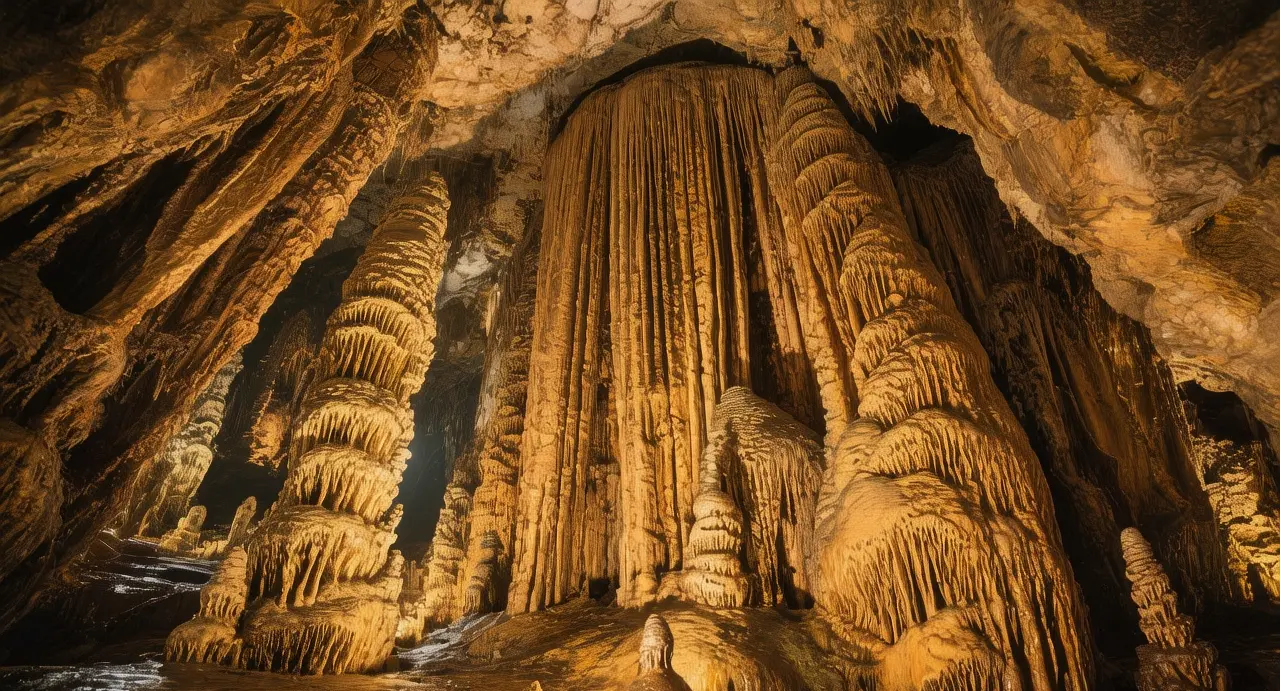
Nerja Caves: Where Prehistoric Art Meets Stone Cathedral
I step across the threshold at ten in the morning. Cool damp air wraps around me — steady and constant, as it has been for millennia. Entry costs ten euros. I walk forward and the ceiling soars high above — vast columns, hanging curtains of calcite, chambers large enough to hold cathedrals. Further in, behind protective barriers, faint lines of red and black mark the rock — drawings left here twelve thousand years ago. Not everything feels quiet. Midday groups echo loud. The most ancient sections stay closed to protect them. Some paths feel narrow and crowded. Yet this place connects you directly to people who lived before history began — and it still holds their secrets.
Why Nerja Caves Matter
Formed over millions of years by water dissolving limestone, these caverns lay sealed and forgotten until 1959, when a group of young explorers broke through the natural rock seal. Inside they found not just magnificent formations — but evidence of continuous human presence stretching back twenty thousand years. Remains of hearths, tools, and bone fragments sit alongside wall paintings of seals, ibex, and fish — some of the oldest art in the Iberian Peninsula. The caves became a protected site and major attraction. That popularity brings strain. Footfall alters temperature and humidity. Paths show wear. Balancing access with preservation grows harder every year. Still the paintings endure. The formations continue to grow. And the silence deep down remains almost untouched.
The Best Time to Experience Nerja
April through June brings warm days and fewer crowds — 16°C to 24°C (61°F–75°F). Underground stays a steady 18°C year-round. September offers golden light and thinner queues — 18°C to 26°C (64°F–79°F). Summer from July to August stays busiest — 22°C to 30°C (72°F–86°F) — and entry slots sell out hours ahead. Winter from November to March stays quiet and mild — 12°C to 18°C (54°F–64°F). The caves feel entirely your own. Weekdays beat weekends. Arrive before 09:30 to walk the largest chambers without echo or crowd.
Approximate Budget for a 7-Day Trip
- Accommodation: Guesthouse in Nerja — 50–85 euros per night. Apartment near caves — 60–100 euros per night. Boutique hotel on coast — 90–180 euros per night. Campsite nearby — 18–25 euros per person.
- Food: Fresh seafood lunch — 14–25 euros. Andalusian tapas — 12–20 euros. Market meal — 8–14 euros. Churros and coffee — 3–6 euros.
- Transport: Bus from Málaga — 5 euros one way. Car rental — 35–55 euros per day. Parking at site — 3 euros daily. Taxi from Nerja centre — 8–12 euros one way.
- Attractions: Nerja Caves — 10 euros. Balcón de Europa — free. Frigiliana village — free. Botanical gardens — 4 euros.
- Miscellaneous: Light layer, water — 8–15 euros daily.
Total estimated for one person, 7 days: 360–670 euros
Drinks and snacks at the cave restaurant cost nearly double what you find in Nerja town centre. Carry water and a small meal. It saves money and you can eat afterwards overlooking the sea.
Essential Nerja Caves Experiences
- Stand in the Great Hall at quiet hour. The ceiling rises thirty metres high. Formations glow in soft light. No noise, no hurry — just the vast ancient space. It humbles you. Skip this on public holidays — the hall stays loud and crowded.
- Study the prehistoric paintings close up. Simple lines, strong shapes, drawn with charcoal and ochre. They have survived twelve thousand years in this dark shelter. You are looking straight into the minds of people long gone.
- Walk the natural upper galleries. Narrower, wilder, less polished. You see the caves as their first modern discoverers did — rough, dark, mysterious.
- Touch the ancient formations (where permitted). Cool, smooth, solid as time itself. They grow a few millimetres every century — slow, patient, constant.
- Step out into bright sunlight afterwards. The Mediterranean glitters blue just beyond the entrance. It feels like returning from another world.
- Walk the Balcón de Europa at sunset. Whitewashed houses, palm trees, sea stretching endless. It balances the dark underground perfectly — light and open, warm and alive.
Hidden Gems Most Travelers Miss
- The small shaded path above the cave entrance. Most head straight for the ticket booth. Climb a little. Pine trees, quiet benches, views down over the coast. It feels peaceful and private.
- The lower chamber section beyond the main circuit. Fewer people walk this far. The formations look different here — darker, more dramatic, almost entirely empty.
- The so-called "iconic stalactite shot" right at the main viewpoint. It fills instantly. Walk twenty metres further along the path. The same formation appears framed by natural rock — empty and just as magnificent.
Cultural & Practical Tips
- Book tickets online in advance. In summer, same-day entry is rarely available. Reserve before you travel.
- Do not touch formations outside marked zones. Skin oils alter growth and damage fragile surfaces. Look, admire, but keep hands clear.
- Wear comfortable flat shoes. Paths are uneven, stone, and permanently damp. Flip-flops are unsafe and impractical.
- Carry a light layer. Underground stays 18°C always — cool enough to feel fresh after warm days above.
- Respect barriers around painted areas. They protect the art from light and breath. Step back and let others see too.
- Book accommodation months ahead in August. Rooms vanish fast. May or September offer better value and thinner crowds.
Essential Visitor Information
Location & Access: Nerja, Málaga province, Andalusia, Spain. 50 km east of Málaga — 45 minutes by car or bus. 100 km west of Almería — 1 hour 15 minutes. The caves sit 3 km inland from Nerja town centre.
Tickets & Booking: Adults 10 euros. Discounts for children and seniors. Book online — advance reservation strongly recommended June–September.
Operating Hours: Daily 09:00–18:30 summer; closes 17:30 winter. Closed 1 January and 25 December.
Visit Duration: Minimum 1.5–2 hours. Half a day lets you explore caves, nearby cliffs, and Nerja town without rushing.
Family Suitability: Good for all ages. Wide main paths suit strollers. Upper galleries are narrower. Restrooms and cafe at entrance.
Timing: Best season — April–June and September. Best time — before 09:30 or after 15:00.
Highlights: Great Hall silence, prehistoric art, upper galleries, returning to sunlight, coastal sunset, Nerja old town.
Nearby & Day Trip: Nerja — 10 mins. Frigiliana — 15 mins. Málaga — 45 mins. Granada — 1 hour 45 mins.
Conclusion: Travel with Care, Not Just Wonder
These caves were here long before humans, and they will remain long after us. The paintings survived twelve thousand years undisturbed — until we found them. Before you leave, look at the oldest mark on the wall. What will you leave behind that lasts half as long?
Post a Comment