
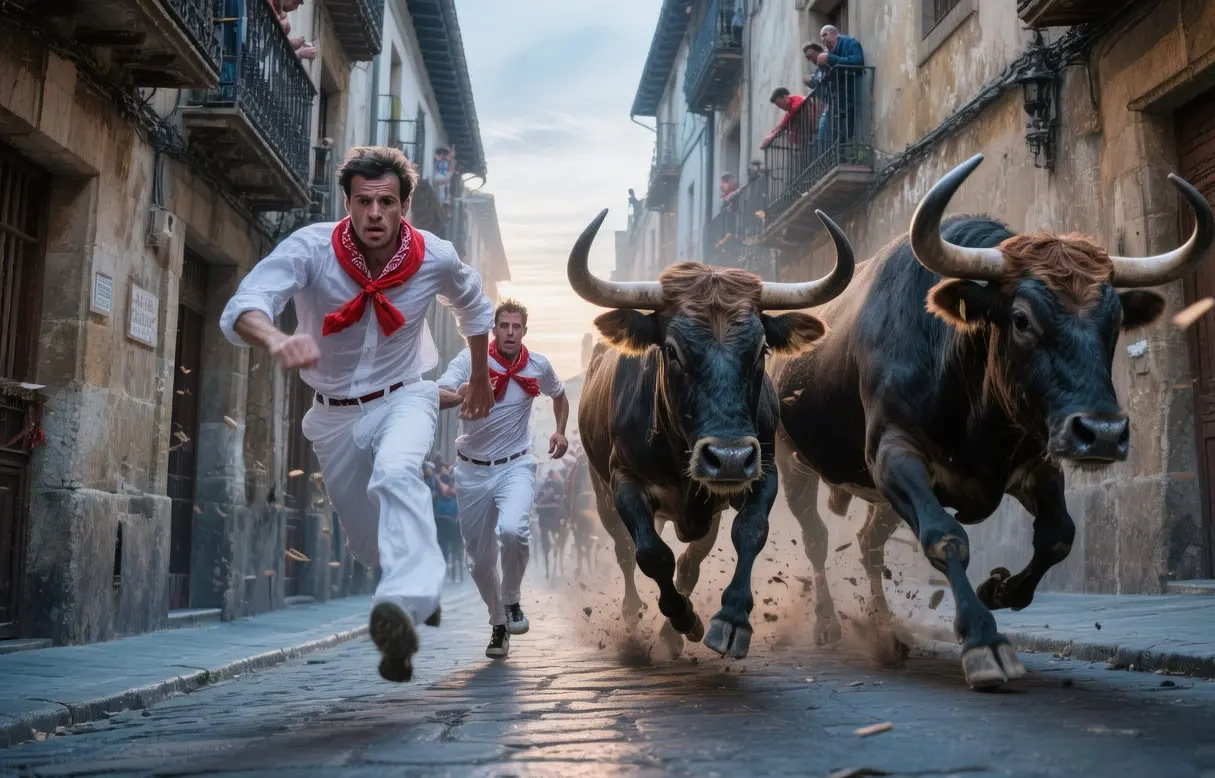
Pamplona Running of the Bulls Ancient Tradition Meets Adrenaline-Fueled Dawn
The rocket cracks at 8:00 AM—sharp, percussive, signaling the start of 875 meters of controlled chaos through Pamplona's medieval streets. You stand behind wooden barricades on Calle Estafeta, heart hammering against your ribs, as the first runners surge forward in a sea of white clothing and crimson scarves. Behind them, 200 meters back at the Santo Domingo corrals, six fighting bulls—each weighing 500 to 700 kilograms—snort and paw the ground, their horns polished to lethal points. For three minutes and thirty seconds (the average duration of the encierro), time collapses into primal instinct: the thunder of hooves on cobblestone, the collective gasp of 20,000 spectators, the scent of sweat and fear and morning dew rising from 14th-century stone. This ritual—unchanged in its essential form since 1385 when bulls were first herded through town to the bullring—represents something far older than tourism or thrill-seeking. In 2026, as the world grapples with questions of animal welfare and cultural preservation, the Pamplona Running of the Bulls matters because it forces us to confront the uncomfortable intersection of tradition, mortality, and what it means to be alive.
Why Pamplona Running of the Bulls Embodies Basque Cultural Identity
The encierro (running) solves a medieval logistical problem that evolved into a cultural phenomenon: how to transport six fighting bulls from the corrals outside town to the bullring for the afternoon corrida. What began in the 14th century as a practical necessity—young men racing ahead of oxen-drawn bull carts to clear the streets—transformed by the 1600s into a test of courage that defined Navarrese masculinity. The route, unchanged since 1856, measures exactly 875 meters (957 yards) and takes runners through five distinct sections: Santo Domingo (steep uphill start), Town Hall Plaza (first turn), Mercaderes (narrowest point at just 3 meters wide), Estafeta (longest straightaway at 300 meters), and the final curve into the bullring through the callejón (alley).
The festival honors Saint Fermín, Pamplona's patron saint and first bishop, who was martyred in 303 AD by being dragged through the streets while tied to a bull—a grim origin story that echoes through every July morning. The modern San Fermín festival, officially established in 1591 when the city council moved the saint's feast day from October 10 to July 7 (better weather for celebration), attracts over one million visitors annually to a city of just 200,000 residents. The running itself involves six fighting bulls from different ganaderías (ranches)—primarily Miura, Victoriano del Río, and Fuente Ymbro—known for their aggression and speed, plus six cabestros (steer) trained to guide the bulls along the route.
Statistics reveal the encierro's inherent danger: between 1924 and 2023, 15 people have died during the running, with the most recent fatality in 2009 (Daniel Jimeno Romero, 27 years old, gored in the neck). Annually, 200–300 runners require medical treatment, primarily for goring wounds, broken bones, and trampling injuries. The Pamplona City Council employs 400 security personnel, 60 medical staff, and maintains 12 ambulances on standby each morning. Despite the risks—or perhaps because of them—the running persists as a visceral expression of Basque identity, drawing participants from 80+ countries who seek what writer Hemingway called "the only thing that makes you feel alive" in his 1926 novel The Sun Also Rises, which immortalized the festival for English-speaking audiences.
The Best Time to Experience Pamplona Running of the Bulls
The San Fermín festival runs annually from July 6–14, with the encierro occurring each morning at 8:00 AM sharp from July 7–14 (no running on July 6, the opening day). For 2026, target July 7–11 for the optimal balance of festival energy and manageable crowds; July 12–14 see peak visitor numbers exceeding 50,000 people in the old town, creating dangerous overcrowding on the route.
Weather during the festival averages 20–28°C (68–82°F) during early morning hours when the running occurs, with humidity around 60–70%. Nights warm to 14–18°C (57–64°F), perfect for the all-night street parties. Arrive at barricade positions by 6:30–7:00 AM to secure viewing spots; by 7:45 AM, the route reaches capacity and police close access points. For photography, position yourself on Calle Estafeta at 7:55 AM when the first rocket (chupinazo de salida) launches—the angled morning light creates dramatic shadows as runners round the final curve.
Avoid July 13–14 unless you tolerate extreme crowds and elevated temperatures (often exceeding 30°C/86°F by midday). The final day (July 14) features the Pobre de Mí closing ceremony at midnight, drawing 100,000+ people to Plaza del Castillo—intoxicating but overwhelming for first-time visitors. If you're squeamish about animal welfare controversies or gore, reconsider attending entirely; this is not a sanitized cultural performance but a raw, sometimes brutal tradition.
Verify the official schedule and safety updates at the Pamplona City Council website: https://www.runningofthebulls.com/ .
Approximate Budget for a 7-Day Trip (2026)
This budget reflects mid-range travel during peak festival pricing—San Fermín sees accommodation costs increase 300–500% compared to normal rates. Prices based on 2025 data adjusted for Spain's projected 3.2% inflation rate for 2026. Booking 6–9 months in advance is essential; last-minute arrangements are prohibitively expensive or unavailable.
Accommodation: €180–€450 per night
- Hostel/budget hotel (outside old town): €180–€250 (Pensión Echarte, 15-minute walk from route)
- Mid-range hotel in old town: €320–€450 (Hotel Tres Reyes, NH Pamplona)
- Apartment rental (entire flat, 4 nights minimum): €400–€700 per night
Food: €50–€85 per day
- Breakfast: €8–€12 (coffee, churros con chocolate, or tostada at Café Iruña)
- Lunch: €18–€30 (menú del día: grilled lamb, menestra vegetable stew, or txuleta steak with Rioja wine)
- Dinner: €25–€45 (tapas crawl: 8–10 pintxos at €3–€5 each plus txakoli wine at €4–€6)
Transportation:
- Flight to Bilbao or San Sebastián: €120–€280 round-trip (varies by origin)
- Bus Bilbao to Pamplona (ALSA Line 15): €16.50 one-way, 75 minutes
- Train Madrid to Pamplona (RENFE): €38–€62 one-way, 3 hours 15 minutes
- Local bus/taxi within Pamplona: €15–€25 total for festival week
Attractions & Experiences:
- Bullring museum and tour: €7
- Bullfight ticket (afternoon corrida, July 7–14): €35–€150 (varies by seating section)
- San Fermín museum: €5
- Guided historical walking tour: €18
- Rocket launch viewing platform (Plaza Consistorial, July 6): Free (arrive by 10:00 AM)
Miscellaneous:
- Traditional white outfit with red scarf (pañuelo): €25–€40
- Festival T-shirts and souvenirs: €30–€60
- Travel insurance (essential—must cover high-risk activities): €45–€75
- Emergency medical fund (recommended): €200+ (in case of injury)
Total for 7 days (mid-range): €2,100–€3,200 per person (excluding international flights to Spain)
6 Essential Pamplona Running of the Bulls Experiences
- Watch the Encierro from Calle Estafeta: Arrive by 6:45 AM to secure a spot behind the wooden barricades on Estafeta, the longest and most dramatic straight section. Wear white clothing with red scarf (available at any shop for €15–€25). The first rocket fires at 8:00 AM sharp; the bulls cover the 875-meter route in 3–4 minutes, averaging 25 km/h (15.5 mph). Expect deafening noise, adrenaline, and the visceral sight of runners stumbling or falling. If you're running yourself, register at the Town Hall by 7:00 AM and enter the corral area by 7:30 AM—no exceptions.
- Experience the Chupinazo Opening: On July 6 at noon, join 50,000 people in Plaza Consistorial for the chupinazo (opening rocket) that launches San Fermín. The mayor fires the rocket from the town hall balcony while the crowd chants "Pamploneses, Pamplonesas, Viva San Fermín, Gora San Fermín!" Arrive by 10:00 AM to secure entry; police close the plaza when capacity (60,000) is reached. The atmosphere is electric—wine sprays, singing erupts, and the festival officially begins. Free event; no tickets required.
- Attend an Afternoon Bullfight: The corrida begins at 6:30 PM daily (July 7–14) at Plaza de Toros, featuring the same six bulls that ran that morning. Purchase tickets in advance (€35–€150) for sombra (shade) sections—sol (sun) seats are cheaper but brutal in July heat. The spectacle lasts 2.5 hours, with six bulls fought sequentially by three matadors. This is controversial and not for the faint of heart; animal welfare concerns are valid and visible.
- Join the Gigantes y Cabezudos Parade: Daily at 12:00 PM (July 7–14), giant papier-mâché figures (4-meter-tall gigantes) and big-headed characters (cabezudos) parade through the old town accompanied by brass bands. The route: Plaza del Castillo → Calle Mayor → Town Hall → back to Castillo. Children love the cabezudos who playfully chase spectators with foam bats. Free; best viewing from Café Iruña terrace (reserve ahead).
- Participate in the Pobre de Mí Closing: On July 14 at midnight, join 100,000 people in Plaza del Castillo for the emotional closing ceremony. The mayor removes his red scarf from the town hall balcony while the crowd sings "Pobre de Mí, Pobre de Mí, que se han acabado las fiestas, de San Fermín" (Poor me, poor me, the San Fermín festival has ended). Many cry; strangers embrace. The festival ends at 12:00 AM sharp on July 15. Arrive by 10:00 PM to secure a spot.
- Explore the Bullring Museum: Open year-round (€7 entry), the museum chronicles the encierro's history from 1385 to present, displaying Hemingway memorabilia, historic photographs, and gored runners' blood-stained clothing. The audio guide (included) runs 45 minutes. Open 10:00 AM–8:00 PM during festival, 10:00 AM–2:00 PM off-season. The bullring itself seats 19,529 people and opened in 1922.
3 Hidden Gems Most Travelers Miss
- Comparsa de Gigantes y Cabezudos Workshop: Behind the tourist spectacle lies a year-round workshop where artisans craft the giant figures using techniques unchanged since 1860. Located at Calle Comedias 12, the Taller de Gigantes offers free visits Tuesday and Thursday, 11:00 AM–1:00 PM (call +34 948 220 222 to book). You'll see the 17 gigantes (representing European, Asian, African, and American royalty) stored between festivals, learn about the 40-kilogram weight each dancer carries, and understand the cultural significance beyond the party. Most visitors never realize these figures date to 1860 and represent one of Europe's oldest continuous parade traditions.
- Rincon de la Aduana Wine Cellar: Tucked beneath a nondescript building at Calle Aduana 24, this 16th-century wine cellar (bodega) serves as a refuge from festival chaos. The vaulted stone chamber maintains 14°C (57°F) year-round, offering tastings of Navarra DO wines (€12 for 5 wines) in complete silence while the streets above roar. Open Monday–Saturday, 12:00–3:00 PM and 6:00–9:00 PM; reservation essential (+34 948 212 410). Limited to 12 people per session; book 2 weeks ahead. The owner, José María Aramendía, provides historical context about Pamplona's medieval wine trade.
- San Fermín Chapel at Dawn: While thousands party all night, the 17th-century chapel dedicated to San Fermín (inside San Lorenzo Church, Calle Mayor) opens at 6:30 AM for quiet prayer before the running. The saint's 18th-century polychrome statue—dressed in white with red scarf—receives blessings from runners seeking protection. Enter through the side door on Calle San Fermín; no photography during prayer. This spiritual dimension of the festival gets lost in the party atmosphere, but for many Navarrese, San Fermín remains a religious observance first, spectacle second. The chapel is free to enter; donations accepted.
Cultural & Practical Tips
- Safety first—know the risks: If running, never carry objects (phones, cameras), wear proper running shoes (not sandals), and understand the route's danger zones: Santo Domingo (steep start causes falls), Mercaderes corner (narrow bottleneck), and Estafeta curve (final turn before bullring). If you fall, stay down and protect your head; runners behind you cannot stop. Medical tents operate 7:00 AM–10:00 AM daily; emergency number: 112.
- Language essentials: While Spanish dominates, Basque (Euskera) holds co-official status. Key phrases: ¡Viva San Fermín! (BEE-bah san fair-MEEN = Long live San Fermín!), Gora San Fermín! (GO-rah = Up with San Fermín! in Basque), Gracias (GRAH-see-ahs = thank you), ¿Dónde está el encierro? (DON-deh es-TAH el en-see-EH-rro = where is the running?).
- Photography guidelines: Tripods prohibited on the running route for safety. Use high ISO (3200+) for early morning shots; avoid flash during the running (distracts runners). Drone use requires special permission from Pamplona City Council (email seguridad@pamplona.es 30 days ahead)—generally denied during festival. Best photo spots: Estafeta balcony rentals (€200–€400 per day) or Town Hall Plaza for chupinazo.
- Alcohol responsibility: The festival encourages drinking, but running under the influence is deadly and illegal. Police conduct breathalyzer tests at corral entrances; runners with 0.5 g/L blood alcohol or higher are barred from participating. Save the txikiteo (bar-hopping) for after 10:00 AM when the running concludes. Water costs €1–€2 at festival stands—hydrate aggressively in July heat.
- Dress code tradition: Runners and spectators wear white clothing with red scarf (pañuelo) and red faja (waist sash). The outfit honors San Fermín's martyrdom (white for purity, red for blood). Purchase authentic sets at any department store (€25–€40) or street vendor (€15–€20, lower quality). Wearing the scarf incorrectly (around waist instead of neck) marks you as a tourist faux pas.
- Animal welfare awareness: Understand that bulls die in the afternoon bullfight—this is not hidden or sanitized. If this conflicts with your values, skip the corrida but know that the running itself also stresses and sometimes injures the bulls (falls on cobblestone, collisions). PETA and other organizations protest annually; respect others' right to attend while making your own ethical choice.
- Accommodation booking strategy: Book 9–12 months ahead for 2026 festival. Most hotels require 4-night minimum stays (July 6–9 or July 10–13). If prices exceed €400/night, consider staying in nearby towns: Burlada (5 km, €80–€120/night) or Villava (6 km, €70–€100/night) with bus connections (€2, 20 minutes). Camping is not permitted within city limits during festival.
Conclusion: Travel with Respect, Not Just Adrenaline
The Pamplona Running of the Bulls doesn't need your participation to survive—it has endured 640 years without Instagram posts or thrill-seeking validation. What it deserves is your respect: the willingness to understand that this tradition exists at the uncomfortable intersection of cultural heritage and animal welfare, of communal celebration and individual mortality. In 2026, as societies worldwide debate which traditions to preserve and which to abandon, San Fermín forces honest conversation about identity, risk, and the price of cultural continuity. Approach the encierro not as a bucket-list checkbox but as a complex cultural phenomenon that reveals as much about human nature as it does about Basque history. Walk the route the day before, imagining the weight of centuries in those cobblestones. Speak with locals who've run for 30 years and those who've sworn never to run again. Acknowledge the bulls' role—not as props in your adventure narrative, but as living creatures caught in a ritual older than nations. Let the rocket's crack at 8:00 AM remind you that some traditions endure not because they're safe or politically correct, but because they speak to something primal in the human spirit. Travel to Pamplona not to conquer fear, but to understand it—and yourself.