
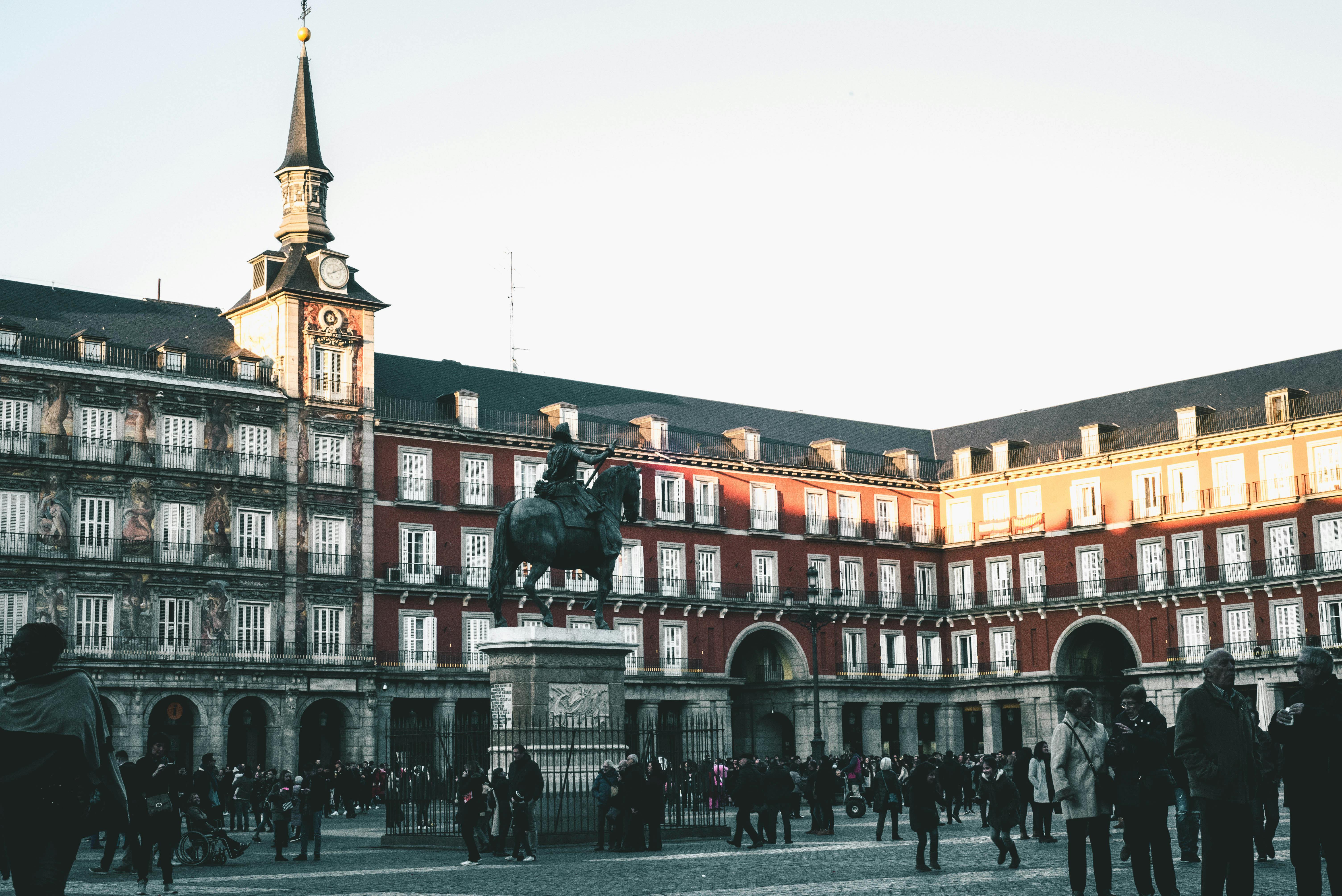
Plaza Mayor, Madrid Red Facades Meet Castilian Sky
The late afternoon sun strikes the ochre walls, turning the red plaster into a burning ember against the deepening blue of the Castilian sky. You stand on the cobblestones of the Plaza Mayor, Madrid, a rectangular void measuring 129 meters by 94 meters, where the air smells of roasted chestnuts and heated stone. The silence is deceptive—broken by the murmur of tourists counting the 237 balconies that line the perimeter, the clatter of ceramic plates from the arcades, and the distant chime of the nearby Puerta del Sol clock. This is the heart of Habsburg Madrid, completed in 1619 under Philip III, where bullfights once bloodied the stones and public executions drew crowds of 50,000. You walk beneath the nine arched gateways that pierce the uniform facade, each one a mouth feeding the square with life. In 2026, as historic centers become sanitized stages for consumption, the Plaza Mayor, Madrid remains a raw testament to public spectacle—a place where the architecture demands you look up, while the street life demands you look around.
Why Plaza Mayor, Madrid Embodies Habsburg Power
The Plaza Mayor, Madrid represents the definitive example of the Spanish closed square, designed to solve the critical need for a controlled public space in the chaotic capital of the Spanish Empire. Originally built during the reign of Philip II and redesigned by Juan Gómez de Mora in 1619, the structure utilizes a uniform five-story facade to project royal authority over the populace. The engineering relies on load-bearing brick walls covered in red ochre plaster, a material chosen for its durability and visual warmth under the intense Spanish sun. The slate spires topping the corners and the central Casa de la Panadería create a jagged skyline that contrasts with the horizontal rhythm of the 437 windows.
Functionally, the square was a multi-purpose arena: it hosted canonizations, bullfights, and markets simultaneously. The nine arches allow access while maintaining the enclosure, creating a sense of security and exclusivity. The Casa de la Panadería, originally the bakery guild headquarters, features frescoes by Carlos Franco added in 1992, layering modern art onto the 17th-century structure. This architectural consistency makes the Plaza Mayor, Madrid not merely a gathering place but a theatrical set where the city itself is the actor. The uniformity was enforced by strict municipal ordinances that dictated window sizes and balcony heights, ensuring that no individual building overshadowed the collective whole—a physical manifestation of Habsburg order.
The Best Time to Experience Plaza Mayor, Madrid
For the optimal Plaza Mayor, Madrid visit, target April 15–June 10 or September 15–October 25, when temperatures range between 15–25°C (59–77°F) and the light is soft enough for photography. The square is accessible 24 hours, but the ideal viewing window is 8:00–9:30 AM when the light hits the eastern façade directly, illuminating the fresco details without harsh shadows. Evening visits between 7:00–9:00 PM offer cooler temperatures and atmospheric lighting, though crowds peak during sunset. Spring coincides with the San Isidro Festival, causing hotel rates to double; book accommodation four months in advance if visiting during this period.
Avoid July 1–August 20 unless acclimated to extreme heat; temperatures frequently surpass 35°C (95°F), making the cobblestone surfaces radiate intense thermal energy. Winter months (December–February) offer mild days (5–12°C / 41–54°F) but occasional rain can make the stone pathways slippery. The Christmas market sets up in December, altering the square's layout; verify status at www.esmadrid.com or contact the tourist office at info@esmadrid.com (+34 915 881 636). Weekday afternoons typically see fewer tour groups compared to weekends, allowing for clearer photography of the architectural details without obstruction from crowds.
Approximate Budget for a 7-Day Trip
Madrid offers excellent value for cultural travelers, though costs fluctuate during major festivals. The following budget assumes mid-range comfort with a focus on local experiences, based on 2026 pricing with approximately 3.5% inflation from 2025 figures. Estimates include stays near the historic center for easy access to the Plaza Mayor, Madrid.
- Accommodation: €80–€150 per night for a double room in a boutique hotel or renovated apartment in Centro, Sol, or La Latina neighborhoods; luxury options overlooking the square command €250–€450 per night
- Food: €45–€65 per day—breakfast €5–€9 (café con leche and churros con chocolate), lunch €15–€25 (menú del día including cocido madrileño, salad, and wine), dinner €25–€35 (tapas selection including calamari and jamón ibérico)
- Transportation: Train from Barcelona Sants to Madrid Atocha: €50–€80 high-speed AVE (2.5 hours); Metro single ticket: €1.50 or €18.50 10-trip pass; taxi from airport: €35 fixed rate; bike rental: €15 per day
- Attractions: Plaza Mayor, Madrid entry: free; Royal Palace: €13; Prado Museum: €16; Reina Sofía: €10; Mercado de San Miguel: free entry (food costs extra)
- Miscellaneous: Ceramic souvenirs from €12; local wine €8–€20 per bottle; horchata drink €3; artisan leather goods €30–€70; guided history walk €18
Total estimated cost for 7 days: €1,050–€1,450 per person (based on double occupancy; solo travelers should add 35–45% for single supplements)
7 Essential Plaza Mayor, Madrid Experiences
- Count the Balconies from the Center: Stand in the middle of the cobblestone plaza and look up at the continuous row of 237 wrought-iron balconies. The uniformity is hypnotic; each balcony was once used by royalty to view spectacles below. Visit at 10:00 AM when the sun illuminates the red facade without casting harsh shadows. Notice the slate spires on the corners; they were added to prevent fire spread. Allow 15 minutes to observe the architectural rhythm. This perspective emphasizes the scale of the Habsburg design.
- Visit the Statue of Philip III: Locate the bronze equestrian statue in the center, moved here in 1848 from the Casa de Campo. The horse stands on a stone pedestal featuring reliefs of historical scenes. Visit between 2:00–4:00 PM when lighting accentuates the bronze details. The statue was crafted by Giambologna and Pietro Tacca in 1616. It is the focal point of the square. Touching the horse's nose is a local superstition for good luck. This connects the space to its royal origins.
- Dine at Casa Botín: Eat at the Guinness World Record holder for the oldest restaurant in operation, established in 1725. The interior features exposed brick arches and wood beams blackened by centuries of smoke. Visit at 2:00 PM for lunch or 9:00 PM for dinner. Order the cochinillo asado (roast suckling pig) cooked in the original wood-fired oven. The cellar where Hemingway wrote is accessible. Reservations essential: +34 913 664 217. This is a living piece of culinary history.
- Walk the Arcades: Stroll beneath the covered walkways that line the perimeter. The arches provide shade and house shops selling stamps, coins, and souvenirs. Visit in late afternoon when the light angles through the arches. The vaulted ceilings are painted with muted tones. It is a peaceful retreat from the open square. The shops often close for siesta between 2:00–5:00 PM. This reveals the commercial heart of the plaza.
- Watch the Street Performers: Gather near the arches to watch musicians, magicians, and living statues. The quality of performance is high due to strict licensing requirements. Visit at 6:00 PM when the evening crowd gathers. Tip performers €1–€2 if you stop to watch; it is customary. The atmosphere is lively but regulated; police monitor noise levels. This reveals the contemporary cultural life of the square. Bring cash for tipping.
- Explore the Casa de la Panadería: Examine the facade of the former bakery guild headquarters on the north side. The frescoes by Carlos Franco depict mythological figures and were completed in 1992. Visit when sunlight streams through the windows to illuminate the colors. The building houses the tourist office on the ground floor. It demonstrates the layering of modern art on historic structures. Do not touch the facade; oils damage the paint.
- Experience the Christmas Market: Visit between December 1–23 when the square transforms into a festive market. Wooden stalls sell figurines, decorations, and sweets. Visit at 5:00 PM when the lights turn on. The scent of roasted chestnuts and turron fills the air. It is crowded but magical. The layout changes completely during this period. This tradition dates back over 200 years.
3 Hidden Gems Most Travelers Miss
- Arco de Cuchilleros: Located at the southwest corner, this steep arched staircase leads to the Calle de Cuchilleros. Entry is free; open 24 hours. It is often overlooked as visitors focus on the center. The street was historically home to knife makers. Contact: N/A. Visit early morning for photography without crowds. The view back towards the square from the top of the arch is stunning. It provides a glimpse into the medieval street layout beneath the grand facade.
- Plaza de la Villa: A 5-minute walk west down Calle Mayor, this medieval square features the Tower of the Lujanes. Entry is free; open 24 hours. It is often overlooked by tourists rushing to the Plaza Mayor. The square retains its 15th-century irregular shape. Contact: N/A. Visit mid-morning when light illuminates the stone towers. The House of the Lujanes is where King Francis I of France was imprisoned. It provides historical context often missing from the main square.
- Real Basílica de San Miguel: Located 300 meters southwest at Calle de San Justo, 4, this 18th-century church features a rare convex facade. Entry: €3; open Tuesday–Saturday 10:00 AM–6:00 PM. It is often overlooked by tourists rushing to the Almudena. The interior features Italianate frescoes. Contact: +34 913 654 354. Visit mid-morning when light illuminates the altarpieces. The dome is one of the few in Madrid. It provides spiritual context often missing from the commercial square.
Cultural & Practical Tips
- Security awareness: While the square is safe, pickpockets operate near crowded areas like the arcades. Keep bags zipped and valuables secure. Do not leave phones on café tables. Allow an extra 15 minutes for security processing during peak festival seasons. Report suspicious activity to local police.
- Master these phrases: "Buenos días" (BWEH-nos DEE-as) for good morning; "Por favor" (por fah-BOR) for please; "¿Cuánto cuesta?" (KWAN-toh KWES-tah) to ask price; "La cuenta, por favor" (lah KWEN-tah) to request the bill.
- Photography guidelines: Tripods are allowed in open areas but not inside restaurants without permission. Drone usage is strictly prohibited over the monument. Flash photography is discouraged inside buildings. Respect privacy when photographing locals. Early morning offers the best light without crowds.
- Hydration strategy: Madrid's inland location means dry heat; carry a refillable bottle. Public fountains (fuentes) are available nearby in Plaza de la Villa. The water is potable. Avoid alcohol during midday heat. You'll save €2–€3 daily and reduce plastic waste. Purchase water from kiosks if fountains are unavailable.
- Footwear selection: The ground consists of cobblestones and gravel. Wear sturdy walking shoes with cushioned soles. The stones can be slippery when wet. Avoid high heels. Comfortable walking shoes essential for extensive exploration. The cobblestones can be uneven.
- Weather considerations: The square provides little shade; wear a hat and sunscreen during summer months. Winter evenings can be chilly; bring a light jacket even if the day is warm. Rain is rare but possible in November; the stone surfaces become slick when wet.
- Siesta timing: Many nearby shops close between 2:00–5:00 PM. Use this time to visit the square interior or rest at your accommodation. Evening activity resumes after 8:00 PM when locals return to the streets for dinner.
Conclusion: Travel with Reverence, Not Just Reverie
The Plaza Mayor, Madrid demands more than casual observation—it asks for contemplation of the layers of history embedded in every stone, every balcony, every archway carved by hands long turned to dust. When you walk this square in 2026, you're not merely touring a monument; you're walking through a fragile ecosystem of memory where Habsburg power, commercial life, and modern tourism intersect in delicate balance.
Choose to engage deeply: hire a local guide from the La Latina neighborhood rather than a large tour company; purchase tickets directly to support preservation efforts; respect the residential nature of the surrounding streets. The Plaza Mayor, Madrid survives not as a museum exhibit but as a living public space—and its preservation depends on visitors who recognize the difference between appreciation and consumption.
Slow down. Sit on a bench after the tour buses depart. Listen to the fountain water flowing through centuries-old channels. Taste the sweetness of a churro from a nearby café. The square rewards those who approach it not as a checklist item but as a conversation across time—a dialogue between past and present that continues, like the city itself, in perpetual evolution.