
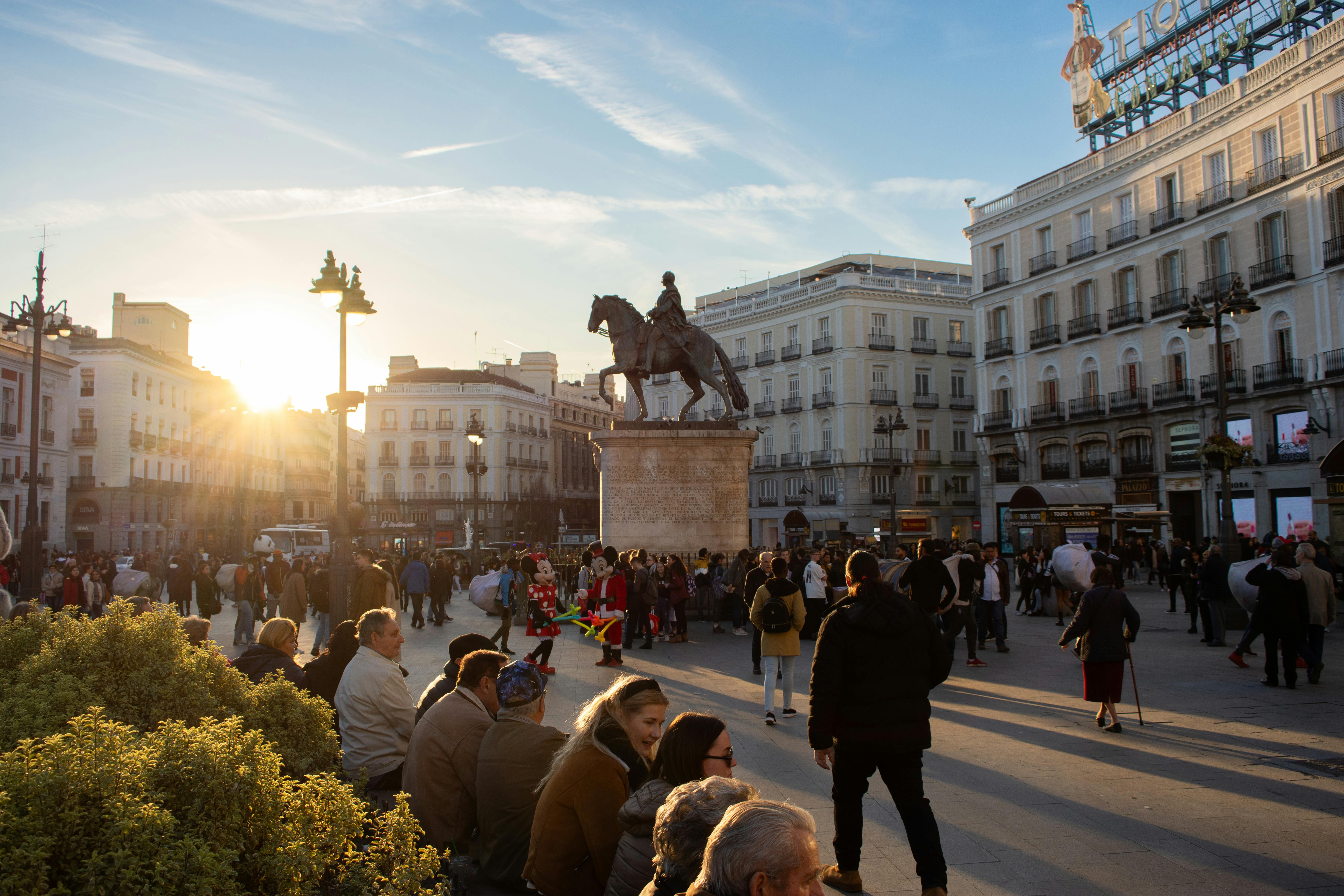
Puerta del Sol, Madrid Kilometer Zero Meets Urban Pulse
The clock on the Real Casa de Correos chimes the hour—a deep, resonant sound that has marked time for Madrileños since 1866. You stand in the center of the Puerta del Sol, a semi-circular plaza spanning 1.5 hectares, where the air vibrates with the energy of 100,000 daily passersby. The ground beneath your feet holds the Kilómetro Zero plaque, the exact point from which all Spanish radial roads are measured. You hear the cacophony of street performers, the clatter of tram wheels on the nearby Gran Vía, and the murmur of tourists seeking the bronze bear and strawberry tree statue. This is the heart of the capital, a space that evolved from a city gate in the 15th century to the epicenter of Spanish democracy. In 2026, as urban squares become homogenized commercial zones, the Puerta del Sol remains a raw nerve of civic life—a place where protests erupt, celebrations explode, and history is written in real-time on the cobblestones.
Why Puerta del Sol Embodies Civic Identity
The Puerta del Sol represents the definitive public square of modern Spain, solving the critical need for a centralized gathering space in a rapidly expanding 19th-century capital. Originally an open area outside the city walls—hence the name "Gate of the Sun"—it was incorporated into the urban fabric during the reign of Charles III. The major transformation occurred between 1857 and 1862 under the direction of architects José María de Aguilar and Juan Rivera, who widened the plaza to accommodate the growing population and traffic. The engineering involved leveling the ground and constructing the iconic semi-circular facade that defines the western edge.
The Real Casa de Correos, built in 1768 by Jaime Marquet, serves as the architectural anchor. Originally the headquarters of the postal service, it now houses the Presidency of the Community of Madrid. The clock tower, added in 1866, broadcasts the time that signals the traditional eating of 12 grapes at midnight on New Year's Eve—a tradition broadcast globally. The Kilómetro Zero plaque, installed in 1950, marks the geometric center of the Spanish road network. This integration of transportation, governance, and culture makes the Puerta del Sol not merely a transit hub but a symbol of national identity, where every meter of distance in Spain is conceptually linked to this specific point.
The Best Time to Experience Puerta del Sol
For the optimal Puerta del Sol visit, target April 10–June 5 or September 20–November 15, when temperatures range between 15–25°C (59–77°F) and the light is clear for photography. The square is accessible 24 hours, but the ideal viewing window is 7:00–8:30 AM when the light hits the Casa de Correos facade directly, illuminating the clock tower without harsh shadows. Evening visits between 8:00–10:00 PM offer atmospheric lighting, though crowds peak during dinner hours. Spring coincides with local festivals, causing hotel rates to increase 40–60%; book accommodation four months in advance if visiting during this period.
Avoid July 15–August 25 unless you tolerate extreme heat; temperatures regularly exceed 35°C (95°F), making the stone surfaces radiate intense thermal energy. The lack of shade in the center exacerbates the heat. Winter months (December–February) bring cold weather (5–12°C / 41–54°F) but fewer crowds, allowing for contemplative exploration. New Year's Eve requires special permits and security checks; verify current regulations at www.esmadrid.com or contact the tourist office at info@esmadrid.com (+34 915 881 636). Weekday mornings typically see the lowest visitor density, allowing for clearer photography of the statues without obstruction from crowds.
Approximate Budget for a 7-Day Trip (2026)
Madrid offers excellent value for cultural travelers, though costs fluctuate during major events like Pride or San Isidro. The following budget assumes mid-range comfort with a focus on local experiences, based on 2026 pricing with approximately 3.5% inflation from 2025 figures. Estimates include stays near the historic center for easy access to the Puerta del Sol.
- Accommodation: €80–€150 per night for a double room in a boutique hotel or renovated apartment in Centro, Sol, or Gran Vía neighborhoods; luxury options overlooking the square command €250–€450 per night
- Food: €45–€65 per day—breakfast €5–€9 (café con leche and churros con chocolate), lunch €15–€25 (menú del día including cocido madrileño, salad, and wine), dinner €25–€35 (tapas selection including calamari and jamón ibérico)
- Transportation: Train from Barcelona Sants to Madrid Atocha: €50–€80 high-speed AVE (2.5 hours); Metro single ticket: €1.50 or €18.50 10-trip pass; taxi from airport: €35 fixed rate; bike rental: €15 per day
- Attractions: Puerta del Sol entry: free; Royal Palace: €13; Prado Museum: €16; Reina Sofía: €10; Mercado de San Miguel: free entry (food costs extra)
- Miscellaneous: Ceramic souvenirs from €12; local wine €8–€20 per bottle; horchata drink €3; artisan leather goods €30–€70; guided history walk €18
Total estimated cost for 7 days: €1,050–€1,450 per person (based on double occupancy; solo travelers should add 35–45% for single supplements)
7 Essential Puerta del Sol Experiences
- Touch the Bear and Strawberry Tree: Locate the bronze statue by Antonio Navarro Santafé, installed in 1967. It is the most popular meeting point in Madrid. Visit at 10:00 AM when the light illuminates the bronze details. The bear stands 2 meters tall; touch the paw for good luck—a local superstition. Allow 15 minutes to observe the crowds interacting with the sculpture. This is the iconic symbol of the Puerta del Sol; do not miss it.
- Find Kilometer Zero: Look down at the pavement in front of the Casa de Correos entrance. The plaque marks the starting point for all Spanish national roads. Visit between 2:00–4:00 PM when lighting accentuates the bronze plate. It is often crowded; wait for a gap to take a photo. The coordinates are exact: 40°25′08″N 3°42′09″W. It represents the geometric heart of the country. Stand on it to say you've been to the center of Spain.
- Watch the Clock Tower: Observe the clock face on the Post Office building, which rings the hour. Visit at 12:00 PM or 8:00 PM to hear the chimes. The mechanism dates to 1866 and is synchronized with the Royal Observatory. The bells are audible across the square. It is the same clock used for the New Year's grape tradition. This connects the space to national traditions. Listen closely for the distinct tone.
- Visit the Tio Pepe Sign: Look up at the neon sign on the corner of the square, installed in 1929. It is one of the oldest advertising signs in Europe. Visit at dusk when the neon lights up against the darkening sky. The figure leans on a bottle of sherry. It was restored in 2011 to preserve its heritage status. It provides a vintage contrast to modern digital billboards. This is a landmark of commercial history.
- Shop at El Corte Inglés: Enter the department store on the south side of the square. The building features a rooftop terrace with views over the Puerta del Sol. Visit in late afternoon when the sun sets. The terrace is free to access. It offers a panoramic perspective of the plaza's layout. The store itself is a Madrid institution. This provides a restful pause with a view.
- Walk the Metro Entrance: Descend into the historic metro station entrance designed by Antonio Palacios. The glass and iron structure dates to the early 20th century. Visit at 11:30 AM when the light filters through the canopy. It is a protected architectural element. The tiles inside feature the Metro logo. It demonstrates the integration of transport and art. This is a functional piece of heritage.
- Experience New Year's Eve (If Timing Aligns): If visiting on December 31, join the crowds for the grape tradition. The square fills with over 1 million people. Visit by 10:00 PM to secure a spot. The atmosphere is electric with countdown anticipation. Eat 12 grapes with the 12 chimes. It is a once-in-a-lifetime cultural immersion. This tradition defines the Spanish calendar.
3 Hidden Gems Most Travelers Miss
- Church of San Ginés: Located 200 meters west down Calle del Arenal, this 17th-century church houses the famous chocolate shop. Entry is free; open 10:00 AM–6:00 PM. It is often overlooked as visitors focus on the square. The interior features Baroque altarpieces. Contact: +34 913 656 544. Visit early morning for chocolate without queues. The juxtaposition of sacred space and culinary tradition is unique.
- Calle de la Montera: A pedestrian street leading north from the square, known for historic shops and architecture. Entry is free; open 24 hours. It is often overlooked by tourists rushing to Gran Vía. The street retains 19th-century facades. Contact: N/A. Visit mid-morning when light illuminates the shop fronts. The Casa de Diego hat shop dates to 1850. It provides historical context often missing from the main square.
- Real Academia de Bellas Artes: Located 500 meters east at Calle de Alcalá, 13, this museum houses works by Goya and Picasso. Entry: €6; open Tuesday–Saturday 10:00 AM–6:00 PM. It is often overlooked by tourists rushing to the Prado. The building is a palace itself. Contact: +34 915 221 491. Visit mid-morning when light illuminates the galleries. The collection offers a deeper dive into Spanish art. It provides cultural depth often missing from the street walk.
Cultural & Practical Tips
- Security awareness: While the square is safe, pickpockets operate near crowded areas like the statue. Keep bags zipped and valuables secure. Do not leave phones on café tables. Allow an extra 15 minutes for security processing during peak festival seasons. Report suspicious activity to local police.
- Master these phrases: "Buenos días" (BWEH-nos DEE-as) for good morning; "Por favor" (por fah-BOR) for please; "¿Cuánto cuesta?" (KWAN-toh KWES-tah) to ask price; "La cuenta, por favor" (lah KWEN-tah) to request the bill.
- Photography guidelines: Tripods are allowed in open areas but not inside shops without permission. Drone usage is strictly prohibited over the monument. Flash photography is discouraged inside buildings. Respect privacy when photographing locals. Early morning offers the best light without crowds.
- Hydration strategy: Madrid's inland location means dry heat; carry a refillable bottle. Public fountains (fuentes) are available nearby in Plaza de la Villa. The water is potable. Avoid alcohol during midday heat. You'll save €2–€3 daily and reduce plastic waste. Purchase water from kiosks if fountains are unavailable.
- Footwear selection: The ground consists of stone and asphalt. Wear sturdy walking shoes with cushioned soles. The surfaces can be slippery when wet. Avoid high heels. Comfortable walking shoes essential for extensive exploration. The cobblestones can be uneven.
- Weather considerations: The square provides little shade; wear a hat and sunscreen during summer months. Winter evenings can be chilly; bring a light jacket even if the day is warm. Rain is rare but possible in November; the stone surfaces become slick when wet.
- Siesta timing: Many nearby shops close between 2:00–5:00 PM. Use this time to visit the square interior or rest at your accommodation. Evening activity resumes after 8:00 PM when locals return to the streets for dinner.
Conclusion: Travel with Reverence, Not Just Reverie
The Puerta del Sol demands more than casual observation—it asks for contemplation of the layers of history embedded in every stone, every clock chime, every statue cast by hands long turned to dust. When you walk this square in 2026, you're not merely touring a monument; you're walking through a fragile ecosystem of memory where civic power, commercial life, and modern tourism intersect in delicate balance.
Choose to engage deeply: hire a local guide from the Centro neighborhood rather than a large tour company; purchase tickets directly to support preservation efforts; respect the residential nature of the surrounding streets. The Puerta del Sol survives not as a museum exhibit but as a living public space—and its preservation depends on visitors who recognize the difference between appreciation and consumption.
Slow down. Sit on a bench after the tour buses depart. Listen to the clock chimes ringing through centuries-old air. Taste the sweetness of a churro from a nearby café. The square rewards those who approach it not as a checklist item but as a conversation across time—a dialogue between past and present that continues, like the city itself, in perpetual evolution.