
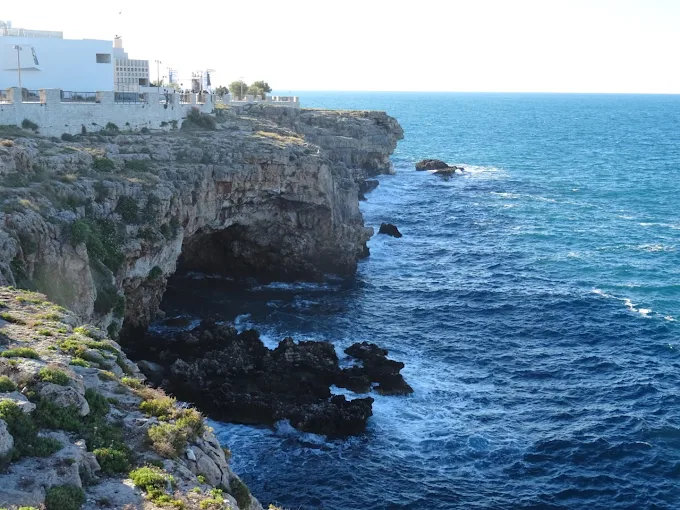
Polignano a Mare Sea Caves Limestone Grottos Meet Adriatic Light
The morning sun slices through the arched entrance of a sea cave just outside Polignano a Mare, illuminating the turquoise water within and casting shimmering reflections on the smooth, sculpted limestone walls. You hear the gentle lap of waves echoing in the cavernous space, the distant cry of a gull, and the soft splash of a paddleboarder gliding into the grotto. This is the dramatic coastline of Puglia, where the Adriatic Sea has spent millennia carving intricate caves, arches, and inlets into the soft, white limestone cliffs. The most famous of these is the Grotta Palazzese, a natural amphitheater that houses a luxury restaurant—but dozens of other hidden grottos, like the Grotta Azzurra and Grotta dei Pipistrelli, offer equally stunning, more intimate experiences. Rising from the sea to a historic old town perched 25 meters (82 feet) above the water, Polignano has been a strategic coastal settlement since Roman times [[17]]. In an age of crowded beaches and predictable itineraries, these sea caves matter now more than ever—they are a portal to a wild, elemental beauty that can only be reached by boat, kayak, or a daring dive, offering a profound connection to the raw power of nature.
Why Polignano a Mare Sea Caves Embodies Coastal Drama
The sea caves of Polignano a Mare are not mere geological curiosities; they are the result of a dynamic, ongoing dialogue between land and sea over millions of years. The region’s bedrock is composed of soft, white limestone, a sedimentary rock formed from ancient marine organisms. This stone is highly susceptible to erosion, and the relentless action of Adriatic waves, combined with rainwater’s slight acidity, has carved out a network of grottos, tunnels, and arches along the coast. This natural process solved a historical problem for local communities: the caves provided shelter for fishermen and smugglers for centuries. Today, they fulfill a modern need—for adventure and awe in a world that often feels overly curated. The most iconic, the Grotta Palazzese, is a vast, cathedral-like cavern with a ceiling height of over 15 meters (49 feet). Its fame was cemented in the 18th century when it became a stop on the Grand Tour, and today it houses a unique restaurant where diners sit on a natural rock platform overlooking the sea [[17]]. This blend of natural wonder and human ingenuity—using the cave not as a resource to be exploited, but as a stage for experience—embodies the essence of Polignano’s coastal drama.
The Best Time to Experience Polignano a Mare Sea Caves
To experience the sea caves in their most serene and visually stunning state, plan your visit for the specific windows of May 15–June 20 or September 5–October 5, 2026. During these periods, the Adriatic Sea is calm and clear, with water temperatures ranging from a comfortable 19–23°C (66–73°F), perfect for swimming and kayaking, while air temperatures hover at a pleasant 23–27°C (73–81°F) [[11]]. The best time of day to explore the caves is in the morning, between 9:00 AM and 11:30 AM, when the sun is high enough to illuminate the interiors of the grottos with its famous ethereal light, but before the afternoon winds pick up and create choppy conditions. It is crucial to avoid the peak summer period of July 15–August 25, when the sea can become crowded with tour boats, the water clarity diminishes due to increased activity, and the intense heat makes being on the water less comfortable [[35]]. For the most reliable information on boat tours, weather conditions, and sea state, always consult the official tourism website: viaggiareinpuglia.it.
Approximate Budget for a 7-Day Trip (2026)
This budget is calculated for a solo traveler seeking a comfortable, adventure-focused experience in Polignano a Mare in 2026, based on current inflation trends and average regional costs for Puglia.
- Accommodation: €95–€170 per night. Staying in a boutique hotel in the historic center offers stunning sea views and easy access to the old town. Options in the newer part of town are more affordable.
- Food: €50 per day. Breakfast (€6): a cappuccino and cornetto at a local bar. Lunch (€18): a seafood salad or pasta at a seaside trattoria. Dinner (€26): a main course like grilled octopus with a glass of local Locorotondo wine.
- Transportation: €160 total. A regional train ticket from Bari to Polignano a Mare (€5). A rental car for exploring the coast (€45/day). Boat tour to the sea caves (€35).
- Attractions: Guided kayak tour of the sea caves (€40). Entry to the historic center and viewpoints is free. Visit to the Pino Pascali Museum (€5).
- Miscellaneous: €100. This covers a bottle of local olive oil (€15), several gelato stops (€3 each), a cliff-jumping experience with a local guide (€50), and souvenirs.
Total Estimated Cost: €975–€1,110
6 Essential Polignano a Mare Sea Caves Experiences
- Take a Morning Boat Tour to the Grottos: Book a small-group tour with a local captain who knows the hidden entrances. Glide into the Grotta Azzurra, where the water glows an intense blue, and the Grotta dei Pipistrelli (Cave of the Bats), named for its resident colony.
- Kayak Through the Coastal Arches: Paddle beneath the famous Lama Monachile beach and explore smaller, inaccessible caves. The early morning light on the water is magical, and you’ll have a unique perspective of the town’s dramatic cliffs.
- Dine in the Grotta Palazzese: Reserve a table for lunch at this legendary restaurant inside a sea cave. The experience is as much about the setting—the sound of waves, the play of light on the water—as it is about the food.
- Swim at Cala Porto: This tiny, pebble beach is nestled directly beneath the old town’s cliffs. It’s the perfect spot to cool off after exploring and offers a direct view of the sea caves from the water.
- Walk the Cliffside Path to San Vito: Take the scenic coastal trail north of town to the neighboring village of San Vito. The path offers breathtaking panoramic views of the entire coastline and its network of grottos.
- Experience the Famous Cliff Jumping: For the adventurous, join a guided session at one of the designated jumping spots. Local guides ensure safety and can take you to the best, less-crowded locations.
3 Hidden Gems Most Travelers Miss
- Grotta del Trullo: A small, secluded cave accessible only by kayak or a long swim from Cala Incina. Its name comes from a rock formation inside that resembles a trullo roof. Go on a weekday morning for complete solitude.
- The View from Piazza dell’Orologio at Sunset: While everyone crowds the main belvedere, this quieter square in the heart of the old town offers a stunning, unobstructed view of the sun setting over the sea caves and the Adriatic.
- Cala Contessa Beach: A short drive south of town, this long, sandy beach is a favorite with locals but often missed by tourists. It’s a great base for a relaxed day and offers a different perspective on the coastline.
Cultural & Practical Tips
- Book boat and kayak tours in advance: The best small-group operators fill up quickly, especially in the shoulder seasons. Booking online a few days ahead is recommended.
- Wear water shoes: The sea floor and cave entrances are rocky. A pair of sturdy water shoes will protect your feet and make entering the caves much more comfortable.
- Learn a few key phrases: “Dov’è la grotta più bella?” (DOH-veh lah GROHT-tah PEE-oo BEL-lah?) for “Where is the most beautiful cave?”, and “Un caffè, per favore” (oon kah-FEH).
- Respect the marine environment: Do not touch the rock formations or disturb wildlife in the caves. Use reef-safe sunscreen to protect the delicate underwater ecosystem.
- Beware of the midday sun in summer: The white limestone reflects intense heat and light. Wear a hat, sunglasses, and high-SPF sunscreen, especially when on the water.
- Tipping is appreciated but not expected: A small tip of €2–€5 for your boat captain or kayak guide is a kind gesture for excellent service.
Conclusion: Travel with Wonder, Not Just a Checklist
The sea caves of Polignano a Mare are not destinations to be ticked off a list; they are invitations to marvel at the raw, creative power of nature. In 2026, as we seek travel experiences that are both thrilling and meaningful, these grottos offer a profound lesson in humility and awe. Your journey here should be guided by wonder—not just by the desire to see them, but to feel their cool, echoing silence, to witness the dance of light on the water, and to understand the immense timescale of their creation. By traveling with this mindful curiosity, you honor the fragile beauty of this coastline and support its preservation. Slow down. Let the rhythm of the waves set your pace. In that quiet moment of communion with the sea and stone, you don’t just visit Polignano—you connect with the very pulse of the planet.