
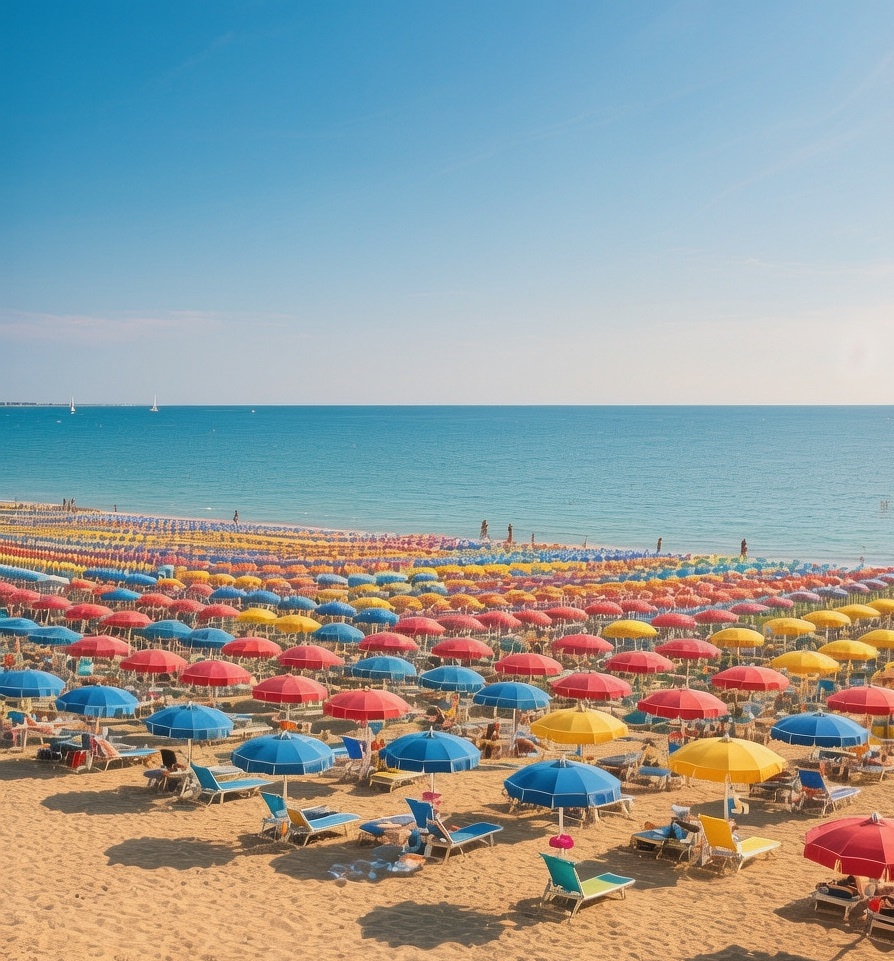
Rimini Beaches Golden Sand Meets Adriatic Serenity
The late sun gilds the Adriatic—turning the water into liquid topaz as it laps gently against Rimini’s 15-kilometer stretch of fine, golden sand. You hear the distant laughter of children building castles, the rhythmic clink of aperitivo glasses from a beachside bar, and the soft rustle of umbrella fabric in the sea breeze. Once a Roman colony founded in 268 BCE—with the still-standing Arch of Augustus and Tiberius Bridge—Rimini evolved into Italy’s first modern seaside resort in the 1840s, when Empress Elisabeth of Austria chose its shores for her summer retreat. Today, its beaches blend historic charm with contemporary comfort: orderly rows of pastel-colored cabanas, clean sands raked daily, and shallow waters ideal for families. In 2026, as sustainable tourism gains urgency, Rimini stands out for its Blue Flag certification (awarded annually since 1997), eco-conscious beach management, and commitment to balancing leisure with environmental care—a model where relaxation and responsibility coexist.
Why Rimini Beaches Embodies Coastal Innovation
Rimini’s beaches aren’t just scenic—they’re a pioneering model of organized seaside tourism. In the mid-19th century, as Europe’s elite sought healthy coastal escapes, Rimini became Italy’s first planned beach resort, introducing the now-iconic stabilimenti balneari (beach establishments) with private cabanas, changing rooms, and lifeguards. This system, refined over 150 years, ensures cleanliness, safety, and accessibility while preserving public access to the shore. The beach itself is composed of fine, golden sand—replenished annually to counter natural erosion—and slopes gently into the Adriatic, creating warm, shallow waters that rarely exceed 26°C (79°F) in summer, perfect for children and non-swimmers. Stretching 15 kilometers from Rivabella to Miramare, the coastline is divided into numbered zones (e.g., Bagno 1–120), each offering consistent amenities: sunbeds, showers, Wi-Fi, and often restaurants or sports rentals. Crucially, Rimini has maintained its Blue Flag status for over 25 years by investing in wastewater treatment, banning single-use plastics on concessions, and protecting dune ecosystems behind the shore. This blend of heritage, hygiene, and sustainability makes Rimini not just a place to sunbathe, but a benchmark for responsible coastal tourism.
The Best Time to Experience Rimini Beaches
To enjoy warm seas and manageable crowds, target the precise window of June 10–24, 2026. During these weeks, daytime temperatures range from a comfortable 22–28°C (72–82°F)—ideal for swimming and beach lounging [[24], [27]]. The Adriatic water averages 21°C (70°F), warm enough for extended dips. Mornings between 8:00–10:00 AM offer soft light for photography and empty stretches of sand before peak sun hours. Alternatively, September 5–19, 2026 provides similar sea temperatures with fewer tourists and lower prices. Avoid visiting during peak periods: all of July and August, when temperatures exceed 32°C (90°F), beaches fill by 9:00 AM, and hotel rates double, and major holidays like Ferragosto (August 15) [[29]]. For the most serene experience, stay mid-week—weekends draw day-trippers from Bologna and Milan. Always verify beach conditions via the official tourism portal (riminiculture.it).
Approximate Budget for a 7-Day Trip (2026)
This budget reflects mid-range 2025 pricing adjusted for Italy’s projected 2026 inflation rate of 1.5% [[37]], offering a realistic estimate for a solo traveler based near the central beach area.
- Accommodation: €700–€945 total (€100–€135 per night) for a 3-star hotel or private apartment near Marina Centro—walking distance to beaches and nightlife.
- Food: €490 total (€70 per day). Breakfast at a café (€4 for cappuccino and brioche); lunch of piadina with grilled vegetables (€10); dinner at a seafood trattoria (€45 for spaghetti alle vongole, grilled sea bass, and house Sangiovese wine).
- Transportation: €55 total. Includes train from Bologna (€15 round-trip); local bus pass (€15 for 7 days); and occasional taxi (€25).
- Attractions: €65 total. Beach club day pass (€15 for 2 sunbeds + umbrella); Federico Fellini Museum (€8); Malatesta Temple visit (€5); guided Roman history walk (€20); and gelato from Zanarini (€4).
- Miscellaneous: €90 total. A locally made linen beach towel (€25); artisanal limoncello (€20); leather sandals from Mercatino Coperto (€30); and aperitivo at Bar Lido (€4).
Total Estimated Budget: €1,400–€1,645
6 Essential Rimini Beaches Experiences
- Relax at Bagno 43 “La Dolce Vita”: This iconic beach club, named after Fellini’s film, offers vintage cabanas, a retro bar, and views of the Grand Hotel. Book early for prime spots near the water.
- Swim at Dawn in Marina Centro: Arrive by 7:00 AM to experience the Adriatic in glassy calm. The water is clearest before boat traffic begins, and the rising sun paints the shore in gold.
- Stroll the Lungomare at Sunset: Walk the 3-kilometer promenade from Piazzale Kennedy to the Tiberius Bridge. Street musicians, gelato carts, and pastel skies create a cinematic evening.
- Explore the Roman Foundations: Visit the Domus del Chirurgo (Surgeon’s House), a 2nd-century CE Roman villa with intact mosaics and surgical tools—proof that Rimini’s allure spans millennia.
- Taste Piadina Romagnola by the Shore: At Kiosko Da Max, try this flatbread stuffed with squacquerone cheese, arugula, and prosciutto—a local staple best eaten with sea air in your hair.
- Attend a Beachfront Aperitivo: From 6:00–8:00 PM, bars like Bar Lido serve spritz with panoramic sea views. It’s the Italian ritual of la passeggiata meets coastal ease.
3 Hidden Gems Most Travelers Miss
- Parco Marecchia Nature Reserve: Just north of the city center, this wetland park offers walking trails, birdwatching, and quiet river beaches away from the main shore. Free entry; open dawn to dusk.
- Borgo San Giuliano: Cross the Tiberius Bridge to this colorful fishermen’s quarter. Its murals depict Fellini films, and tiny piazzas host authentic osterias—often missed by beachgoers.
- Bagno 120 “Oasi Blu”: At the southern end near Miramare, this eco-certified beach uses solar power and bans plastic. Its quieter atmosphere attracts locals seeking serenity.
Cultural & Practical Tips
- Book beach clubs early: Prime stabilimenti like Bagno 43 fill by May. Reserve online via their websites for guaranteed sunbeds and umbrella.
- Respect beach etiquette: Topless sunbathing is accepted, but nudity is not allowed on public beaches. Keep noise down after 8:00 PM in residential zones.
- Carry cash for small vendors: Many beach kiosks and piadina stands don’t accept cards. Tipping isn’t expected, but rounding up is appreciated.
- Learn key phrases: “Quanto costa l’ombrellone?” (KWAHN-toh KOS-tah lohm-breh-LOH-neh?) for umbrella rental; “Grazie mille” (GRAHT-see-eh MEE-leh) for thanks.
- Protect the environment: Use reef-safe sunscreen, avoid single-use plastics, and never leave trash on the sand. Rimini’s Blue Flag status depends on collective care.
Conclusion: Travel with Respect, Not Just Relaxation
In 2026, Rimini invites more than sunbathing—it calls for stewardship. Your choice to book an eco-certified beach club supports waste reduction; eating piadina from a family stand sustains local traditions; carrying reusable bottles honors the clean waters that earned this coast its Blue Flag. Slow down: watch fishermen mend nets at dawn, listen to the rhythm of waves against the ancient Tiberius Bridge, taste wine pressed from Romagnolo grapes. By traveling with respect—prioritizing sustainability over convenience—you help ensure Rimini remains not just a summer escape, but a model of how coastal communities can thrive without sacrificing their soul. Let your vacation be a promise: that beauty, carefully tended, can endure for generations along this golden shore.