
San Marino Fortress Mountain Stone Meets Timeless Liberty
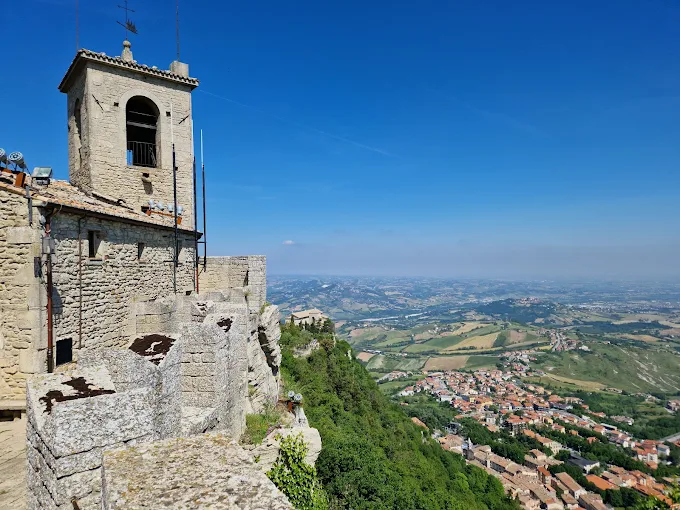
The late sun gilds the Apennine ridges—casting long shadows across the three peaks of San Marino, where ancient fortresses stand sentinel over Europe’s oldest republic. You hear the distant chime of the Palazzo Pubblico’s bell, the rustle of chestnut leaves in the valley below, and the murmur of Italian and international visitors marveling at a nation that has preserved its independence since 301 CE. Perched on Monte Titano at 739 meters (2,425 feet) above sea level, the fortress complex—comprising Guaita, Cesta, and Montale towers—has guarded this microstate for over a millennium. Built from local limestone and reinforced through centuries of conflict, these walls have repelled invasions by Cesare Borgia, Napoleon, and even Mussolini, who respected its sovereignty. In 2026, as global tensions rise and borders shift, San Marino stands as a quiet testament to resilience, self-governance, and the enduring power of community—a place where history isn’t just remembered, but lived.
Why San Marino Fortress Embodies Enduring Sovereignty
San Marino’s fortress isn’t just defensive architecture—it’s the physical embodiment of a 1,700-year-old social contract. Founded by Saint Marinus, a Dalmatian stonemason fleeing religious persecution, the republic established its independence in 301 CE and has maintained it through diplomacy, strategic neutrality, and formidable mountain defenses. The fortress complex crowns Monte Titano’s three summits: **Guaita** (First Tower), built in the 11th century, is the oldest and most imposing, with double walls and a deep cistern; **Cesta** (Second Tower), perched at 755 meters—the highest point—houses a museum of ancient weapons; and **Montale** (Third Tower), smaller and once used as a prison, offers panoramic views of the Adriatic Sea, 20 kilometers away. Connected by a 2.5-kilometer path along the ridge, the towers form a UNESCO World Heritage site recognized in 2008 for their “testimony to the continuity of a free republic since the Middle Ages.” Constructed from pale gray limestone quarried from the mountain itself, the walls are up to 3 meters thick in places, designed to withstand siege engines and cannon fire. Today, the fortress remains a symbol of civic pride—where every September 3, citizens gather to celebrate Independence Day with flag-throwing displays and communal feasts.
The Best Time to Experience San Marino Fortress
To explore the fortress in comfortable weather and clear views, target the precise window of May 15–29, 2026. During these weeks, daytime temperatures range from a pleasant 18–24°C (64–75°F)—ideal for hiking the ridge path and climbing tower steps [[24], [27]]. Mornings between 8:00–9:30 AM offer crisp air, empty pathways, and unobstructed views of the Emilia-Romagna countryside stretching to the sea. Alternatively, September 12–26, 2026 provides similar conditions with golden autumn light and fewer crowds. Avoid visiting during peak periods: all of July and August, when heat exceeds 32°C (90°F) and narrow streets become congested, and major holidays like Italian Ferragosto (August 15) or San Marino’s own Independence Day (September 3), when hotels fill months ahead [[29]]. For the most magical experience, stay overnight—day-trippers vanish by 6:00 PM, revealing the fortress’s quiet, residential soul. Always verify opening hours via the official tourism portal (visitsanmarino.com).
Approximate Budget for a 7-Day Trip (2026)
This budget reflects mid-range 2025 pricing adjusted for modest inflation, offering a realistic estimate for a solo traveler based in San Marino’s historic center.
- Accommodation: €770–€1,050 total (€110–€150 per night) for a boutique guesthouse or small hotel within the walls—many with views of the fortress or the surrounding valleys.
- Food: €490 total (€70 per day). Breakfast at a café (€4 for cappuccino and cornetto); lunch of piadina with local cheese (€12); dinner at a family-run osteria (€45 for passatelli soup, grilled lamb chops, and house Sangiovese wine).
- Transportation: €65 total. Includes bus from Rimini or Bologna (€10 round-trip); funicular from Borgo Maggiore to the city center (€5); and occasional taxi for luggage (€50).
- Attractions: €55 total. Fortress entry pass (€10 for all three towers); State Museum (€6); Wax Museum (€8); guided historical walk (€20 donation); and wine tasting at a local cantina (€11).
- Miscellaneous: €90 total. A high-quality print of the fortress (€25); locally made ceramic tile (€30); leather journal from Libreria San Francesco (€20); and gelato from Gelateria La Rocca (€4).
Total Estimated Budget: €1,470–€1,760
6 Essential San Marino Fortress Experiences
- Climb Guaita Tower at Dawn: Arrive by 8:00 AM to ascend the oldest fortress before crowds arrive. From the ramparts, watch the morning mist lift off the valleys—a view unchanged for 1,000 years.
- Walk the Three Towers Path: Hike the 2.5-kilometer ridge trail connecting Guaita, Cesta, and Montale. The route offers ever-changing panoramas—from the Adriatic to the Apennines—and passes through chestnut forests and ancient gates.
- Visit the Museum of Ancient Arms in Cesta: Inside the Second Tower, explore over 500 historical weapons, including crossbows, halberds, and early firearms used to defend the republic.
- Attend the Changing of the Guard: At 10:00 AM daily in Piazza della Libertà, the colorful Guard of the Rock performs a ceremonial march—a tradition blending pageantry and civic pride.
- Watch Sunset from Montale Tower: Though not always open to the public, the exterior viewpoint offers the most dramatic silhouette of the fortress against the setting sun—perfect for photography.
- Dine with a Fortress View: At Ristorante Il Beffardo, enjoy a plate of torta tre monti (cake of the three towers) while overlooking the illuminated Guaita—a sweet tribute to San Marino’s iconic skyline.
3 Hidden Gems Most Travelers Miss
- Pieve di San Marino Church: Tucked near the First Tower, this 14th-century church houses relics of the republic’s founder. Its simple stone interior offers a serene counterpoint to the fortress’s grandeur.
- Contrada Oltremura: Behind the Palazzo Pubblico, this quiet residential quarter features cobblestone lanes, flower-filled balconies, and artisan workshops—rarely visited by tourists.
- Libreria San Francesco: Established in 1985, this independent bookstore specializes in Sammarinese history and maps. Its reading nook overlooks the valley—a perfect retreat after sightseeing.
Cultural & Practical Tips
- Use the funicular wisely: The cable car from Borgo Maggiore runs every 15 minutes (€2.50 round-trip). It’s far easier than the steep 30-minute walk uphill.
- Wear sturdy shoes: The Three Towers path includes uneven stone steps and forest trails. Sandals or flip-flops are impractical for exploration.
- Respect ceremonial spaces: During the Changing of the Guard or Independence Day events, maintain a respectful distance and avoid blocking official routes.
- Learn key phrases: “Dov’è la Prima Torre?” (doh-VEH lah PREE-mah TOR-reh?) for directions; “Grazie mille” (GRAHT-see-eh MEE-leh) for sincere thanks.
- Carry cash for small vendors: Many artisan shops and cafés don’t accept cards. Tipping isn’t expected, but rounding up is appreciated.
Conclusion: Travel with Reverence, Not Just Recognition
In 2026, San Marino’s fortress invites more than admiration—it calls for witness. Your presence supports local artisans who maintain centuries-old crafts, historians who preserve the republic’s archives, and families who keep its traditions alive. Choosing a family osteria over a souvenir stall keeps euros in the community; walking the Three Towers path connects you to generations of defenders who believed in liberty; sitting quietly on the ramparts honors the silence that has echoed here since the Middle Ages. Slow down: taste wine pressed from local grapes, listen to the wind in the chestnut trees, let the scale of the landscape humble your sense of time. By traveling with reverence—prioritizing depth over speed—you help ensure San Marino remains not just a photo op, but a living testament to freedom. Let your visit be a quiet promise—and these stones will remember your respect long after you’ve descended the mountain.