
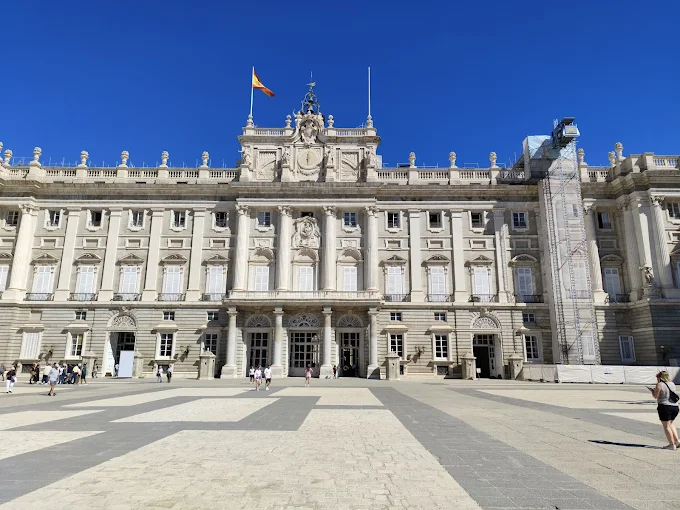
Royal Palace, Madrid Bourbon Grandeur Meets Spanish Sky
The morning sun strikes the Colmenar stone facade, turning the pale limestone into a glowing beacon against the deep blue Castilian sky. You stand before the Royal Palace, Madrid, a monumental structure spanning 135,000 square meters, where the air smells of manicured boxwood and heated rock. The silence here is heavy with history—broken only by the rhythmic clatter of horse hooves during the Changing of the Guard or the distant hum of traffic from the Bailén Street tunnel below. Construction began in 1738 under Philip V, rising from the ashes of the old Alcázar that burned on Christmas Eve 1734. You walk across the cobblestones of the Plaza de la Armería, dwarfed by the 100-meter wide western façade that boasts 100 tons of stone per floor. In 2026, as European monarchies modernize, the Royal Palace, Madrid remains a steadfast anchor of heritage—a place where absolute power is frozen in stone, demanding acknowledgment of a past where kings ruled by divine right.
Why Royal Palace, Madrid Embodies Bourbon Ambition
The Royal Palace, Madrid represents the pinnacle of 18th-century Spanish Baroque architecture, constructed to solve a critical symbolic problem: how to establish the Bourbon dynasty's legitimacy after the War of Spanish Succession. King Philip V required a residence that rivaled Versailles, signaling Spain's return to European prominence. The architectural solution, designed initially by Filippo Juvarra and completed by Giovanni Battista Sacchetti, utilized a rigid grid plan measuring 130 meters per side. The structure employs load-bearing walls of granite and Colmenar limestone, capable of supporting three stories and a vaulted basement without external buttresses.
Engineering feats define the interior: the main staircase features a single block of San Pablo stone weighing 100 tons, carved without seams. The palace contains 3,418 rooms, though only 50 are open to the public, including the Throne Room with its velvet canopy and frescoed ceiling by Giovanni Battista Tiepolo. The Royal Armory houses one of the world's finest collections of armor, preserved in climate-controlled cases since 1897. This concentration of art, engineering, and power makes the Royal Palace, Madrid not merely a home but a statement of statehood, where every column and chandelier was calculated to overwhelm the visitor with royal magnificence.
The Best Time to Experience Royal Palace, Madrid
For the optimal Royal Palace, Madrid visit, target April 15–June 10 or September 15–October 25, when temperatures range between 15–25°C (59–77°F) and the gardens are in full bloom. The palace opens at 10:00 AM daily; arrive 15 minutes before opening to enter with the first group, as tour buses converge by 11:30 AM. The Changing of the Guard occurs Wednesday and Saturday mornings at 11:00 AM (October–July), offering a ceremonial spectacle best viewed from the Plaza de la Armería. Sunset light on the western façade—specifically 7:00–8:30 PM in summer—creates dramatic shadows across the stone columns.
Avoid July 15–August 25 unless you tolerate extreme heat; temperatures regularly exceed 35°C (95°F), making the stone plazas radiate intense thermal energy. The lack of shade in the courtyards exacerbates the heat. Winter months (December–February) bring cold weather (5–12°C / 41–54°F) but fewer crowds, allowing for contemplative exploration. The palace closes early on state function days; verify current schedules at www.patrimonionacional.es or contact the ticket office at informacion@patrimonionacional.es (+34 914 548 800). Purchasing tickets online saves 30–45 minutes of queueing time during peak season.
Approximate Budget for a 7-Day Trip (2026)
Madrid offers excellent value for cultural travelers, though costs fluctuate during major events like San Isidro Festival. The following budget assumes mid-range comfort with a focus on local experiences, based on 2026 pricing with approximately 3.5% inflation from 2025 figures. Estimates include stays near the historic center for easy access to the Royal Palace, Madrid.
- Accommodation: €80–€150 per night for a double room in a boutique hotel or renovated apartment in Centro, Sol, or Ópera neighborhoods; luxury options near the palace command €200–€400 per night
- Food: €45–€65 per day—breakfast €5–€9 (café con leche and churros con chocolate), lunch €15–€25 (menú del día including cocido madrileño, salad, and wine), dinner €25–€35 (tapas selection including calamari and jamón ibérico)
- Transportation: Train from Barcelona Sants to Madrid Atocha: €50–€80 high-speed AVE (2.5 hours); Metro single ticket: €1.50 or €18.50 10-trip pass; taxi from airport: €35 fixed rate; bike rental: €15 per day
- Attractions: Royal Palace, Madrid entry: €13; Prado Museum: €15; Reina Sofía: €10; Retiro Park boat rental: €6; Temple of Debod: free
- Miscellaneous: Ceramic souvenirs from €12; local wine €8–€20 per bottle; horchata drink €3; artisan leather goods €30–€70; guided palace tour €18
Total estimated cost for 7 days: €1,050–€1,450 per person (based on double occupancy; solo travelers should add 35–45% for single supplements)
7 Essential Royal Palace, Madrid Experiences
- Stand in the Throne Room: Enter the heart of the palace where the king receives dignitaries. The velvet canopy and gold leaf details shimmer under crystal chandeliers. Visit at 10:00 AM opening time to experience the space before crowds obscure the view. The ceiling fresco by Tiepolo depicts the monarchy's divine right. Allow 15 minutes to observe the intricate woodwork. The room measures 1,000 square meters, designed to overwhelm visitors with scale.
- Explore the Royal Armory: Descend to the basement to discover one of the world's finest collections of armor and weapons. The pieces date from the 15th to 19th centuries, including suits owned by Emperor Charles V. Visit between 2:00–4:00 PM when lighting accentuates the steel engravings. Audio guides explain the battle history. This collection survived the 1734 fire, making it historically priceless. The climate control preserves the metal from oxidation.
- Walk the Royal Pharmacy: Examine the 18th-century apothecary jars and medical instruments used by royal physicians. The room retains its original wooden shelving and ceramic containers. Visit at 11:30 AM when the guide explains the medicinal herbs. The scent of dried lavender and wood polish lingers in the air. It provides a glimpse into royal healthcare before modern medicine. The jars feature hand-painted labels depicting contents.
- Stroll the Sabatini Gardens: Exit the north façade into these neoclassical gardens designed by Francesco Sabatini. The geometric hedges and statues offer a quiet contrast to the stone palace. Visit in late afternoon when the scent of orange blossoms is strongest. The fountain features statues of Spanish kings. Entry is free; open 9:00 AM–9:00 PM. This provides a peaceful retreat from the tourist crowds inside.
- Watch the Changing of the Guard: Gather at the Plaza de la Armería at 10:45 AM on Wednesday or Saturday. The ceremony lasts 40 minutes, featuring music and marching soldiers in traditional uniform. The horses wear plumed helmets and polished tack. Bring a zoom lens for photography; the action centers on the palace gate. This tradition continues uninterrupted since the 18th century. It is a living link to the monarchy's ceremonial past.
- Examine the Porcelain Room: Step into the chamber where walls are entirely covered in hand-painted porcelain tiles. The blue and white patterns depict scenes of hunting and mythology. Visit when sunlight streams through the windows to illuminate the glaze. The room was completed in 1760 under Charles III. It demonstrates the royal obsession with decorative arts. Do not touch the surfaces; oils damage the historic glaze.
- Visit the Royal Kitchen: Tour the historic kitchens where meals for 100+ people were prepared daily. The copper pots and wood-fired stoves remain in place. Visit at 1:00 PM when the guide explains the menu planning. The scale of the infrastructure reveals the logistics of royal life. The ventilation system was advanced for its time. It offers a grounded perspective on palace operations beyond the glamour.
3 Hidden Gems Most Travelers Miss
- Campo del Moro Gardens: Located behind the palace at Paseo de la Virgen del Puerto, these English-style gardens offer views of the rear façade. Entry is free; open 10:00 AM–6:00 PM (winter) or 8:00 PM (summer). It is often overlooked as visitors focus on the front entrance. The peacocks roam freely among the trees. Contact: +34 914 548 800. Visit early morning for private guided tours that access areas closed to general public. The sunset view here is superior to the front plaza.
- Royal Monastery of La Encarnación: Located 500 meters northeast at Plaza de la Encarnación, 1, this 17th-century convent houses religious art and relics. Entry: €6; open Tuesday–Saturday 10:00 AM–6:00 PM. It connects to the palace via a historic tunnel used by royals. Contact: +34 915 420 059. Visit mid-morning when light illuminates the altarpieces. The museum contains relics including vials of blood from saints. It provides spiritual context often missing from the state rooms.
- Temple of Debod: A 10-minute walk west down Cuesta de San Vicente, this ancient Egyptian temple was gifted to Spain. Entry is free; open Tuesday–Sunday 10:00 AM–8:00 PM. It offers panoramic views of the palace and cathedral from the grounds. Visit at sunset when the stone glows orange. The site is popular for picnics but remains peaceful in the mornings. It represents international diplomatic history often overlooked by palace visitors.
Cultural & Practical Tips
- Security checks: Expect airport-style security screening at the entrance. Large backpacks and suitcases are not permitted; use the left luggage facility at Atocha station or your hotel. Allow an extra 15 minutes for security processing during peak hours.
- Master these phrases: "Buenos días" (BWEH-nos DEE-as) for good morning; "Por favor" (por fah-BOR) for please; "Una entrada, por favor" (OO-nah en-TRAH-dah) to buy a ticket; "¿Dónde está el baño?" (DON-deh es-TAH el BA-nyo) to find the restroom.
- Photography guidelines: Flash photography is prohibited inside the palace to protect artwork. Tripods require special permission from the administration (+34 914 548 800). Mobile phones must be silenced. Respect "no fotos" signs in temporary exhibition areas.
- Dress code: While less strict than churches, modest dress is respectful. Shoulders and knees should ideally be covered. Comfortable walking shoes are essential; the floors are polished stone and can be slippery. Avoid high heels.
- Hydration strategy: Madrid's inland location means dry heat; carry a refillable water bottle. Public fountains (fuentes) are available in the gardens. The water is potable and sourced from local springs. You'll save €2–€3 daily and reduce plastic waste.
- Ticket strategy: Purchase tickets online at least 48 hours in advance during peak season (April–June, September–October). On-site queues can exceed 60 minutes. Students under 25 and children under 5 enter free with ID. Seniors over 65 receive discounted rates (€7).
- Weather considerations: The palace offers little shade in the courtyards; wear a hat and sunscreen during summer months. Winter evenings can be chilly; bring a light jacket even if the day is warm. Rain is rare but possible in November; the stone surfaces become slick when wet.
Conclusion: Travel with Reverence, Not Just Reverie
The Royal Palace, Madrid demands more than casual observation—it asks for contemplation of the layers of history embedded in every stone, every fresco, every polished suit of armor. When you walk these halls in 2026, you're not merely touring a monument; you're walking through a fragile ecosystem of memory where Bourbon ambition, Spanish artistry, and modern tourism intersect in delicate balance.
Choose to engage deeply: hire a local guide from the Ópera neighborhood rather than a large tour company; purchase tickets directly to support preservation efforts; respect the silence of the halls that once housed kings. The Royal Palace, Madrid survives not as a museum exhibit but as a state property—and its preservation depends on visitors who recognize the difference between appreciation and consumption.
Slow down. Sit in the Sabatini Gardens after the tour buses depart. Listen to the fountain water flowing through centuries-old channels. Taste the sweetness of a churro from a nearby café. The palace rewards those who approach it not as a checklist item but as a conversation across time—a dialogue between past and present that continues, like the guard change, in perpetual motion.