Teruel Mudéjar Towers Islamic Brickwork Meets Aragonese Stone
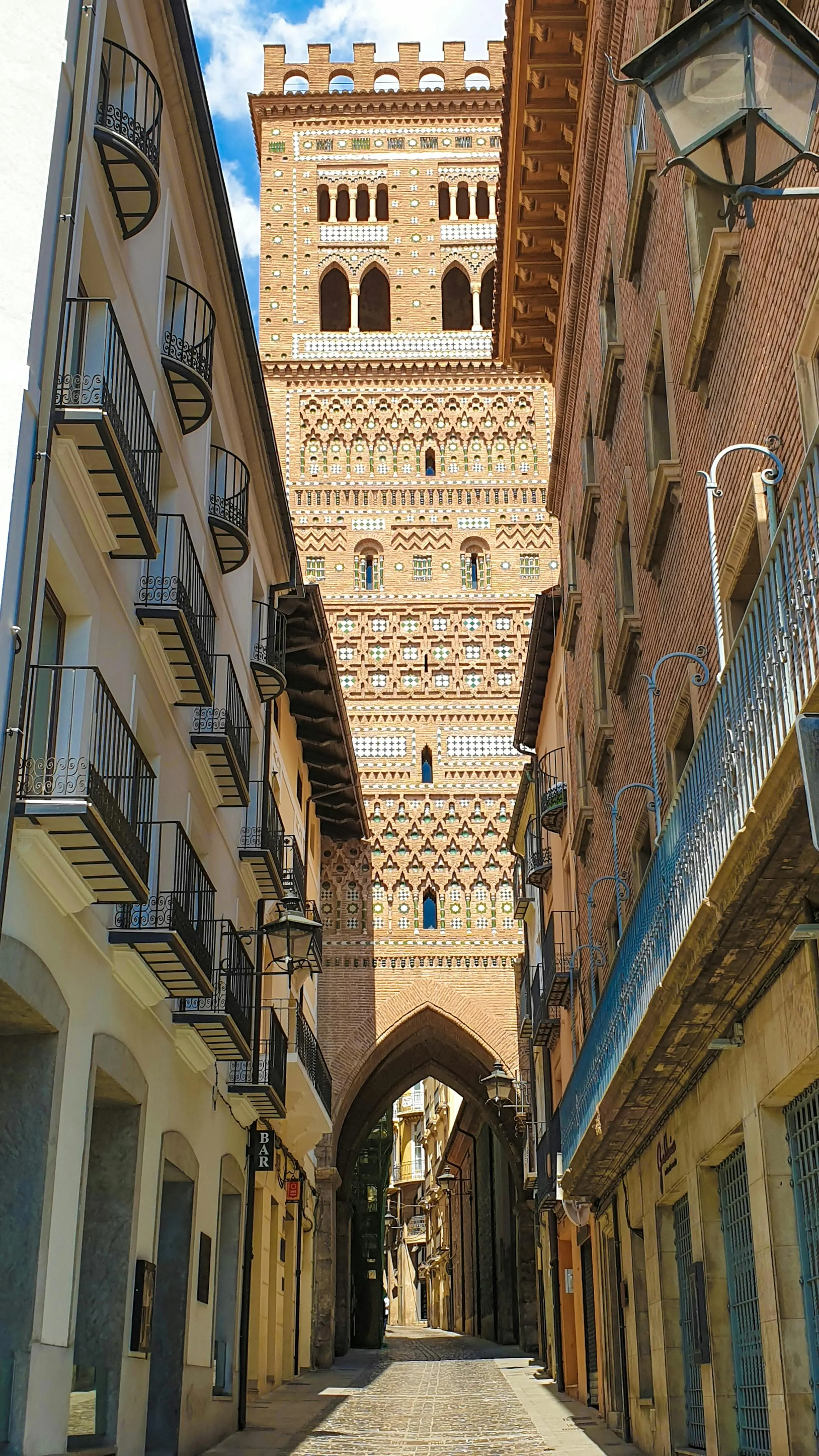
Teruel Mudéjar: Where Brick Pattern Meets Mountain Skyline
I stand in the main square at ten in the morning. Sun strikes a tower face covered in glowing brick and deep blue tile. Entry to the historic quarter is free. I walk down narrow lanes lined with warm stone buildings. Every few steps another tower rises — slender, decorated, distinct. These structures blend Islamic craft with Christian form, built by Muslim artisans who stayed after the Christian reconquest. Not everything feels perfect. The city sits quiet and somewhat remote. Some towers remain closed to visitors. Public transport connections take time. Yet Teruel holds Spain’s finest collection of Mudéjar architecture — a style that bridges two worlds, and still stands whole.
Why Teruel Mudéjar Matters
In the 12th and 13th centuries, Teruel grew as a frontier city between Christian and Muslim lands. Muslim artisans who remained under Christian rule brought their own building traditions — patterned brickwork, geometric tile, tall slender towers — and applied them to churches and public buildings. The result was something entirely new: Mudéjar, a style that merged cultures. UNESCO listed these towers as World Heritage in 1986. That recognition brings visitors, but not enough. The city sits off the main tourist routes. Restoration is slow and costly. Some quarters feel quiet and underused. Still the towers stand — brick by brick, pattern by pattern — proof that different traditions can build something beautiful together.
The Best Time to Experience Teruel
May through June brings mild days and blooming almond trees — 11°C to 21°C (52°F–70°F). Light falls soft and warm on the brick facades. September offers golden afternoons and thinner crowds — 12°C to 22°C (54°F–72°F). Summer from July to August feels warmest — 15°C to 28°C (59°F–82°F) — but the city stays quiet. Winter from November to March stays cool and crisp — 4°C to 12°C (39°F–54°F). Frost makes the tile glow bright. Weekdays beat weekends. Arrive before 10:00 to walk the lanes almost alone.
Approximate Budget for a 7-Day Trip
- Accommodation: Guesthouse near old town — 42–70 euros per night. Apartment in centre — 50–85 euros per night. Boutique hotel in historic building — 70–120 euros per night. Campsite nearby — 14–20 euros per person.
- Food: Spicy lamb stew lunch — 12–18 euros. Tapas dinner — 10–16 euros. Local ham and cheese — 8–14 euros. Pastry and coffee — 3–5 euros.
- Transport: Train from Zaragoza — 12 euros one way. From Valencia — 15 euros. Car rental — 32–50 euros per day (recommended). Parking — 3–6 euros daily.
- Attractions: Tower entry — 3–4 euros each. Combined ticket — 10 euros. Museum — 4 euros. Dinópolis park — 25 euros.
- Miscellaneous: Warm layer, snacks — 7–13 euros daily.
Total estimated for one person, 7 days: 310–580 euros
Cafes right beside the main cathedral charge noticeably more than those two lanes away. Walk toward the central market. You will find better food and fairer prices.
Essential Teruel Mudéjar Experiences
- Walk between the towers at golden hour. Brick glows amber, tile shines deep blue. Every tower looks different — pattern, height, detail — yet they belong together. The skyline feels like no other in Spain. Skip this if heavy cloud hangs low — the colours stay flat and dim.
- Climb the Cathedral Tower. Steps wind upward inside thick walls. You emerge high above red rooftops. Every other tower appears laid out below. It connects you to the whole city.
- Study the facade patterns close up. Geometric shapes repeat and shift — brick, tile, stone — forming complex designs that never repeat the same way. The craftsmanship astonishes. People built this by hand, generation after generation.
- Step inside San Martín Church. Wooden ceiling beams form a star pattern overhead. Light filters through high windows. It feels quiet, balanced, entirely peaceful.
- Walk the old city walls at sunset. The towers stand silhouetted against warm sky. You see how the Mudéjar quarter fits inside the ancient defences. Past and present meet perfectly.
- Taste local ham and spicy stew afterwards. Cured meat from the surrounding mountains, rich lamb stew with red pepper. It tastes of this high, clear land — strong, honest, memorable.
Hidden Gems Most Travelers Miss
- The small tower of San Pedro. Most visitors focus on the cathedral. This one stands quieter, closer, equally beautiful. Its tile patterns glow especially bright in afternoon sun.
- The lane behind the main churches. Runs parallel to the tourist route. Old doorways, quiet courtyards, almost no one. It feels like the Teruel locals know.
- The so-called "famous viewpoint" right at the main gate. It fills instantly. Walk fifty metres along the wall. The same towers appear framed by stone and green — empty and just as magnificent.
Cultural & Practical Tips
- Go by car if you can. Trains are reliable but slow. Having your own wheels lets you reach the smaller surrounding villages where Mudéjar work also survives.
- Wear comfortable shoes. The old town sits on a slope. Lanes climb and drop constantly. Sturdy soles matter.
- Respect quiet hours. Many streets are narrow and residential. Keep voices low, especially in the evening.
- Check opening times individually. Not all towers open every day. Some close mid-afternoon. Plan which ones you want to see before you start walking.
- Carry a warm layer. Teruel sits high in the mountains. Even sunny days turn cool fast after sunset.
- Book accommodation ahead during festivals. The city fills for its own celebrations. Outside those dates, you can find good rates right up to arrival.
Essential Visitor Information
Location & Access: Teruel, Aragon, Spain. 170 km south of Zaragoza — 2 hours by train or car. 110 km west of Valencia — 1.5 hours. 240 km east of Madrid — 3 hours by car. The city sits at high altitude in the Iberian mountains.
Tickets & Booking: Old quarter — free. Individual towers 3–4 euros. Combined ticket offers best value. No reservation needed for individuals.
Operating Hours: Generally 10:00–14:00 and 16:00–19:00. Many sites closed Mondays. Winter hours shorter.
Visit Duration: Minimum 1–2 days. 3 days lets you explore all main towers, surrounding villages, and nearby countryside without rushing.
Family Suitability: Good for older children. Tower climbs are steep. Strollers work on main lanes but struggle on slopes and steps. Restrooms at main square and market.
Timing: Best season — May–June and September. Best time — 1 hour before sunset.
Highlights: Golden hour tower walk, cathedral climb, facade patterns, San Martín ceiling, wall sunset, local food.
Nearby & Day Trip: Albarracín — 30 mins. Mora de Rubielos — 25 mins. Zaragoza — 2 hours. Valencia — 1.5 hours.
Conclusion: Travel with Unity, Not Just Sight
These towers were built when two worlds met. They did not erase one another — they built something new together. Before you leave, look at the patterns on the brick. What will you build that brings people together?
Post a Comment