Albarracín Medieval Town Pink Limestone Meets Aragonese Silence
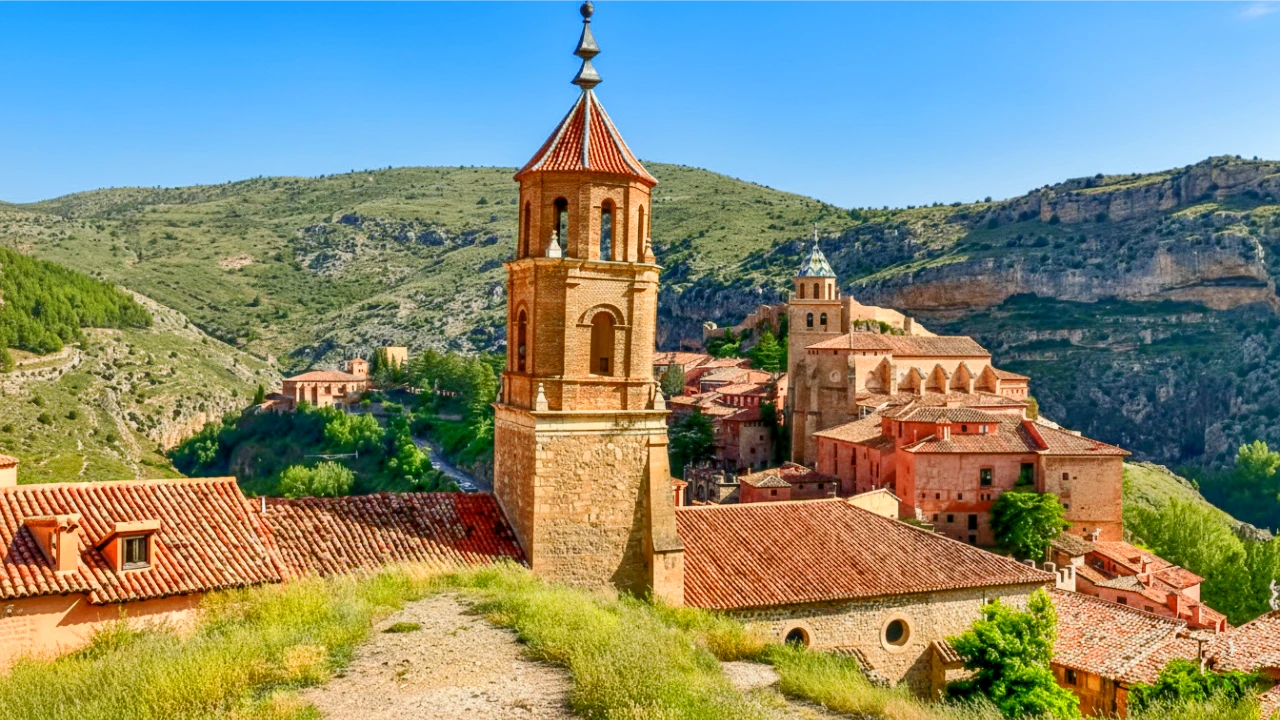
Albarracín medieval town pink limestone walls glowing at sunset in Teruel province, Aragon, Spain with mountain backdrop

Albarracín Medieval Town Pink Limestone Meets Aragonese Silence

The wind whispers through the narrow cobblestone streets as dusk settles over the Sierra de Albarracín—your footsteps echo against walls built from rose-hued stone that glows warmly in the fading light. Perched at 1,175 meters (3,855 feet) above sea level, this Albarracín medieval town feels suspended in time, untouched by the frantic pace of the modern world. You stand before the remnants of the 11th-century city walls, constructed by the Banu Razin dynasty during the Taifa period, where every irregular corner tells a story of defensive necessity rather than urban planning. The scent of wild thyme drifts from the surrounding hills; the silence is profound, broken only by the distant chime of the cathedral bell. In 2026, as overtourism reshapes Europe's historic centers, this place matters now more than ever: it offers a sanctuary of authenticity, demanding that you slow down to listen to the stones rather than simply capturing them for a digital gallery.

Why Albarracín Medieval Town Embodies Organic Urban Design

The Albarracín medieval town represents far more than a picturesque village—it stands as a masterpiece of organic urbanism adapted to extreme topography. Founded in the 10th century by the Moorish Banu Razin family, the settlement solved a critical defensive problem: how to inhabit a steep, rocky promontory while maximizing protection against Christian Reconquista forces. Unlike grid-based Roman cities, Albarracín's layout follows the natural contours of the hill, creating a labyrinthine network of streets designed to confuse invaders. The unique pinkish hue of the buildings comes from local rodeno stone, rich in iron oxide, quarried directly from the surrounding Sierra. This material not only defines the aesthetic but provides durability against the harsh continental climate of Aragon.

The engineering specifics reveal the ingenuity of the builders: the city walls extend 1,650 meters around the perimeter, incorporating existing rock formations into the defensive structure. The Episcopal Palace, constructed in the 16th century, showcases Mudejar architecture—a fusion of Islamic and Christian styles unique to this region. Inside the Cathedral of El Salvador, built between 1572 and 1600, you find a fortress-like exterior protecting a delicate Renaissance interior. Today, the town fulfills a different need—preserving a unique architectural heritage while adapting to rural tourism. With only 1,000 permanent residents, Albarracín medieval town balances authenticity with accessibility, receiving 200,000 annual visitors while maintaining its structural integrity through strict conservation laws enforced by the Government of Aragon. It remains a living museum where history is not displayed behind glass but lived in every winding alleyway.

The Best Time to Experience Albarracín Medieval Town

While the stone walls of Albarracín medieval town remain accessible year-round, your experience depends heavily on the extreme continental climate of the Teruel province. For optimal visiting conditions, target April 15–May 30 or September 10–October 20, when daytime temperatures average 15–24°C (59–75°F) and the harsh weather softens. During these windows, you'll explore the steep streets comfortably without the biting winds of winter or the scorching heat of summer. The light during these months also enhances the pink limestone, creating ideal photography conditions for the historic facades.

For the most atmospheric experience, arrive between 9:00–10:30 AM when day-trippers from Valencia haven't yet arrived, or during golden hour (8:00–9:30 PM in summer, 6:00–7:30 PM in winter) when the setting sun illuminates the walls. Early morning visits offer the clearest air for viewing the surrounding sierra. Winter months (December–February) bring colder temperatures of -2–8°C (28–46°F) and occasional snow, which dramatically reduces crowds but requires warm clothing for outdoor viewing platforms. The village looks magical dusted with white, though some rural roads may close due to ice.

Avoid July 25–August 25 and Spanish national holidays (Semana Santa/Easter Week, August 15) when daily visitor numbers spike and temperatures soar to 30–36°C (86–97°F). Midday tours during peak season create bottlenecks on the narrow castle stairs. For real-time opening hours and crowd alerts, check the official tourism office at www.turismodealbarracin.com or call +34 978 700 266 before your visit.

Approximate Budget for a 7-Day Trip (2026)

Albarracín offers exceptional value compared to Spain's major cities, though prices have risen 21% since 2020 due to tourism growth and inflation. This budget assumes moderate comfort—clean, well-located accommodation; authentic meals at local restaurants; and selective paid attractions. Prices reflect 2026 rates with approximately 4% annual inflation factored into estimates. Note that this budget covers a relaxed 7-day stay based in Albarracín with day trips to the surrounding Sierra region.

Accommodation: €55–€100 per night for a double room in a historic parador or rural guesthouse in the Old Town; budget hostels from €35/night

Food: €30–€50 per day

    • Breakfast: €3–€6 (café con leche €2.20, tostada con tomate €3.50) • Lunch: €12–€18 (menú del día includes soup, main course like ternera de Albarracín, dessert, wine/water) • Dinner: €15–€26 (grilled lamb chops €14, local trout €12, glass of Somontano wine €4)

Transportation:

    • Bus from Teruel to Albarracín: €4.50 one-way (ALSA, 40 minutes) • Local taxis within village: €5–€8 flat rate • Taxi from Teruel train station: €35–€45 (35 minutes) • Car rental for surrounding region: €40/day

Attractions:

    • Cathedral of El Salvador entrance: €4 adults, €2 students • Episcopal Palace Museum: €3.50 • City Walls walk: Free • Naval Museum (nearby): €5 • Guided historic tour: €12

Miscellaneous:

    • Local wine bottle (Somontano): €9–€16 • Handcrafted ceramics: €15–€45 • Travel insurance: €45 for week • Souvenir jamón ibérico: €25–€50

Total for 7 days (per person, double occupancy): €750–€1,150

7 Essential Albarracín Medieval Town Experiences

  1. Walk the Complete City Walls: Begin at the Plaza Mayor and follow the marked path along the 1,650-meter defensive perimeter between 9:00–10:00 AM to avoid crowds. The stone path is uneven, so wear sturdy shoes. From the towers, you gain a panoramic view of the Guadalaviar River winding through the canyon. The wind is often strong here—secure loose items. Your guidebook will point out the original Moorish foundations beneath the Christian reinforcements.
  2. Explore the Cathedral of El Salvador: Located in the main square, this 16th-century fortress-church houses significant religious art and a cloister. Spend 45 minutes examining the main altarpiece and the choir stalls. The contrast between the defensive exterior and the delicate Renaissance interior creates a unique dialogue across centuries. Entry is €4. Listen for the acoustics during quiet moments; the stone amplifies sound beautifully.
  3. Visit the Episcopal Palace Museum: This 16th-century building showcases religious artifacts and period furniture used by the bishops of Albarracín. Access: Plaza de la Catedral, open 10 AM–2 PM and 4–7 PM. Entry €3.50. Insider tip: The courtyard offers a quiet respite from the sun and features original Mudejar tilework rarely seen elsewhere in Aragon.
  4. Watch Sunset from the Castle Ruins: Climb to the highest point of the town where the original Almohad castle once stood. Although only foundations remain, the viewpoint offers the best panoramic vista of the pink houses cascading down the hill. Visit at sunset when the stone glows orange. It is a popular spot for photographers, so arrive 20 minutes early to secure a position.
  5. Dine on Local Specialties: Reserve a table at a restaurant near the Plaza Mayor. Order the local specialty ternera de Albarracín (high-quality beef) while watching the light change on the opposite cliff face. Evening dining (9:30 PM) allows you to see the town illuminated against the night sky. The lamb is also exceptional, raised on the surrounding sierra grasslands.
  6. Hike the Sendero del Río: This 4-kilometer trail follows the Guadalaviar River downstream from the village. The path is flat and shaded by poplar trees, making it suitable for families. You will pass old water mills used for flour production. Allow 90 minutes for the round trip. Bring water as there are no services along the trail. The birdwatching opportunities are excellent here.
  7. Attend the Medieval Market (If Visiting in September): If visiting during the second weekend of September, witness the traditional market filling the streets with artisans and performers. The village transforms with locals in period costume. Book accommodation 6 months in advance as hotels fill completely. The fireworks display over the river is spectacular. This event showcases the community spirit that keeps the village alive.

3 Hidden Gems Most Travelers Miss

  • Ermita de Santa Bárbara (Hermitage of Saint Barbara): While most visitors focus on the cathedral, this small hermitage sits on a hill opposite the village, offering the best panoramic view of Albarracín medieval town itself. Access: Follow the signs from the bullring, 30-minute uphill walk. Open daily during daylight hours. Insider tip: Visit at sunrise when the mist rises from the river and the village lights are still on. It is the only spot where you can photograph the entire spiral of the town without obstruction.
  • Centro de Interpretación (Interpretation Center): Located near the entrance to the old town, this small museum explains the geological formation of the pink stone and the history of the Banu Razin dynasty. Access: Calle Portal de Molina, open 10 AM–2 PM and 4–7 PM, €3 entry. Insider tip: The staff speaks excellent English and provides free maps highlighting less-visited alleyways. Ask about the underground cisterns used during sieges.
  • La Torre del Andador (Andador Tower): A specific defensive tower located on the western wall, accessible via a narrow footpath often overlooked by tour groups. This rocky outcrop offers a secluded spot for reflection away from tourist crowds. Access: Follow the wall path west from the Cathedral, look for the marked trail. Insider tip: Bring binoculars. Golden eagles frequently soar on the thermal updrafts here. Best visited late afternoon when the heat subsides and the light hits the red stone.

Cultural & Practical Tips

  • Photography etiquette: Drones require permission from the local council—fines up to €500 for violations. Street photography of locals requires verbal consent; a simple "¿Puedo?" (PWEH-doh) shows respect. Flash photography is prohibited inside the cathedral.
  • Dress code for churches: Shoulders and knees must be covered to enter the Cathedral of El Salvador. Carry a lightweight scarf even in summer. Remove hats when entering religious spaces.
  • Respect siesta culture: Many shops close 2–5 PM. Plan castle visits and outdoor activities for morning or evening; use midday for leisurely lunches. Quiet hours are enforced in residential areas.
  • Essential phrases: "Buenos días" (BWEH-nos DEE-as) before 2 PM; "¿Dónde está el baño?" (DON-deh es-TAH el BA-nyo) = "Where is the bathroom?"; "La cuenta, por favor" (la KWEEN-ta por fa-BOR) = "The bill, please."
  • Weather preparedness: The region experiences extreme temperature shifts. Nights can be 15°C cooler than days. Bring layers and a windproof jacket. Winter visits require heavy coats and sturdy shoes for potentially icy paths on the castle climb.
  • Tipping customs: Round up restaurant bills or leave 5–10% for exceptional service. Not tipping is acceptable but leaving small change shows appreciation. Taxi drivers appreciate small change rounded up to the nearest euro.
  • Accessibility information: The Old Town is cobblestoned and steep, making wheelchair access challenging. The castle ruins are not accessible. Contact the tourism office for adapted route maps along the river.

Conclusion: Travel with Reverence, Not Just Checklist Tourism

The Albarracín medieval town landscape has witnessed nearly 1,000 years of human history—Moorish sentries watching the horizon, shepherds driving flocks across the stone bridges, families cooking over hearths in pink stone rooms. When you walk these streets in 2026, you're not just capturing images for your gallery; you're stepping into a living narrative of adaptation and resilience. The limestone cliffs holding these homes never imagined they would support tourists from every corner of the globe; the builders who carved these paths never conceived their work would become a cultural treasure.

But here's what separates meaningful travel from tourism: this village doesn't need your footprint—it needs your respect, your willingness to understand the fragility of rural life, to recognize that each visitor adds wear to structures that cannot be easily replaced. In an age of overtourism, Albarracín offers a masterclass in preservation—showing us that some wonders demand we subordinate our desire for access to the greater need for protection. Walk the cliffs, yes, but emerge with something deeper than souvenirs: carry forward a commitment to protect not just this village, but all the fragile, irreplaceable treasures that connect us to our shared human history.

Post a Comment (0)
Previous Post Next Post