
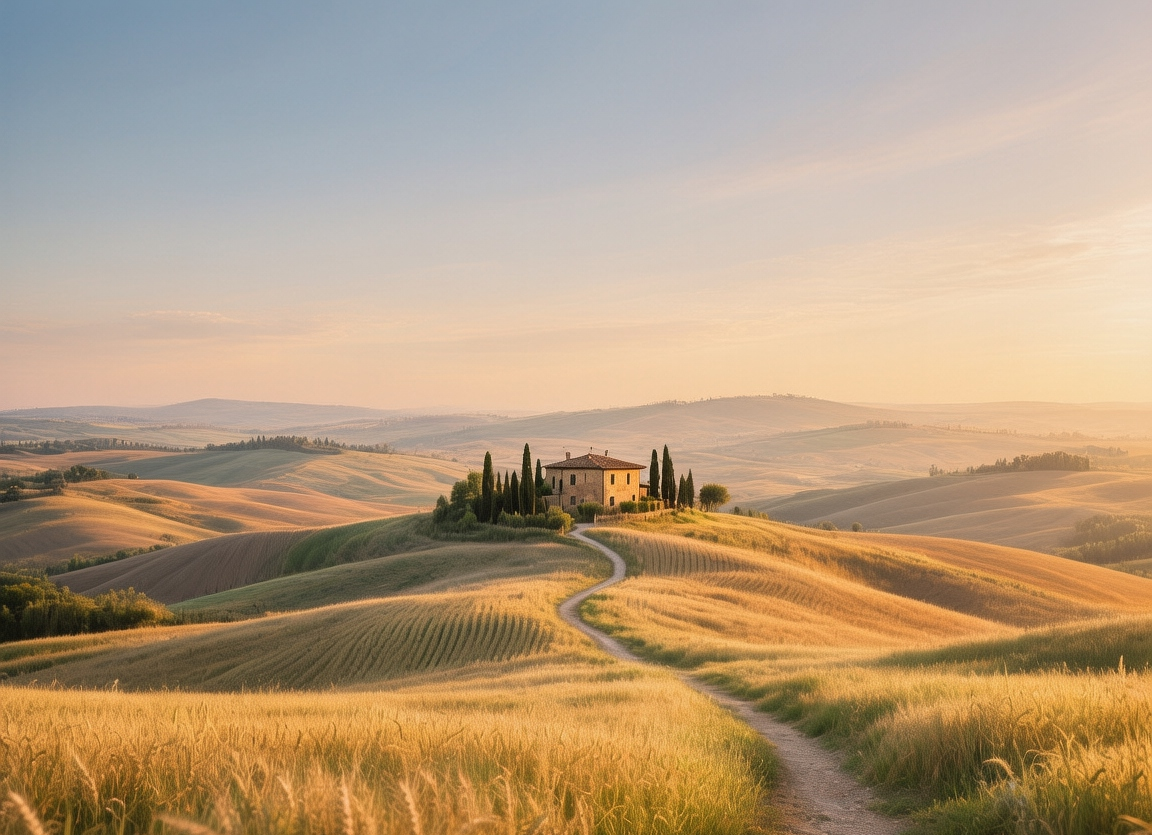
Val d’Orcia – Tuscan Hills Golden Light Meets Timeless Harmony
The late afternoon sun spills across the Val d’Orcia—turning wheat fields into rivers of gold and casting long shadows from solitary cypress trees that stand like sentinels on hilltops. You hear the rustle of olive leaves in the breeze, the distant chime of sheep bells, and the low hum of a tractor harvesting sun-drenched grapes. This UNESCO World Heritage landscape, stretching 25 kilometers south of Siena, is not just picturesque—it’s a masterpiece of human design. Since the 14th century, Tuscan landowners have shaped these hills with geometric precision: vineyards in neat rows, wheat fields in sweeping curves, and cypress alleys leading to Renaissance villas. The region inspired countless painters—most notably Leonardo da Vinci and the Sienese school—and today remains one of Europe’s most intact examples of Renaissance agricultural planning. In 2026, as climate change threatens traditional farming and overtourism strains rural communities, the Val d’Orcia stands as both a sanctuary and a call for stewardship—where every visitor’s choice shapes whether this harmony endures.
Why Val d’Orcia – Tuscan Hills Embodies Human-Crafted Beauty
The Val d’Orcia isn’t merely scenic—it’s a living testament to Renaissance ideals of order, beauty, and agricultural harmony. Designated a UNESCO World Heritage site in 2004, this 70,000-hectare landscape was deliberately engineered between the 14th and 15th centuries by Sienese nobles who transformed wild terrain into a productive yet aesthetically sublime estate. Key features include the iconic cypress-lined roads (like the famed Via Cassia), checkerboard vineyards, and fortified hilltop villages such as Pienza—rebuilt in 1459 by Pope Pius II as the “ideal Renaissance town.” The region’s soil, rich in clay and limestone, supports three protected agricultural products: Brunello di Montalcino DOCG wine, Pecorino di Pienza cheese, and extra-virgin olive oil from Olivastra Seggianese olives. The landscape’s visual rhythm—rolling hills, alternating crops, and strategic tree plantings—was designed to please the eye while maximizing yield. Today, strict zoning laws prohibit billboards, modern architecture, and industrial farming, preserving a vista so unchanged that it still mirrors the backgrounds of 15th-century frescoes. This is not nature untouched, but nature perfected—a dialogue between human vision and earth’s generosity.
The Best Time to Experience Val d’Orcia – Tuscan Hills
To witness the Val d’Orcia in its most luminous state—with open wineries and manageable crowds—target the precise window of May 18–June 12, 2026. During these weeks, daytime temperatures range from a comfortable 19–26°C (66–79°F)—ideal for cycling country roads and touring vineyards [[24], [27]]. Wheat fields glow amber, poppies dot the verges, and cypress shadows stretch dramatically across the hills. Mornings between 7:00–9:00 AM offer soft, diffused light perfect for photography and empty roads for driving or biking. Alternatively, September 20–October 4, 2026 provides similar conditions with the added drama of grape harvests and golden vineyards. Avoid visiting during peak periods: all of July and August, when heat exceeds 32°C (90°F) and agriturismi fill months in advance, and major holidays like Italian Ferragosto (August 15) [[29]]. For the most authentic experience, stay at a working farmstay and book wine tastings ahead via the official Consorzio del Brunello (consorziobrunello.it).
Approximate Budget for a 7-Day Trip (2026)
This budget reflects mid-range 2025 pricing adjusted for Italy’s projected 2026 inflation rate of 1.5% [[37]], offering a realistic estimate for a solo traveler based in an agriturismo near Pienza or Montalcino.
- Accommodation: €840–€1,120 total (€120–€160 per night) for a room in a working agriturismo with breakfast—offering direct access to trails, vineyards, and local produce.
- Food: €490 total (€70 per day). Breakfast included; lunch of pecorino, salami, and bread from a local market (€15); dinner at a farmhouse trattoria (€45 for pici pasta with duck ragù, grilled vegetables, and house red wine).
- Transportation: €110 total. Includes rental car (€70 for 7 days—essential for rural access); fuel (€25); and parking fees in historic centers (€15).
- Attractions: €75 total. Pienza Cathedral & Piccolomini Palace (€8); Montalcino Fortress entry (€6); Brunello wine tasting (€25); guided truffle hunt (€30); and thermal baths at Bagno Vignoni (€6).
- Miscellaneous: €95 total. A bottle of Brunello di Montalcino (€35); handcrafted pecorino cheese (€20); locally made linen scarf (€25); and gelato in San Quirico (€4).
Total Estimated Budget: €1,610–€1,900
6 Essential Val d’Orcia – Tuscan Hills Experiences
- Drive the Cypress Road at Dawn: Take the SP146 from San Quirico to Pienza at 6:30 AM. The morning mist softens the light, and the cypress alley—immortalized in films and paintings—appears as a corridor of green flame against golden fields.
- Taste Pecorino di Pienza with Local Honey: At Caseificio Fattoria Pianporcino, sample aged sheep’s milk cheese paired with chestnut honey—a tradition dating back to Etruscan times.
- Explore Pienza’s Ideal Renaissance Layout: Walk from the Duomo to Palazzo Piccolomini, then descend to the Belvedere Terrace for panoramic views of the valley—a vista unchanged since 1460.
- Soak in Bagno Vignoni’s Thermal Pool: This medieval village centers on a 12th-century thermal pool where Lorenzo de’ Medici once bathed. Swim at sunset for a surreal, steamy experience under open sky.
- Hike Monte Amiata’s Forest Trails: From Castel del Piano, trek through chestnut forests to abandoned mercury mines. The summit offers 360° views of the entire Val d’Orcia—a perspective few tourists seek.
- Attend a Grape Harvest in Montalcino: In late September, join a family-run vineyard for the vendemmia. Crush Sangiovese grapes by foot, then share a rustic lunch under the vines—a deeply communal ritual.
3 Hidden Gems Most Travelers Miss
- Abbazia di Sant’Antimo: Tucked in a secluded valley near Montalcino, this 9th-century abbey hosts Gregorian chants at 11:00 AM daily. Its rose-colored travertine glows in morning light—often empty even in high season.
- Podere Il Casale Goat Farm: Near Pienza, this organic farm offers cheese-making workshops and baby goat cuddling. Book ahead (+39 0578 757 003)—it’s a favorite among locals with children.
- Strada Bianca di Cappella: An unpaved white road east of Radicofani, this 8-kilometer gravel track winds through wheat fields with zero traffic. Perfect for cycling or a quiet picnic under lone oaks.
Cultural & Practical Tips
- Rent a car—but drive slowly: Rural roads are narrow and often unpaved. Stick to 40 km/h on strade bianche to avoid dust clouds and potholes.
- Book agriturismi early: Authentic farmstays fill 6+ months ahead, especially those offering cooking classes or wine tours.
- Respect private property: Many fields are active farms. Never enter without permission, and close gates behind you to contain livestock.
- Learn key phrases: “Dov’è la strada per Pienza?” (doh-VEH lah STRAH-dah PEHR pyen-TSAH?) for directions; “Grazie mille” (GRAHT-see-eh MEE-leh) for sincere thanks.
- Photograph responsibly: Drones require permits in protected zones. Early morning offers the best natural light without harsh midday glare.
Conclusion: Travel with Stewardship, Not Just Scenery
In 2026, the Val d’Orcia invites more than admiration—it calls for participation. Your presence here supports generations of farmers who maintain terraces by hand, vintners who age wine in centuries-old cellars, and cheesemakers who follow lunar calendars. Choosing a family agriturismo over a luxury resort keeps euros in the community; buying Brunello directly from a cantina ensures fair wages; walking respectfully through fields honors the labor that shapes this landscape. Slow down: sip wine where the grapes were grown, listen to the rhythm of sheep bells at dusk, taste bread baked with local grain. By traveling with stewardship—prioritizing connection over consumption—you help ensure the Val d’Orcia remains not just a postcard, but a living testament to harmony between human hands and fertile earth. Let your journey be a promise: that beauty, carefully tended, can endure for centuries more.