Valencia City of Arts and Sciences Meets Mediterranean Light
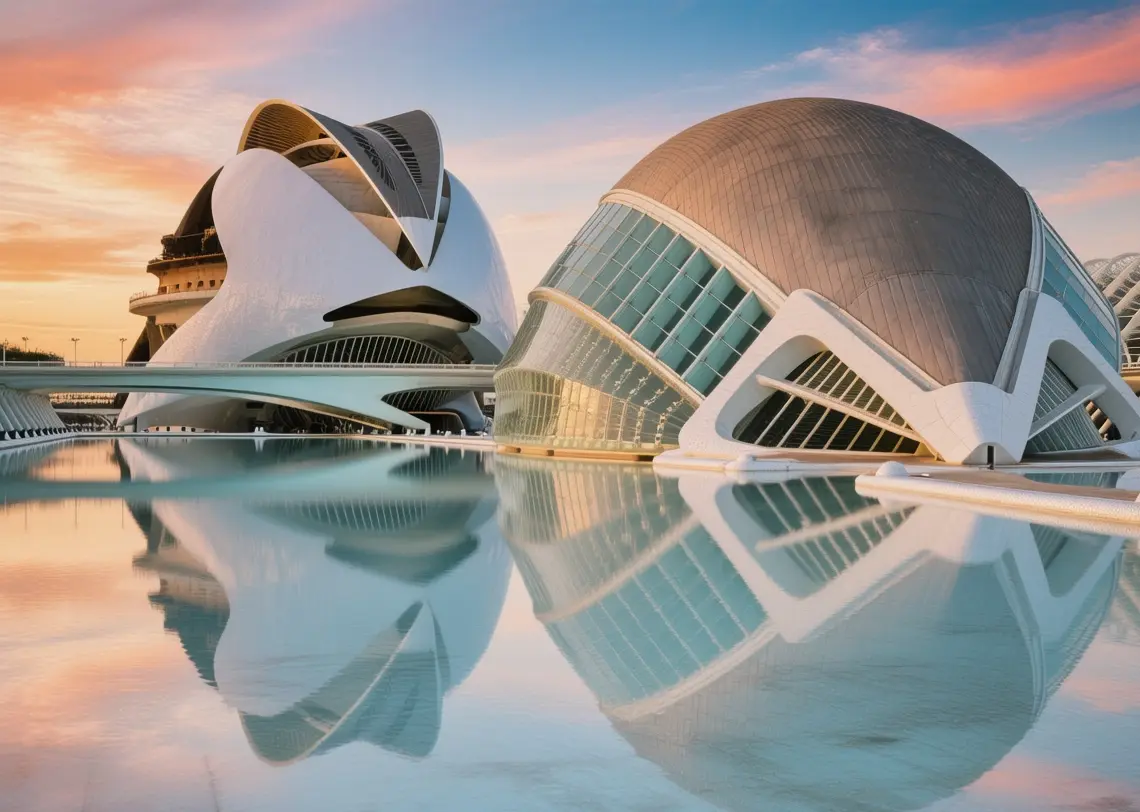
Ciudad de las Artes y las Ciencias: Where Futuristic Architecture Meets Mediterranean Light
At 9:12 on a Sunday morning in October, I stand on the Pont de l'Assut with a café con leche that cost 1.80 euros. The sun is low behind me. The white ribs of L'Hemisfèric catch the light and throw long shadows across the shallow pools below. A few joggers pass. A man walks his dog. Nobody is taking selfies yet. This is the Ciudad de las Artes y las Ciencias before the tour buses arrive, and it belongs to whoever bothered to wake up early. By noon, the same spot will hold two hundred people posing in front of the same reflective pools. But right now, the complex feels like what it was designed to be: a quiet, strange, beautiful place built on the dry bed of a river that no longer runs through Valencia.
Why Ciudad de las Artes y las Ciencias Matters
Valencia diverted the Turia River in 1957 after a flood killed dozens and swamped the city center. The old riverbed sat empty for decades. In 1991, the regional government commissioned Santiago Calatrava, a Valencia-born architect, to design a cultural complex on that unused land. The first building, L'Hemisfèric, opened on April 16, 1998. Over the next eleven years, five more structures followed: the Umbracle, the Science Museum, the Oceanogràfic, the Palau de les Arts Reina Sofía, and the Ágora. The project cost an estimated 1.2 billion euros and has become Valencia's most visited attraction.
Here's the honest criticism. The complex has been dogged by budget overruns and construction defects since the beginning. Tiles have fallen off the Palau de les Arts. The opera house faced structural problems within years of opening. Calatrava's reputation in Valencia is complicated; many locals see the complex as a monument to political ambition as much as architectural vision. The white concrete and tile are stunning in photos, but on a scorching August afternoon, the glare off the pavement is genuinely unpleasant. There is almost no shade outside the Umbracle. The complex is also expensive to maintain, and critics argue that the money could have gone to schools or hospitals. You can love the buildings and still acknowledge that they came at a cost.
The Best Time to Experience Ciudad de las Artes y las Ciencias
Late spring and early autumn are the sweet spots. April through June brings temperatures between 20°C and 26°C (68°F to 79°F). September and October are similar, though October evenings can drop to 18°C (64°F). The light in autumn is softer, and the crowds thin out considerably after mid-September. July and August are brutal for walking the complex. Highs hit 30°C to 33°C (86°F to 91°F), and the outdoor areas offer little shade. Winter is workable if you dress for it. January averages 12°C (54°F), and the indoor museums remain comfortable. The tradeoff is shorter opening hours and fewer evening events. My visit in mid-October was close to ideal. The pools reflected a clear sky, the queues were short, and I could walk from the Hemisfèric to the Oceanogràfic without breaking a sweat.
Approximate Budget for a 7-Day Trip
This assumes you stay in Valencia city center and visit the City of Arts and Sciences as a day trip. Prices are per person.
- Accommodation: A mid-range hotel or Airbnb near Ruzafa or the old town runs 65 to 110 euros per night. Seven nights: 455 to 770 euros.
- Food: Breakfast at a café (3 to 5 euros), lunch at a menu del día (12 to 15 euros), dinner at a neighborhood restaurant (18 to 25 euros). Seven days: roughly 230 to 315 euros.
- Transport: A Valenbisi weekly bike pass costs around 13.30 euros. The Turia Garden path connects the old town to the City of Arts directly. Add 20 to 30 euros for metro and tram rides. Total: 35 to 45 euros.
- Attractions: The Oceanogràfic adult ticket is around 38 euros. The Science Museum is around 9 euros. Combined tickets are available. Budget 60 to 90 euros for entry fees across the week.
- Miscellaneous: Coffee, snacks, souvenirs. 80 to 120 euros.
Total: approximately 860 to 1,340 euros for the week.
One overpriced trap: the restaurants inside the complex. A basic sandwich and a soft drink near the Oceanogràfic will set you back 12 to 15 euros. Walk ten minutes to the Aqua shopping center or cycle back toward Ruzafa, where a full lunch costs 10 to 12 euros. The on-site cafés are convenient but not good value.
Essential Ciudad de las Artes y las Ciencias Experiences
- Walk the exterior at sunrise. The complex is free to walk around. The buildings face east, so the morning light hits the white facades and reflects in the pools. Arrive before 8 AM for empty paths and the best photos. Skip it if you hate early starts; sunset is a decent second option.
- The Oceanogràfic. Europe's largest aquarium holds more than 500 species, including beluga whales and a 70-meter underwater shark tunnel. Budget three to four hours. The dolphin show draws crowds and criticism; decide for yourself whether to attend.
- The Museu de les Ciències. The interactive science museum looks like a whale skeleton from the outside. Inside, exhibits cover everything from dinosaurs to space stations. It's genuinely good for children and curious adults. Allow two to three hours.
- L'Hemisfèric. The eye-shaped building houses an IMAX cinema and planetarium. The architecture is more impressive than the films, but a show is a pleasant way to sit down for an hour. Tickets start around 8.70 euros for one venue.
- L'Umbracle. This free arched promenade is the most underrated part of the complex. It's a 320-meter sculpture garden with native plants and rotating art installations. Walk it in the late afternoon when the shadows stretch across the walkway.
- Cycle the Turia Garden. Rent a Valenbisi bike and ride the 9-kilometer green corridor from the old town to the City of Arts. The path is flat, car-free, and passes fountains, orange trees, and playgrounds. It's the best way to arrive.
- Pont de l'Assut at golden hour. This angled bridge offers the classic view of the complex reflected in the water. Come 30 minutes before sunset. Bring a jacket in October; the wind picks up.
Hidden Gems Most Travelers Miss
- The whispering wall. Near the Science Museum, two curved concrete walls create an acoustic effect. Stand at one end and whisper; a friend at the other end can hear you clearly. Most people walk past without noticing.
- The sunken garden behind L'Ágora. A small below-ground space filled with plants that look like they belong in a desert. It's quiet, shaded, and almost always empty.
- The Umbracle night terrace. After dark, the upper level of L'Umbracle turns into an open-air bar and club. It operates Thursday through Saturday in season. Even if you don't stay for drinks, the view of the illuminated complex from above is worth the walk up.
- The overrated gem: the 4D cinema at the Oceanogràfic. It costs extra, the seats are uncomfortable, and the film is a generic ocean documentary with water sprayed at your face. Skip it. Use the time for a second walk through the shark tunnel.
- The palm tree collection. The Umbracle garden holds dozens of palm species from around the world. Most visitors treat it as a path to somewhere else. Slow down and read the small labels.
Cultural & Practical Tips
- Buy tickets online before you arrive. The walk-up queue at the Oceanogràfic can take 30 minutes or more in high season.
- Wear comfortable shoes. The complex covers 350,000 square meters, and you will walk several kilometers without realizing it.
- Bring a refillable water bottle. Fountains are available, but bottled water inside costs 2.50 euros.
- Tourist mistake number one: assuming the outdoor areas are shaded. They are not. In summer, the esplanade between buildings becomes a heat trap. Wear a hat and sunscreen.
- Tourist mistake number two: trying to see everything in one day. The Oceanogràfic alone needs three hours. The Science Museum needs two. Pick two venues maximum and leave time for walking the exterior.
- The complex is accessible for wheelchairs and strollers on main paths. Some smaller viewing areas have steps.
- Photography is allowed except in sensitive areas of the Oceanogràfic. Flash is prohibited near the animals.
Essential Visitor Information
Location & Access: Av. del Professor López Piñero, 7, 46013 València. GPS: 39.4546° N, 0.3506° W. The complex sits at the eastern end of the Turia Garden, about 2 kilometers from the historic center. Three transport options: Metro Line 10 stops at Oceanogràfic station, a five-minute walk from the main entrance. Bus lines 35 and 95 serve the complex. Valenbisi bike stations are located near the Hemisfèric and the Oceanogràfic; the ride from the old town takes about 15 minutes on flat, car-free paths.
Tickets & Booking: Prices vary by venue. Oceanogràfic adult admission is around 38 euros. Science Museum entry is around 9 euros. L'Hemisfèric tickets start at 8.70 euros. Combined tickets for the entire complex cost around 44.20 euros. Booking online is strongly recommended during peak season. Yes, you need timed entry slots for the Oceanogràfic in July and August.
Operating Hours: The exterior spaces are open 24 hours and free to walk. The Oceanogràfic operates 10:00 to 18:00 daily, with extended hours to 20:00 on Saturdays and during summer. The Science Museum runs 10:00 to 19:00, sometimes until 21:00 in peak season. L'Hemisfèric shows vary by day. Last entry to paid venues is one hour before closing.
Visit Duration: Minimum half a day for the exterior and one venue. Recommended full day for the Oceanogràfic and Science Museum combined. I spent six hours across two visits and still skipped the Hemisfèric.
Family Suitability: Excellent for children. Stroller access is good on main paths. Facilities include restrooms, nursing rooms, and several cafes. The Science Museum is particularly child-friendly with interactive exhibits.
Timing: Best seasons are April to June and September to October. Best time of day is early morning for photography and late afternoon for walking. Avoid midday in summer.
Highlights: The Oceanogràfic shark tunnel, the Museu de les Ciències interactive exhibits, L'Hemisfèric IMAX shows, the L'Umbracle sculpture walk, and the Pont de l'Assut views.
Nearby & Day Trip: The Malvarrosa beach is a 15-minute tram ride from the complex. The Albufera Natural Park, famous for paella and lagoon boat rides, is a 30-minute drive south. The historic old town, with the Central Market and Valencia Cathedral, is a 20-minute bike ride along the Turia Garden. Xàtiva, a hilltop castle town, is an hour by train and makes a good day trip.
Conclusion: Travel with Attention, Not Just a Camera
The Ciudad de las Artes y las Ciencias is not a subtle place. It demands to be looked at. But the best moments here are small: the reflection of a cloud in a shallow pool, the sound of your footsteps under the Umbracle's arches, a beluga turning slowly in its tank. Go early. Walk slowly. Skip the 4D cinema. And when you leave, ride your bike back through the Turia Garden as the light fades. If you have been to the Ciudad de las Artes, what surprised you most?
Post a Comment