Aalborg Waterfront: Where Maritime Heritage Meets Nordic Architectural Innovation
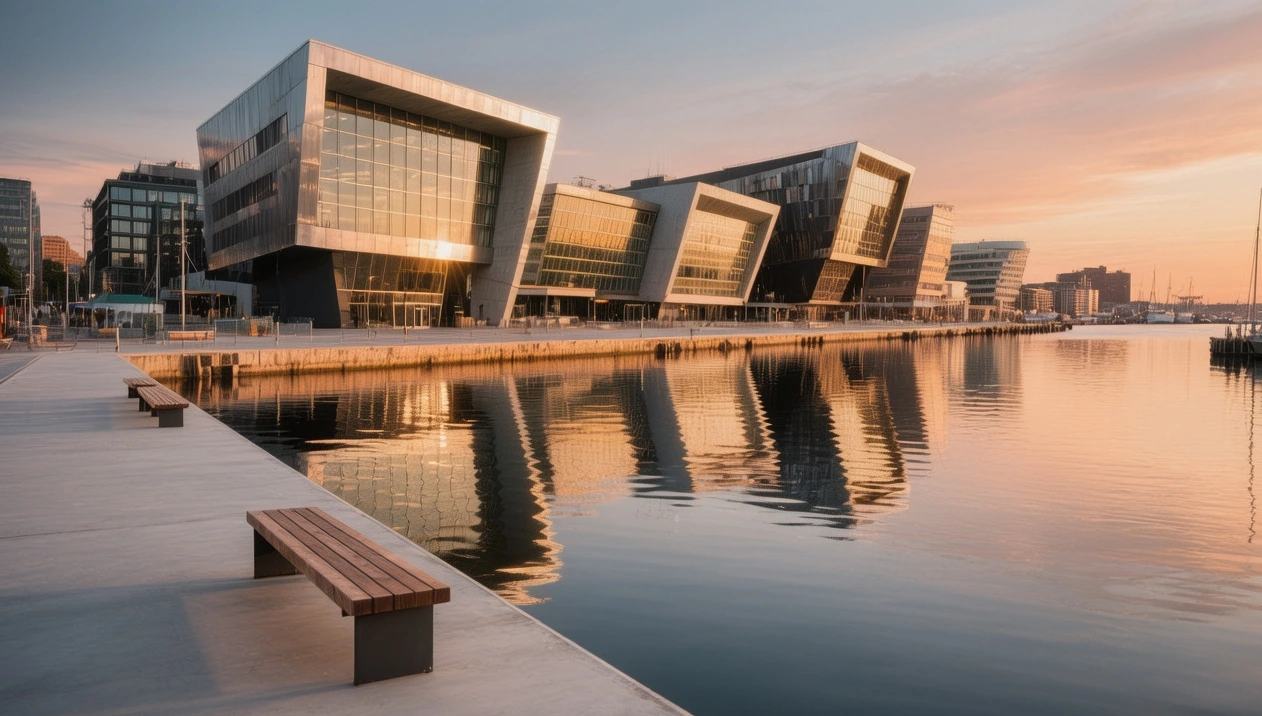
Aalborg Waterfront: Where Industrial Heritage Meets Modern Light
I walk the quayside just past ten in the morning. The Limfjord stretches wide and calm. Sunlight reflects off glass facades and weathered brick. I paid nothing to walk the promenade. The train ride from Skagen cost 240 DKK one way. It took one hour and forty minutes. I bought a warm apple pastry from a stall near the library. It cost 28 DKK and still steamed. The water laps gently against stone. Cyclists pass quietly. No one rushes. Old grain warehouses stand beside sleek new apartments. Cranes from the shipyard appear in the distance. This is a working waterfront remade for people. You feel both the past and the present side by side.
Why Aalborg Waterfront Matters
Aalborg grew from trade and shipping on the Limfjord. For centuries, the waterfront served industry — shipyards, warehouses, grain silos, and docks. By the late 20th century, much of it stood quiet. Redevelopment began in the 1990s, preserving historic structures while adding homes, cafes, cultural buildings, and public space. The result connects the city center directly to the water in a way few Danish cities manage. You find the Utzon Center, designed by the architect of the Sydney Opera House, and the cultural house Nordkraft, housed in a converted power plant. The waterfront is not just a tourist attraction — it remains a living, working part of daily life for locals.
It is not perfect. Large sections feel dominated by modern apartment blocks. Some visitors find the architecture uneven — striking buildings sit beside plain functional structures. Construction continues in areas north of the center. Fencing and noise can disrupt the walk. In winter, the wind off the fjord feels biting and many outdoor benches sit empty.
The Best Time to Experience Aalborg Waterfront
Late May through early September offers the longest days and mildest weather. Daytime temperatures sit between 14°C and 21°C (57°F–70°F). Outdoor cafes stay open late. Cultural venues extend hours. Arrive before 11:00 AM to walk without crowds. July and early August feel busiest but still relaxed compared to coastal resorts.
April, early May, and September suit slower visits. Temperatures hover around 9°C–15°C (48°F–59°F). Spring brings blossom to trees along the promenade. Autumn turns the water deep blue and light softens. October through March brings shorter days and cooler conditions — 2°C–7°C (36°F–45°F). Wind off the fjord feels stronger. Outdoor dining closes but indoor venues remain open. The waterfront stays quiet and peaceful then.
Approximate Budget for a 7-Day Trip
- Accommodation: 3,500 DKK – 5,950 DKK. Guesthouse or B&B within walking distance sits lower. Waterfront hotel or apartment runs 750–950 DKK per night. Staying slightly inland cuts costs noticeably.
- Food & Drink: 1,680 DKK – 2,870 DKK. Lunch at a waterfront café costs 105–180 DKK. Dinner at a restaurant runs 180–295 DKK per person. Buying bread, cheese, and smoked fish from the central market saves nearly half.
- Transport: 770 DKK – 1,470 DKK. Local buses cover the city well — 36 DKK one way. Bicycle rental works perfectly at 100–150 DKK per day. Train to nearby sites like Lindholm Høje or Skagen available.
- Attractions & Entry: 420 DKK – 700 DKK. Waterfront promenade free. Utzon Center 110 DKK. Other museums carry similar fees.
- Miscellaneous: 560 DKK – 910 DKK. Covers coffee, snacks, souvenirs, and small purchases.
Total estimated budget: 6,930 DKK – 11,900 DKK per person for 7 days.
One thing to watch: restaurants directly facing the water charge premium rates. A meal can cost 70 DKK more than at places one street back. Buy food from the market, sit on the steps by the library, and watch boats pass. It costs far less and feels just as good.
Essential Aalborg Waterfront Experiences
- Walk the full promenade. Start at the train station and follow the fjord north past all the landmarks. Notice how the character changes — historic warehouses, cultural buildings, modern apartments. Skip this if you dislike long flat walks; it stretches several kilometers.
- Visit the Utzon Center. Dedicated to architect Jørn Utzon. Models, drawings, and exhibits show his work and philosophy. The building itself feels like a ship — light, open, connected to water. It closes on Mondays.
- Explore Nordkraft. Housed in a converted power plant. The large brick building holds theaters, galleries, cinema, and cafes. You feel the industrial scale inside. Walk through even if you do not attend an event.
- Sit at the Library steps. The sloped plaza outside the main library descends to the water. People gather here day and evening. Bring a coffee or pastry. Watch ferries and small boats glide past.
- Cross to Lindholm Høje by bridge or tunnel. The ancient burial ground sits across the water. The view back toward Aalborg reveals the waterfront whole. It takes twenty minutes by bike or bus.
- Walk the northern sections at sunset. Fewer people reach this far. The light turns buildings warm gold. The fjord reflects the sky. Most visitors head back toward the center by then. You often have the quieter stretches to yourself.
Hidden Gems Most Travelers Miss
- The old grain warehouse district south of the bridge. Renovated but still raw around the edges. Art studios and small workshops occupy ground floors. No large crowds find their way here.
- Overrated spot: the main plaza in front of the culture center. It feels paved and exposed. Walk two hundred meters south along the path. Benches sit sheltered and the view covers more sky.
- The small harbor pool near Nordkraft. In summer, locals swim and relax here. It feels like a secret spot even though it sits in plain sight. Check opening times — it closes outside warm months.
- The industrial heritage markers along the quayside. Small plaques explain what stood where and how the waterfront worked. Most people walk past without noticing. They add depth to the view.
- The evening market stalls on Fridays. Local growers and artisans set up near the library. It draws more locals than tourists. The atmosphere feels relaxed and friendly.
Cultural & Practical Tips
- Wear layers. Wind off the fjord picks up speed and feels colder than inland. Even sunny days turn breezy by afternoon. A light waterproof jacket stays useful year-round.
- Do not rely on waterfront restaurants alone. Prices run high and quality varies. Excellent affordable places sit just one or two streets back. Explore the side lanes.
- Stay on marked paths near construction zones. Redevelopment continues. Fencing moves and sections close without warning. Follow signs to avoid detours.
- Mondays catch many people out. The Utzon Center and several museums close then. Plan visits for Tuesday through Sunday to see everything.
- Bicycles rule here. The waterfront path shares space with riders. Keep to the pedestrian side and watch before stepping sideways. It is a busy commuter route.
- Give yourself enough time. Many people plan one hour and leave rushing. Three hours minimum lets you walk, stop, and look inside a venue without hurrying.
Essential Visitor Information
Location & Access: Aalborg Waterfront, Limfjord promenade, 9000 Aalborg. Three ways to arrive: train to Aalborg Station then walk five minutes to the water; bus to Østerågade then short walk; car to waterfront parking — fees apply, cheaper lots sit slightly inland.
Tickets & Booking: Promenade and public areas free. Utzon Center 110 DKK adult. Nordkraft entry free — event tickets separate. Booking ahead not needed for waterfront access or most venues.
Operating Hours: Public promenade open 24 hours daily year-round. Venues typically 10:00 AM–5:00 PM or later; closed Monday. Outdoor areas accessible always.
Visit Duration: Minimum 2 hours for a relaxed walk. 4–5 hours lets you visit one or two museums and stop for food. Half a day if combining with a trip across to Lindholm Høje.
Family Suitability: Excellent. Wide flat paths suit strollers and wheelchairs. Shallow water areas supervised in summer. Restrooms and cafes spaced along the route.
Timing: Best season: May or September. Best time: before 11:00 AM or late afternoon toward sunset. Weekdays stay quieter than weekends.
Highlights: Utzon Center, Nordkraft cultural house, library steps, old warehouse district, sunset views north along the fjord.
Nearby & Day Trip: Lindholm Høje 15 minutes across the water. Skagen 1/2 hours by train. Rebild National Park 45 minutes by car. Grenen reachable as full-day trip.
Conclusion: Travel with Depth, Not Just Sight
Aalborg Waterfront does not pretend to be something it never was. It carries its industrial past openly — brick, steel, grain, and shipyards — while growing into something new. Old and new stand side by side. Walk slowly. Notice where the rough edges remain. That is where the real character lives. What story will you tell when you look back across the water?
Post a Comment