
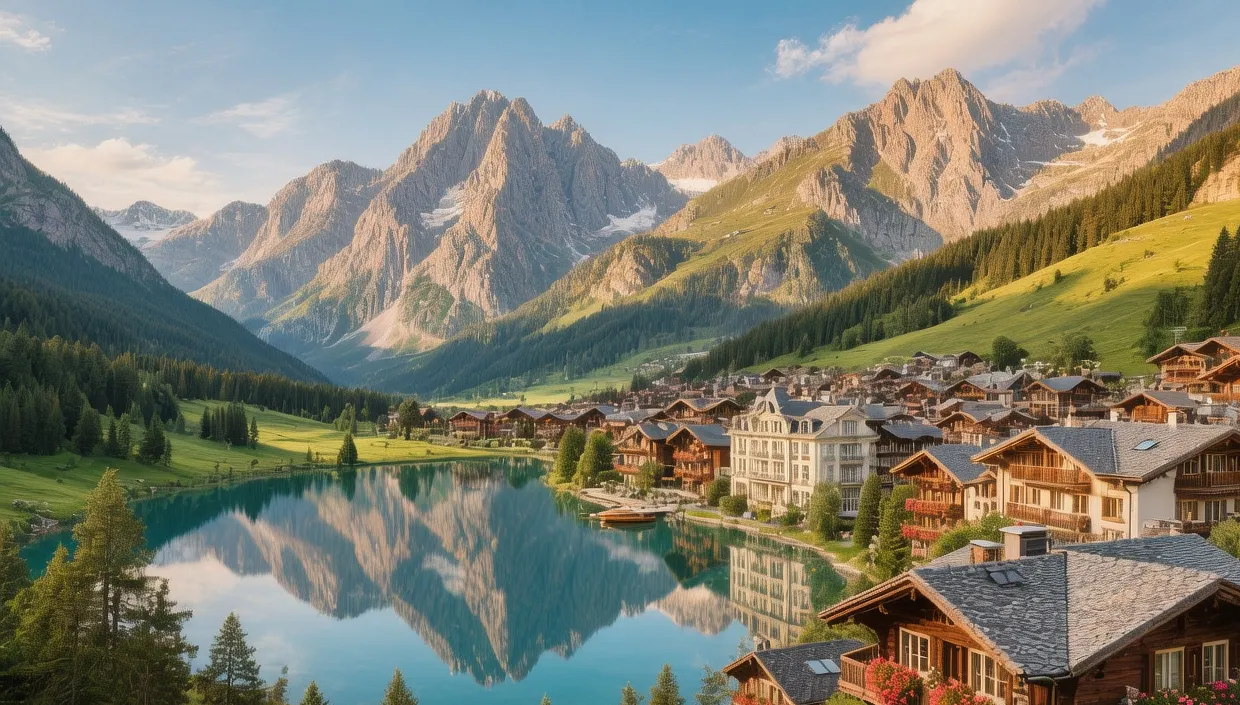
Arosa Mountain Resort Alpine Silence Meets Therapeutic Light
At 6:45 AM, the air above the Arosa mountain resort hangs still at 1,775 meters (5,823 feet) elevation, cold enough to crystallize breath into momentary clouds. You hear it before the sun crests the Weisshorn peak—the distant hum of snow groomers carving corduroy patterns into 225 kilometers of terrain, a rhythmic pulse that has marked winter mornings since the first hotel opened in 1880. This is not merely a ski destination; it is a high-altitude sanctuary where Dr. Alexander Spengler once prescribed clean air for tuberculosis patients, transforming a remote Schanfigg valley village into a global health haven. The light here possesses a specific quality—thin, intense, unfiltered by pollution—that drew artists and invalids alike in the late 19th century. In 2026, as modern life accelerates into digital noise, the Arosa mountain resort matters more than ever: it represents a rare convergence of therapeutic isolation and Alpine accessibility, where the silence isn't empty but full of restoration, demanding you slow down to match the mountain's ancient pace.
Why Arosa Mountain Resort Embodies Therapeutic Alpine Heritage
The Arosa mountain resort solves a fundamental human problem: the need for recovery in an overstimulated world. When the first sanatorium, the Schatzalp, opened in 1899, it addressed a crisis—tuberculosis claimed 10% of European lives annually. Today, the infrastructure has evolved from medical treatment to wellness prevention. The link with Lenzerheide, completed in 2013, created one of Switzerland's largest ski areas (225 kilometers), yet Arosa retains its village intimacy. The engineering behind this balance is precise: cable cars like the Weisshornbahn (upgraded 2018) move 2,400 passengers hourly while minimizing visual impact through underground stations. The town's architecture reflects this heritage—wooden chalets with overhanging roofs designed to shed 3 meters of annual snowfall stand alongside modern spas using geothermal energy.
Historically, Arosa fulfilled a need for controlled environment. The microclimate here offers 300 days of sunshine annually, with humidity levels dropping below 40% in winter—ideal for respiratory health. This isn't marketing; it's meteorology verified by the Swiss Federal Institute of Technology. The resort addresses a deeper craving: the desire for authenticity. Unlike purpose-built stations, Arosa grew organically over 140 years. The main street, Dorfstrasse, retains its 19th-century width, prohibiting heavy traffic since 2005. This preservation creates a pedestrian-first zone where the only engines heard are electric shuttles. With 12 distinct ski sectors connected by modern lifts, the facility operates like a distributed network rather than a hub. This isn't just tourism; it's a continuation of a 140-year-old promise—that high altitude heals, provided you respect the environment that enables it.
The Best Time to Experience Arosa Mountain Resort
For optimal snow conditions: December 15–March 15 offers the most reliable base depth. Daytime temperatures range from -5–5°C (23–41°F) on the mountain; valley temperatures sit 3°C warmer. Nights drop to -12°C (10.4°F), ensuring snow preservation. For summer hiking: July 1–September 10 provides access to 500 kilometers of trails. Daytime temperatures reach 18–24°C (64–75°F); nights cool to 8–12°C (46–54°F).
Avoid December 24–January 5 (Christmas/New Year peak) and February 11–25 (Swiss school holidays)—lift queues exceed 40 minutes, and restaurant wait times reach 75 minutes. Also avoid October 15–December 10 if you seek winter sports; many lifts close for maintenance, and snow coverage is unreliable below 2,000 meters.
For specific experiences: arrive at the Weisshorn cable car by 8:30–9:00 AM to beat the rush. The first groomed runs are pristine until 11:00 AM. Summer lake swimming operates June 20–August 31 at Obersee. Check live snow reports at arosa.ch or call the snow hotline at +41 81 378 18 18. Webcams update every 15 minutes, showing visibility at 2,653 meters.
Approximate Budget for a 7-Day Trip (2026)
Pricing methodology: Costs reflect mid-range travel (4-star hotels, mix of self-catering and restaurant dining, public transportation) during peak winter season (January 2026). All prices include Switzerland's 7.7% VAT. Prices adjusted for 3.5% inflation projected for 2026. Currency is Swiss Francs (CHF).
Accommodation: CHF 240–CHF 420 per night for double room in 4-star hotel in Arosa Dorf/Platz; CHF 160–CHF 260 in guesthouses in nearby Langwies. Budget hostels: CHF 65–CHF 95 per person.
Food: CHF 75–CHF 115 per day per person
- Breakfast: CHF 18–CHF 28 (hotel buffet with muesli, cheese, bread)
- Lunch: CHF 28–CHF 42 (mountain hut rösti CHF 30, sausage platter CHF 35)
- Dinner: CHF 38–CHF 58 (restaurant: cheese fondue CHF 42, schnitzel CHF 45)
Transportation:
- Train Zurich to Arosa: CHF 95 one-way (3 hours, change in Chur)
- Swiss Travel Pass (8 days): CHF 436 for unlimited trains/buses
- Local bus within Arosa: free with Guest Card
- Taxi from station to hotel: CHF 35 (3 kilometers)
Attractions:
- Ski Pass (6 days, Arosa Lenzerheide): CHF 395 adults, CHF 195 children
- Ski Rental (7 days, mid-range): CHF 260
- Guided Snowshoe Tour: CHF 85 per person
- Schatzalp Historic Railway: CHF 32 round-trip
Miscellaneous:
- Souvenir: Swiss Army Knife CHF 50, local honey CHF 18
- Travel insurance (7 days): CHF 55–CHF 95
- Après-ski drinks (3 beers): CHF 27
- Lockers at slope base: CHF 12 per day
Total for 7 days (mid-range): CHF 2,700–CHF 3,750 per person (excluding international flights)
7 Essential Arosa Mountain Resort Experiences
- Ski the Weisshorn Summit Run: Start at 9:00 AM from the top station (2,653m). This 10-kilometer descent to Arosa takes 50–60 minutes without stopping. The top section is wide and groomed; the middle narrows through larch forest. Stop at the Weisshorn restaurant for lunch (CHF 38) with panoramic views. Wear goggles with low-light lenses—glare off snow is intense at this altitude. The run ends at the Carmenna station; take the cable car back to village. Lift tickets scanned at entry.
- Ride the Schatzalp Historic Railway: Built in 1899, this funicular uses original wooden cars to climb 400 meters from Arosa Platz. Operates 9:00 AM–5:00 PM daily. At the top, ski the historic run used by Thomas Mann in The Magic Mountain (1924). The slope is steep (35% gradient) and ungroomed—only for confident skiers. The restaurant terrace offers hot chocolate (CHF 9) with views of the valley. Entry includes museum access showing 19th-century tourism history.
- Swim in Lake Obersee: The 1,850m alpine lake offers swimming from June 20–August 31. Water temperatures reach 18°C (64.4°F) in July. Access via 45-minute hike from Arosa or PostBus line 851. The path is flat (100m elevation gain). Stop at the lake restaurant for barley soup (CHF 20). You'll see trout in the water; bring binoculars. The trail is marked with yellow signs; do not deviate. Changing rooms available at shore.
- Take a Guided Snowshoe Tour: Book the "Silent Valley Walk" (CHF 85, 3 hours) with certified guides. Meets at Arosa Tourism Office at 10:00 AM. You'll access untracked powder fields above 2,000 meters. Avalanche equipment (beacon, probe, shovel) is provided and mandatory. The guide teaches snow stability assessment before entering zones. Maximum group size is 10 people. Fitness level required: able to walk continuously for 2 hours. Lunch included at mountain hut.
- Visit the Arosa Bear Sanctuary: Located 2 kilometers from village, this sanctuary houses rescued bears since 1995. Open 10:00 AM–4:00 PM daily (May–October). Entry: CHF 15 adults, CHF 8 children. The 3-hectare enclosure mimics natural habitat. Guides explain conservation efforts at 11:00 AM and 2:00 PM. The path is stroller-friendly. Look for the feeding platform where bears stand on hind legs. Combine with a walk through the surrounding forest. No feeding allowed.
- Dine at the Tschuggen Club: Located at the base of the Tschuggen cable car. Reserve a table for 7:30 PM. Order the "Mountain Platter" (CHF 55): dried meat, cheese, pickles, bread. The interior features wood paneling from 1950s ski lodges. Live acoustic music plays Friday–Saturday. The wine list focuses on Swiss varieties (CHF 70 per bottle). Dress code is smart casual; ski boots are frowned upon—use locker rooms to change.
- Watch the Sunrise at Carmenna: Take the first cable car at 8:00 AM. The viewpoint terrace at 2,200 meters offers unobstructed 360° panoramas. On clear days, you see the Bernina massif 80 kilometers away. Bring a warm jacket—even in summer, temperature drops to 5–8°C after sunrise. The café opens at 8:30 AM for coffee (CHF 6). Stay for 30 minutes to allow eyes to adjust to light. Photography tripods allowed but cannot obstruct traffic.
3 Hidden Gems Most Travelers Miss
- The Old Sanatorium Library: Inside the Schatzalp hotel lies a library preserved since 1900, containing first editions of medical texts and guest logs from famous patients (including Thomas Mann). Access is restricted; email library@schatzalp.ch 7 days ahead for a guided tour (CHF 30, Thursdays at 3:00 PM). The room smells of old paper and wood polish. You'll see original prescription books detailing "air cure" regimens. Photography is prohibited to protect fragile bindings. Combine with a stay at the hotel for full access.
- The Sapün Valley Snowshoe Trail: While skiers crowd Weisshorn, this valley 8 kilometers east remains quiet. Access via PostBus line 852 from Arosa Platz (25 minutes). The 5-kilometer snowshoe loop requires no guide in winter (avalanche risk low). Rent snowshoes at the valley entrance (CHF 22). The trail follows the frozen Sapünbach river. Look for ptarmigan tracks in the snow. The valley guesthouse serves lunch (CHF 28) but closes at 3:00 PM. Best visited Tuesday mornings when tour groups are absent.
- The Carmenna Sun Deck: At 2,200 meters, a specific terrace on the restaurant's south side receives direct sunlight from 11:30 AM–1:30 PM even in winter. Most skiers eat inside; ask for "Sonnenterrasse" when ordering. The temperature here can reach 12°C (53.6°F) in sun despite air temperature of -5°C. Bring sunscreen (UV index 9+ at altitude). It's the warmest spot on the mountain for a midday break. No reservation needed, but arrive by 11:15 AM to secure a table.
Cultural & Practical Tips
- Slope Right of Way: The skier ahead has right of way—this is strictly enforced. Overtaking must be done uphill or downhill with ample space. Violations resulting in collision incur CHF 500 fines and liability for damages. Lift operators monitor behavior; reckless skiing results in pass confiscation.
- Layering System: Temperatures swing 18°C between sun and shadow. Wear three layers: moisture-wicking base, insulating mid-layer (fleece/wool), windproof shell. Avoid cotton—it retains moisture and freezes. Gloves must be waterproof; hand warmers are recommended for -10°C days. Rent heated insoles (CHF 18) if you suffer from cold feet.
- Language Basics: The region speaks German (Swiss dialect). Learn: "Grüezi" (GRUE-ts-i) = hello; "Danke" (DAN-kuh) = thank you; "En Guete" (en GUE-teh) = enjoy your meal. English is widely spoken in hotels and lifts. Signage appears in German and English. Staff appreciate efforts to use local greetings.
- Avalanche Safety: Off-piste skiing requires avalanche training. Check daily bulletins at slf.ch. Carry a transceiver, probe, and shovel. Guided tours are recommended for visitors unfamiliar with Alpine terrain. Avalanche beacons are checked at lift entrances; ensure yours is charged and switched to transmit.
- Photography Guidelines: Drones are prohibited without special permits (apply 4 weeks ahead via arosa.ch). Tripods are allowed on slopes but cannot obstruct traffic. Respect privacy—do not photograph other guests without permission. The best light for photography is 8:00–10:00 AM and 3:00–4:30 PM when shadows define the terrain.
- Health & Altitude: Arosa sits at 1,775 meters. Some visitors experience mild altitude sickness (headache, fatigue). Hydrate with 3 liters of water daily. Avoid alcohol on the first day. The town has a medical center (Spital Arosa) open 24/7 for emergencies. Ski patrol responds within 12 minutes to slope incidents.
- Lift Ticket Validation: Passes are scanned at lift entrances. Keep tickets in your jacket pocket (RFID technology). Do not store near phones or magnets—they demagnetize chips. Lost tickets incur CHF 55 replacement fees. Children under 9 ski free with registered parents; bring passports for age verification.
Conclusion: Travel with Reverence, Not Just Adrenaline
The Arosa mountain resort doesn't need more speed—it needs more respect. Those who understand that the groomed corduroy isn't just a surface but a canvas maintained by 4:00 AM labor. Those who recognize that the silence above the tree line isn't emptiness but an ecosystem fragile to noise and heat. Those who accept that skiing here isn't conquest but collaboration with gravity, geology, and generations of engineers who made this access possible. In 2026, as winter seasons shorten globally, Arosa stands as a reminder: snow is a privilege, not a guarantee.
Your lift pass funds snowmaking research and valley conservation. Your choice to stay on marked trails protects alpine vegetation recovering under snow. Your willingness to learn the rules, respect the locals, and ski within your limits—this is the currency of sustainable tourism. So when you carve a turn on the Weisshorn, feeling the edge bite into ice formed over centuries, remember: you're not consuming a resource but borrowing a moment. Slow down. Look up at the peaks. Respect the mountain. The snow will melt in spring, but the culture remains—if we choose to preserve it.