Christiansborg Palace: Where Democratic Power Meets Royal Tradition
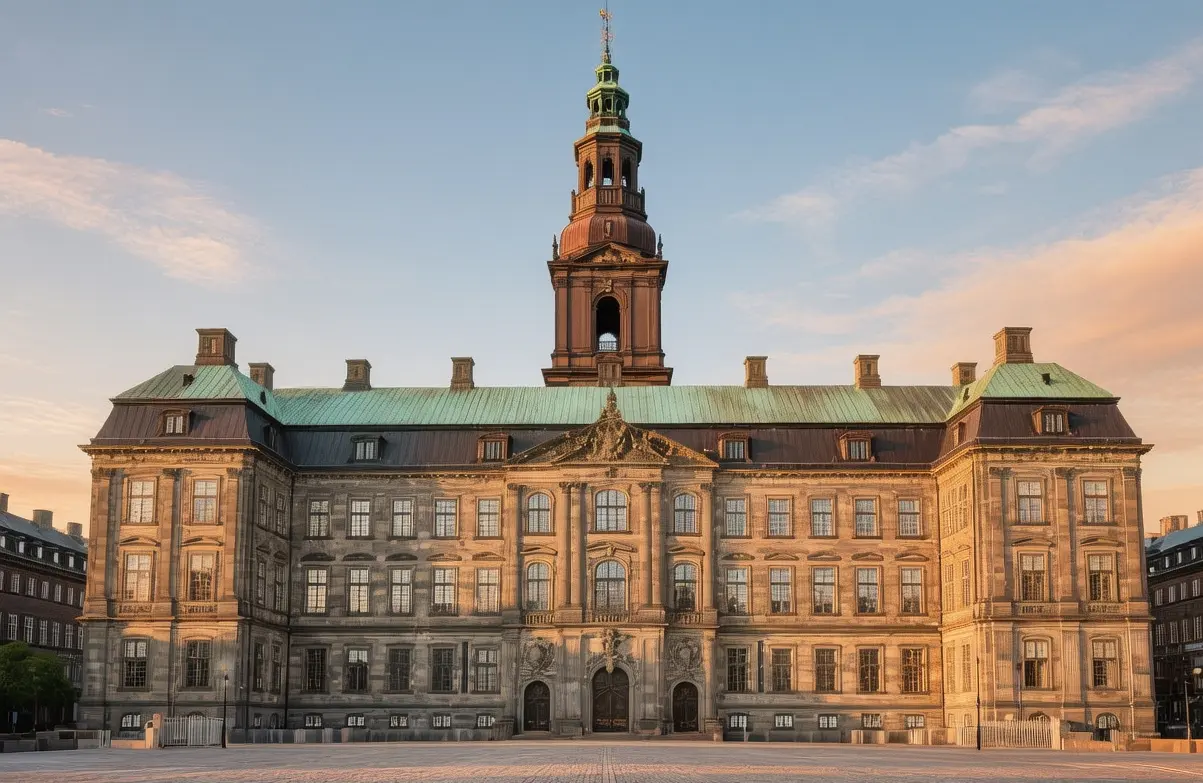
Christiansborg Palace: Where Power, History, and Harbor Meet
I walk across the bridge from the city center just past ten in the morning. Copper spires rise ahead, green with age. The palace stands on its own islet, separated from the rest of Copenhagen by canals. I paid 110 DKK for combined entry to the towers and ruins. The short walk from the central station took ten minutes. I bought a warm apple pastry from the kiosk in the courtyard. It cost 26 DKK and tasted of cinnamon. This is where Denmark governs — parliament, prime minister's office, and royal reception rooms all share one roof. Ruins beneath the floors reveal castles that stood here long before. Power has sat on this ground for eight hundred years.
Why Christiansborg Palace Matters
Christiansborg occupies the site of Copenhagen's very first castle, built by Bishop Absalon in the 12th century. Successive palaces rose and fell here — destroyed by fire, rebuilt, expanded. The present building dates mostly from the early 20th century, with older wings and stables preserved. Today it houses the Danish Parliament, the Prime Minister's offices, and royal reception rooms. No other place in the country holds so many layers of authority and history. Beneath the present structure lie excavated ruins of earlier fortresses and palaces — visible to visitors. Above, towers offer sweeping views over the city and harbor. Christiansborg is not just a monument — it is where the nation's business happens every day.
It is not a single historic building from one era. Styles overlap — medieval foundations, baroque halls, early 20th-century stonework. Some visitors find the mix disjointed. Several areas close unexpectedly for official events — guided tours may be cancelled or rooms shut without notice. Photography is restricted in certain galleries. The main tower is closed for renovation at times — check before traveling. The site spreads across levels and wings; climbing between areas feels tiring for anyone with limited mobility.
The Best Time to Experience Christiansborg Palace
Late May through early September offers the longest days and fullest access. Daytime temperatures sit between 14°C and 21°C (57°F–70°F). The tower and outdoor grounds stay open late. Arrive before 11:00 AM to have the ruins quiet. July and August stay busiest — book tickets online ahead.
April, early May, and September balance mild weather and fewer crowds. Temperatures hover around 9°C–15°C (48°F–59°F). Spring brings fresh green to the surrounding canals. Autumn turns the treetops gold. October through April brings shorter days and cooler conditions — 2°C–7°C (36°F–45°F). The palace closes an hour earlier then. Winter visits feel peaceful — the ruins and halls stay quiet and light falls soft and low. Mondays remain closed outside peak season.
Approximate Budget for a 7-Day Trip
- Accommodation: 4,200 DKK – 7,350 DKK. Hotel or B&B in Indre By sits closest. Staying in Christianshavn or Nørrebro costs less — ten to fifteen minutes by foot or metro.
- Food & Drink: 1,750 DKK – 2,940 DKK. Lunch at the palace café costs 125–205 DKK. Dinner in central Copenhagen runs 185–295 DKK per person. Buying bread, cheese, and pastries from nearby bakeries saves nearly half.
- Transport: 630 DKK – 1,190 DKK. Most places are walkable — public transport needed only from outer districts. City pass covers all buses, trains, and ferries. Bicycle rental works perfectly at 100–140 DKK per day.
- Attractions & Entry: 440 DKK – 660 DKK. Combined ticket 110 DKK adult. Children under 18 free. Some areas priced separately.
- Miscellaneous: 525 DKK – 875 DKK. Covers coffee, snacks, guidebooks, and small souvenirs.
Total estimated budget: 7,545 DKK – 12,915 DKK per person for 7 days.
One thing to watch: the café inside the palace grounds charges premium rates. A meal can cost 85 DKK more than at places five minutes away. Step across the bridge — the same atmosphere costs far less.
Essential Christiansborg Palace Experiences
- Walk the underground ruins. Foundations of Bishop Absalon's castle and two later palaces lie preserved beneath the present building. Stone walls, gateways, and courtyards stretch out in dim light. It feels like stepping back through centuries. Go early — groups fill the narrow passages by midday. Skip if you dislike confined or dimly lit spaces.
- Climb the main tower. Narrow steps wind upward. The view opens across rooftops, canals, harbor, and distant sea. You see how the city grew around this central point. Check opening times — the tower closes for maintenance or events.
- Explore the Royal Reception Rooms. Grand halls, tapestries, and ceilings tell stories of state visits and ceremonies. They feel formal but warm — used by the royal family still. Move slowly — the details reward close looking.
- Stand in the courtyard at sunset. Low light turns the stone walls warm gold. Most visitors leave by 4:00 PM. The gates stay open a little longer. The silence returns. It is the moment the palace feels most itself.
- Walk the canal circuit. Paths run around the islet. You see the palace from every angle — towers, stables, gardens, harbor front. It changes shape as you move. The view across the water from the opposite bank feels most impressive.
- Visit the tapestry galleries. Large modern works hang alongside older pieces. They depict Danish history across thousands of years. Detailed and rich in color, they show the nation's story woven in thread.
Hidden Gems Most Travelers Miss
- The quiet western terrace. Most visitors stay on the side facing the city. This stretch looks out over the harbor. Benches sit empty and calm. The breeze carries the sound of water gently against the stone.
- Overrated spot: the main entrance photo spot. Every group stops here. Walk fifty yards along the canal to the right. The full palace appears reflected in the water with no crowd.
- The old stable lanes behind the main building. Cobbled paths and timbered arches survive from earlier centuries. Few visitors walk this far. They feel peaceful and entirely separate from the busy halls.
- The small upper gallery overlooking the courtyard. Tucked away and easy to miss. It gives a clear view down onto the symmetrical layout and stonework. Sit and watch light move across the walls.
- Early morning light on the towers. Arrive just before opening. Sun hits the copper spires and turns them warm. The doors open and you walk in before the first tour groups arrive.
Cultural & Practical Tips
- Buy tickets online ahead. It saves queuing and guarantees entry. Summer weekends sell out completely. Do not count on buying at the door then.
- Check the schedule before traveling. Areas close for parliament or royal events with little warning. Confirm which sections are open on the day you visit.
- Wear comfortable shoes. You will walk across levels, climb stairs, and loop through underground passages. Stone floors stay hard and uneven in places.
- Respect photography rules. Some galleries ban photos entirely. Others allow without flash. Signs are clear — please honor them. It keeps rooms calm and protects sensitive art.
- Do not rush. Many people plan one hour and leave feeling they barely saw anything. Three hours minimum lets you explore ruins, tower, and rooms. Half a day feels relaxed.
- Visit on a Tuesday or Wednesday. Mondays the palace stays closed outside June–August. Thursdays and weekends fill with groups. Midweek offers the best balance of light and calm.
Essential Visitor Information
Location & Access: Christiansborg Palace, Prins Jørgens Gård 1, 1218 København K. Three ways to arrive: short walk from Copenhagen Central Station (10 minutes); metro to Kongens Nytorv then 5-minute walk; bicycle via dedicated lanes — racks available near main entrance.
Tickets & Booking: Combined entry 110 DKK adult. Children and young people under 18 free. Separate tickets available for specific sections. Booking ahead recommended June–August.
Operating Hours: Tuesday–Sunday 10:00 AM–5:00 PM June–August; shorter hours September–May. Closed Mondays October–April. Sections may close early for events.
Visit Duration: Minimum 2 hours. 3–4 hours includes ruins, tower, and reception rooms. Half a day if combining with surrounding harbor walk and city center.
Family Suitability: Good. Interactive displays suit children. Stroller access available; some underground areas and narrow stairs remain challenging. Restrooms and baby-care rooms on-site.
Timing: Best season: May or September. Best time: before 11:00 AM or after 3:00 PM. Midweek stays noticeably quieter than weekends.
Highlights: Medieval ruins, tower panorama, Royal Reception Rooms, tapestries, canal reflections at sunset.
Nearby & Day Trip: Nyhavn 10 minutes on foot. Tivoli Gardens 10 minutes. Freetown Christiania 20 minutes. Rosenborg Castle 25 minutes.
Conclusion: Travel with Depth, Not Just Sight
Christiansborg is not one building — it is many, layered atop the same ancient ground. Castles burned, palaces fell, yet power returned here. Stone walls remember kings, queens, lawmakers, and ordinary people. Walk slowly. Look down as often as up. What will you carry away from this seat of centuries?
Post a Comment