Amalienborg Palace: Where Royal Ceremony Meets Copenhagen Harbor
Amalienborg Palace: Where Royal Tradition Meets City Streets
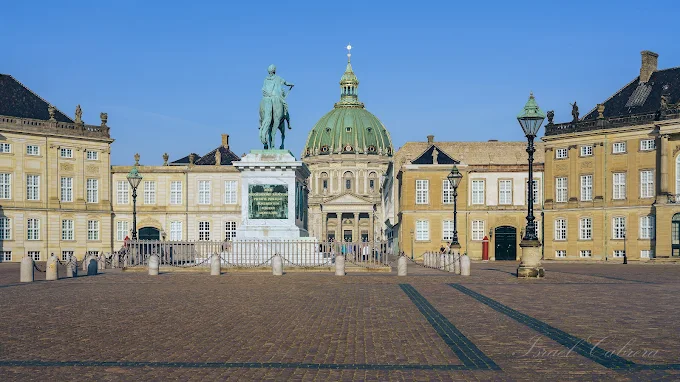
I stand at the edge of the octagonal courtyard just before noon. Four identical palaces face inward across the open square. Guards in dark uniforms stand motionless at their posts. I paid nothing to enter the courtyard. The guided museum tour cost 95 DKK. The train ride from central Copenhagen took ten minutes. It cost 36 DKK one way. I bought a warm coffee from a café on the corner. It cost 32 DKK and tasted smooth. The royal family lives here still. When their flag flies, someone is home. This is not a museum locked away — it is a working palace where history happens every day.
Why Amalienborg Palace Matters
Amalienborg was built in the mid-1700s as part of a grand new district planned around an octagonal square. Four symmetrical palaces were erected for noble families. When Christiansborg Palace burned down in 1794, the royal family moved in, and Amalienborg became the permanent royal residence. Today each palace serves a distinct purpose — one for the royal couple, one for the heir, one for official functions, one housing public museums. The design is unique — perfect symmetry, equal scale, open space. It reflects ideals of order and power. Beyond architecture, Amalienborg matters because it remains a living home. The Changing of the Guard takes place daily, linking past and present. It is where the nation greets dignitaries, celebrates milestones, and mourns together.
It is not one single building open throughout. Only two palaces have public access — the rest stay private. Which sections you can visit changes with the royal calendar — rooms close when in use. Photography is restricted in several areas. The courtyard feels exposed; wind and rain sweep across openly. In summer, crowds fill the square during the guard ceremony and quiet vanishes. Some visitors expect vast interiors and find the accessible spaces more modest than imagined.
The Best Time to Experience Amalienborg Palace
Late May through early September offers the longest days and fullest atmosphere. Daytime temperatures sit between 14°C and 21°C (57°F–70°F). The Changing of the Guard happens daily at noon. Arrive twenty minutes early to stand where you can see clearly. July and August stay busiest — visit midweek if you can.
April, early May, and September balance mild weather and fewer visitors. Temperatures hover around 9°C–15°C (48°F–59°F). Spring brings blossom to the streets leading from the harbor. Autumn turns the nearby tree-lined avenues gold. October through April brings shorter days and cooler conditions — 2°C–7°C (36°F–45°F). The guard ceremony continues but may be shortened in bad weather. Winter visits feel quiet and dignified — the square stays empty and calm. Saturdays and Sundays draw more onlookers year-round.
Approximate Budget for a 7-Day Trip
- Accommodation: 4,200 DKK – 7,350 DKK. Hotel or B&B in Indre By or Nyhavn sits closest. Staying in Nørrebro or Vesterbro costs less — ten to fifteen minutes by metro or foot.
- Food & Drink: 1,750 DKK – 2,940 DKK. Lunch at a nearby café costs 115–195 DKK. Dinner in Nyhavn runs 195–310 DKK per person. Buying fresh bread and open sandwiches from local bakeries saves nearly half.
- Transport: 630 DKK – 1,190 DKK. Most central areas are walkable. Harbor bus or metro costs 36 DKK one way. Bicycle rental works perfectly at 100–140 DKK per day — dedicated lanes lead directly to the square.
- Attractions & Entry: 380 DKK – 570 DKK. Museum ticket 95 DKK adult. Children under 18 free. Special exhibits may carry small extra fee.
- Miscellaneous: 525 DKK – 875 DKK. Covers coffee, snacks, and small souvenirs.
Total estimated budget: 7,485 DKK – 12,925 DKK per person for 7 days.
One thing to watch: restaurants directly facing the square charge premium rates. A meal can cost 90 DKK more than at places just two streets away. Walk a short distance — the same food costs less and atmosphere feels more authentic.
Essential Amalienborg Palace Experiences
- Watch the Changing of the Guard. The ceremony begins at noon. Music, uniformed guards, and precise movements unfold across the square. It feels formal and quietly powerful. Arrive early — crowds gather fast. Skip if you dislike standing in crowds — the same ceremony happens daily and is shorter in winter.
- Tour the royal museum sections. Rooms where past monarchs lived, worked, and received guests. Furniture, portraits, and personal items appear in context. You see how life was lived behind the public face. Check opening times — these areas close for official functions.
- Walk the full octagonal circuit. Four palaces, equal and aligned. The perspective shifts as you move — towers and facades frame differently from each side. Notice how the architect balanced every view. Look toward the harbor — Frederik's Church and water appear perfectly centered.
- Stand near the royal residence entrance. When the flag flies, the family is inside. Guards stand still as statues. It feels ordinary yet extraordinary — a working palace open to the city. Keep voice low — this is a home as much as a landmark.
- Walk from Nyhavn along the waterfront. The approach follows the harbor edge. Palaces appear ahead framed by water and trees. This is how visitors arrived by boat in centuries past. It sets the perfect tone before you reach the square.
- Visit the square at dusk. Lamplight glows against pale stone facades. Most day visitors have left. The guards remain. The square settles into quiet. It is when Amalienborg feels most like a home and least like an attraction.
Hidden Gems Most Travelers Miss
- The quiet northern side of the square. Most people gather near the center and harbor. This stretch stays empty. You see the palace facades clearly with no crowd. The light falls beautifully in late afternoon.
- Overrated spot: the center viewpoint during the ceremony. Every group crowds here. Stand fifty yards back along the west edge. The full ceremony unfolds with all four palaces in your frame.
- The small garden behind the eastern wing. Tucked away and easy to miss. Benches sit under trees. It offers a moment of calm away from the square. Few visitors find their way in.
- The approach street from Bredgade. Tall buildings frame the palaces as you walk toward them. It reveals the original grand design — how the whole district was planned around this centerpiece. Look up and notice the symmetry.
- Early morning light on the facades. Arrive before 10:00 AM. Sun hits the pale stone and turns it warm. No crowds yet. You have the square almost to yourself.
Cultural & Practical Tips
- Check opening times online before traveling. Museum sections close suddenly when royal events are scheduled. Confirm what is accessible on the day.
- Stand respectfully during the guard ceremony. Do not block paths or step across barriers. It is a public event but also a military duty — treat it with courtesy.
- Respect privacy. This is a real home. Stay on public paths. Do not lean over railings or photograph windows. Signs are clear — please honor them.
- Wear comfortable shoes. You will walk across open paving and through surrounding streets. The area connects to Nyhavn, the harbor, and museums — exploring adds up.
- Do not rush. Many people plan thirty minutes and leave feeling they saw nothing. Two hours minimum lets you watch the ceremony, tour the museum, and walk the square. Half a day feels relaxed.
- Bring layers and a windproof jacket. The square is fully exposed. Wind off the harbor feels colder than elsewhere. Even sunny days turn breezy.
Essential Visitor Information
Location & Access: Amalienborg Palace, Amalienborg Slotsplads, 1257 København K. Three ways to arrive: walk from Nyhavn (10 minutes); metro to Kongens Nytorv then 5-minute walk; bus 1A or 2K to Bredgade then 3-minute walk.
Tickets & Booking: Museum section 95 DKK adult. Children and young people under 18 free. Booking ahead recommended June–August. Courtyard access free always.
Operating Hours: Courtyard open 24 hours daily. Museum sections typically 10:00 AM–4:00 PM; closed Mondays outside peak season. Ceremony daily at noon — may be modified in bad weather.
Visit Duration: Minimum 1 hour for ceremony and courtyard. 2–3 hours includes museum and surrounding walk. Half a day if combining with harbor and Nyhavn exploration.
Family Suitability: Good. Open space suits children. Stroller access excellent. Restrooms nearby. Museum rooms quiet and formal — best for older children.
Timing: Best season: May or September. Best time: 11:30 AM for ceremony; early morning or dusk for quiet. Weekdays stay noticeably quieter than weekends.
Highlights: Changing of the Guard, royal museum sections, octagonal courtyard symmetry, dusk lamplight, waterfront approach from Nyhavn.
Nearby & Day Trip: Nyhavn 10 minutes on foot. Frederik's Church 5 minutes. Christiansborg Palace 15 minutes. Tivoli Gardens 20 minutes.
Conclusion: Travel with Depth, Not Just Sight
Amalienborg is not frozen in time. It breathes, changes, and stays alive. Flags rise and fall. Guards march. Doors open and close for births, weddings, funerals, ordinary days. Walk respectfully. Look beyond the ceremony to the quiet life unfolding behind the walls. What does it mean to live in a home the whole world watches?
Post a Comment