
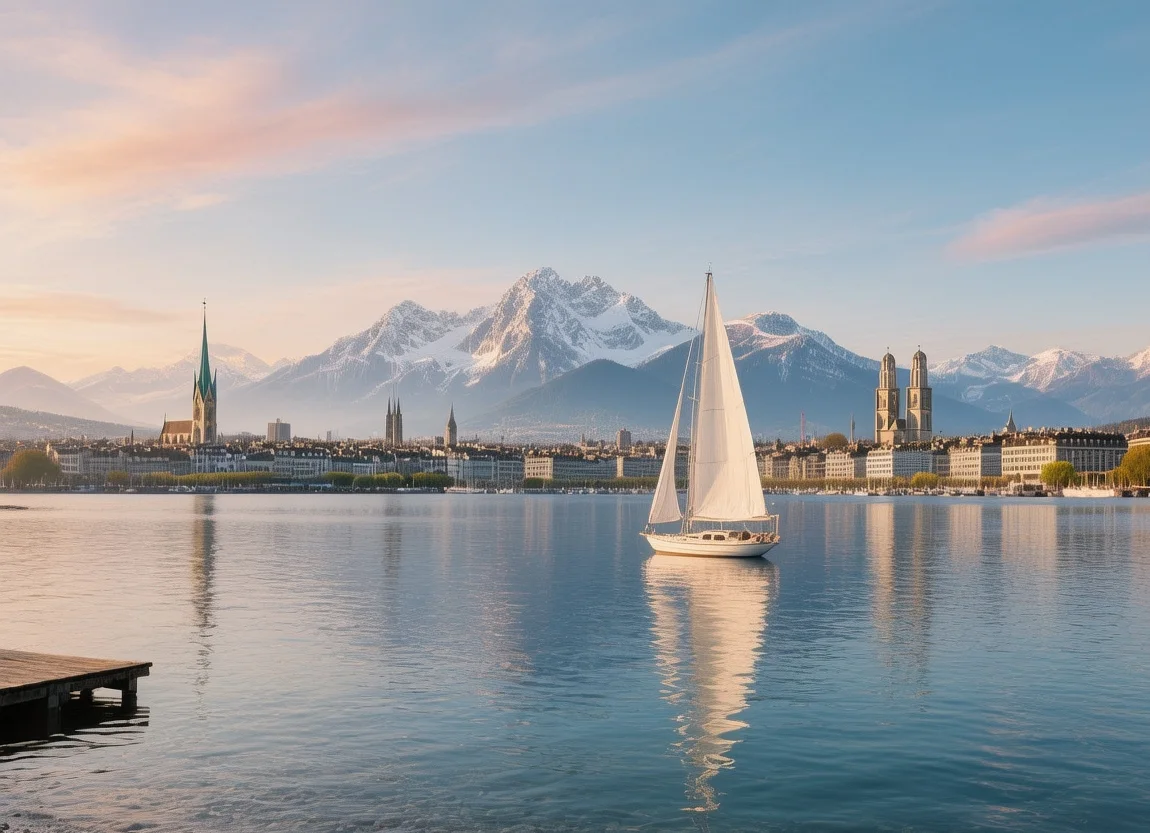
Lake Zurich Alpine Reflections Meet Urban Elegance
The surface of the water shimmers like polished mercury as a historic paddle steamer cuts through the calm—its white wake trailing behind like a ribbon of lace against the deep blue expanse. You stand on the quay at Bürkliplatz, breathing air that carries the crisp scent of glacial meltwater mixed with the faint perfume of lakeside linden trees, watching the horizon where the 40-kilometer length of Lake Zurich disappears into the haze of the Glarus Alps. The water here is cold—never exceeding 22°C (72°F) even in August—yet it invites you with a clarity that reveals stones seven meters below the surface. Since the water level was regulated in 1880, this glacial fingerprint has served as both a transportation artery and a recreational sanctuary for the city that bears its name. In 2026, as urban centers worldwide struggle with heat islands and disconnection from nature, Lake Zurich remains a vital cooling corridor—a place where the boundary between metropolitan life and Alpine wilderness dissolves, demanding that you slow down, look outward, and remember that some landscapes are meant to be navigated rather than conquered.
Why Lake Zurich Embodies Swiss Hydrological Engineering
Lake Zurich represents a unique fusion of natural glacial formation and human hydraulic management, solving the historical problem of flooding while creating a stable recreational resource for millions. Formed during the last Ice Age by the Linth Glacier, the lake stretches 40 kilometers in length with a maximum depth of 143 meters, holding approximately 3.9 cubic kilometers of water. The Seeabfluss (lake outflow) was engineered in 1880 to stabilize water levels, preventing the catastrophic floods that once submerged the Niederdorf district every few decades. This engineering feat allows the Zürichsee-Schifffahrtsgesellschaft (SGZ) to operate a consistent fleet of 17 vessels, including five historic paddle steamers, without worrying about seasonal dock submersion.
Beyond utility, the lake fulfills a cultural need for accessible nature within a financial capital. The shoreline is publicly accessible for 70% of its perimeter, a rarity for lakes surrounded by major urban development. The water quality is monitored daily by the Amt für Abfall, Wasser, Energie und Luft (AWEL), ensuring drinking-grade clarity that supports swimming at 16 designated badis (lidos). The lake's orientation—running southeast to northwest—creates a natural wind tunnel that clears pollution quickly, maintaining visibility ranges of over 30 kilometers on clear days. Today, the infrastructure balances preservation with access: electric boats now supplement diesel vessels, while shoreline promenades remain unpaved in rural sections to protect aquatic habitats. This living heritage proves that urban lakes can remain ecological sanctuaries while serving as vibrant public spaces.
The Best Time to Experience Lake Zurich
For optimal conditions combining swimmable water temperatures, clear visibility, and operational frequency of historic steamers, visit between June 15–July 5 or September 1–September 20. During these windows, daytime temperatures range from 20–25°C (68–77°F), while water temperatures reach 18–21°C (64–70°F). The ideal time to board a boat is 10:00–11:30 AM, when the morning breeze has settled and the light illuminates the Alps without creating glare on the water surface.
Winter visits (December–February) offer a stark beauty with snow-capped peaks, but water activities cease and fog (Nebel) frequently obscures the view from the city. The Bise wind from the northeast can drop perceived temperatures to -5°C (23°F) despite air temperatures hovering around 2°C (36°F). Summer peak season (July 20–August 15) brings water temperatures up to 22°C (72°F) but also crowds at popular swimming spots like Strandbad Tiefenbrunnen. The lake breeze provides relief, but shoreline restaurants require reservations weeks in advance.
Avoid these periods: August 1 (Swiss National Day fireworks create boat traffic congestion), November 1–15 (annual maintenance shutdowns for several boat lines), and late October (fog season reduces visibility to under 100 meters). For real-time water temperatures and boat schedules, verify conditions at zuerichsee.ch or check the SGZ fleet status at zsg.ch for seasonal operating hours.
Approximate Budget for a 7-Day Trip (2026)
This budget estimate reflects mid-range travel preferences for a solo traveler or couple, based on 2026 pricing adjusted for Switzerland's 2.5% annual inflation rate (Swiss Federal Statistical Office data). Lake Zurich exploration requires strategic budgeting, as lakeside accommodation commands a premium over city-center options.
Accommodation:
• Budget hostel (dorm bed): CHF 65–CHF 90 per night (Youth Hostel Zurich, near Sihlquai)
• Mid-range hotel (3-star, lakeside): CHF 240–CHF 330 per night (Hotel Seeburg or Lake View Hotel)
• Upscale boutique (4-star, panoramic views): CHF 450–CHF 650 per night (Baur au Lac or Dolder Grand)
Food: CHF 85–CHF 125 per day
• Breakfast: CHF 22–CHF 32 (hotel buffet with Swiss muesli and local cheeses)
• Lunch: CHF 32–CHF 48 (lakeside restaurant fish menu or market sausage)
• Dinner: CHF 55–CHF 80 (traditional fondue at Swiss Chuchi or lakeside grill)
• Coffee/pastry: CHF 9–CHF 15
Transportation:
• Swiss Travel Pass (8 days, 2nd class): CHF 432 (covers trains, buses, boats, museums)
• Zurich Card (72 hours): CHF 68 (includes public transport and 50+ museum entries)
• Airport transfer (Zürich HB to Lake): covered by Zurich Card or CHF 6.80 train ticket
• Local boat (Line S8, S16): CHF 4.40 per ride (free with Zurich Card)
Attractions:
• Lake Zurich Boat Cruise: CHF 28 (free with Swiss Travel Pass)
• Lindt Home of Chocolate: CHF 25 (free with Zurich Card)
• Swiss National Museum: CHF 20 (free with Swiss Travel Pass)
• Uetliberg Mountain Railway: CHF 72 round-trip (50% off with Swiss Travel Pass)
• Guided Lake Walking Tour: CHF 40
Miscellaneous:
• Souvenirs (Swiss knife, chocolate, watch): CHF 100–CHF 500
• Travel insurance (7 days): CHF 55–CHF 85
• SIM card/data (Swisscom 10GB): CHF 45
• Emergency fund: CHF 200
Total estimated cost (mid-range): CHF 2,800–CHF 3,600 for 7 days
Budget traveler option: CHF 1,500–CHF 1,800
Luxury experience: CHF 6,500–CHF 11,000+
7 Essential Lake Zurich Experiences
1. Historic Paddle Steamer Cruise: Board the Stadt Zürich at Bürkliplatz at 10:40 AM for the journey to Rapperswil. The 1909 engine hums beneath the wooden deck as you pass vineyards and villages. Sit on the upper deck for unobstructed Alpine views. The journey takes 2 hours 15 minutes one-way. Cost: CHF 28 (free with Swiss Travel Pass). Bring a windbreaker; it is cooler on the water.
2. Swimming at Strandbad Tiefenbrunnen: Arrive by 9:00 AM to secure a spot on the wooden sunbathing platforms. The water is clean enough to drink, though chilly. Rent a locker for CHF 5. The facility includes a restaurant serving lake fish. Open May–September 10:00 AM–7:00 PM. Entry: CHF 8 adults. Towels available for rent.
3. Lakeside Promenade Walk: Walk the 3-kilometer path from Bürkliplatz to Tiefenbrunnen at 5:00 PM. The path is paved with granite stones and lined with century-old plane trees. You pass luxury villas and public parks. Free access. Best photographed during golden hour when the water reflects the sunset.
4. Rapperswil Rose Garden Visit: Disembark at Rapperswil and hike to the castle hill. The garden contains 15,000 rose bushes blooming June–October. The view back toward Zurich is panoramic. Open daily dawn to dusk. Free entry. Allow 90 minutes for the walk and garden exploration.
5. Uetliberg Panorama View: Take the S10 train from Zurich HB to the summit at 869 meters. The viewing platform overlooks the entire lake length. The hike down to Adliswil takes 1 hour. Open 24 hours. Train cost: CHF 7.20 (50% off with Swiss Travel Pass). Best visited: Clear mornings for visibility.
6. Wine Tasting in Meilen: Visit the lakeside village of Meilen at 3:00 PM. Several vineyards offer tastings of Pinot Noir grown on the slopes. The soil is rich in limestone. Contact +41 44 923 12 34 for appointments. Tasting cost: CHF 25 per person. Open Tuesday–Saturday 2:00 PM–6:00 PM.
7. Christmas Market Boat Ride: Visit between December 1–23 for the special evening cruise. The boat is decorated with lights and serves mulled wine. The shoreline villages glow in the darkness. Temperatures hover around 0°C. Best viewed at 6:00 PM when darkness falls. Cost: CHF 45 adults. Book 2 weeks in advance.
3 Hidden Gems Most Travelers Miss
• Au Peninsula: Located near Wädenswil, this protected nature reserve offers quiet walking paths away from crowds. Access: Take train to Wädenswil, then bus 884 to "Au, ZH". Open daily dawn to dusk. Free entry. Insider tip: Visit during migration season (April/May) for birdwatching. The restaurant serves fresh lake fish.
• Schloss Wädenswil Vineyards: While most visit Meilen, the slopes above Wädenswil castle offer superior views and fewer tourists. Access: 15-minute uphill walk from Wädenswil train station. Open daily. Free entry. Insider tip: The path behind the castle leads to a secluded viewpoint over the lake bend.
• Feldmeilen Harbor: A small working harbor with historic wooden boats rarely seen by tourists. Access: Take train to Feldmeilen, walk 5 minutes to the shore. Open 24 hours. Free access. Best visited: Early morning when fishermen return. The café harbor-side serves excellent coffee.
Cultural & Practical Tips
• Swimming etiquette: Most badis separate men and women in certain sections. Topless sunbathing is accepted in designated areas only. Shower before entering the water to maintain hygiene. Fines for littering are CHF 200.
• Boat ticket validation: If using paper tickets, validate before boarding at the blue machines. Digital tickets via SBB Mobile app are scanned by inspectors. Fines for fare evasion are CHF 100. Keep tickets until you exit the station.
• Language basics: The region speaks Swiss German. Learn these phrases: "Grüezi" (GRÜE-tsi) for hello, "Merci vilmal" (MAIR-see feel-mahl) for thank you very much, "See" (ZAY) for lake. English is widely spoken on boats.
• Photography guidelines: Tripods are permitted on public quays but not on moving boats (they block aisles). Drone usage requires FOCA authorization and is rarely granted over the lake. Respect privacy; do not photograph sunbathers without consent.
• Weather considerations: The Föhn wind can raise temperatures 10°C rapidly but creates rough water. Check the SGZ weather hotline (+41 44 261 21 11) before booking cruises. Even in summer, evenings cool to 12°C (54°F). Carry a light jacket.
• Water safety: Swimming outside designated badis is allowed but risky due to boat traffic. Wear a bright swim cap. Never swim near the harbor entrances where currents are strong. Life rings are available at most public quays.
Conclusion: Travel with Presence, Not Just Checklists
Lake Zurich stretches 40 kilometers not merely to be crossed, but to be contemplated—a ribbon of glacial history that connects the urban pulse of Zurich with the silent grandeur of the Alps. As you stand on the quay in 2026, watching the paddle steamer vanish into the haze, remember that this water has quenched the thirst of generations and reflected the lights of countless evenings. Responsible travel means respecting the water quality, using public transport to reach the shores, and understanding that the silence of the Au Peninsula is a fragile resource worth protecting. Slow down. Dip your hands in the cold water. Watch the light change on the surface. Leave no trace on the shoreline paths. This lake will endure long after your visit ends, carrying the stories of future generations who seek connection with the elements. Carry forward not just photographs, but a deeper appreciation for the balance between enjoying natural wonders and preserving them for those who will walk these quays in 2126.