Louisiana Museum: Where Modern Art Meets Danish Coastal Serenity
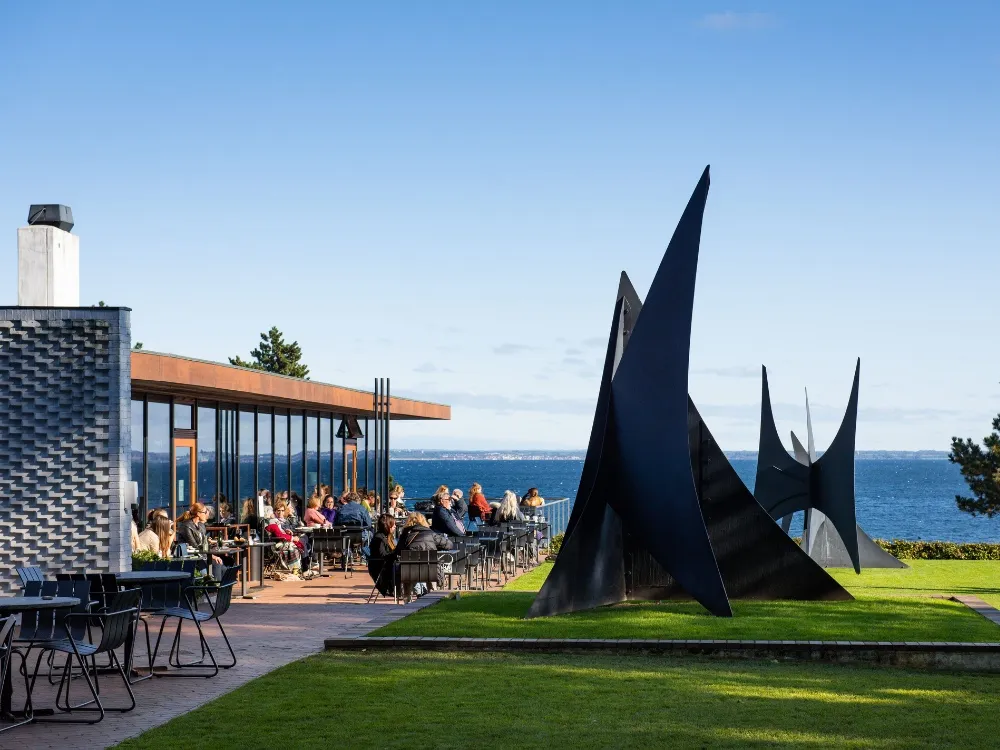
Louisiana Museum: Where Modern Art Meets Shore and Sky
I step through the entrance just past eleven in the morning. Glass walls blur the line between inside and out. Sound of the sea drifts through open doorways. I paid 145 DKK for adult admission. The train ride from Copenhagen took thirty-five minutes. It cost 110 DKK one way. I bought a coffee at the café. It cost 38 DKK and tasted smooth. Light falls everywhere — across canvases, through oak leaves, onto the water. Sculptures stand among trees as if they grew there. Nothing feels separated. Art, nature, and people breathe the same air.
Why Louisiana Museum Matters
Louisiana opened in 1958 on a former estate north of Copenhagen. The building itself is a masterpiece — low pavilions connected by glass corridors, winding down a wooded slope toward the Øresund. Every turn reveals a new view — gallery opening to terrace, sculpture appearing between trunks, sea stretching beyond. The collection holds modern and contemporary art from the mid-20th century onward. Special exhibitions draw international attention. But what makes Louisiana truly different is how it treats art and nature as equals. You do not just see the work — you experience it alongside shifting light, rustling leaves, and the sound of waves. It feels less like a museum and more like a living conversation between human creativity and the natural world.
It is not a quiet escape on weekends. Crowds fill the most popular rooms and terraces. The layout can feel disorienting — levels shift, corridors branch, and you may circle back without meaning to. Photography is restricted in some galleries. The permanent collection is strong but rotates; you may not see specific works you expect. In summer, outdoor areas feel busy and the shore path fills fast.
The Best Time to Experience Louisiana Museum
Late May through early September offers the longest days and fullest outdoor experience. Daytime temperatures sit between 14°C and 21°C (57°F–70°F). Terraces stay open late on selected Thursdays — seeing the coast turn from daylight to evening glow feels unforgettable. Arrive before 11:00 AM to walk the sculpture park quiet. July and August stay busiest — book tickets online ahead.
April, early May, and September balance mild weather and fewer visitors. Temperatures hover around 9°C–15°C (48°F–59°F). Spring brings blossom to the slope. Autumn turns the woods gold. October through April brings shorter days and cooler conditions — 2°C–7°C (36°F–45°F). The museum closes at 5:00 PM then. Winter visits feel contemplative — light falls soft and low through bare branches. Tuesdays through Thursdays stay quietest year-round.
Approximate Budget for a 7-Day Trip
- Accommodation: 4,200 DKK – 7,000 DKK. Guesthouse or B&B in Humlebæk or nearby towns sits lower. Hotel with sea view runs 850–1,100 DKK per night. Staying in Copenhagen gives more options — thirty-five minutes by train.
- Food & Drink: 1,820 DKK – 3,010 DKK. Lunch at the museum café costs 135–225 DKK. Dinner in Humlebæk or Elsinore runs 195–310 DKK per person. Bringing a picnic to eat on the shore terrace saves nearly half.
- Transport: 840 DKK – 1,540 DKK. Train from Copenhagen 110 DKK one way. Local bus from Humlebæk station 36 DKK. Bicycle rental works perfectly at 100–150 DKK per day — coastal paths lead directly to the entrance.
- Attractions & Entry: 435 DKK – 580 DKK. Museum ticket 145 DKK adult. Children under 18 free. Special exhibits included in admission.
- Miscellaneous: 560 DKK – 910 DKK. Covers coffee, snacks, books, and postcards.
Total estimated budget: 7,850 DKK – 13,040 DKK per person for 7 days.
One thing to watch: the museum café charges premium rates. A full meal here costs 95 DKK more than at places just a short walk away. Step out, eat well, and return — your ticket gives all-day re-entry.
Essential Louisiana Museum Experiences
- Walk the sculpture park. Works by modern masters stand on the slope — some bold, some quiet, all in dialogue with trees and sky. Paths wind gently down. Every viewpoint frames something new. Go early — the light falls best before noon. Skip if you cannot manage uneven ground — the slope is gentle but continuous.
- Stand in the ocean-facing wing. Floor-to-ceiling glass looks straight across the water. Sometimes Sweden appears clear on the horizon. Artworks hang beside the view. The two compete and complement each other. Sit and watch the light change across the surface.
- Explore the permanent collection galleries. Rooms move through decades — abstract, figurative, experimental. Curators arrange works thoughtfully, not just chronologically. You see connections across time and style. Move slowly — some pieces reward long looking.
- Walk the shore path below the museum. It runs along the water’s edge. You see the building from outside — pavilions set among trees, glass catching light. Sculptures appear from different angles. It feels peaceful and entirely separate from the galleries.
- Visit the terrace at sunset — on late-opening Thursdays. The sun dips low across the water. The museum glows from within. Most people leave by 4:00 PM on other days. Stay late if you can — the atmosphere shifts completely.
- Find the hidden garden nooks. Benches tucked between galleries and trees. Few visitors pause here. You hear wind in the branches and water lapping the shore. It is where the museum feels most itself — quiet, open, alive.
Hidden Gems Most Travelers Miss
- The upper west terrace. Most people head straight down to the water. This higher spot catches afternoon sun and looks back across the museum roofs. Empty benches wait with clear light and calm.
- Overrated spot: the main entrance viewpoint. Every group stops here. Walk fifty yards along the path to the right. The same building and sea appear with no crowd in your frame.
- The quiet print room. Tucked away on an upper level. Drawings, etchings, and photographs change regularly. It feels focused and intimate. Most visitors never find their way up.
- The woodland loop behind the parking area. A short trail winds through tall trees. It connects to the shore path. No sculptures line it — just nature. It offers a gentle reset before heading home.
- Early morning light in the central hall. Sun streams through glass roofs before 11:00 AM. It falls across the space and moves visibly across the floor. Arrive at opening to catch it at its best.
Cultural & Practical Tips
- Buy tickets online ahead. It saves queuing and guarantees entry. Special exhibits and weekends sell out completely. Do not count on buying at the door then.
- Respect photography rules. Some galleries ban photos entirely. Others allow without flash. Signs are clear — please honor them. It protects the art and keeps rooms calm.
- Wear comfortable walking shoes. The museum spreads across connected levels and slopes. You will walk up and down gentle inclines repeatedly. Flat, supportive shoes make the day feel effortless.
- Do not rush. Many people plan one and a half hours and leave feeling they barely touched the surface. Three hours minimum lets you see main galleries, sculpture park, and shore path. Half a day feels relaxed.
- Check late-opening dates. Thursdays until 9:00 PM offer the best experience — softer light, fewer crowds, sunset over the water. It changes the whole visit.
- Bring layers and a light jacket. The shore breeze feels cooler than inland. Terraces stay open year-round. Even sunny days turn breezy by afternoon.
Essential Visitor Information
Location & Access: Louisiana Museum of Modern Art, Gl. Strandvej 13, 3050 Humlebæk. Three ways to arrive: train from Copenhagen Central Station to Humlebæk (35 minutes) then 10-minute walk; car via coastal road — paid parking available on-site; bicycle via dedicated coastal paths from north of Copenhagen.
Tickets & Booking: Adult 145 DKK online or at door. Children and young people under 18 free. Seniors and students 120 DKK. Booking ahead recommended June–August and for special exhibits.
Operating Hours: Tuesday–Friday 10:00 AM–5:00 PM; extended to 9:00 PM on selected Thursdays. Saturday–Sunday 10:00 AM–5:00 PM. Closed Mondays.
Visit Duration: Minimum 2–3 hours. 4 hours lets you explore fully and sit with artworks. Half a day if combining with shore walk and café meal.
Family Suitability: Excellent. Interactive areas suit children. Stroller access good indoors; outdoor slopes and paths need care. Restrooms and baby-care rooms available.
Timing: Best season: May or September. Best time: before 11:00 AM or late Thursday evening. Weekdays stay noticeably quieter than weekends.
Highlights: Sculpture park, ocean-facing gallery, shore path, sunset terrace, changing contemporary exhibits.
Nearby & Day Trip: Kronborg Castle Helsingør 15 minutes by train. Frederiksborg Castle 30 minutes by car. Copenhagen city center 35 minutes by train. Roskilde 45 minutes by car.
Conclusion: Travel with Depth, Not Just Sight
Louisiana does not separate art from the world outside. Windows frame the sea. Trees grow beside canvases. Light and sound shift through every room. It reminds you that creativity belongs to the living world. Walk slowly. Sit often. Let the space speak. What will you carry away from where art meets the shore?
Post a Comment