
Joanina Library: Where Baroque Grandeur Meets Ancient Cedar Scent
Morning light slants through the high windows of the Joanina Library, catching swirling dust motes that dance above gilded, trompe-l'œil ceilings. You stand in the hushed nave of the main hall, enveloped by the rich, intoxicating aroma of aged cedar, beeswax, and the faintest lingering trace of clove oil. The air feels distinctly cool—a stabilized, subterranean chill that defies the warm Portuguese sun beating down on the cobblestones outside. Towering above you, two stories of intricately carved Brazilian oak shelves stretch 70 meters (230 feet) in total length, holding approximately 60,000 volumes bound in russet, navy, and pale green leather. Your footsteps echo against the polished elm floor, a sharp contrast to the absolute stillness of the surrounding stacks. Commissioned by King João V during the early eighteenth century, this sanctuary of knowledge stands as a physical manifestation of the Portuguese Enlightenment. The Joanina Library matters because it is not merely a repository of old books; it is a masterful, living triumph of preventative engineering, using organic chemistry and architectural ingenuity to outsmart time itself.
Why Joanina Library Embodies Architectural Preservation
The Joanina Library embodies architectural preservation because it was explicitly engineered to solve a devastating environmental problem: the rapid degradation of parchment and paper in a notoriously humid, salt-air climate. When construction began in the early eighteenth century under the direction of architect Gaspar Ferreira, the overarching challenge was creating a microclimate entirely independent of the volatile exterior. Ferreira solved this through a brilliant combination of structural mass and organic chemistry. The exterior walls measure a staggering 2.1 meters (7 feet) thick, constructed from dense local limestone to create a massive thermal buffer. This immense weight stabilizes interior temperatures year-round. Inside, the technical mastery continues. The reading desks and towering shelves are built from exotic Brazilian wood—specifically mahogany, cedar, and ebony—chosen not just for beauty, but for their natural resistance to moisture and insects. To combat the persistent threat of paper-destroying pests, the wood was meticulously treated with an alchemical mixture of lard, cinnamon, and cloves. This aromatic coating acts as a natural insecticide, filling the air with a spicy, protective perfume. Even the lighting is an engineered solution; daylight enters indirectly through a system of angled, concealed windows, illuminating the gilded Baroque arches without exposing the fragile book spines to direct ultraviolet rays. Every single material and structural choice functions as a defensive mechanism, transforming the library into an impenetrable fortress of preservation.
The Best Time to Experience Joanina Library
To experience the Joanina Library in its most contemplative state, plan your visit between April 10 and May 20. During this narrow window, the academic spring semester is fully underway, lending the surrounding courtyards an authentic intellectual energy, while the inland Coimbra temperatures remain a comfortable 16°C–21°C (61°F–70°F). Arrive precisely between 9:00 and 10:15 AM. At this early hour, the angled light perfectly illuminates the intricate ceiling paintings by Lisbon artists Simões Ribeiro and Vicente Nunes, and the guided groups remain small, allowing you to hear the distinct, creaking settle of the ancient wood. You should strictly avoid July 15 through August 30; summer holidays push daytime temperatures to a sweltering 33°C (91°F), and the resulting humidity forces the library's delicate microclimate to work overtime, while claustrophobic crowds completely destroy the sanctuary's meditative silence. For real-time ticket availability, conservation notices, and scheduled closures of the university complex, consult the official municipal tourism portal at https://visit.uc.pt. Checking this resource ensures you secure the strictly timed entry slot required to witness this architectural marvel without the frustration of being turned away at the door.
Approximate Budget for a 7-Day Trip
Estimating costs for a cultural immersion into the Joanina Library requires factoring in the highly favorable pricing of Coimbra, a city built around a student economy. This budget reflects a mid-range traveler prioritizing deep historical engagement and regional gastronomy over luxury accommodations.
- Accommodation: €70–€100 per night (a restored nineteenth-century guesthouse in the historic Almedina district, featuring exposed stone archways and views of the Mondego River valley)
- Food: €45 per day (Breakfast €4 for a strong bica espresso and a flaky pastel de nata; Lunch €13 for a hearty prato do dia featuring chanfana—goat stew slow-cooked in red wine—at a bustling local tavern; Dinner €28 for a refined tasting of leitão à Bairrada [roast suckling pig] paired with a crisp Espumante at a traditional brick-vaulted restaurant)
- Transportation: €14 total (€1.65 per ride on the SMTUC urban Bus 34 or 35, which connects the Coimbra-A train station directly to the university hilltop; extensive pedestrian zones make additional transit unnecessary)
- Attractions: €17 total (€14.50 for the combined Paço das Escolas and Joanina Library entrance ticket; €2.50 for the Old Cathedral of Coimbra; €0 for wandering the university courtyards and the lower botanical gardens)
- Miscellaneous: €35 total (a hand-carved cork bookmark from a local artisan cooperative, a box of traditional champurrada sponge cake from a downtown bakery, and a richly bound replica of a sixteenth-century manuscript from the university press)
Total: €571–€796
6 Essential Joanina Library Experiences
- Breathe in the Organic Climate Control: Step across the heavy threshold and pause on the elm floorboards. Close your eyes and inhale deeply. The distinct, spicy aroma hitting your senses is not an artificial air freshener, but the active, centuries-old pest-repellent treatment of lard, cinnamon, and clove oil still emanating from the untreated tropical wood shelves.
- Admire the Trompe-l'œil Ceiling: Stand in the center of the main nave and tilt your head back. The vibrant, illusionistic paintings depict complex allegorical scenes of wisdom and science, utilizing forced perspective to make the flat ceiling appear deeply domed. Notice how the blue and gold pigments seem to glow with an inner light, protected from fading by the carefully angled window shafts.
- Listen for the Resident Bats: As you move toward the darker recesses of the lower stacks, listen closely for faint, high-pitched squeaks. A colony of common pipistrelle bats lives behind the ornate wooden bookcases; they emerge at night to feast on insects, acting as a living, biological defense system that has protected the parchment for centuries.
- Examine the Gold-Tooled Bookbindings: Lean in closely—without touching—to inspect the spines of the older volumes on the upper galleries. You will see intricate, raised floral motifs stamped in real gold leaf over the dark morocco leather. These bindings represent the peak of seventeenth- and eighteenth-century European bookbinding craftsmanship.
- Study the Climate-Controlled Reading Desks: Observe the heavy wooden reading tables arranged in the center aisles. Notice they feature slanted tops and raised edges designed to hold the books securely. Light was historically provided by placing candles beneath the tables, allowing illumination to bounce upward toward the pages without exposing the delicate paper to open flames or direct heat.
- Walk the Antigo Recinto da Cadeia: Before exiting, descend the narrow stone staircase into the former academic prison located directly beneath the library floor. This stark, unadorned subterranean space features heavy iron rings embedded in the stone walls; it was historically used to detain unruly students, providing a jarring architectural contrast to the divine elegance above.
3 Hidden Gems Most Travelers Miss
- The Student Graffiti of the Academic Prison: Located at the bottom of the staircase leading out of the Joanina complex, this hidden gem is overlooked because visitors typically rush past the dark cells to reach the sunlight. Pause inside the second cell and shine your phone flashlight on the plaster walls; you will find centuries of ink and charcoal graffiti carved by imprisoned students, featuring satirical poems, crude sketches, and melancholic laments about their failed exams.
- The Silver Tabernacle Doors in the Exhibition Hall: Situated in the antechamber before the main library entrance, this small glass display case is routinely ignored as tourists push forward toward the grand doors. Inside rests a breathtaking silver and gold liturgical casket crafted by colonial Brazilian silversmiths. The intricate filigree work depicts indigenous flora and fauna, representing a stunning fusion of European religious iconography and South American artisanal techniques.
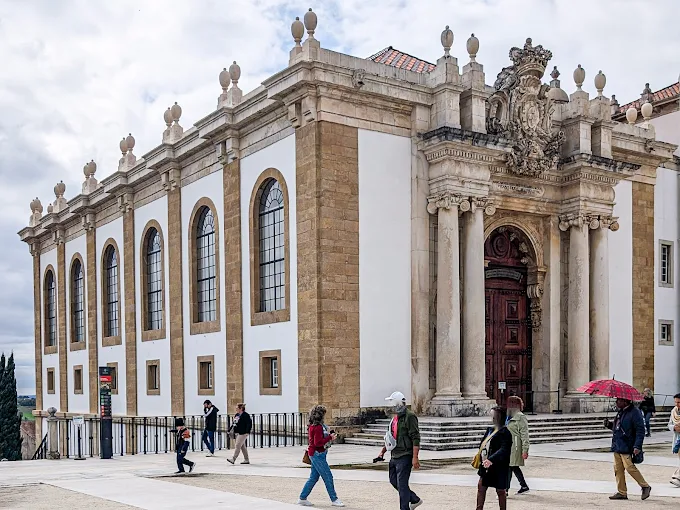
- The Capela de São Miguel Balcony View: This tiny, unmarked stone balcony is missed because it requires walking away from the library exit toward the adjacent university chapel. Stand at the railing of the chapel’s outer courtyard and look back up. This specific vantage point perfectly frames the Joanina Library’s massive, Baroque limestone facade against the bright blue sky, completely free of the crowds blocking the main square below. It is best photographed in the late afternoon.
Cultural & Practical Tips
- Photography is strictly prohibited inside the Joanina Library, even without flash; security guards strictly enforce this rule to protect the light-sensitive ancient pigments and prevent disruption to the delicate microclimate. Store your camera in your bag before entering the ticket queue.
- Book your timed entry tickets at least three weeks in advance during the busy academic months; daily capacity is severely limited to prevent the buildup of body heat and humidity from human breath, which threatens the fragile parchment volumes.
- Maintain absolute silence while inside the reading rooms; the library still functions as a revered research space for specialized scholars, and loud whispers or the shuffling of bags are met with immediate, stern reprimands from the attendants.
- Wear shoes with soft, quiet soles and excellent rubber grip; the approach to the library involves a steep, 200-meter (656-foot) climb up polished limestone cobblestones that become treacherously slick during the damp mornings common in autumn and winter.
- Learn basic Portuguese courtesies: say "Bom dia" (good morning, pronounced "bom dee-ah") when handing your ticket to the attendant, and "Obrigado" (thank you, pronounced "oh-bree-gah-doo") as you exit. This small effort is deeply appreciated by the university staff.
- Be prepared for a significant temperature shift; the library interior is maintained at a cool 18°C (64°F) year-round to protect the books. Even on a sweltering summer afternoon, bring a light sweater or jacket to wear during your twenty-minute guided visit.
Conclusion: Travel with Reverence, Not Just Recreation
The Joanina Library stands as a profound testament to the fragility of human knowledge and the extraordinary lengths required to protect it. When you choose to step softly through its gilded halls—respecting the strict prohibitions on photography and noise—you are actively participating in the preservation of a sanctuary that has defied decay for centuries. Mindful travel here means looking beyond the immediate visual gratification of the Baroque ceilings to appreciate the invisible, organic engineering happening around you: the thick walls buffering the heat, the spicy oils repelling insects, the bats policing the dark corners. By treating this space as a vital, functioning scientific instrument rather than a mere historical backdrop for a photograph, you honor the original architects who designed it to outlast them. Let the heavy wooden doors closing behind you serve as a reminder that true cultural immersion requires surrender. In a world addicted to instant digital access, the greatest privilege the Joanina Library offers is the rare, quiet space to simply stop, breathe in the cedar, and acknowledge the weight of time.