Ribe: Where Viking Heritage Meets Medieval Danish Charm
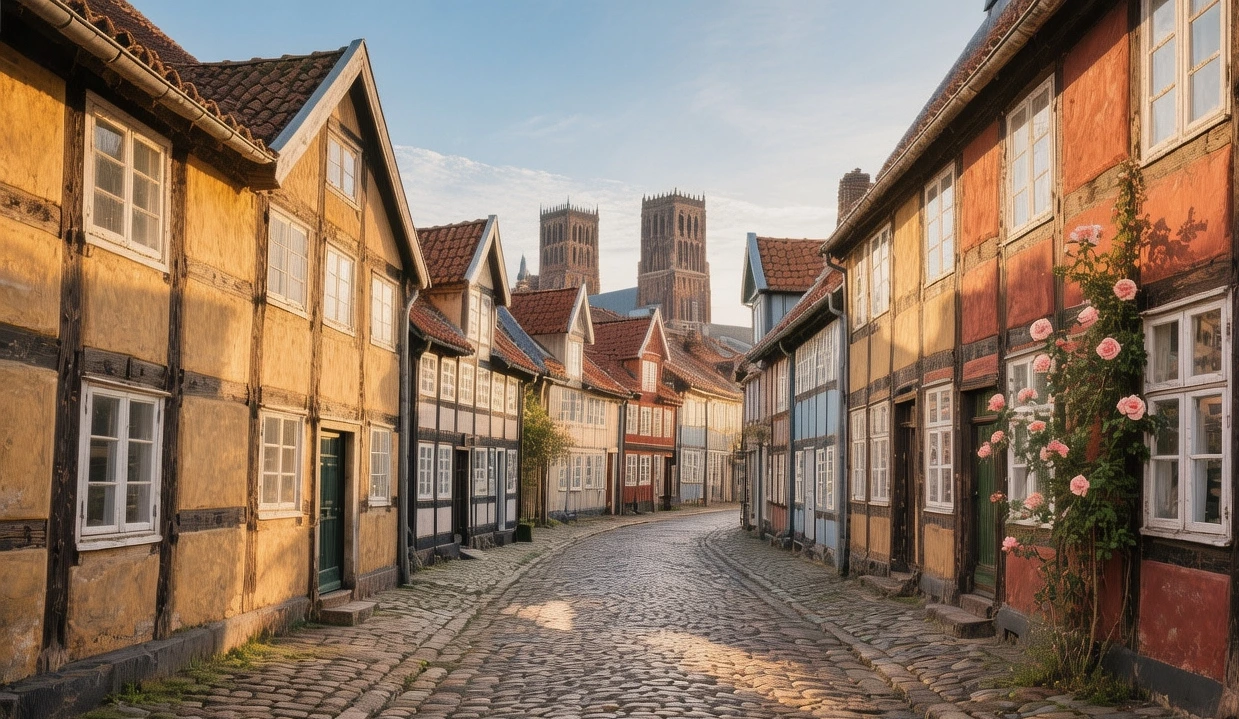
Ribe: Where Ancient Streets Meet Tidal Shores
I walk down the main lane just past ten in the morning. Cobblestones run worn smooth under my feet. Half-timbered houses lean gently toward each other. I paid nothing to wander the lanes. The guided tour cost 100 DKK at the center. The train ride from Esbjerg took twenty minutes. It cost 65 DKK one way. I bought a warm cinnamon roll from the bakery near the tower. It cost 22 DKK and smelled of cardamom and butter. The cathedral bell rings slow and deep. No loud traffic breaks the rhythm. Time moves differently here. You feel it in the stones themselves.
Why Ribe Matters
Ribe is Denmark's oldest surviving town. Founded in the early 8th century as a trading settlement, it has stood continuously on this ground for more than twelve hundred years. The medieval street plan remains almost unchanged — narrow lanes radiate from the cathedral, following paths laid out before written records began. Half-timbered houses from the 16th, 17th, and 18th centuries line every street. The town sits beside the Wadden Sea, so its history ties to both land and tide — merchants, sailors, and farmers all shaped its story. Ribe also holds one of Denmark's finest medieval cathedrals, built over centuries from the 12th to the 15th. Few places in Northern Europe preserve this sense of unbroken, living antiquity so completely.
It is not a museum frozen in time. People live and work here, so houses show everyday wear. Some visitors find the town smaller than they expect — you can walk the entire historic center in twenty minutes. In summer, day-trippers fill the main streets between 11:00 AM and 2:00 PM. Several lanes slope steeply and cobblestones make walking difficult for anyone with limited mobility. Rain makes the stone surfaces dangerously slippery.
The Best Time to Experience Ribe
Late May through early September offers the longest days and mildest weather. Daytime temperatures sit between 13°C and 20°C (55°F–68°F). Outdoor cafes open and the nearby Wadden Sea teems with birdlife. Arrive before 10:00 AM to have the streets quiet. July and August stay busiest — book accommodation well ahead.
April, early May, and September suit slower visits. Temperatures hover around 8°C–14°C (46°F–57°F). Spring brings blossom to cottage gardens. Autumn turns the surrounding marshes gold. October through March brings shorter days and cooler conditions — 2°C–7°C (36°F–45°F). Fewer visitors come then. The town feels quiet and genuinely old. Some smaller shops close for winter. Check opening times before traveling.
Approximate Budget for a 7-Day Trip
- Accommodation: 3,850 DKK – 6,300 DKK. Guesthouse or B&B inside the old town sits higher. Hotel or inn just outside the center costs less. Staying in Esbjerg cuts rates but adds travel time.
- Food & Drink: 1,750 DKK – 2,940 DKK. Lunch at a café costs 105–185 DKK. Dinner at a local restaurant runs 180–295 DKK per person. Buying bread, cheese, and smoked fish from the market saves nearly half.
- Transport: 770 DKK – 1,400 DKK. Train from Esbjerg 65 DKK one way. Local buses connect to the coast. Bicycle rental works perfectly at 100–140 DKK per day — flat paths lead everywhere.
- Attractions & Entry: 450 DKK – 650 DKK. Cathedral tower access 40 DKK. Ribe Vikingecenter 110 DKK. Wadden Sea visitor center nearby carries similar fees.
- Miscellaneous: 525 DKK – 875 DKK. Covers coffee, snacks, souvenirs, and guide donations.
Total estimated budget: 7,345 DKK – 12,165 DKK per person for 7 days.
One thing to watch: restaurants directly on the main cobbled street charge premium rates. A meal can cost 65 DKK more than at places just one lane back. Eat well and spend less by walking two minutes away from the busiest path.
Essential Ribe Experiences
- Climb the cathedral tower. Narrow stone steps wind upward. The view unfolds slowly — red roofs, green marshes, blue distance to the sea. You see exactly how the town was laid out. Go early — the stairs stay narrow and queues form by midday. Skip if you dislike confined spaces or heights.
- Walk the full medieval street grid. Follow lanes away from the main square. Notice how buildings change — grand merchant homes near the center, simpler cottages along the edges. Every lane has its own character. Walk slowly — the details matter more than speed.
- Visit the Wadden Sea shore nearby. Cycle or take the short bus ride out. Mudflats stretch vast and empty. The tide rules everything here. Combine the visit with low tide — check times locally. It feels like stepping into a different world.
- Explore Ribe Vikingecenter. Reconstructed longhouses, workshops, and harbor sit on the edge of town. Staff demonstrate crafts and explain daily life. It feels grounded rather than theatrical. It shows what Ribe was before the stone houses.
- Stand in the square at dusk. Streetlights glow warm against timber and plaster. The crowds leave. The cathedral tower rises dark and solid. The bell rings softly. It is the moment the town feels most itself.
- Walk the old rampart path. Grass-covered earthworks mark the town's former defenses. They form a quiet loop with views over rooftops and fields. Few visitors find their way here. It offers calm and perspective.
Hidden Gems Most Travelers Miss
- The lane behind the cathedral. Most people walk past the west front. Go around the side. Old gravestones lean against the chancel. Small gardens brighten the backs of houses. It feels entirely private.
- Overrated spot: the main square photo spot. Every group stops here. Walk fifty yards down any side street. The same architecture frames you with no crowd.
- The tidal path along the river. It runs from the town center out toward the sea. Reed beds and meadows line the banks. No signs mark every stretch. It feels wild and quiet.
- The small museum of local history. Tucked in a courtyard off the main lane. It holds everyday objects — tools, clothes, kitchenware — from centuries of life here. Simple, unassuming, and deeply touching.
- Early morning before 9:00 AM. The bakeries open. Residents walk dogs. The town wakes slowly. No visitors have arrived yet. You have the streets almost to yourself.
Cultural & Practical Tips
- Wear sturdy, non-slip shoes. Cobblestones are uneven and ancient. They stay damp and slippery much of the year. Thin-soled shoes make every step harder than it needs to be.
- Respect the quiet. This is not a theme park — people live here. Keep voices down after dark and do not block doorways while taking photos.
- Check tide times if walking toward the shore. The water returns fast. Several paths lead out onto low ground. Stay on higher ground or go with a guide if unsure.
- Mondays catch visitors out. Some smaller museums and cafes close then. The cathedral stays open but shops may be quiet or shut.
- Do not rush. Many people plan one hour and leave feeling they barely saw anything. Three hours minimum lets you wander, climb the tower, and sit quietly. Half a day feels relaxed.
- Bring small change. The tower ticket machine and some parking areas do not take cards. Coins work smoothly when notes do not.
Essential Visitor Information
Location & Access: Ribe, 6760 Ribe, southwest Jutland. Three ways to arrive: train from Esbjerg (20 minutes); train from Copenhagen via Esbjerg (3 hours); car via E20 — parking available at town edge, limited in center.
Tickets & Booking: Town streets free. Cathedral tower 40 DKK. Ribe Vikingecenter 110 DKK. Museum 60 DKK. Booking ahead not required but recommended for groups.
Operating Hours: Public areas open always. Cathedral 10:00 AM–4:00 PM daily. Shops 10:00 AM–5:00 PM, closed Sunday. Some attractions close Monday.
Visit Duration: Minimum 3 hours. 1 full day lets you explore the town and walk out to the shore. 2 days suits relaxed exploration including nearby Wadden Sea sites.
Family Suitability: Good. Flat areas suit strollers but cobblestones make pushing hard. Tower climb is narrow and steep. Restrooms and cafes spaced throughout.
Timing: Best season: May or September. Best time: before 10:00 AM or after 3:00 PM. Weekdays stay noticeably quieter than weekends.
Highlights: Cathedral tower view, medieval lanes, rampart walk, Wadden Sea shore, Ribe Vikingecenter.
Nearby & Day Trip: Wadden Sea National Park 10 minutes by bus. Esbjerg 20 minutes by train. Legoland Billund 1 hour 15 minutes by car. Mols Bjerge National Park 1 hour 30 minutes east.
Conclusion: Travel with Depth, Not Just Sight
Ribe does not shout about its age. It simply stands — quiet, worn, and enduring. The same streets have carried merchants, monks, sailors, and children for more than a thousand years. Walk slowly. Notice the lean of old beams. Touch the stone that has seen so much. What will you carry away from this oldest of towns?
Post a Comment