Viking Ship Museum: Where Ancient Seafaring Meets Nordic Maritime Heritage
Viking Ship Museum: Where Ancient Vessels Meet Living Sail
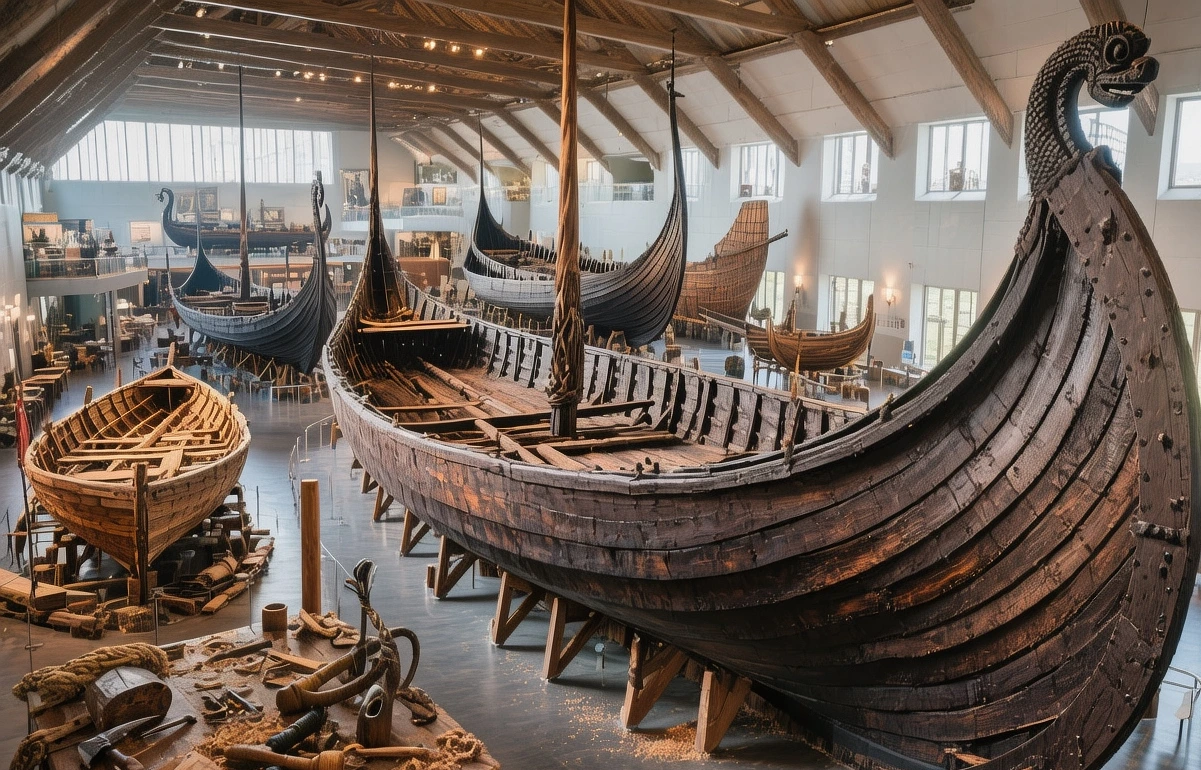
I walk toward the waterfront just past ten in the morning. Oak timbers rise from the water. Carved prows curve upward like dragons. I paid 145 DKK for adult admission. The train ride from Copenhagen took thirty minutes. It cost 110 DKK one way. I stepped inside the main hall and stopped short. Five original ships rest in their cradle. They are not replicas — they are the actual vessels built and sailed eight hundred years ago. Sunlight slants through glass walls onto planks scarred by time. You can almost see the water still clinging to them. No glass barrier separates you from history. You stand close enough to touch what remains.
Why Viking Ship Museum Matters
The museum preserves five warships recovered from Roskilde Fjord in the 1960s. Sunk deliberately around 1070 to block an approaching enemy, they lay buried in silt for nearly nine centuries. Excavation revealed extraordinary detail — construction methods, wood types, tools, even traces of cargo. The site grew to include a working boatyard where traditional vessels are built and sailed using ancient techniques. This is not a static collection. It is a living practice — researchers, boatbuilders, and sailors keep the knowledge alive. The museum connects the people who built and sailed these ships to the way those skills endure today. It shows that the Viking age was not just raids and battles — it was exploration, trade, and mastery of the sea.
It is not a large museum. You can see the main hall in less than an hour. Some visitors expect sprawling exhibits and leave surprised by how compact the display feels. The original ships survive only in part — sections are missing, timbers are worn. That is their truth, but some people imagine full gleaming vessels instead. Outdoor workshops and shipyard areas close in bad weather. Winter visits mean fewer activities and shorter hours.
The Best Time to Experience Viking Ship Museum
Late May through early September offers the fullest experience. Daytime temperatures sit between 14°C and 21°C (57°F–70°F). Reconstructed ships set sail with passengers aboard. The boatyard runs at full activity. Arrive before 11:00 AM to see the main hall quiet. July and August stay lively — book sailing trips ahead.
April, early May, and September balance pleasant weather and fewer crowds. Temperatures hover around 9°C–15°C (48°F–59°F). Days grow longer or softer light falls on the water. October through April brings shorter days and cooler conditions — 2°C–7°C (36°F–45°F). Sailing trips stop and the boatyard works at reduced pace. The museum stays open and the ships feel quiet and deeply atmospheric then. Weekdays stay noticeably quieter than weekends year-round.
Approximate Budget for a 7-Day Trip
- Accommodation: 4,200 DKK – 7,000 DKK. Guesthouse or B&B in Roskilde sits lower. Hotel near the fjord runs 850–1,100 DKK per night. Staying in Copenhagen gives more options — thirty minutes by train.
- Food & Drink: 1,820 DKK – 3,010 DKK. Lunch at the museum café costs 115–195 DKK. Dinner in Roskilde runs 185–295 DKK per person. Packing a picnic to eat on the waterfront saves nearly half.
- Transport: 770 DKK – 1,470 DKK. Train from Copenhagen 110 DKK one way. Local bus from Roskilde station 36 DKK. Bicycle rental works perfectly at 100–140 DKK per day — dedicated paths lead directly to the museum.
- Attractions & Entry: 435 DKK – 580 DKK. Museum ticket 145 DKK adult. Children under 18 free. Sailing trips 350–450 DKK extra when running.
- Miscellaneous: 525 DKK – 875 DKK. Covers coffee, snacks, souvenirs, and small donations.
Total estimated budget: 7,755 DKK – 12,935 DKK per person for 7 days.
One thing to watch: the museum café charges premium rates. A meal here costs 75 DKK more than at places five minutes away. Step out, eat well, and return — your ticket gives all-day re-entry. No need to rush.
Essential Viking Ship Museum Experiences
- Walk among the original ships. Five vessels of different sizes and purposes — warships, cargo ships, coastal craft. Notice how they were built for speed or for carrying heavy loads. Read the simple labels — they explain construction clearly. Go early — light falls best through the glass roof before noon.
- Step aboard a reconstructed ship. Moored outside, full-size replicas float in the fjord. You walk their decks, touch their timbers, see how they were rigged. It brings scale and purpose home. Skip if you dislike narrow spaces or slightly uneven decks.
- Sail aboard a replica ship — season permitting. Hoist sail, take an oar, or simply sit as the vessel glides across the fjord. It feels different from any modern boat. The motion, the sound of water, the wind in your hair — this is how they traveled. Book weeks ahead in summer — trips sell out fast.
- Watch the boatbuilders at work. The yard uses traditional tools and methods to build new ships exactly as the originals were made. Visitors can observe from walkways. Ask questions — builders often stop to explain what they are doing. It shows that this knowledge is not dead history.
- Visit the boat collection. Smaller traditional craft from across Denmark and beyond sit alongside the main hall. Each serves a different purpose — fishing, transport, coastal travel. They show how water shaped daily life far beyond the famous longships.
- Walk the shore path at sunset. The museum faces west. Low sun turns the fjord gold. Replicas stand silhouetted against the light. Most visitors leave by 4:00 PM. You often have the benches almost to yourself.
Hidden Gems Most Travelers Miss
- The quiet upper gallery overlooking the main hall. Few visitors climb the stairs. It gives a different perspective — seeing the ships whole, their lines and curves revealed from above. Sit and watch how light moves across the timbers.
- Overrated spot: the main ship deck photo spot. Every group gathers there. Walk twenty yards along the pier. The same vessel appears with no crowd and perfect reflection in the water.
- The small sailing craft display behind the workshop. Simple, elegant boats built for everyday use. They receive far less attention than the warships. Their design feels just as thoughtful and beautiful.
- The experimental archaeology section. Builders test ancient methods — carving joints, cutting timber, sinking and raising vessels. It shows how much remains uncertain and how much is learned through doing. Tucked away and easy to miss.
- Early morning light on the water. The museum opens at 10:00 AM. Arrive then — sun hits the glass walls and illuminates the ships from within. The space feels fresh and quiet.
Cultural & Practical Tips
- Buy tickets online ahead. It saves queuing and guarantees entry. Summer weekends and sailing days sell out completely. Do not count on buying at the door then.
- Respect the original ships. Do not touch the timbers. Oils from hands damage ancient wood. Signs are clear — please honor them. These vessels will not last forever.
- Wear comfortable shoes. The museum spreads across several buildings and outdoor areas. You will walk on decks, piers, and paths. It adds up more than you expect.
- Check sailing schedules before traveling. Trips run May through September only and depend on weather. They do not run every day. Confirm online to avoid disappointment.
- Do not rush. Many people plan one hour and leave feeling they barely saw anything. Three hours minimum lets you see the ships, walk the docks, and watch the builders. Half a day feels relaxed.
- Bring layers and a windproof jacket. The fjord breeze feels colder than inland. Even sunny days turn breezy. A light jacket stays useful year-round.
Essential Visitor Information
Location & Access: Viking Ship Museum, Vindeboder 12, 4000 Roskilde. Three ways to arrive: train from Copenhagen Central Station to Roskilde (30 minutes) then 10-minute walk or short bus; car via E55 — paid parking available; bicycle via dedicated coastal paths from Roskilde center.
Tickets & Booking: Adult 145 DKK online or at door. Children and young people under 18 free. Seniors and students 120 DKK. Sailing trips separate fee. Booking ahead recommended June–August.
Operating Hours: Daily 10:00 AM–5:00 PM June–August; 10:00 AM–4:00 PM September–May. Closed Mondays November–March. Outdoor areas close 30 minutes after museum.
Visit Duration: Minimum 2 hours. 3–4 hours includes exhibits and dockside exploration. Half a day if combining with a sailing trip.
Family Suitability: Excellent. Interactive areas suit children. Replicas invite exploration. Stroller access good indoors; some piers have narrow planks. Restrooms and baby-care available.
Timing: Best season: May or September. Best time: 10:00 AM–11:30 AM and late afternoon. Weekdays stay noticeably quieter than weekends.
Highlights: Five original medieval ships, full-size replicas, sailing trips, working boatyard, fjord views at sunset.
Nearby & Day Trip: Roskilde Cathedral 15 minutes on foot. Roskilde city center 20 minutes. Copenhagen 30 minutes by train. Frederiksborg Castle 45 minutes by car or train.
Conclusion: Travel with Depth, Not Just Sight
These ships are not statues. They were built to carry people across oceans — to trade, settle, explore, and fight. They sank, they rested, and now they stand where they were once launched. Walk slowly. Look closely at the tool marks, the joinery, the worn wood. Remember that real people built and sailed them. What will you take away from these ancient timbers?
Post a Comment