
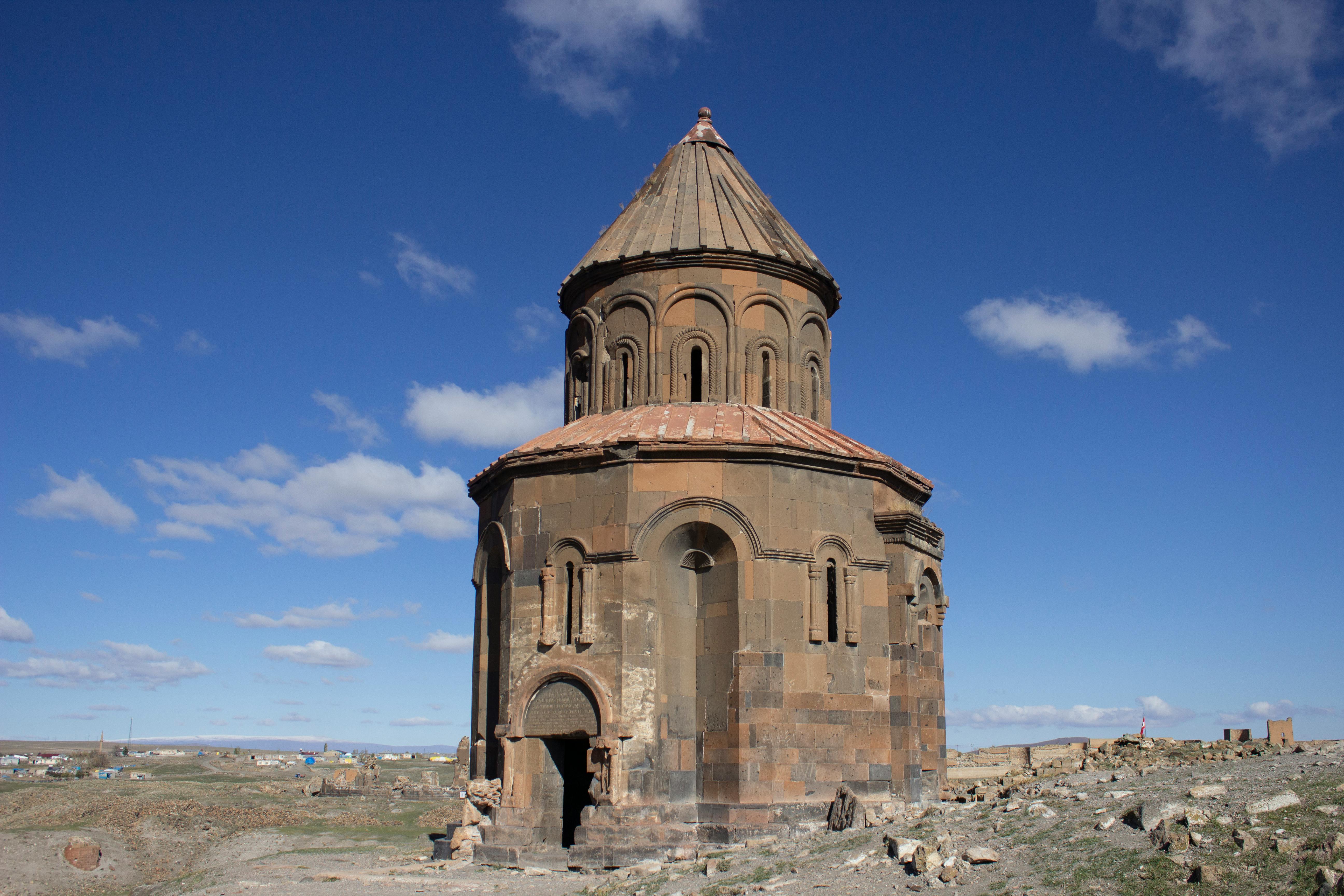
Ani: Where Medieval Stone Cathedrals Meet the Silence of Empires
The wind sweeps across the high plateau at 1,340 meters elevation, carrying whispers of a thousand years through the skeletal remains of stone cathedrals that once echoed with Gregorian chants and the footsteps of merchants from the Silk Road. You stand at the edge of Ani, where the Akhurian River gorge cuts a dramatic 100-meter-deep canyon marking the border between Turkey and Armenia, and the silence is so profound you can hear your own heartbeat against the backdrop of crumbling domes and fractured arches. The golden limestone structures—over fifty churches, palaces, and civic buildings scattered across 225 hectares—glow amber in the late afternoon light, their intricate carvings and pointed arches testifying to an architectural sophistication that rivaled Constantinople and Baghdad. This was once a city of 100,000 souls, a cosmopolitan hub where Armenian, Georgian, Byzantine, and Persian cultures converged; now it stands as a ghost city, its population reduced to caretakers, archaeologists, and the occasional traveler who makes the journey to this remote corner of eastern Anatolia. Ani matters because it embodies both the zenith of medieval Armenian civilization and the fragility of human achievement—a reminder that even the greatest cities can become echoes, preserved in stone but emptied of life.
Why Ani Embodies the Grandeur of Lost Civilizations
Ani represents far more than archaeological ruins—it embodies the extraordinary achievement of medieval Armenian architecture and the complex tapestry of Caucasian history. Founded in the 5th century as a fortress, the city reached its zenith under the Bagratid dynasty, becoming the capital of Armenia and one of the world's most important trading centers along the Silk Road. At its height, Ani housed between 100,000 and 200,000 inhabitants, rivaling Constantinople, Baghdad, and Cairo in population and splendor. The city solved fundamental challenges of medieval urban planning: defensive fortification along a vulnerable border, water management in a semi-arid climate, and the creation of monumental architecture that expressed both religious devotion and political power.
The architectural achievements are staggering. The Cathedral of Ani, completed by architect Trdat in the early medieval period, features a dome rising 32 meters supported by massive piers and pointed arches that prefigure Gothic architecture by centuries. The Church of the Redeemer, with its central plan and intricate stone carving, demonstrates sophisticated understanding of structural engineering and aesthetic harmony. The city walls, stretching 2.5 kilometers with forty-four towers spaced at precise intervals, employed advanced military architecture including double walls, murder holes, and arrow slits oriented for maximum defensive coverage. The Tigran Honents Church preserves the most extensive cycle of medieval Armenian frescoes, their vibrant blues and reds depicting biblical scenes with Byzantine influence.
What makes Ani unique is its layered history: Armenian foundations, Seljuk modifications, Georgian additions, and Ottoman adaptations all coexist in the same landscape. The city wasn't abandoned due to decline but rather shifted control multiple times—passing from Armenian to Byzantine to Seljuk to Georgian to Mongol rule before eventual depopulation. This complex history is written in stone: Persian inscriptions alongside Armenian crosses, Islamic geometric patterns adjacent to Christian iconography, Byzantine domes near Seljuk muqarnas. Ani stands as a testament to the region's multicultural past and a poignant reminder of how political upheaval, earthquakes, and changing trade routes can transform a thriving metropolis into a silent witness to history.
The Best Time to Experience Ani
To experience Ani at its most atmospheric, plan your visit between May 15–June 20 or September 10–October 15, when daytime temperatures range from 16-25°C (61-77°F) and the high plateau blooms with wildflowers or glows with autumn gold. During these windows, you'll enjoy comfortable conditions for exploring the extensive archaeological site without the intense heat of summer or the bitter cold of winter on this exposed plateau.
For optimal photography of the limestone cathedrals and dramatic gorge views, arrive at key monuments at 7:30–9:00 AM when morning light strikes the eastern facades, or 5:00–6:30 PM
Avoid the peak summer period of June 25–August 20 when temperatures can exceed 35°C (95°F) on the exposed plateau with minimal shade. While the altitude provides some relief, the relentless sun and lack of tree cover make extended exploration uncomfortable. Winter months (November–March) bring harsh conditions: temperatures drop to -15°C to -5°C (5°F to 23°F), snow covers the site, and access roads from Kars may close due to weather. The site is beautiful in snow but requires special preparation and may have limited access.
Approximate Budget for a 7-Day Trip
Visiting Ani requires basing yourself in Kars, the nearest city located 42 kilometers away, with day trips to the archaeological site. The following budget assumes moderate travel style—comfortable local hotels, authentic regional dining, and a mix of public transportation and occasional private transfers. Prices are listed in euros for international travelers, though Turkey uses the Turkish Lira (₺).
- Accommodation: €24–€45 per night in Kars city center. Budget pensions start at €18; boutique hotels in restored Russian-era buildings run €48-75. Staying in Kars provides better amenities while keeping Ani within a 45-minute drive.
- Food: €12-18 per day total. Breakfast: €3-4 for traditional Turkish breakfast with menemen, cheese, olives, and çay. Lunch: €3-6 for regional specialties like Kars kaşarı cheese, honey, and Turkish pide at local esnaf lokantası. Dinner: €6-10 for sit-down meals featuring Kars kazı (goose), baklava, and ayran.
- Transportation: Round-trip flight to Kars Harakani Airport from Istanbul: €55-125. Airport shuttle to city center: €3. Local dolmuş within Kars: €0.45 per ride. Taxi or shared minibus to Ani: €22 round-trip. Car rental: €30/day.
- Attractions: Ani archaeological site entrance: €5. Kars Museum: €3. Church of the Apostles: included in site ticket. Guided historical tour of Ani: €35.
- Miscellaneous: Handwoven Kars kilim: €30-95. Local Kars kaşarı cheese: €8/kg. Traditional Russian-style souvenirs: €10-35. Hand-carved stone crosses (khachkar replicas): €15-40.
Total 7-Day Budget: €370–€540 per person (excluding international flights to Turkey)
7 Essential Ani Experiences
- Explore the Cathedral of Ani at Dawn: Arrive at the site opening time (8:00 AM) and head directly to the cathedral, the architectural masterpiece designed by Trdat. The building features a massive dome that once rose 32 meters, supported by twelve piers and pointed arches that influenced Gothic architecture. Walk the perimeter to examine the intricate stone carving and blind arcades; enter through the main portal to experience the vast interior space. The morning light streams through the windows, illuminating the geometric patterns carved into the limestone. Spend at least 30 minutes here, noting how the building's proportions create a sense of soaring verticality despite the partial collapse.
- Walk the City Walls at Sunset: Follow the 2.5-kilometer circuit of defensive walls that once protected this thriving metropolis. The fortifications feature forty-four towers spaced at precise intervals, double walls in vulnerable sections, and arrow slits oriented for maximum defensive coverage. Start at the Lion Gate on the northern side at 5:30 PM and walk clockwise. The walls offer dramatic views of the Akhurian River gorge 100 meters below and the Armenian landscape across the border. The limestone glows amber in the setting sun, and the silence is profound.
- Photograph the Church of the Redeemer: This centrally-planned church, perched dramatically on the edge of the gorge, offers one of the most iconic views at Ani. The building's distinctive conical roof has partially collapsed, creating a skeletal silhouette against the sky. Position yourself on the eastern side at 7:00 AM when the morning light illuminates the facade, or at 6:00 PM when the setting sun casts long shadows through the ruined dome. Use a wide-angle lens to capture both the church and the dramatic gorge behind it.
- Discover the Tigran Honents Church Frescoes: Enter this remarkably preserved church to find the most extensive cycle of medieval Armenian frescoes. The interior walls display vibrant biblical scenes painted in Byzantine style with rich blues, reds, and golds. The frescoes depict the life of Christ, Old Testament scenes, and portraits of donors. Visit between 10:00 AM–2:00 PM when natural light enters through the windows to illuminate the paintings. Note the Armenian inscriptions identifying scenes and the sophisticated understanding of perspective and human anatomy.
- Visit the Menucihr Mosque: Explore what is considered one of the earliest Seljuk mosques in Anatolia, built in the 11th century after the Seljuk conquest. The structure features a rectangular prayer hall, a square minaret, and a portico with pointed arches demonstrating the transition from Armenian to Islamic architecture. The building incorporates spolia—reused materials from earlier Armenian structures—visible in the carved stones. Arrive at 9:00 AM when the site opens to experience the building in quiet contemplation.
- Contemplate the Akhurian River Gorge: Stand at the edge of the canyon that forms the natural border between Turkey and Armenia, where the Akhurian River flows 100 meters below. The gorge creates a dramatic natural defense and offers breathtaking views across to the Armenian side. Find a quiet spot along the western edge of the site at 4:00 PM to watch the light change on both sides of the border. Bring binoculars to observe the landscape and reflect on how this natural feature shaped the city's strategic importance.
- Examine the Bridge of the Single Arch: Walk to the southern edge of the site to see the remains of this medieval bridge that once connected Ani to trade routes. The single surviving arch demonstrates sophisticated engineering, spanning the gorge with precisely cut limestone blocks. The viewpoint also offers panoramic views of the entire archaeological site spread across the plateau. Visit at 5:00 PM when the afternoon light creates dramatic shadows in the stonework.
3 Hidden Gems Most Travelers Miss
- The Cave Monastery Complex: Hidden in the cliffs along the Akhurian gorge, a network of rock-cut chapels and monastic cells carved directly into the volcanic tufa offers a glimpse into early Christian monastic life. Most visitors overlook these caves because they're not prominently marked. Access: From the main path near the Cathedral, follow the trail south along the gorge edge for 400 meters. Look for a narrow path descending toward the cliff face. The caves feature carved crosses, simple altars, and ventilation shafts. Best visited mid-morning (10:00 AM–12:00 PM) when light penetrates the cave openings. Bring a flashlight and wear sturdy shoes—the path is steep and uneven.
- The Persian Inscriptions Wall: On the eastern side of the city walls, a section of fortification features well-preserved Persian and Arabic inscriptions from the Seljuk period, offering a rare glimpse into the Islamic administration of Ani. This wall is often missed because it's远离 the main tourist circuit. Access: From the Lion Gate, follow the eastern wall northward for 600 meters. Look for a section with visible calligraphic inscriptions carved into the limestone. The inscriptions date from various periods and include Quranic verses and foundation texts. Best photographed in late afternoon (4:00–5:30 PM) when side-lighting reveals the carved details. No entrance fee; allow 20 minutes to examine the inscriptions.
- The Citadel Mound: At the southern tip of the triangular city, the citadel mound offers the highest vantage point at Ani and reveals archaeological layers from the 5th-century fortress through medieval modifications. Most visitors skip it because it requires a steep climb and isn't prominently signposted. Access: From the main entrance, follow the path south for 800 meters to the citadel area. The climb takes 15 minutes and rewards with 360-degree views of the entire site, the Akhurian gorge, and the Armenian highlands. Archaeological excavations have revealed foundations from multiple periods. Best visited at 6:00 PM for sunset views. Bring water and sun protection—there's no shade.
Cultural & Practical Tips
- Respect the Sacred Space: Ani holds deep significance for Armenians worldwide as a symbol of their medieval civilization. Speak quietly among the ruins, especially in churches and monasteries. Don't climb on fragile structures or remove any stones—the site is actively being preserved. Stay on marked paths to protect unexcavated areas and prevent erosion.
- Photography Guidelines: Photography is permitted throughout the site, but drone photography requires advance permission from provincial authorities (contact: kars.kultur@ktb.gov.tr). Tripods are allowed but must not obstruct pathways. The best light for photography is early morning (7:30–9:30 AM) and late afternoon (5:00–7:00 PM); avoid midday when harsh overhead light flattens the stone textures.
- Essential Phrases: "Teşekkür ederim" (teh-shek-kür eh-deh-rim) = Thank you; "Ani nerede?" (ah-nee neh-reh-deh) = Where is Ani?; "Ne kadar?" (neh kah-dar) = How much?; "Hoş geldiniz" (hosh gel-din-iz) = Welcome.
- Physical Preparedness: Exploring Ani involves walking 3-5 kilometers on uneven terrain, climbing steep paths, and navigating rocky surfaces. The site is at 1,340 meters elevation and largely unshaded. Wear sturdy, closed-toe shoes with good grip. Carry at least 2 liters of water per person—there are no facilities on-site beyond the visitor center. The site is not wheelchair-accessible.
- Weather Considerations: The high plateau creates extreme conditions: summer temperatures can exceed 35°C (95°F) with intense sun; winter brings temperatures below -15°C (5°F) and heavy snow. The site is exposed with minimal shade or shelter. In summer, start early (8:00 AM) and take midday breaks; in winter, visit only between 11:00 AM–3:00 PM when temperatures are mildest. Wind is constant—bring a windbreaker even in summer.
- Border Area Awareness: Ani sits directly on the Turkish-Armenian border. The Akhurian River gorge is a closed military zone—do not attempt to approach the river or cross into restricted areas. Photography of military installations is prohibited. Carry identification at all times. The border is clearly marked; respect all signage and barriers.
- Understand the Context: Ani's history is complex and sometimes contested. Approach the site with respect for Armenian heritage and the multicultural history of the region. Consider hiring a local guide who can provide historical context and explain the architectural significance of different structures. Listen to multiple perspectives about the site's history and preservation.
Conclusion: Travel with Reverence, Not Just Checklists
Ani invites you to do more than photograph crumbling cathedrals against a dramatic landscape. This is a place to stand where merchants once traded silk and spices, where architects pushed the boundaries of medieval engineering, where multiple faiths and cultures coexisted in a cosmopolitan center of learning and commerce. When you walk through the Cathedral's vast interior, when you trace the carved inscriptions on weathered stone, when you gaze across the gorge to Armenia, you participate in a meditation on impermanence and legacy that transcends any single lifetime.
Travel to Ani with reverence for the craftsmanship that shaped these stones, for the cultures that merged in its churches and mosques, for the resilience that preserved this site through centuries of abandonment and neglect. Respect the fragility of the limestone—soft enough to carve into intricate patterns, hard enough to survive earthquakes, but vulnerable to careless touch and environmental degradation. Understand that the silence you cherish depends on the restraint of every visitor who comes after you. Let the wind across the plateau slow your pace, let the weight of history humble your expectations, and let the beauty of these ruins remind you that even the greatest cities are temporary, but the human impulse to create beauty endures.