
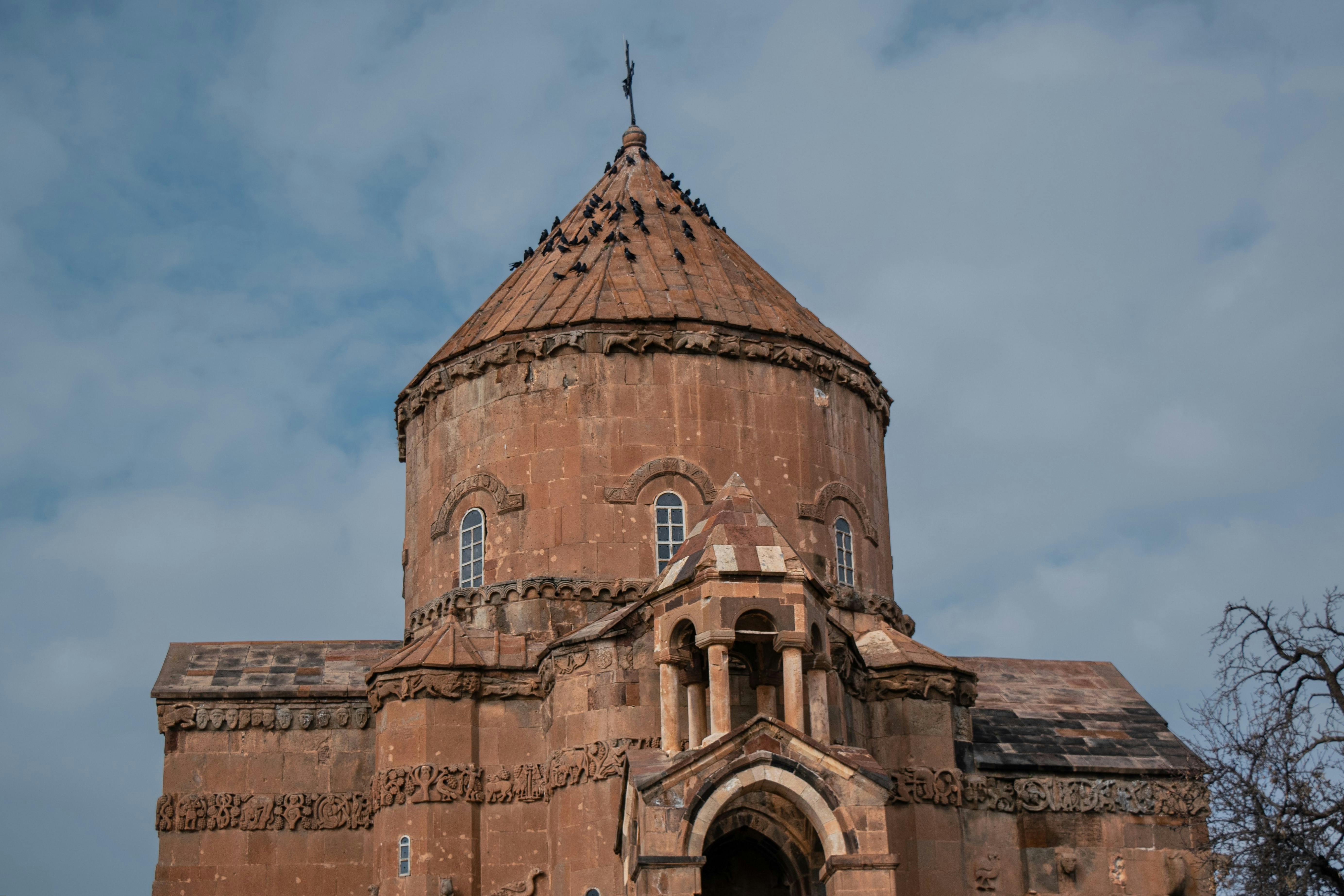
Artvin Churches: Where Medieval Stone Crosses Meet the Misty Caucasus Peaks
The morning sun breaks through dense Pontic forest as you approach Artvin churches, ancient stone sanctuaries perched on forested slopes at elevations between 800 and 1,400 meters in Turkey's northeastern corner near the Georgian border. The air carries the scent of pine resin, wild rhododendrons, and damp earth warmed by emerging light. You hear the gentle rush of mountain streams, the distant call of blackbirds echoing through valleys, and your own footsteps on paths worn smooth by centuries of pilgrims. Before you rise distinctive cross-dome churches carved from local volcanic stone—Parkhali's soaring nave, Ishhan's intricate facade carvings, Opiza's delicate window tracery—each bearing the hallmarks of medieval Georgian architecture: pointed arches, blind arcades, and sculpted crosses that seem to emerge from the living rock. These structures, built between the 9th and 11th centuries during the golden age of the Georgian Bagrationi dynasty, stand as silent witnesses to a time when this borderland flourished as a center of Orthodox Christianity, artistic achievement, and cultural exchange. Artvin churches matter because they embody the extraordinary capacity of medieval craftsmen to create beauty in challenging mountain landscapes—a testament to faith, engineering ingenuity, and the enduring human impulse to honor the divine through stone that outlasts empires.
Why Artvin Churches Embody Medieval Spiritual Heritage
Artvin churches represent far more than architectural ruins—they embody the extraordinary synthesis of Georgian Orthodox spirituality and Caucasian mountain craftsmanship that defined this borderland during the medieval period. Constructed primarily between the 9th and 11th centuries under the patronage of the Bagrationi dynasty, these structures solved fundamental challenges of highland construction: creating stable foundations on steep, forested slopes; engineering domes capable of withstanding seismic activity and heavy snowfall; and designing buildings that would serve both liturgical function and community gathering in remote valleys.
The technical achievements are remarkable. Churches like Parkhali (Barhal) feature central domes rising 18-22 meters, supported by four massive piers and transitioning from square base to circular drum through sophisticated squinch architecture. Walls constructed from locally quarried volcanic tufa—soft when first cut, hardening upon exposure to air—measure 90-120 centimeters thick, providing both structural stability and thermal regulation in Artvin's extreme climate. The distinctive cross-dome plan, with arms extending from a central square bay, demonstrates sophisticated understanding of spatial hierarchy and acoustic properties: chants resonate clearly beneath the dome while natural light enters through carefully positioned windows to illuminate interior frescoes.
What makes Artvin churches unique is their iconographic and architectural fusion: Georgian cross-dome plans blend with Armenian decorative motifs, Byzantine fresco techniques, and local Caucasian stone-carving traditions. Exterior facades feature intricate blind arcades, sculpted crosses, and floral motifs carved with such precision that individual leaves remain crisp after a millennium. Interior spaces, though often stripped of original frescoes, retain the atmospheric quality that guided medieval worshippers toward contemplation. This convergence of spiritual aspiration and artistic mastery—where stone meets sky, where faith meets engineering, where isolation meets beauty—creates monuments that speak to both the fragility and permanence of human achievement in one of Turkey's most culturally complex regions.
The Best Time to Experience Artvin Churches
To experience Artvin churches at their most atmospheric, plan your visit between May 20–June 25 or September 10–October 15, when daytime temperatures range from 16-24°C (61-75°F) and the surrounding forests bloom with wildflowers or glow with autumn gold. During these windows, you'll enjoy comfortable conditions for exploring remote sites, photography, and hiking without summer's humidity or winter's challenging weather.
For optimal photography of stone facades and forest settings, arrive at key churches at 7:30–9:00 AM when morning light strikes eastern facades, illuminating carved crosses and blind arcades with soft, directional illumination. Alternatively, visit at 4:30–6:00 PM during golden hour when the volcanic stone transforms into warm amber tones against the dark green forest. The stone's color shifts dramatically throughout the day—from pale gray at dawn to vibrant copper at sunset—making timing crucial for capturing architectural details.
Avoid the peak summer period of June 28–August 20 when humidity can exceed 80%, afternoon thunderstorms are frequent, and forest trails become muddy and slippery. While summer offers the most reliable access to remote sites, the combination of heat, insects, and sudden weather changes can diminish the contemplative experience. Winter months (November–March) bring harsh conditions: temperatures drop to -10°C to 0°C (14°F to 32°F), snow frequently covers access roads, fog reduces visibility, and some remote churches may become inaccessible. While winter visits offer dramatic photography with snow-covered forests, access is unreliable and requires special preparation including winter tires and appropriate clothing.
For current information on site access, visiting conditions, and regional tourism services, visit the official Turkish Ministry of Culture and Tourism website: www.ktb.gov.tr
Approximate Budget for a 7-Day Trip
Visiting Artvin churches requires basing yourself in Artvin city or Şavşat, with day trips to remote ecclesiastical sites scattered across forested valleys. The following budget assumes moderate travel style—comfortable local guesthouses, authentic regional dining, and a mix of public transportation and occasional private transfers or guide services. Prices are listed in euros for international travelers, though Turkey uses the Turkish Lira (₺).
- Accommodation: €26–€48 per night in Artvin city center or Şavşat. Budget pensions start at €21; boutique guesthouses with mountain views run €50-75. Staying in Artvin provides better amenities while keeping church sites within 30-90 minutes drive.
- Food: €12-19 per day total. Breakfast: €3-5 for traditional Turkish breakfast with menemen, local honey, Artvin cheese, and çay. Lunch: €4-6 for regional specialties like kuymak (cheese fondue), Black Sea anchovies, and Turkish pide at local esnaf lokantası. Dinner: €6-10 for sit-down meals featuring mountain trout, baklava, and ayran.
- Transportation: Round-trip flight to Trabzon or Erzurum airports from Istanbul: €58-125. Airport shuttle to Artvin: €10. Local dolmuş within region: €0.50 per ride. Taxi or private transfer to remote churches: €25-40 round-trip. Car rental: €33/day (4WD recommended for forest roads).
- Attractions: Parkhali Church access: Free. Ishhan Church: Free. Opiza Church: Free. Guided historical tour of Artvin churches: €35. Photography permit (if required): €5.
- Miscellaneous: Handwoven Artvin wool scarf: €35-95. Local mountain honey: €7/jar. Traditional wooden crafts: €16-45. Regional guidebook: €12.
Total 7-Day Budget: €395–€575 per person (excluding international flights to Turkey)
7 Essential Artvin Churches Experiences
- Explore Parkhali Church at Dawn: Arrive at this remarkably preserved 10th-century church at 7:30 AM when morning light illuminates the distinctive cross-dome structure and intricate stone carvings. Parkhali (Barhal) features a soaring central nave, blind arcades along the facade, and a conical roof that exemplifies medieval Georgian architecture. Walk the perimeter to examine sculpted crosses and floral motifs; enter through the western portal to experience the atmospheric interior. Spend at least 45 minutes here, noting how the building's proportions create a sense of vertical aspiration. Bring a flashlight to illuminate darker corners and examine carved details.
- Photograph Ishhan Church Facade: Position yourself at Ishhan (Işhan) Church at 8:00 AM to capture the intricate stone carvings that adorn its western facade. This 10th-century structure features elaborate blind arcades, sculpted crosses, and floral motifs carved with extraordinary precision. Use a telephoto lens to emphasize individual details: interlaced borders, stylized leaves, and geometric patterns. The volcanic stone glows amber in morning light, creating stunning contrast with the forest backdrop. Best photographed in spring or autumn when atmospheric clarity is optimal.
- Visit Opiza Church's Forest Setting: Hike the forest path to Opiza Church, a smaller but exquisitely crafted 11th-century sanctuary nestled among ancient fir trees. The approach itself—winding through rhododendron thickets and across mountain streams—enhances the sense of discovery. The church features delicate window tracery and a compact cross-dome plan that demonstrates sophisticated understanding of spatial harmony. Visit between 10:00 AM–12:00 PM when natural light enters through the windows to illuminate interior details. Allow 30 minutes to explore respectfully.
- Examine Stone-Carving Techniques: Spend time studying the craftsmanship of Artvin churches' exterior decoration: blind arcades created by carving recessed arches into solid stone, sculpted crosses with interlaced borders, and floral motifs that seem to grow from the rock itself. Bring a magnifying glass or use your phone's zoom to appreciate fine details. Note how artisans worked with local volcanic tufa—soft when quarried, hardening with exposure—to achieve remarkable precision. Best examined mid-morning (9:00–11:00 AM) when directional light emphasizes carved depth.
- Walk the Ancient Processional Paths: Follow the historic pathways that once connected churches to nearby settlements, often marked by worn stone steps and occasional cross-carved waymarkers. These routes offer insight into medieval pilgrimage practices and community life. The path to Dolishana Church, for example, winds through forested slopes with panoramic valley views. Visit late afternoon (4:00–5:30 PM) when light filters through trees to create atmospheric effects. Wear sturdy shoes—the paths can be uneven and slippery when wet.
- Contemplate from Church Terraces: Many Artvin churches feature elevated terraces or platforms offering panoramic views of surrounding valleys and peaks. Find a quiet spot at Parkhali or Ishhan at 5:00–6:30 PM to watch the light change on forested slopes and distant mountains. This contemplative practice connects you with the spiritual intention of medieval builders who chose these dramatic settings to inspire awe. Bring a jacket—the elevation catches wind even in summer.
- Learn About Restoration Efforts: Visit informational displays or speak with local caretakers about ongoing preservation work at Artvin churches. Many sites have benefited from recent conservation projects involving traditional stone-matching techniques and reversible methods. Understanding these efforts deepens appreciation for the buildings' continued survival and the delicate balance between preservation and access. Best discussed midday (12:00–2:00 PM) when site staff are most available.
3 Hidden Gems Most Travelers Miss
- Dolishana Church's Forest Sanctuary: Tucked deep in a forested valley 15 kilometers from Şavşat, Dolishana Church offers an exceptionally peaceful experience with minimal visitor traffic. This 10th-century structure features a compact cross-dome plan and remarkably preserved exterior carvings. Most tourists overlook it because access requires navigating unpaved forest roads. Access: From Şavşat, follow signs toward Dolishana village; the church is 2 kilometers beyond, marked by a small stone cross. Best visited mid-morning (10:00 AM–12:00 PM) when forest light is optimal. No entrance fee; allow 45 minutes to explore respectfully.
- The Carved Cross Trail: A lesser-marked path connecting Ishhan and Opiza churches features numerous small stone crosses carved into trees, rocks, and waymarkers along the route—a tangible expression of medieval pilgrimage practice. Most visitors focus solely on the main churches and miss these subtle devotional features. Access: Ask a local guide for directions to "haçlı yol" (cross path); the trail begins near Ishhan's parking area. Best walked mid-morning (9:00–11:00 AM) when light reveals carved details. Bring water and wear sturdy shoes—the path is uneven and forested.
- The Ancient Spring Chapel: Near Parkhali Church, a small rock-cut chapel built around a natural spring offers a glimpse into medieval water veneration practices. The space features simple stone carving and a niche for offerings, with the spring still flowing today. Most visitors miss it because it's not prominently signposted. Access: From Parkhali's main entrance, follow the path downhill for 150 meters toward the stream; look for a stone archway partially hidden by vegetation. Best photographed mid-afternoon (2:00–4:00 PM) when side-lighting reveals carved details. No entrance fee; respect the sacred nature of the space.
Cultural & Practical Tips
- Respect Sacred Spaces: Artvin churches remain sites of cultural and spiritual significance for Orthodox Christians and hold historical importance for all visitors. Speak quietly throughout the complexes, avoid disruptive behavior, and dress modestly (shoulders and knees covered). While many churches now function primarily as historical sites, approach them with reverence for their religious heritage.
- Physical Preparedness: Visiting Artvin churches involves walking on uneven forest paths, climbing gentle slopes, and navigating stone steps. Sites are at 800-1,400 meters elevation. Wear sturdy, closed-toe shoes with good grip. Carry water and sun protection—forest trails offer partial shade but exposure varies. Most sites are partially accessible but not fully wheelchair-friendly due to historic stone steps and uneven terrain.
- Essential Phrases: "Teşekkür ederim" (teh-shek-kür eh-deh-rim) = Thank you; "Artvin kiliseleri nerede?" (art-vin ki-li-se-ler-ee neh-reh-deh) = Where are Artvin churches?; "Ne kadar?" (neh kah-dar) = How much?; "Hoş geldiniz" (hosh gel-din-iz) = Welcome.
- Weather Considerations: The Pontic-Caucasus region creates unpredictable conditions: morning fog often burns off by midday, afternoon showers are common in summer, and temperatures can drop suddenly at elevation. Pack layers, rain protection, and sun protection regardless of season. Forest trails become slippery when wet—allow extra time for exploration.
- Photography Guidelines: Photography is permitted throughout the sites, but tripods require care not to obstruct pathways or damage fragile stone. Flash photography is discouraged inside churches to protect any remaining frescoes. Drone photography requires advance permission from provincial authorities (contact: artvin.kultur@ktb.gov.tr). The best light for architectural photography is early morning (7:30–9:30 AM) and late afternoon (4:30–6:30 PM).
- Understand the Context: Artvin churches represent complex cultural heritage with significance for Georgian, Armenian, Turkish, and Orthodox communities. The region has experienced shifting borders and populations across centuries. Approach sites with curiosity about multicultural history and respect for ongoing preservation efforts. Consider hiring a local guide who can explain the Byzantine, Georgian, and Ottoman periods.
- Support Local Communities: Many Artvin churches are maintained by local villagers who welcome respectful visitors. Purchase local honey, crafts, or simple meals from families near church sites to support livelihoods in this rural region. Learn a few words of Turkish or local dialects—effort is appreciated even if pronunciation isn't perfect.
Conclusion: Travel with Reverence, Not Just Checklists
Artvin churches invite you to do more than photograph stone crosses against forest backdrops. This is a place to stand where medieval craftsmen carved prayers into volcanic rock, where pilgrims once walked forest paths seeking blessing, where architects merged faith and engineering to create beauty meant to outlast empires. When you trace the blind arcade with your eyes, when you feel the cool stone beneath your palm, when you gaze across valleys that have witnessed millennia of human story, you participate in a meditation on memory and meaning that transcends any single lifetime.
Travel to Artvin with reverence for the craftsmanship that shaped these stones, for the cultures that converged in these sacred spaces, for the resilience that preserved these sites through centuries of change. Respect the fragility of volcanic tufa—soft enough to carve into exquisite detail, hard enough to endure earthquakes, but vulnerable to careless touch and environmental stress. Understand that the contemplative silence you cherish depends on the restraint of every visitor who comes after you. Let the forest's tranquility slow your pace, let the weight of history humble your expectations, and let the convergence of art, faith, and landscape remind you that the most profound journeys are those that deepen our connection to the enduring human impulse to create beauty in honor of something greater than ourselves.