
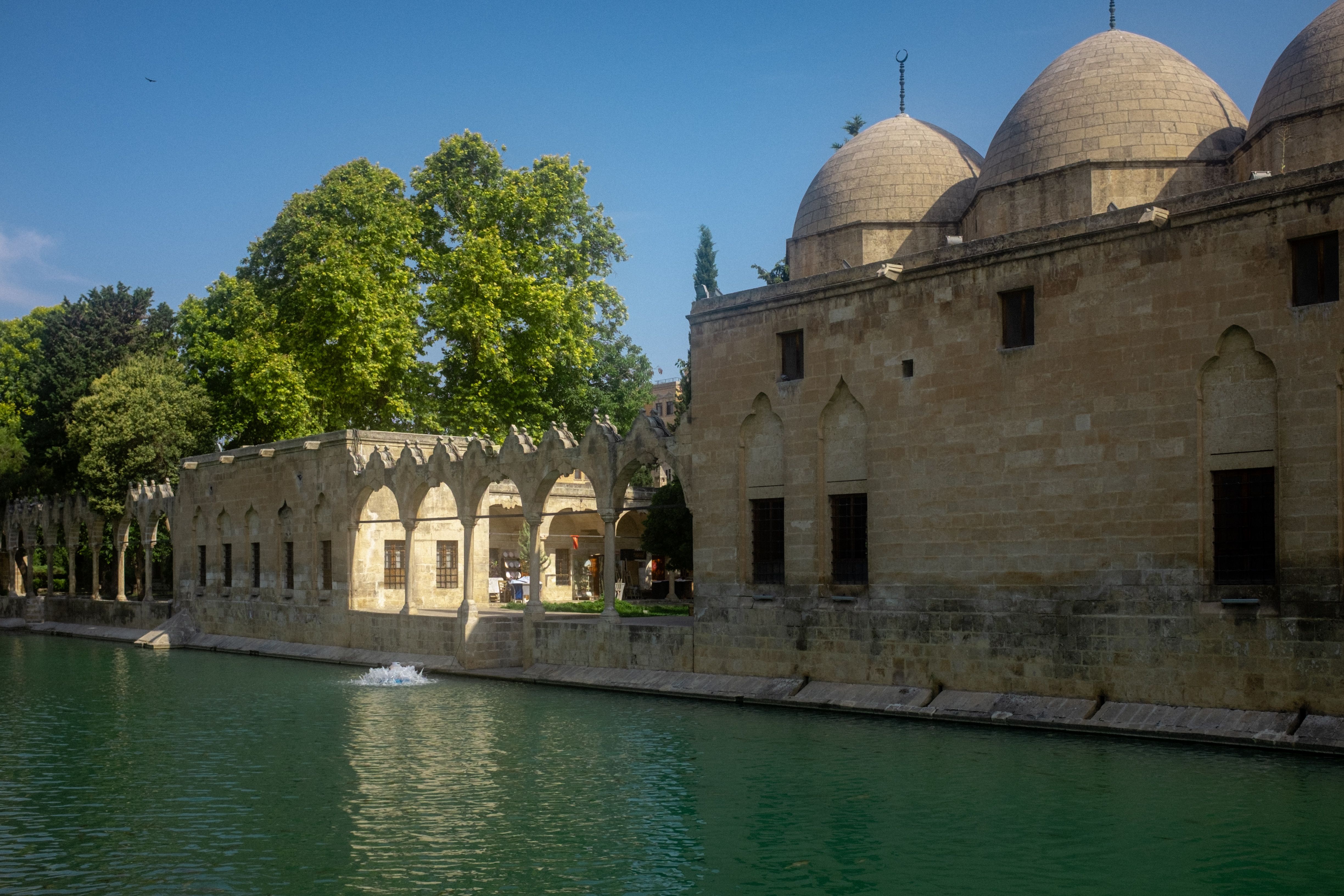
Balıklıgöl: Where Sacred Waters Meet Ottoman Stone
The late afternoon sun casts a golden glow across the twin pools as hundreds of carp glide through water so clear you can count every scale, every ripple. You stand at the edge of Balıklıgöl—the Pool of Sacred Fish—where the air hums with the murmur of prayers, the splash of feeding fish, and the distant call to prayer echoing from the minarets of Halil-ür Rahman Mosque. According to ancient legend, this is the very spot where Prophet Abraham was cast into flames by the tyrant King Nimrod, only for God to transform the fire into water and the burning logs into sacred carp that still swim here today. The larger pool stretches 150 meters long and 50 meters wide, fed by natural springs that have bubbled up from the earth for millennia; its smaller sister pool, Ayn-ı Zeliha, lies just meters away, separated by stone walkways worn smooth by centuries of pilgrims. Families gather on benches beneath cypress trees, tossing breadcrumbs to fish that surge forward in silver flashes; couples stroll hand-in-hand along the colonnaded pathways; elderly men sit in quiet contemplation, their worry beads clicking rhythmically. This isn't merely a tourist attraction—it's a living sanctuary where faith, history, and daily life converge in one of Turkey's most spiritually significant sites.
Why Balıklıgöl Embodies Faith Transformed into Water
The sacred pools of Şanlıurfa represent far more than a beautiful Ottoman-era complex—they embody a narrative of divine intervention that has drawn pilgrims for over two millennia. The legend traces back to the biblical and Quranic story of Abraham (İbrahim in Turkish), who, around 1800 BCE according to tradition, smashed the idols of his people and was condemned to death by King Nimrod. As Abraham was thrown from the citadel heights into a massive bonfire below, God spoke: "Oh fire, be coolness and peace for Abraham"—and instantly, the flames became water, the burning embers transformed into fish, and the site became eternally blessed.
The complex you see today took shape during the Ottoman period, with the Halil-ür Rahman Mosque built in 1211 during the Artuqid dynasty and significantly expanded in the 17th century. The Rizvaniye Mosque, constructed in 1716, guards the pool's entrance with its distinctive stone arches and delicate baroque influences. The pools themselves are fed by the Deyrullah Spring, which emerges from beneath the mosque at a constant temperature of 22°C (72°F) year-round, producing approximately 400 liters of water per second—enough to completely refresh the pool's 15,000 cubic meter volume every ten hours. The water's clarity isn't accidental; it's maintained by the sacred carp themselves, which consume algae and organic matter, creating a self-cleaning ecosystem that has functioned uninterrupted for centuries.
The fish—Cyprinus carpio, or common carp—can grow up to 80 centimeters and live 25-35 years. Locals believe these specific fish are descendants of the original transformed logs, and harming them brings misfortune. The pools solve a profound human need: the desire for tangible connection to the divine, a place where legend becomes visible, where faith swims before your eyes in flashes of orange and silver. Beyond the spiritual significance, the complex serves as Şanlıurfa's social heart—a gathering place where tourists and locals, devout and curious, all find common ground beside waters that have witnessed prayer, celebration, and contemplation across countless generations.
The Best Time to Experience Balıklıgöl
To experience Balıklıgöl at its most enchanting, plan your visit between April 20–June 10 or September 15–October 25, when daytime temperatures range from 20-28°C (68-82°F) and the gardens burst with blooming jasmine and cypress shadows stretch long across the stone pathways. During these windows, you'll enjoy comfortable conditions for walking the complex, feeding the fish, and exploring the adjacent mosques without the oppressive heat that characterizes southeastern Anatolia's summers.
For the most atmospheric experience, arrive at 7:00–8:30 AM when the morning mist still hovers above the water, the first light catches the mosque domes, and local families begin their day with traditional Turkish breakfast at the gardenside cafes. The fish are most active during these early hours, creating spectacular feeding frenzies as breadcrumbs hit the water. Alternatively, visit at 6:00–7:30 PM during golden hour, when the setting sun bathes the limestone architecture in honey-colored light and the call to prayer creates an unforgettable soundscape.
Avoid the peak summer period of June 20–September 5 when temperatures regularly exceed 42°C (108°F), making outdoor exploration uncomfortable and the crowds overwhelming. Winter months (December–February) bring cooler temperatures of 5-12°C (41-54°F) and frequent rain, though the pools remain beautiful in misty conditions if you don't mind bundling up. Friday afternoons draw large local crowds for prayer and family gatherings—arrive early or expect dense crowds.
Approximate Budget for a 7-Day Trip
Şanlıurfa offers exceptional value for travelers, with costs significantly lower than Istanbul or coastal Turkish destinations. The following budget assumes a moderate travel style—comfortable boutique accommodation, authentic local dining, and a mix of public transportation and occasional taxis. All prices are listed in euros for international travelers, though Turkey uses the Turkish Lira (₺).
- Accommodation: €30–€55 per night in Şanlıurfa city center near Balıklıgöl. Budget pensions start at €20; boutique cave hotels in restored Ottoman stone houses run €60-90. The Eyyübiye and Haliliye districts offer the best location for walking to the pools.
- Food: €15-22 per day total. Breakfast: €3-5 for traditional Turkish breakfast (kahvaltı) with cheese, olives, tomatoes, and çay. Lunch: €4-6 for lahmacun, çiğ köfte, or Urfa kebab at local esnaf lokantası. Dinner: €8-12 for sit-down meals featuring şıllık (sweet dessert), baklava, and ayran.
- Transportation: Round-trip flight to Şanlıurfa GAP Airport from Istanbul: €55-110. City bus from airport to center: €2. Local dolmuş (minibus) within city: €0.50 per ride. Taxi from Balıklıgöl to Göbekli Tepe: €15 each way. Car rental: €30/day.
- Attractions: Balıklıgöl complex: Free. Şanlıurfa Archaeological Museum: €4. Göbekli Tepe entrance: €8. Harran day trip with guide: €25. Traditional boat ride on Atatürk Dam: €12.
- Miscellaneous: Handwoven Şanlıurfa silk scarf: €25-60. Local pistachios (famous Urfa fıstığı): €10/kg. Copper coffee pot souvenir: €15-35. Traditional Urfa embroidery: €20-80.
Total 7-Day Budget: €400–€580 per person (excluding international flights to Turkey)
7 Essential Balıklıgöl Experiences
- Feed the Sacred Carp at Dawn: Arrive at 7:30 AM when the pools first open and purchase a bag of simit (sesame bread rings) from vendors near the entrance for €1. Stand at the northern edge of Halil-ür Rahman Pool where the water is deepest, and toss small pieces into the center. Watch as hundreds of carp—some over 60 centimeters long—surge forward in a churning mass of silver and orange. The fish are remarkably bold and will eat from your hand if you're patient. This is when the water is clearest and the light most photogenic.
- Pray at Halil-ür Rahman Mosque: Enter the 13th-century mosque that overlooks the main pool, removing your shoes at the entrance. Women should cover their hair with a scarf (available at the entrance if needed). The interior features intricate Iznik tiles from the 16th century and a mihrab oriented toward Mecca. If you visit during one of the five daily prayer times, join the congregation for a truly moving experience—the echo of hundreds of voices praying beside the sacred waters is unforgettable.
- Walk the Colonaded Pathways: Stroll the stone arcades that encircle both pools, admiring the Ottoman-era architecture with its distinctive pointed arches and alternating light-dark stone patterns (ablaq). Stop at the historical fountains where locals still come to perform ablution before prayer. The walkway between the two pools offers the best photo opportunities, especially at golden hour when the limestone glows amber.
- Visit Ayn-ı Zeliha Pool: The smaller, quieter sister pool to the north is dedicated to Abraham's daughter (or wife, depending on the version of the legend). This pool is less crowded and more contemplative, with ancient plane trees providing shade. According to tradition, this is where Zeliha watched Abraham's trial by fire. The water here is equally clear, and the carp are just as sacred—spend time sitting on the marble benches and listening to the water trickle from the spring sources.
- Explore the Dergah Cave: Located beneath the Halil-ür Rahman Mosque, this cave is believed to be the exact spot where Abraham landed after being thrown from the citadel. Descend the stone steps (watch your head—the entrance is low) to find a small prayer space with a natural spring. The cave maintains a constant 18°C (64°F) year-round and offers a profound sense of connection to the ancient legend. Visit between 9:00 AM–4:00 PM when it's accessible.
- Take a Traditional Rowboat: For €3 per person, hire one of the small wooden rowboats that operate on the main pool. A local boatman will row you slowly across the water, giving you a unique perspective of the mosques and allowing you to see the fish from above. The boats hold 4-6 people and the ride lasts about 10 minutes. Best done in late afternoon when the water reflects the sky like glass.
- Attend the Evening Light Show: From April through October, the Balıklıgöl complex hosts a free sound and light projection show (8:30 PM, lasting 25 minutes) that tells the story of Abraham using the mosque facades as screens. The show runs in Turkish and Arabic with English subtitles. Arrive by 8:00 PM to secure a good viewing spot on the gardenside benches. The combination of narration, traditional music, and illuminated architecture creates a magical atmosphere.
3 Hidden Gems Most Travelers Miss
- Şanlıurfa Castle (Urfa Kalesi): Perched on the hilltop 400 meters northeast of Balıklıgöl, this ancient fortress offers panoramic views of the pools and the entire city. According to legend, this is the exact spot where King Nimrod stood when he threw Abraham into the fire below. The castle dates to the 9th century BCE with Byzantine, Crusader, and Ottoman modifications. Entry costs €3 and it's open 8:00 AM–7:00 PM. Most tourists skip it, but the 15-minute climb rewards you with the best photo angle of Balıklıgöl and a profound sense of the legend's geography. Bring water—the climb is steep and unshaded.
- Gümrük Hanı Caravanserai: This restored 16th-century Ottoman caravanserai, located 600 meters west of the pools on Gümrük Caddesi, now houses artisan workshops and a quiet tea garden. Built in 1562 during the reign of Suleiman the Magnificent, the two-story stone structure features a central courtyard where merchants once traded silk and spices. Today, you'll find local craftsmen practicing traditional copper-working, calligraphy, and ebru (marbling). The tea garden serves excellent çay for €1 in a peaceful setting most tour groups never discover. Open daily 9:00 AM–6:00 PM. Contact: +90 414 212 3456.
- The Ancient Spring Source: Behind the Rizvaniye Mosque, tucked away in a small courtyard that most visitors never notice, lies the actual source of the Deyrullah Spring that feeds both pools. A small stone fountain marks the spot where water emerges from the earth at 22°C (72°F). The water is drinkable and considered blessed by locals—bring an empty bottle to fill. This spot is rarely crowded and offers a moment of quiet contemplation away from the main complex. Look for the unmarked archway to the left of the mosque's ablution fountain. Accessible during daylight hours; no entrance fee.
Cultural & Practical Tips
- Dress Code & Respect: Balıklıgöl is an active religious site, not just a tourist attraction. Dress modestly—shoulders and knees should be covered, especially if entering the mosques. Women should carry a lightweight scarf for mosque visits. Remove shoes before entering any carpeted prayer areas. Speak quietly and avoid disruptive behavior.
- Photography Guidelines: Photography is permitted throughout the complex, but never photograph people praying without explicit permission. Drone photography requires special permits from the provincial governor's office (apply 2 weeks in advance). The best light for photography is 7:00–9:00 AM and 6:00–7:30 PM. Avoid using flash inside the mosques.
- Essential Turkish Phrases: "Teşekkür ederim" (teh-shek-kür eh-deh-rim) = Thank you; "Balıklıgöl nerede?" (bah-luh-kul-gheul neh-reh-deh) = Where is Balıklıgöl?; "Ne kadar?" (neh kah-dar) = How much?; "Afiyet olsun" (ah-fee-yet ol-soon) = Enjoy your meal (said to those eating).
- Feeding the Fish: Only use the simit or breadcrumbs sold by authorized vendors (€1 per bag)—never throw random food into the pools as it can harm the fish. Don't attempt to catch or touch the fish aggressively; they're considered sacred and harming them is deeply offensive to locals. The fish are accustomed to being fed and will approach you naturally.
- Weather Considerations: Şanlıurfa experiences extreme continental climate. In summer (June–September), bring sunscreen, a wide-brimmed hat, and 2+ liters of water per day—temperatures regularly exceed 40°C (104°F). In winter, temperatures can drop to 2°C (36°F) at night; bring layers. The pools are beautiful in all seasons but spring and fall offer the most comfortable conditions.
- Accessibility: The main pathways around the pools are paved and wheelchair-accessible, though some areas have steps. Wheelchair rental is available at the visitor center (free with ID deposit). The mosques have ramps but the cave access requires descending steep stone steps and is not accessible for those with mobility issues.
- Friday Considerations: Friday is the Muslim day of congregational prayer. The complex becomes extremely crowded between 12:00–2:00 PM with locals attending Friday prayers and bringing families. If you prefer quieter conditions, visit Friday morning before 11:00 AM or after 3:00 PM. Some shops and restaurants close during Friday prayer but reopen afterward.
Conclusion: Travel with Reverence, Not Just Checklists
Balıklıgöl asks something different of you than a typical tourist destination. This isn't a place to rush through, snapping photos between Instagram stories, checking off another box on your Turkey itinerary. The sacred pools demand presence—they invite you to sit on the marble benches and watch the carp glide through water that has reflected countless faces across millennia, to listen to the mingled sounds of prayer and laughter and splashing fish, to contemplate a story of faith so powerful it transformed fire into water and wood into living creatures. When you feed the fish at dawn, you participate in a ritual that has continued uninterrupted for generations; when you walk the colonnaded pathways, you follow in the footsteps of pilgrims, poets, and seekers who came seeking blessing, healing, or simply a moment of peace.
Travel to Balıklıgöl with reverence for the living faith that animates these waters. Respect the worshippers who come here not for photos but for prayer. Understand that the fish are not attractions but sacred beings in a story that matters deeply to millions. Leave space for silence, for contemplation, for the possibility that legend and history might blur into something more profound than either alone. The pools will still be here tomorrow, next year, a century from now—preserved not by barriers and restrictions, but by the respect of visitors who understand that some places are not meant to be consumed, but honored. Slow down. Sit awhile. Let the sacred waters work their quiet magic on your hurried soul.