
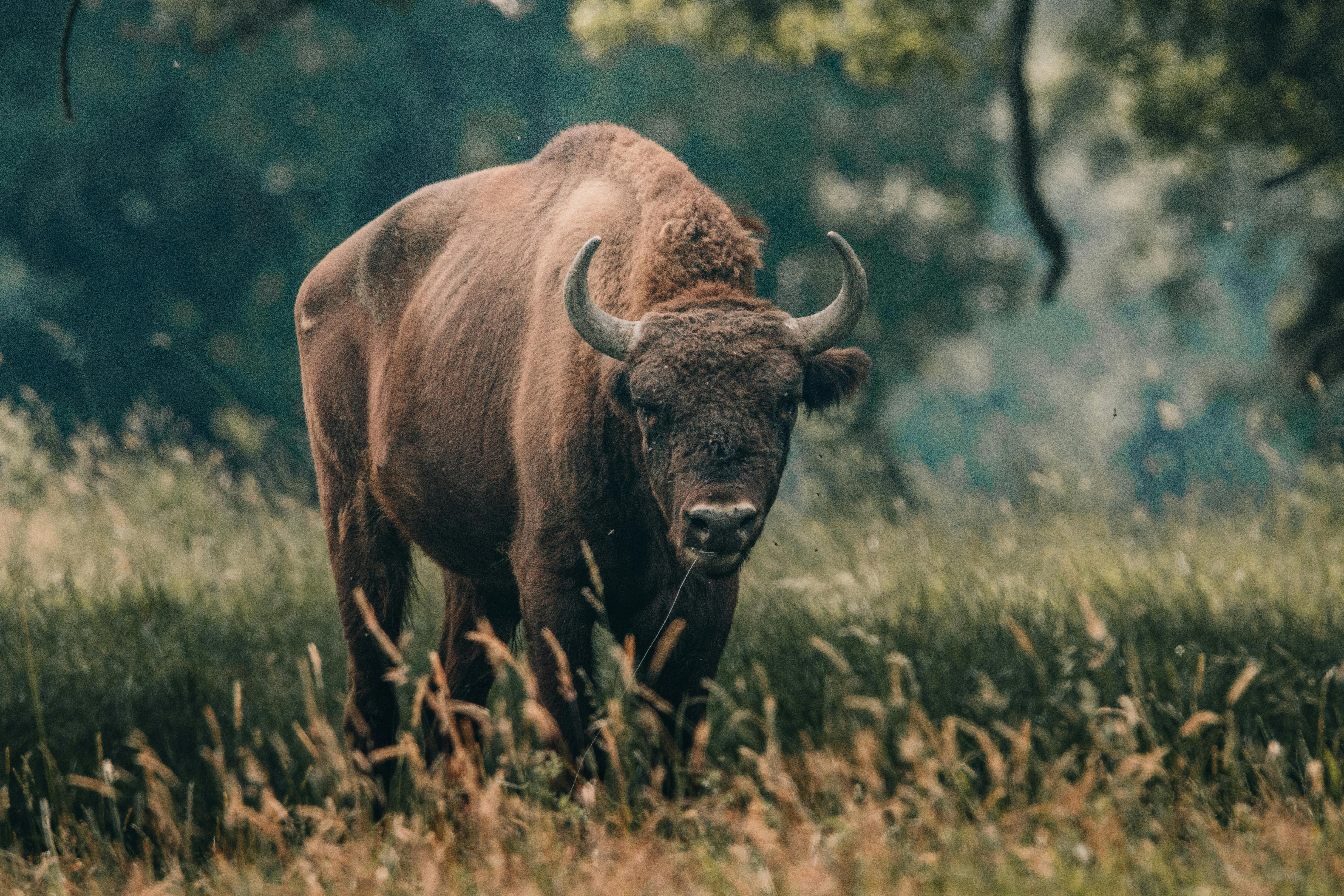
Białowieża Forest: Where Primeval Wilderness Meets Bison Majesty
Golden hour light spills through the ancient canopy of Białowieża Forest—one of Europe's last and largest remaining primeval forests where the scent of moss-covered oak trees mingles with the earthy aroma of damp forest floor. The air carries the soft crunch of centuries-old leaves beneath your feet, the distant call of black woodpeckers echoing through the trees, and the gentle rustle of undergrowth as something large moves just out of sight. You hear the deep, resonant breathing of European bison grazing in a clearing, the soft murmur of multilingual conversations from fellow visitors treading carefully on the forest path, and beneath it all, the profound silence that honors the ancient wilderness that has existed largely unchanged for 8,000 years. This isn't merely a forest—it's a living chronicle of European ecology, where 500-year-old oaks stand sentinel over the world's largest free-roaming herd of European bison, and where every step connects you to the same primeval landscape that has sustained life since the last Ice Age. Standing in this UNESCO World Heritage site, you connect with the same ecosystem that witnessed the rise and fall of civilizations, the quiet persistence of nature that survived human expansion, and the delicate balance between preservation and accessibility that continues to inspire awe centuries after its creation. This place matters because it represents humanity's capacity to protect what remains of our wild heritage—a testament to the enduring power of wilderness when given space to breathe and evolve.
Why Białowieża Forest Embodies Primeval Wilderness
Białowieża Forest represents far more than scenic beauty—it embodies one of Earth's most extraordinary examples of untouched wilderness, where natural processes have continued largely uninterrupted for millennia. Spanning 141,885 hectares (350,000 acres) across the Poland-Belarus border, this UNESCO World Heritage site contains Europe's last and largest remaining fragment of the immense primeval forest that once stretched across the European Plain. The forest solved a fundamental ecological challenge: how to maintain a self-sustaining ecosystem that preserves ancient biodiversity while coexisting with human communities. Built through natural succession over 8,000 years since the last Ice Age, the forest features trees growing, dying, and decomposing without human intervention—a remarkable process that creates complex habitats supporting over 20,000 species, including 5,500 species of fungi and 1,200 species of mosses. What makes Białowieża unique is its completeness: unlike managed forests across Europe, this ecosystem functions according to natural processes with minimal human intervention—dead trees remain to decompose naturally, creating habitats for rare species like the three-toed woodpecker and the globally threatened beetle Rosalia longicorn. The forest's strategic location at the intersection of multiple biogeographical regions created a biodiversity hotspot where species from northern, southern, eastern, and western Europe converge—a delicate balance that has existed since medieval times when the area was designated a royal hunting reserve by Polish kings. Today, Białowieża Forest stands as one of Europe's most significant ecological treasures, where the constant interplay between natural processes and conservation efforts creates a dynamic wilderness that continues to shape our understanding of primeval forests—a testament to the enduring power of nature when given space to follow its own rhythms.
The Best Time to Experience Białowieża Forest
To experience Białowieża Forest at its most atmospheric, plan your visit between May 10–June 15 or September 10–October 15, when daytime temperatures range from 12–20°C (54–68°F) and the surrounding landscape blooms with spring greenery or glows with autumn colors. During these windows, you'll enjoy comfortable conditions for hiking, wildlife observation, and photography without summer's humidity or winter's extreme cold. For optimal bison viewing and photography, arrive at 5:30–7:30 AM when morning light illuminates forest clearings, revealing bison activity while the forest surface remains dewy calm. Alternatively, visit at 6:00–8:00 PM during golden hour when warm light filters through the ancient canopy, creating dramatic shadows across the forest floor where bison often graze. You should firmly avoid July 15–August 25 when temperatures can exceed 28°C (82°F), insect populations peak, and the forest becomes congested with tour groups that disturb wildlife behavior. For visitor information, conservation guidelines, and educational resources, visit bialowieza.travel.
Approximate Budget for a 7-Day Trip
Visiting Białowieża Forest requires basing yourself in the nearby village of Białowieża with easy access to the forest. The following budget assumes respectful, thoughtful travel with appropriate accommodations for reflection. Prices are listed in Polish Złoty (PLN) with euro equivalents for international travelers (1 EUR ≈ 4.3 PLN in 2026).
- Accommodation: 100–240 PLN (23–56€) per night in Białowieża village. Budget pensions start at 50 PLN; mid-range eco-lodges run 240–450 PLN (56–105€).
- Food: 50–80 PLN (12–19€) per day total. Breakfast: 15–25 PLN for traditional śniadanie with jajecznica, local cheese, and fresh bread. Lunch: 20–35 PLN for regional specialties at a milk bar like Pod Żubrem. Dinner: 40–70 PLN for sit-down meals featuring forest mushrooms, game dishes, and craft beer.
- Transportation: Local bus: 3.40 PLN (0.80€) for 20 minutes; taxi from Białystok: ~100 PLN (23€); bike rental: 35–55 PLN (8–13€) per day; park shuttle bus: 12 PLN (2.80€) round-trip.
- Attractions: Białowieża National Park entry: 20 PLN (4.70€); Bison Show Reserve: 25 PLN (5.80€); Forest Museum: 15 PLN (3.50€); Guided wildlife tour: 50 PLN (11.60€).
- Miscellaneous: Forest-themed souvenirs: 30–100 PLN (7–23€); educational books: 35–120 PLN (8–28€); transportation to/from Białystok: 30–60 PLN (7–14€).
Total 7-Day Budget: 2,300–3,500 PLN (535–815€) per person (excluding international flights)
7 Essential Białowieża Forest Experiences
- Witness Bison at Dawn: Arrive before sunrise to experience the forest with minimal human presence as morning light illuminates wildlife activity. The quiet atmosphere allows for reflection on the ancient ecosystem while observing bison behavior in natural conditions. Free; allow 90 minutes; wear camouflage clothing and remain silent.
- Explore the Strict Protection Zone: Walk designated trails through the forest's most pristine areas where natural processes continue uninterrupted. These paths reveal the forest's ecological complexity with minimal human impact. Visit mid-morning (10:00 AM–12:00 PM) when lighting enhances forest details; entry 20 PLN; allow 120 minutes; wear quiet footwear.
- Visit the Bison Show Reserve: Observe European bison up close in a semi-natural enclosure that demonstrates conservation efforts. The reserve features educational exhibits about bison biology and reintroduction history. Visit mid-week (Tuesday–Thursday) when guides provide detailed explanations; entry 25 PLN; allow 75 minutes.
- Photograph Ancient Trees: Position yourself to capture the iconic 500-year-old oaks that stand as living monuments to the forest's longevity. The elevated vantage points along designated trails offer perfect perspectives for both wide-angle landscapes and detailed close-ups. Visit during golden hour (6:00–8:00 PM) for optimal lighting; free; allow 45 minutes; wide-angle lens recommended.
- Attend the Forest Museum: Explore exhibits on forest ecology, bison conservation, and the cultural history of the region. The museum features remarkable displays on forest biodiversity and conservation challenges. Visit mid-week (Tuesday–Thursday) when guides provide detailed explanations; entry 15 PLN; allow 60 minutes.
- Taste Traditional Forest Cuisine: Sample authentic dishes at restaurants like Pod Żubrem: try forest mushroom soup, game dishes, and regional specialties that connect you to centuries of culinary tradition unique to this ecosystem. Best experienced during lunch (12:00–2:00 PM); budget 40–70 PLN per meal.
- Join a Guided Night Walk: Experience the forest after dark to hear nocturnal wildlife and observe how the ecosystem transforms under moonlight. The park's night walks focus on sensory experiences beyond visual observation. Events typically begin at 9:00 PM; tickets 40 PLN; book online to secure spots; allow 90 minutes.
3 Hidden Gems Most Travelers Miss
- The Secret Birdwatching Platform: Tucked away in the northern section of the forest, this elevated platform offers unparalleled views of rare woodpeckers and other forest birds. Most visitors miss it because it's not marked on standard tourist maps. Access: Located 3 kilometers north of the main trailhead; best visited early morning (6:00–8:00 AM) when bird activity peaks. No additional fee; allow 60 minutes; bring binoculars.
- The Hidden Ancient Oak: Hidden along a lesser-known trail, this 600-year-old oak stands as the oldest living tree in the forest. Often overlooked because it's not on the main tourist route. Access: Follow the red trail from the Forest Museum; visit mid-morning (10:00 AM–12:00 PM) when lighting enhances the tree's texture. No additional fee; allow 30 minutes.
- The Moonlit Forest Path: This lesser-known evening walking route follows a forest stream where strategically placed trees create dramatic moonlight effects on the water's surface. Most visitors leave before dusk, missing this serene experience. Access: Available during evening hours; best visited on clear nights with full moon. No additional fee; allow 75 minutes; bring a flashlight and wear quiet footwear.
Cultural & Practical Tips
- Respect the Fragile Ecosystem: Białowieża Forest is a protected natural area—stay on marked trails to avoid disturbing wildlife habitats. The forest ecosystem takes decades to recover from damage; what might seem like a small shortcut can cause lasting harm.
- Essential Polish Phrases: "Dzień dobry" (jen doh-brih) = Good day; "Dziękuję" (jen-koo-yeh) = Thank you; "Proszę" (proh-sheh) = Please/You're welcome; "Żubr" (zhoo-br) = European bison. Locals appreciate respectful efforts.
- Forest Strategy: Visit the Strict Protection Zone early in your trip when energy levels are highest for hiking. Save the educational center and museum for later when you're ready for more relaxed exploration.
- Photography Guidelines: Photography is permitted throughout the forest. In protected areas, avoid using flash that could disturb wildlife. Respect nesting birds by maintaining distance.
- Weather Preparedness: Białowieża experiences temperate continental climate: summer highs reach 23°C (73°F); winter lows drop to -15°C (5°F). The forest can be humid year-round; carry waterproof clothing even in summer.
- Accessibility Notes: The forest trails have no accessibility features due to natural terrain. The Forest Museum and some park facilities are accessible; contact park staff for specific accessibility information.
- Combine with Nearby Sites: Enhance your Białowieża visit with nearby attractions: Tykocin Castle (60 minutes by car), Białystok Old Town (45 minutes), and the Augustów Canal (90 minutes). A regional perspective enriches understanding of northeastern Poland's historical layers.
Conclusion: Travel with Reverence, Not Just Observation
Białowieża Forest invites you to do more than photograph ancient trees against forest vistas. This is a place to stand where natural processes have continued uninterrupted for millennia, where the rhythmic pulse of wilderness connects you to geological time measured in centuries rather than moments, where the quiet persistence of ecological balance triumphs over human expansion. When you walk the same paths trodden by European bison for generations, when you feel the forest breeze that has carried the hopes and dreams of conservationists since the 1920s, when you experience the dramatic contrast between the managed forest edges and the primeval core that defines this unique ecosystem, you participate in a legacy that transcends tourism. Travel to Białowieża with reverence for the natural forces that created this ancient wilderness, for the conservation efforts that protect it from overuse, for the community that balances hospitality with preservation. Respect the fragility of ecological systems—every footprint off-trail, every piece of litter left behind, disrupts a balance measured in decades rather than moments. Understand that the pristine beauty you cherish depends on the mindfulness of every visitor who comes after you. Let the forest's ancient trees humble your understanding, let its ecological significance deepen your compassion, and let the convergence of wilderness and human stewardship remind you that the most profound journeys are those that transform observation into responsibility for the natural world we've been entrusted to protect.