
Butterfly Valley: Where Cascading Waterfalls Meet Turquoise Sanctuary
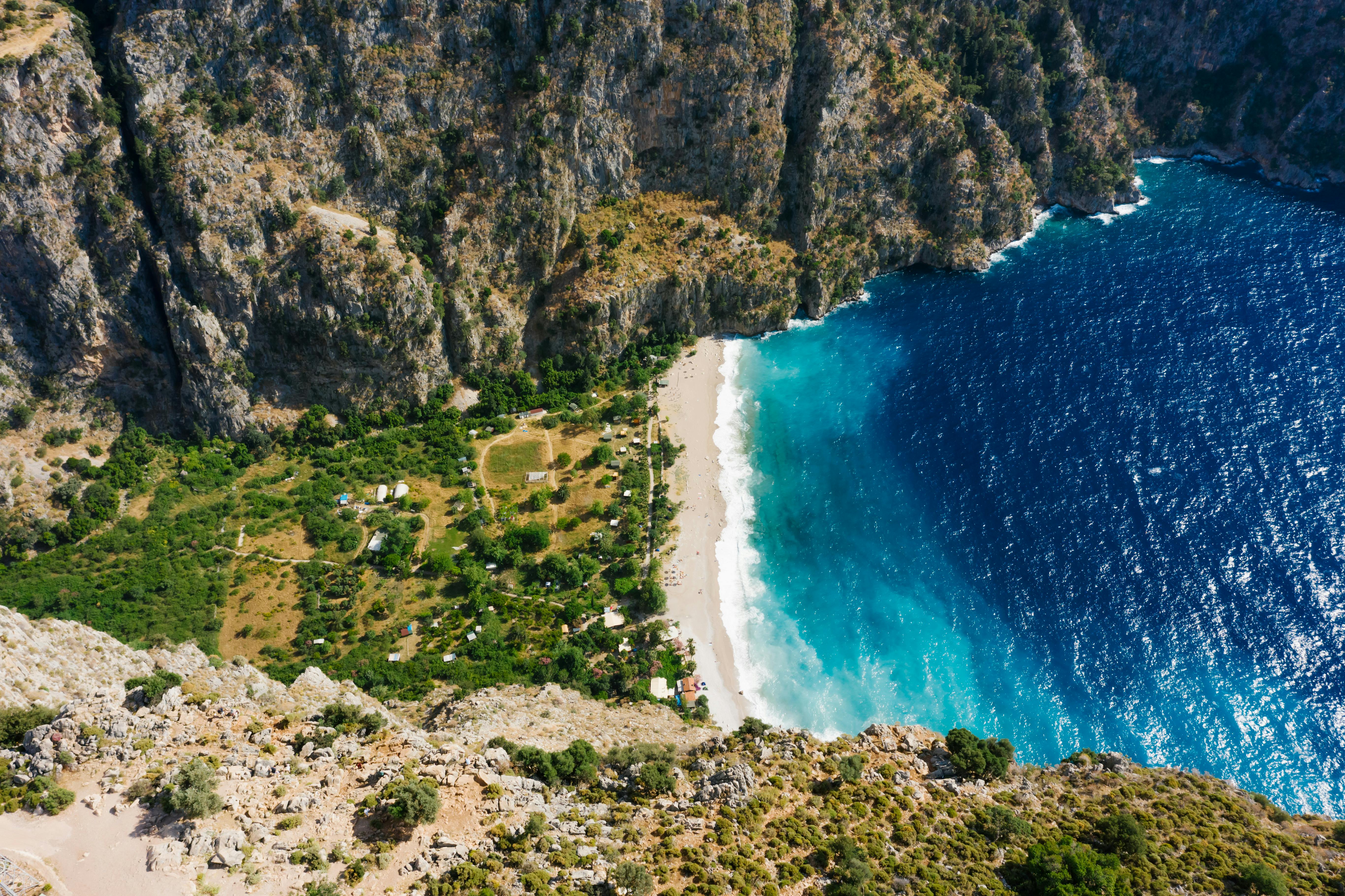
First light filters through tamarisk branches as you step onto powder-soft sand, the gentle roar of a waterfall echoing off limestone cliffs that rise eighty-six meters skyward. You've arrived at Butterfly Valley—Kelebekler Vadisi in Turkish—a secluded paradise accessible only by boat or challenging mountain trail, where the Mediterranean creates nature's most perfect amphitheater. The air carries the intoxicating scent of pine resin, wild sage, and salt spray, while dozens of Jersey Tiger butterflies (Euplagia quadripunctaria)—the valley's namesake—flutter among oleander bushes in flashes of crimson and black. This pristine cove stretches approximately two kilometers along Turkey's Turquoise Coast, its beach backed by a freshwater waterfall that tumbles year-round from hidden springs above, creating pools where you can cool off after swimming in waters that maintain twenty-four to twenty-eight degrees Celsius even in peak summer. This place matters because it represents one of the Mediterranean's last truly wild beaches—a protected natural sanctuary since 1987 where development is forbidden, where butterflies still thrive in their natural habitat, and where you experience the raw beauty of a coastline unchanged since Lycian sailors first sought refuge in these protected waters over two millennia ago.
Why Butterfly Valley Embodies Untouched Paradise
Butterfly Valley represents a geological and ecological masterpiece that solves the modern traveler's desperate need for authentic wilderness experiences in an increasingly developed world. Designated as a Special Environmental Protection Area in 1987, this valley functions as both a butterfly sanctuary and a pristine coastal ecosystem where human impact remains minimal despite attracting over one million visitors annually. The valley's dramatic geography—steep limestone cliffs rising 80–100 meters on three sides with only the sea providing access—creates a natural amphitheater that shelters diverse microclimates supporting over eighty butterfly species, with the endangered Jersey Tiger butterfly serving as the flagship species that gives the valley its name.
The valley spans approximately 86,000 square meters, with a beach stretching roughly 200 meters wide and backed by dense vegetation including tamarisk trees, oleander bushes, and plane trees that provide natural shade. A year-round freshwater waterfall—fed by underground springs from the Babadağ Mountain aquifer—cascades down the eastern cliff face, creating a series of natural pools where the water temperature remains a refreshing 16–18°C (61–64°F) even during summer heat. This freshwater source proves critical for the valley's ecosystem, supporting not only butterflies but also freshwater crabs, dragonflies, and various bird species that nest in the cliff faces.
Beyond its recreational value, Butterfly Valley fulfills vital conservation functions: it serves as a protected breeding ground for Euplagia quadripunctaria, whose populations have declined across Europe due to habitat loss. The Turkish Ministry of Environment and Forestry implemented strict regulations in 2006 prohibiting overnight camping (except in designated areas), banning construction within the valley, and limiting daily visitor numbers to preserve the delicate ecological balance. The beach achieved Blue Flag status in 2012, meeting stringent international criteria for water quality, environmental management, and safety. Scientific studies conducted by Ankara University's Biology Department since 1995 have documented the valley's biodiversity, revealing over 130 plant species including several endemic to the Lycian region, making this sanctuary as important for botanical conservation as it is for lepidopterology.
The Best Time to Experience Butterfly Valley
Timing your visit to Butterfly Valley dramatically affects butterfly sightings, water conditions, and crowd levels. The optimal window stretches from June 10–July 25 when Jersey Tiger butterfly populations peak and you'll witness hundreds fluttering among the vegetation, and September 5–October 10 when temperatures remain warm but crowds diminish significantly. During these periods, air temperatures range between 26–32°C (79–90°F) and water temperatures reach comfortable 24–27°C (75–81°F). Arrive at the valley between 9:00–10:30 AM when morning light illuminates the cliffs beautifully, butterflies are most active, and before the midday boat crowds arrive from Ölüdeniz and Fethiye.
Avoid July 25 through August 25 absolutely: temperatures soar to 35–42°C (95–108°F), the beach reaches maximum capacity with visitor numbers exceeding three thousand daily, and the intense heat makes hiking to the waterfall or viewing platforms uncomfortable and potentially dangerous. Midday visits between 12:00–4:00 PM during peak season prove overwhelming—boat arrivals create crowds that diminish the valley's serene atmosphere, finding quiet spots becomes nearly impossible, and the waterfall pools fill with swimmers. Winter months (November through March) bring cooler air temperatures of 12–17°C (54–63°F) and water temperatures dropping to 17–19°C (63–66°F), while rough seas often prevent boat access entirely, though the valley remains stunningly beautiful for those who can reach it.
The butterfly viewing season extends from May through September, with peak populations occurring in June and July. For current valley conditions, boat schedules, environmental protection regulations, and guided tour operators. Note that the valley operates with seasonal restrictions, and overnight camping requires permits from the Fethiye District Governorate's Environmental Protection Office.
Approximate Budget for a 7-Day Trip
Visiting Butterfly Valley and the surrounding Fethiye-Ölüdeniz region offers excellent value for nature enthusiasts and adventure seekers. This budget assumes moderate comfort—mid-range accommodation with mountain or sea views, fresh Turkish and Mediterranean cuisine, boat transfers to the valley, and selective adventure activities. Prices reflect 2026 rates for travelers seeking authentic experiences without ultra-luxury pricing.
- Accommodation: €40–€80 per night in Ölüdeniz or Fethiye (boutique hotels with pool and breakfast; budget pensions from €22, luxury resorts from €140)
- Food: €26–€40 per day (breakfast €5—Turkish kahvaltı spread with cheeses, olives, tomatoes, honey, börek; lunch €8–€12—gözleme, grilled fish sandwich, or meze platter at beachside cafes; dinner €13–€23—fresh sea bass, lamb tandır, or vegetarian options with local wine)
- Transportation: €65 total (Dalaman Airport to Fethiye via shuttle: €9 each way; local dolmuş to Ölüdeniz: €2 per ride; taxi to boat departure points: €12; bicycle rental: €8/day; optional car rental for exploring: €35/day)
- Attractions: €95 total (Butterfly Valley boat transfer: €15 round-trip; Ölüdeniz Blue Lagoon entrance: €7; Lycian Way hiking guide: €20; Saklıkent Gorge tour: €18; paragliding experience: €85; boat trips to nearby islands: €25)
- Miscellaneous: €45 (waterproof bag €12, reef-safe sunscreen €8, Turkish ceramics €15, local honey and olive oil €10, travel insurance prorated €10)
Total: €470–€660 for 7 days (excluding international flights to Dalaman)
7 Essential Butterfly Valley Experiences
- Arrive by boat at sunrise: Book the earliest boat departure from Ölüdeniz (typically 9:00 AM, €15 round-trip) to experience Butterfly Valley before crowds arrive. The twenty-minute journey reveals stunning coastal scenery with views of Babadağ Mountain's dramatic cliffs. As you approach, the valley's iconic waterfall becomes visible cascading down the eastern cliff. Disembark onto the white pebble beach and take fifteen minutes to simply observe—the morning light creates spectacular photo opportunities and butterflies are most active during these cooler hours.
- Hike to the waterfall pools: Follow the marked path along the valley's eastern edge (approximately 400 meters) to reach the freshwater waterfall's base. The trail takes ten minutes and includes some rocky sections, so wear sturdy sandals or water shoes. The waterfall creates three natural pools of varying depths—the first pool is shallow (under 1 meter) and perfect for cooling off. The water temperature of 16–18°C provides refreshing relief from the Mediterranean heat. Spend at least thirty minutes here observing dragonflies and listening to the water's thunderous cascade.
- Observe Jersey Tiger butterflies: Between 9:00–11:00 AM and 4:00–6:00 PM, walk slowly through the tamarisk and oleander vegetation near the waterfall where Euplagia quadripunctaria congregates. These striking butterflies display brilliant orange-red wings with black spots and white markings. Move quietly and avoid touching vegetation—butterflies rest on leaves and branches throughout the valley. Bring binoculars for close observation without disturbing them. The best viewing occurs in June and July when populations peak at several hundred individuals.
- Swim in the turquoise lagoon: The main beach area offers some of the clearest swimming water on Turkey's coast, with visibility exceeding thirty meters. Enter from the center of the beach where depths increase gradually from 0.5 meters to 3 meters over fifty meters. The water temperature of 24–28°C feels luxuriously warm. Swim toward the valley's western end where rocky outcrops create small coves perfect for snorkeling. You'll spot sea bream, octopus, and colorful sea urchins in the crystal-clear water.
- Climb to the clifftop viewpoint: For the ultimate Butterfly Valley perspective, hike the challenging trail to the valley's rim (approximately 350 meters elevation gain over 1.2 kilometers). The trail begins behind the waterfall and requires moderate fitness—allow forty-five minutes for the ascent. The viewpoint reveals the valley's full amphitheater shape, the turquoise beach below, and panoramic views extending to Greek islands on clear days. Visit at sunset (boats typically depart around 5:00 PM, so you'll need to stay overnight with a permit or hike down in twilight with a flashlight).
- Picnic under the tamarisk trees: The valley provides natural shade beneath mature tamarisk trees lining the beach's back edge. Spread a towel or sit on provided benches (first-come, first-served) and enjoy a packed lunch while watching butterflies and listening to waves. No restaurants operate in the valley to preserve its natural state, so bring food and water. Many boat tours include a simple lunch, but packing your own allows dietary flexibility. Dispose of all waste properly—there are designated bins near the boat dock.
- Photograph the iconic landscape: Butterfly Valley offers endless photographic opportunities: the waterfall framed by white cliffs, butterflies on purple oleander flowers, the turquoise water contrasting with white pebbles, and the dramatic canyon walls. The best lighting occurs during golden hour (7:00–9:00 AM and 6:00–8:00 PM in summer). Bring a polarizing filter to reduce water glare and capture the lagoon's true turquoise color. For butterfly photography, use a macro lens or macro mode, and maintain patience—these creatures move quickly but often return to the same perches.
3 Hidden Gems Most Travelers Miss
- The Lycian rock-cut tombs: While most visitors focus on the beach, few notice the ancient burial chambers carved into the cliff face 150 meters above the valley's western end. These fourth-century BCE tombs belong to the Lycian civilization that once dominated this coast. Access requires asking your boat captain to point out the trailhead—a steep but manageable fifteen-minute climb from the beach. The tombs feature relief carvings and offer spectacular views down into the valley. Visit between 4:00–6:00 PM when most day-trippers have departed and you can explore in peaceful solitude. Bring water and wear sturdy shoes—the path includes loose scree sections.
- The hidden eastern cove: Beyond the waterfall, a narrow passage between boulders leads to a secluded pebble beach accessible only at low tide. This tiny cove—barely thirty meters across—remains unknown to ninety percent of Butterfly Valley visitors. Time your visit with the tide (check with boat captains for daily tide tables; low tide typically occurs around 2:00–4:00 PM). The cove offers complete privacy, deeper swimming water, and excellent snorkeling around underwater rock formations. You'll need to scramble over rocks for five minutes from the waterfall's base. Bring water shoes and never visit alone—inform someone of your plans.
- The butterfly breeding observation area: In cooperation with Ankara University, a small research station operates in the valley's northeastern corner where scientists monitor Jersey Tiger butterfly populations. While not regularly open to tourists, the station offers educational visits by appointment (contact Fethiye Environmental Protection Office: +90 252 614 1596). Request authorization at least seventy-two hours in advance, mentioning educational or conservation interest. You'll observe butterfly breeding programs, learn about conservation efforts, and see species not visible in the wild. Visits are limited to groups of six and occur Tuesday and Thursday mornings from 9:00–11:00 AM during butterfly season (June–August).
Cultural & Practical Tips
- Respect the protected status: Butterfly Valley operates under strict conservation regulations: no overnight camping without permits (apply through Fethiye District Governorate), no removal of plants or butterflies (fines up to ₺3,000/€90), no loud music, and no drones without authorization. Swimming is prohibited in the waterfall's upper pools to protect freshwater ecosystems. Always follow posted guidelines and ranger instructions.
- Bring essential supplies: No shops or restaurants operate in the valley to preserve its natural state. Pack at least two liters of water per person, sun protection (hat, sunscreen, sunglasses), insect repellent, and food for your visit. There are basic toilet facilities near the boat dock, but no showers or changing rooms. Bring a towel and change of clothes if planning to swim.
- Understand boat schedules: Boats to Butterfly Valley depart from Ölüdeniz Beach and Fethiye Harbor between 9:00 AM–5:00 PM, with the last return boat typically departing at 5:00 PM. Missing the last boat means either staying overnight (requires camping permit) or arranging expensive private transfer (€150+). Always confirm return times with your boat captain upon arrival and arrive at the dock fifteen minutes before departure.
- Learn essential Turkish phrases: "Merhaba" (mehr-hah-bah—hello), "Teşekkür ederim" (teh-shek-kür eh-deh-rim—thank you), "Kelebekler nerede?" (keh-leh-bek-ler neh-reh-deh—where are the butterflies?), "Su nerede?" (soo neh-reh-deh—where is the water?), and "İyi günler" (iy-ee gün-ler—good day). Even basic efforts earn warm responses from boat captains and local staff.
- Photography etiquette: While photography is encouraged, avoid using flash when photographing butterflies as it can harm their sensitive eyes. When photographing other visitors, always ask permission first—Turkish culture values privacy, especially for women and families. Drone photography requires permits from the Turkish Civil Aviation Authority (apply at least one week in advance at local Kaymakamlık office).
- Plan for weather conditions: The valley's enclosed geography creates microclimates—temperatures can be 3–5°C cooler than Ölüdeniz due to shade and the waterfall's mist. Afternoon thunderstorms occasionally occur in summer; if caught in rain, shelter exists under the tamarisk trees and near the waterfall's base. Check weather forecasts before visiting, as rough seas can cancel boat services.
- Practice Leave No Trace principles: Pack out all trash (there are limited bins), use reef-safe sunscreen to protect marine life, avoid stepping on vegetation, and never feed or chase butterflies. The valley's ecological health depends on visitor cooperation. Consider joining organized beach cleanup events (typically first Saturday of each month, contact Fethiye Environmental Office for details).
Conclusion: Travel with Wonder, Not Just Checklists
Butterfly Valley doesn't surrender its magic to those racing between photo opportunities. It reveals itself slowly—to the visitor who sits quietly watching butterflies dance on thermal currents, who feels the waterfall's mist on sun-warmed skin, who understands that this sanctuary represents nature's fragile perfection requiring our reverence and protection. When you stand in this amphitheater of cliffs, hearing water cascade and waves lap against ancient pebbles, you're participating in an experience unchanged since Lycian sailors first discovered this hidden cove over two thousand years ago.
Responsible travel here means honoring the valley's protected status—respecting visitor limits designed to prevent ecological degradation, supporting local boat operators who follow sustainable practices, leaving no trace beyond footprints that tide will erase, and understanding that your presence is a privilege granted by nature's generosity. This valley has survived millennia while maintaining its pristine character—a balance worth preserving for future generations of butterflies, travelers, and dreamers. Come not just to capture the perfect photograph, but to understand that paradise isn't a commodity to consume—it's a relationship to nurture, one gentle observation, one respectful choice, one moment of pure wonder at a time.