Cascais Beaches: Where Aristocratic Elegance Meets Atlantic Swell
Cascais Beaches: Where Atlantic Sand Meets Portugal’s Coastal Heritage
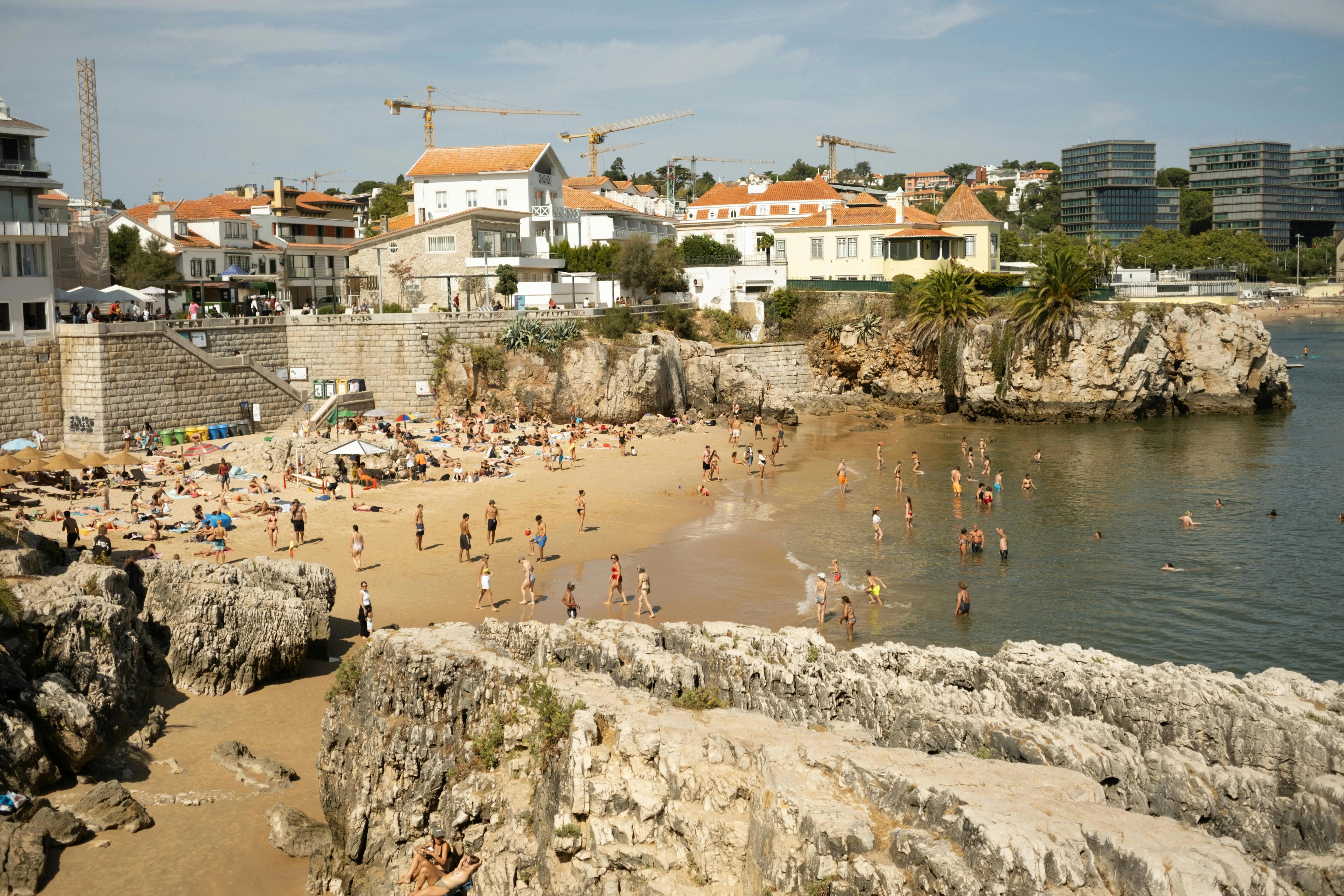
At 9:10 a.m., I pay €2.40 for a fresh pastry and espresso near Cascais railway station before walking toward Praia da Conceição. The sand is still cool, fishing boats sit beyond the bay, and the water looks calm enough for an easy morning swim. Within an hour, the beach fills with families, day-trippers, and visitors searching for the best patch of sand. That is the appeal of Cascais beaches: several very different shorelines sit close together, linked by footpaths, trains, buses, and a long coastal promenade. Praia da Rainha is small and sheltered, Praia do Guincho is wide and windy, and Tamariz offers an easy combination of swimming, gardens, and Estoril’s casino. The area is convenient, but not always peaceful. Summer crowds arrive early, beach chairs can be overpriced, and Guincho is often too rough for casual swimming. Choose the right beach for your plans, and the coast becomes far more enjoyable.
Why Cascais Beaches Matter
Cascais began as a fishing village before becoming a fashionable coastal retreat for Portugal’s royal family and wealthy residents during the late nineteenth century. That change shaped the town’s architecture, promenades, gardens, and beaches. Grand villas stand close to working roads, while fishing traditions remain visible around Praia da Ribeira, also known as Praia dos Pescadores.
The beaches are important because they show several sides of the same coastline. The sheltered coves near the centre suit families and relaxed swimming. Tamariz reflects Estoril’s resort history, with the casino, gardens, and railway connection nearby. Farther west, Guincho faces the open Atlantic and attracts surfers, windsurfers, and kitesurfers rather than casual swimmers.
Cascais also works as an easy base for exploring the Lisbon region. The railway line links it with Lisbon, while buses and cycle routes connect the central beaches with Guincho and the Sintra-Cascais Natural Park. A visitor can spend the morning swimming, the afternoon walking beside the sea, and the evening eating in the old town without hiring a car.
There is a clear downside. The central beaches can feel crowded and commercial in July and August, especially on weekends. Praia da Rainha is attractive but tiny, and its fame often leaves little room for towels. Restaurants beside the sand also charge more than places a few streets inland. Cascais is easy, but convenience comes at a price.
The Best Time to Experience Cascais Beaches
March 20 to May 31: Daytime temperatures usually range from 16°C to 23°C, or 61°F to 73°F. The sea remains cool, but walking conditions are good and central beaches are easier to enjoy. Bring a light jacket for windy evenings.
June 1 to July 15: Expect temperatures of approximately 22°C to 28°C, or 72°F to 82°F. This is a strong period for swimming, coastal cycling, and long lunches. Arrive before 10:00 a.m. on weekends because the most convenient beaches fill quickly.
July 16 to August 31: Daytime temperatures commonly sit between 25°C and 31°C, or 77°F to 88°F. The weather is reliable, but the beaches near Cascais and Estoril become crowded. Guincho is popular with water-sports visitors and can be extremely windy by afternoon.
September 1 to October 15: Temperatures generally range from 20°C to 27°C, or 68°F to 81°F. The water is often more comfortable than in spring, while visitor numbers start to fall. This is one of the best periods for a balanced beach trip.
October 16 to March 19: Plan for roughly 12°C to 19°C, or 54°F to 66°F. Swimming becomes less appealing, but the coast remains excellent for walking and photography. Storms can produce strong waves, particularly around Guincho and the western cliffs.
For calm water, choose a central beach in the morning. For a sunset walk, head toward Guincho or the Cascais promenade, but carry a warm layer. Wind can increase suddenly, even on a sunny day.
Approximate Budget for a 7-Day Trip to Cascais Beaches
This estimate covers one person staying in a modest room near Cascais, using public transport, eating a mixture of casual and mid-range meals, and visiting several nearby attractions.
- Accommodation: €490 to €910 for seven nights in a guesthouse, simple hotel, or apartment outside the most expensive old-town streets.
- Food: €245 to €385 for bakery breakfasts, seafood lunches, casual dinners, drinks, and coffee.
- Transport: €45 to €90 for trains from Lisbon, local buses, airport travel, and one or two taxi rides.
- Attractions: €75 to €170 for museums, palace visits, surf lessons, paid viewpoints, and optional boat trips.
- Miscellaneous: €65 to €130 for beach rentals, snacks, sunscreen, small purchases, and luggage storage.
Estimated total: €920 to €1,685 per person.
Beachfront sun loungers and umbrellas can be overpriced, especially during the high season. Bring a towel and buy beach supplies from a supermarket in town instead. Private boat trips are another costly option; a train to Cascais, a bus to Guincho, or a self-guided coastal walk gives you much more time outside for far less money. Accommodation prices rise sharply in July, August, and around public holidays.
Essential Cascais Beaches Experiences
- Swim at Praia da Conceição: This sheltered beach beside the centre is one of the easiest choices for families and first-time visitors. The railway station, cafés, and promenade are close by.
- Compare Praia da Duquesa: Walk across the short stretch of sand beside Conceição and notice how quickly the mood changes. Both beaches share the same bay but have different seating and access points.
- Visit Praia da Rainha early: This small cove is attractive and protected by rocks. Arrive before the late morning rush because the available sand disappears quickly.
- Walk from Cascais to Estoril: The coastal promenade links the town with Praia do Tamariz. Allow about 45 minutes without long stops, or much longer if you pause at the coves.
- Watch surfers at Praia do Guincho: The wide beach, dunes, and open Atlantic make it ideal for watching water sports. Strong currents mean it is not a casual swimming beach.
- Explore Praia da Ribeira: This historic fishermen’s beach sits in the centre of Cascais. It is better for understanding the town’s past than for spending a full day on a towel.
- Skip Guincho if you want warm, calm water: Choose Conceição, Duquesa, or Tamariz instead. Guincho is impressive in rough weather, but wind can make eating, sunbathing, and swimming uncomfortable.
Hidden Gems Most Travelers Miss
- Praia das Moitas: This small beach lies between Cascais and Estoril along the coastal promenade. It is handy for a short swim away from the centre.
- Praia da Poça: Located near São João do Estoril, this beach has a broad promenade, cafés, and easier access than some smaller coves.
- Praia da Azarujinha: A compact cove surrounded by rock and reached by steps. It is a pleasant stop when the larger beaches feel too busy.
- Cresmina Dune: Near Guincho, this dune system offers wooden walkways and a closer look at the coastal landscape without entering the rough water.
- Praia do Abano: A smaller beach north of Guincho with a more isolated feel. Access can be awkward, so sturdy footwear helps.
- Santa Marta Park: Just inland from the waterfront, this small green area and museum provide shade during the hottest part of the day.
- Praia da Rainha in August: The cove is lovely, but it is one of the most overrated stops for a full beach day. Its limited sand and heavy crowds make it better for a short look than a long stay.
Cultural & Practical Tips
- Use “praia” when asking for a beach, and check whether a local means the central bay or the exposed Guincho coast.
- Carry water, sunscreen, and a light jacket. The sun can feel strong while Atlantic wind hides how quickly skin burns.
- Do not swim at Guincho unless local lifeguards clearly indicate safe conditions. Rip currents and large waves are serious hazards there.
- Do not leave phones, wallets, or bags unattended on the sand. Busy central beaches attract opportunistic theft during peak periods.
- Wear shoes with grip for rocky access points and coastal paths. Sandals are not ideal for the route toward remote coves.
- Do not assume every beach has the same facilities. Toilets, showers, lifeguards, cafés, and accessible paths vary from one stretch of coast to another.
- Eat away from the immediate waterfront when possible. Restaurants one or two streets inland usually offer better value and shorter waits.
Essential Visitor Information for Cascais Beaches
Location & Access: The main Cascais beach area begins around Praia da Ribeira, Largo Praia da Ribeira, 2750-427 Cascais, Portugal. The approximate GPS position is 38.6968, -9.4204. Cascais is about 30 kilometres west of Lisbon. Three practical options are the direct train from Cais do Sodré, local buses from Lisbon and nearby towns, or a taxi and ride-hailing service. From Cascais station, Praia da Conceição is about 400 metres away, Praia da Rainha is about 550 metres away, and Praia do Guincho is roughly 7 kilometres away.
Tickets & Booking: Beach access is free, and no booking is required. Sun loungers and umbrellas often cost about €15 to €25 for a pair during the high season, though prices vary by beach and date. Surf lessons commonly cost €35 to €70 per person. Boat trips and private activities should be booked ahead in July and August.
Operating Hours: Beaches are open at all times, but lifeguard coverage, toilets, showers, cafés, and rental services follow seasonal schedules. Lifeguards are most likely to be present from late May through September, generally during daylight hours. Facilities may close outside the main summer period.
Visit Duration: Allow at least two hours for one central beach. A full day works well for combining swimming, the promenade, lunch, and two or three nearby beaches. Visiting Guincho, Cresmina, and central Cascais comfortably requires five to seven hours.
Family Suitability: Praia da Conceição, Praia da Duquesa, and Tamariz are the most practical choices for children because they have calmer water, nearby cafés, and easier access. Stroller access is reasonable along the main promenade but difficult on narrow paths, steps, and sandy entrances. Some beaches have toilets, showers, changing areas, and seasonal lifeguards.
Timing: June through September is best for swimming, while May, early June, and late September offer a better balance of weather and space. Visit central beaches before 10:00 a.m. For Guincho, morning usually brings lighter wind and better walking conditions.
Highlights: Praia da Conceição, Praia da Duquesa, Praia da Rainha, Praia do Tamariz, and Praia do Guincho are the essential stops. The promenade between Cascais and Estoril adds an easy walking route between several beaches.
Nearby & Day Trip: Cascais old town, Boca do Inferno, the Casa das Histórias Paula Rego museum, and Cabo da Roca are all useful additions. Sintra is possible as a day trip, but combining Sintra’s palaces with several beaches in one day is tiring. A separate day for Sintra gives you more time and fewer transport problems.
Conclusion: Travel with Variety, Not Just a Beach Towel
Cascais beaches reward visitors who choose with care. The sheltered central coves suit easy swimming, Tamariz adds resort history, and Guincho brings strong Atlantic wind and serious surf. No single beach works for every traveler, and that is what makes this coastline useful rather than repetitive. Expect crowds in summer, higher prices beside the sand, and rough water on the western shore. Take the train, arrive early, and keep one flexible day for changing conditions. Pack both swimwear and a light jacket. Which beach will you choose first: calm Conceição or wild Guincho?
Post a Comment