Cabo da Roca: Where Continental Terminus Meets Atlantic Majesty
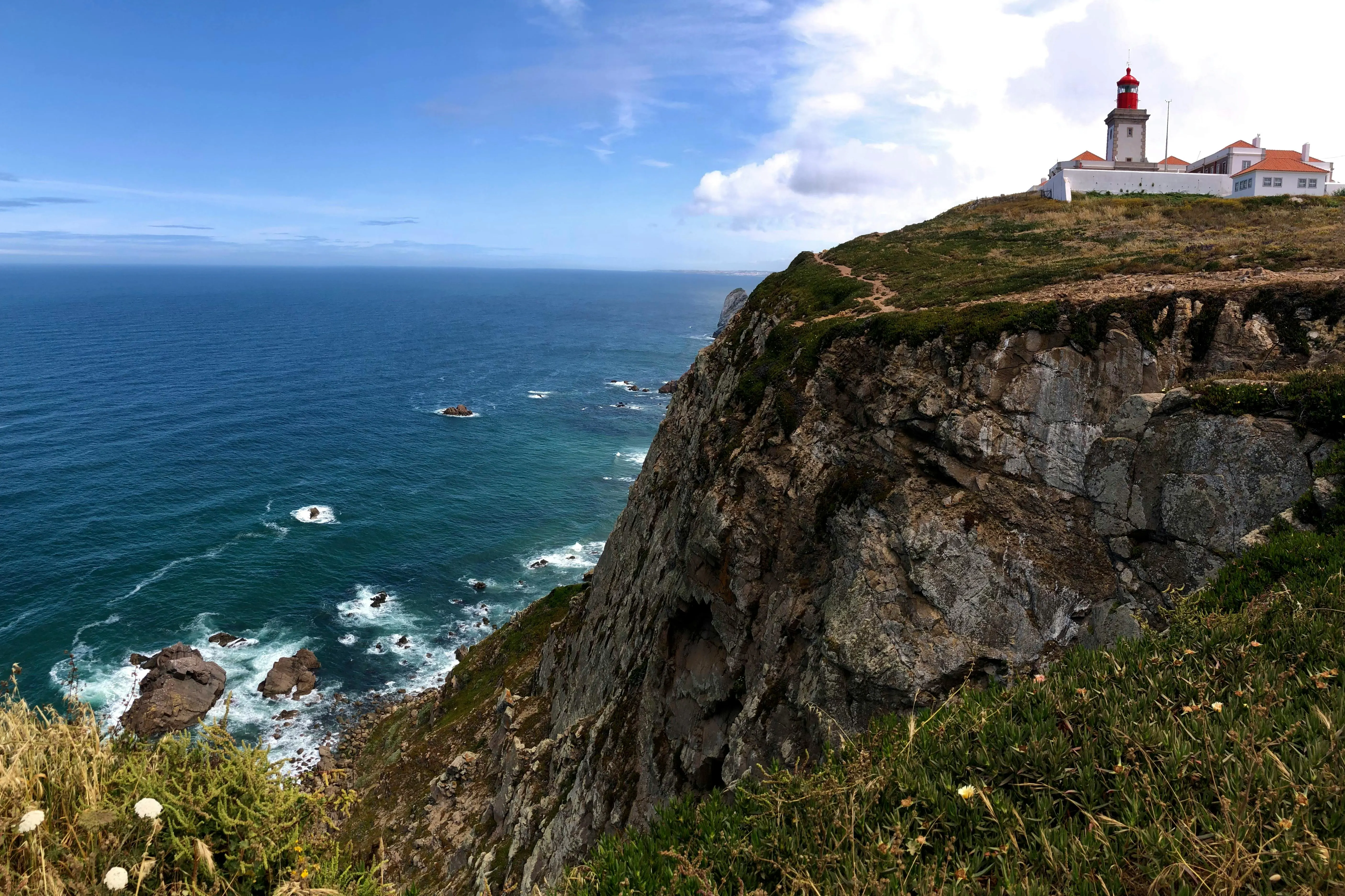
Cabo da Roca: Where Atlantic Cliffs Meet Portugal's Maritime History
At 10:15 on a Tuesday morning, I paid €2.60 for a one-way bus ticket and stepped onto the exposed headland at Cabo da Roca with the Atlantic wind pushing hard against my jacket. The famous stone marker was only a short walk from the bus stop, but the first thing I noticed was not the monument. It was the sound of the sea below, mixed with the rattle of the flagpoles and the sharp smell of salt in the air. Cabo da Roca is the westernmost point of mainland Europe, about 40 kilometres from Lisbon, and it is easy to visit from Sintra or Cascais. It is also easy to misunderstand. This is not a place filled with attractions or cafés. Most people need 30 to 60 minutes for the viewpoint, lighthouse, monument and a few photographs. The reward comes from the location itself, the open coastline and the feeling of standing at the edge of a continent. Bring a jacket. Even July can feel cold here.
Why Cabo da Roca Matters
Cabo da Roca matters because it combines geography, Portuguese history and maritime culture in one small site. The cape marks the westernmost point of mainland Europe, with cliffs rising roughly 140 metres above the Atlantic. A stone monument carries the well-known words associated with Luís de Camões: “Where the land ends and the sea begins.” The quotation gives the place a literary connection, but the setting does not need much explanation. The ocean is right in front of you, and the land falls away quickly beyond the marked paths.
The lighthouse is another important part of the site. Built in 1772, it remains an active aid to navigation and has guided ships along this coast for centuries. Since July 2026, the lighthouse complex has also included an interpretation centre, with a self-guided visit costing €5 and a panoramic visit costing €10 for adults. This adds useful context to a stop that once consisted mainly of a viewpoint and a souvenir certificate.
There is an honest limitation. Cabo da Roca is small. If you arrive expecting a full day of sightseeing, you may feel disappointed after the first half-hour. Tour buses can also make the viewpoint crowded, while the café and toilet facilities are limited. I recommend treating Cabo da Roca as one part of a wider day around Sintra, Cascais or the nearby beaches rather than as your only destination.
The Best Time to Experience Cabo da Roca
The most reliable period for visiting Cabo da Roca runs from May 15 to June 30. Daytime temperatures usually sit around 19°C to 24°C (66°F to 75°F), and the days are long enough for a late afternoon visit without rushing back to Sintra or Cascais.
July 1 to August 31 brings the warmest weather, with typical daytime temperatures of 24°C to 28°C (75°F to 82°F). The cape itself is usually cooler than Lisbon, but summer wind can still be strong. Tour buses are busiest between 11:00 and 15:00. Arrive before 10:00 or after 16:00 for a less crowded stop.
September 1 to October 15 is another excellent window. Expect approximately 21°C to 26°C (70°F to 79°F), fewer organised groups and softer afternoon light. The sea can look especially clear after several dry days.
From November 1 to March 15, temperatures often range from 13°C to 18°C (55°F to 64°F). Rain and strong gusts are more likely, and bus services run less often. The upside is a quieter visit. Check the return timetable before leaving Sintra, because missing a bus can mean waiting 30 to 40 minutes in an exposed area.
For sunset, arrive at least 45 minutes early. The western view is excellent, but the wind usually increases after dark, and the path near the cliffs is not a place to explore casually at night.
Approximate Budget for a 7-Day Trip
A seven-day trip based in Lisbon, with one day dedicated to Cabo da Roca and the Sintra coast, can be managed on a moderate budget. The figures below are per person and assume a shared room, public transport and several casual meals.
- Accommodation: €420 to €840 for seven nights in a budget hotel, guesthouse or private hostel room. Staying in Lisbon usually gives you more choice, while Sintra can save travel time but may cost more on busy weekends.
- Food: €210 to €350 for breakfasts, simple lunches, pastries, dinners and drinks. A daily average of €30 to €50 is realistic if you mix cafés with local restaurants.
- Transport: €55 to €100 for Lisbon metro and trains, the Sintra or Cascais connection, and buses 1253 or 1624 to Cabo da Roca. A rental car can add €180 to €320 once fuel, tolls and parking-related costs are included.
- Attractions: €80 to €180 for selected Sintra palaces, the Cabo da Roca lighthouse experience, museums and other paid visits. Cabo da Roca's main viewpoint remains free.
- Miscellaneous: €50 to €100 for snacks, coffee, a certificate, small purchases and occasional ride-hailing trips.
Total: €815 to €1,570 per person for seven days.
The handwritten Cabo da Roca certificate costs about €11. It is a fun souvenir, but it is overpriced if you are travelling on a tight budget; take your own photograph at the monument instead. Private taxis from Sintra can also be poor value for one or two people. The public bus costs about €2.60 each way, while a shared ride-hailing car becomes more sensible for a group.
Essential Cabo da Roca Experiences
- Stand beside the westernmost-point monument. Walk to the stone marker and read the inscription linked with Camões. Go early if you want a clear photograph without a queue.
- See the Cabo da Roca Lighthouse. View the lighthouse from outside or book the interpretation centre. The panoramic visit adds access to the upper balcony and costs more than the basic experience.
- Walk the clifftop paths. Follow the marked coastal routes for wider views and fewer people. Wear proper shoes, since loose ground and sudden gusts make the edges unsafe.
- Hike towards Praia da Ursa. The beach is roughly one kilometre away, but the descent is steep and the return is harder than it looks. Skip this walk if you have poor footwear, mobility limitations or unstable weather.
- Watch the late afternoon light. The cape faces west, so the final hours of daylight bring the best colour. Stay behind barriers and leave before the area becomes difficult to navigate.
- Buy a local certificate. The tourism office sells a traditional certificate confirming your visit. It is a small keepsake, especially useful for families and children who enjoy geographic milestones.
Hidden Gems Most Travelers Miss
- Sanctuary of Peninha: A hilltop religious site in the Sintra hills with broad views over the forest and coast. It is quieter than the main Sintra palaces.
- Praia da Adraga: A dramatic beach with a sandy cove and rock formations. It works well after Cabo da Roca, especially if you have a car.
- Praia da Ursa northern trail: Even if you do not descend to the beach, the upper path gives a better sense of the coastline than the main viewpoint.
- Colares wine country: Small producers around Colares make distinctive wines from vines grown in sandy soils. Appointments are often needed.
- Azenhas do Mar: A coastal village built into the hillside, with sea views and a natural swimming pool. It is more rewarding at quieter times than during the midday rush.
- The lighthouse interpretation centre: Many visitors still miss it because they assume the lighthouse is closed to the public. The new displays give the site more depth.
- The main sunset viewpoint: It is popular for a reason, but it is also the most overrated part of the visit when crowded. If coaches arrive, wait 20 minutes or walk farther along the marked path.
Cultural & Practical Tips
- Carry a windproof layer in every season. A sunny forecast for Lisbon does not guarantee comfortable weather at the cape.
- Stay behind fences and marked barriers. The cliffs are high, exposed and unstable in places, and a photograph is never worth stepping onto loose ground.
- Do not assume the bus will be waiting when you finish. Check the return time before walking towards Praia da Ursa or the northern trails.
- Use the local pronunciation, “Cabo da Roca,” rather than shortening the name to “the cape” when asking for directions.
- Bring water and a snack. The café is useful, but queues can be long and the food selection is basic.
- Do not combine a long beach hike with several Sintra palaces unless you start early. The distances and bus waits can turn an enjoyable day into a rushed one.
- Keep children close to adults near every viewpoint. Strollers may work around the main paved area, but they are unsuitable for coastal paths.
Essential Visitor Information
Location & Access: Cabo da Roca is at Estrada do Cabo da Roca, 2705-001 Colares, Portugal. GPS: 38.7805, -9.4970. It is about 18 kilometres from Sintra, 15 kilometres from Cascais and 40 kilometres from Lisbon. By public transport, take bus 1253 from Sintra station or bus 1624 from Cascais or Portela de Sintra. By car, follow the N247 and turn towards Azóia. Ride-hailing services are faster than the bus but cost more.
Tickets & Booking: The main viewpoint and monument are free, and no booking is needed. The lighthouse interpretation centre costs €5 for the essential visit. The panoramic lighthouse visit costs €10 for adults, €7.50 for visitors aged 65 and over, and €5 for children aged 6 to 17. Booking is recommended for the panoramic visit during summer and weekends.
Operating Hours: The outdoor viewpoint is accessible throughout the day. The tourism office generally operates from 09:00 to 18:30 between October and April and from 09:00 to 19:30 between May and September. It closes on Christmas Day and New Year's Day. Lighthouse centre hours can change, so confirm the session time when booking.
Visit Duration: Allow 30 minutes for the monument, lighthouse exterior and main viewpoint. Plan 60 to 90 minutes if you include the interpretation centre, photography and short clifftop walks. Hiking towards Praia da Ursa requires several additional hours once the return walk and changing conditions are considered.
Family Suitability: Children can enjoy the monument, lighthouse and open views, but adults must supervise them closely. The main visitor area is fairly easy to reach, and a stroller may work on the flatter approach. Coastal paths are uneven, exposed and unsuitable for most strollers. Toilets and a small café are available, though facilities are limited during busy periods.
Timing: May, June, September and early October offer the best balance of weather and visitor numbers. Arrive before 10:00 or after 16:00 in summer. Sunset is attractive, but bring warm clothing and check the last bus before staying late.
Highlights: The Cabo da Roca monument, the Atlantic cliff viewpoint, the 1772 lighthouse, the lighthouse interpretation centre and the trail towards Praia da Ursa are the main sights.
Nearby & Day Trip: Praia da Ursa is about one kilometre away, Praia da Adraga is roughly four kilometres away, and the Sanctuary of Peninha is around three kilometres inland. Sintra's historic centre, Quinta da Regaleira and Monserrate are reachable by car, bus or organised tour. A full day combining Sintra and Cabo da Roca is feasible, but visiting several major palaces plus the cape requires an early start.
Conclusion: Travel with Perspective, Not Just a Photograph
Cabo da Roca is at its best when you give it the right role in your itinerary. It is not a large attraction with hours of indoor displays, shops and restaurants. It is a short, powerful stop shaped by wind, cliffs, maritime history and the simple fact of standing at mainland Europe's western edge. Visit with a warm layer, sensible shoes and a plan for getting back. Pair it with Sintra, Cascais or one of the nearby beaches, and the journey feels worthwhile rather than hurried. Would you prefer a quiet early-morning visit or a sunset stop after exploring the coast?
Post a Comment