
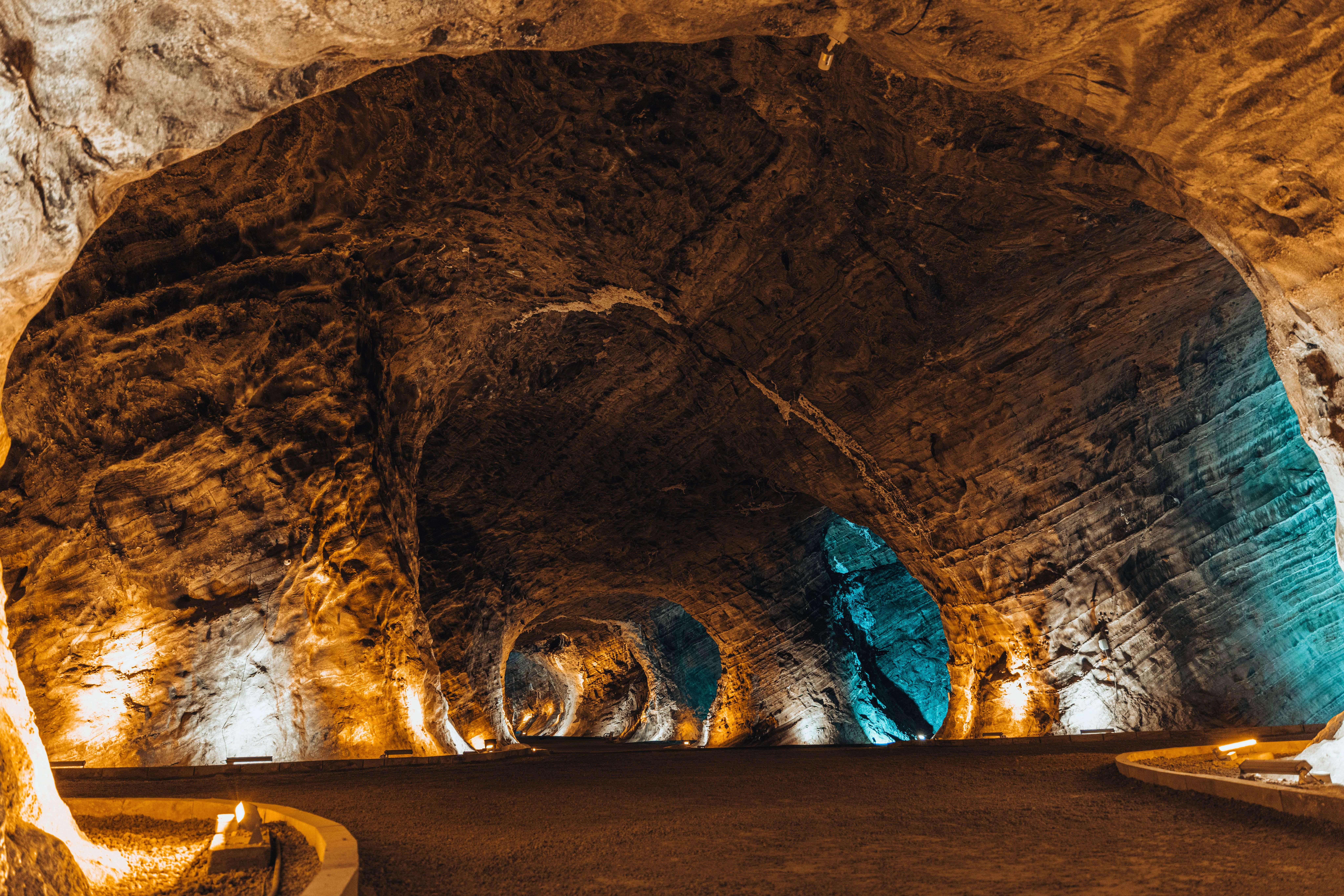
Damlataş Cave: Where Glittering Stone Meets Healing Air
Soft amber light filters through the cavern entrance as you step into Damlataş Cave—a natural cathedral where limestone has been sculpted over fifteen thousand years into glittering stalactites that drip like frozen honey from the ceiling. The air carries a cool, mineral scent, while the rhythmic plink of water droplets creates a meditative soundtrack unchanged since the last Ice Age. You stand in a chamber measuring approximately two hundred fifty square meters, where temperatures remain a constant twenty-two degrees Celsius year-round and humidity hovers near ninety-five percent—a microclimate so stable it has earned this cave a reputation for therapeutic benefits, particularly for respiratory conditions. This place matters because it offers one of Turkey's most accessible encounters with geological time—a cave where you can touch stone formed before human civilization, breathe air that has remained unchanged for millennia, and witness nature's patient artistry in creating beauty that requires no human hand, only the eternal dance of water and rock.
Why Damlataş Cave Embodies Geological Wonder
Damlataş Cave represents one of Anatolia's most accessible yet scientifically significant karst formations, solving the modern traveler's desire to experience ancient geological processes within easy reach of coastal amenities. Discovered in 1948 during harbor construction in Alanya, the cave was formed approximately fifteen thousand years ago as rainwater enriched with carbon dioxide dissolved limestone bedrock, creating chambers adorned with stalactites (hanging formations) and stalagmites (rising formations) that grow at a rate of approximately one millimeter per century. The cave's name—"Dripping Stone" in Turkish—reflects the continuous process of calcite deposition that still shapes its interior today.
The engineering behind Damlataş reveals fascinating hydrological processes: the cave maintains a constant temperature of 22°C (72°F) and relative humidity of 95% year-round, creating a stable microclimate that has attracted scientific interest since the 1950s. Researchers from Istanbul University documented the cave's air composition in 1965, noting elevated levels of radon gas and negative ions—elements believed to benefit respiratory health. The cave's formations include delicate "cave pearls" (spherical calcite deposits), flowstone curtains that cascade like frozen waterfalls, and columns where stalactites and stalagmites have joined over millennia. Engineers constructed a protected entrance with lighting and walkways in 1952 to allow public access while preserving fragile formations from human touch.
Beyond its aesthetic grandeur, Damlataş Cave fulfills critical scientific and cultural functions: it serves as a natural laboratory for studying karst formation processes, a therapeutic destination for visitors with asthma and allergies, and a symbol of Alanya's natural heritage. The Turkish Ministry of Environment designated the cave as a protected natural monument in 1980, implementing conservation measures that limit daily visitors to preserve air quality and prevent damage to delicate formations. Scientific monitoring by Akdeniz University's Geology Department has documented formation growth rates and air composition changes, ensuring that Damlataş Cave remains pristine for both human visitors and the geological processes that continue to shape its interior. The site attracts over three hundred thousand visitors annually while maintaining environmental standards through controlled access, educational programs, and research initiatives connecting visitors to the cave's natural significance.
The Best Time to Experience Damlataş Cave
Timing your visit to Damlataş Cave dramatically affects crowd levels, lighting conditions, and overall experience quality. The optimal window stretches from April 18–May 30 and September 12–October 20, when air temperatures in Alanya range between 20–28°C (68–82°F) and the cave's constant 22°C (72°F) interior provides welcome relief from coastal warmth. During these shoulder seasons, wildflowers bloom along the approach path, photographic lighting at the entrance is spectacular, and visitor numbers stay manageable at approximately two hundred to four hundred daily rather than the eight hundred to twelve hundred seen in peak summer. Arrive at the cave between 8:30–10:00 AM when morning light illuminates the entrance beautifully and before tour groups arrive from Alanya resorts.
Avoid July 15 through August 25 absolutely: temperatures in Alanya soar to 34–41°C (93–106°F), crowds reach maximum capacity creating lengthy waits for cave entry, and the narrow entrance pathway can feel congested with visitors. Midday visits between 12:00–4:00 PM during peak season prove uncomfortable—the queue outside the cave exposes visitors to intense sun, and finding quiet moments inside becomes difficult with constant foot traffic. Winter months (November through March) bring cooler air temperatures of 10–16°C (50–61°F) outside the cave, though the interior remains a comfortable 22°C (72°F); occasional rain can make the approach path slippery, but the cave remains accessible and offers solitary exploration opportunities with dramatic lighting.
The cave operates daily with seasonal hour adjustments. For current opening times, admission fees, and conservation updates, consult the official resource: www.kulturportali.gov.tr—Turkey's Ministry of Culture and Tourism portal provides verified information about Damlataş Cave accessibility, ticket prices, and ongoing preservation projects. Note that admission typically costs €4–€6, and the cave can be explored thoroughly in thirty to forty-five minutes, making it ideal to combine with nearby Alanya Castle or Cleopatra Beach.
Approximate Budget for a 7-Day Trip
Exploring Damlataş Cave and the surrounding Alanya region offers exceptional value for nature enthusiasts and cultural travelers. This budget assumes moderate comfort—mid-range accommodation with sea or mountain views, fresh Turkish and Mediterranean cuisine, local transportation, cave entrance fees, and selective guided experiences. Prices reflect 2026 rates for travelers seeking authentic natural experiences without luxury resort pricing.
- Accommodation: €38–€72 per night in Alanya town center or Cleopatra Beach area (boutique hotels with pool and traditional breakfast; budget pensions from €20, upscale seaside resorts from €115)
- Food: €22–€36 per day (breakfast €4—Turkish kahvaltı spread with cheeses, olives, tomatoes, honey, börek; lunch €7–€10—gözleme, grilled fish sandwich, or meze platter at local cafes; dinner €11–€22—fresh sea bass, lamb tandır, or vegetarian options with local wine)
- Transportation: €54 total (Antalya Airport to Alanya via shuttle: €8 each way; local dolmuş to Damlataş Cave: €1.50 per ride; taxi from beach area: €8; bicycle rental: €6/day; optional car rental for exploring: €28/day)
- Attractions: €72 total (Damlataş Cave entrance: €6; Alanya Castle: €8; Alanya Archaeological Museum: €5; Dim Cave tour: €12; guided nature walk: €15; boat trip along coast: €15)
- Miscellaneous: €38 (guidebook €8, Turkish evil eye charm €6, local honey and herbs €10, reef-safe sunscreen €7, travel insurance prorated €8)
Total: €410–€580 for 7 days (excluding international flights to Antalya)
7 Essential Damlataş Cave Experiences
- Enter the cave at opening time: Arrive by 8:30 AM when the cave opens to experience Damlataş in its most tranquil state—before crowds arrive and morning light filters beautifully through the entrance. The initial descent reveals glittering stalactites illuminated by carefully positioned lighting that enhances their natural colors without damaging delicate formations. Allow ten minutes to adjust your eyes to the dim interior and appreciate the cool, humid air that has remained unchanged for millennia.
- Observe the cave's formations up close: Follow the designated pathway to view the cave's most spectacular features: delicate "cave pearls" no larger than marbles, flowstone curtains that cascade like frozen waterfalls, and columns where stalactites and stalagmites have joined over thousands of years. Look for the central stalactite cluster that gives the cave its name—"dripping stone"—where water droplets fall with metronomic precision. Visit between 9:00–10:00 AM when ambient light from the entrance enhances formation details without harsh artificial lighting.
- Breathe the cave's therapeutic air: Pause in the cave's central chamber to experience the air that has earned Damlataş its reputation for respiratory benefits. The constant 22°C (72°F) temperature and 95% humidity create a stable microclimate rich in negative ions and trace radon gas—elements studied for their potential therapeutic effects. Many visitors with asthma or allergies report feeling immediate relief; spend fifteen minutes breathing deeply to experience this natural phenomenon.
- Photograph the entrance at golden hour: Return to the cave entrance approximately one hour before sunset to capture the iconic view of the cavern mouth framed by Alanya's coastal landscape. The best lighting occurs during golden hour (5:00–7:00 PM in summer) when warm light bathes the limestone facade in amber tones. Bring a polarizing filter to reduce glare on wet rock surfaces and enhance the contrast between cave interior and exterior.
- Learn about cave formation processes: Read the informational panels near the entrance that explain how Damlataş was formed over fifteen thousand years through the slow dissolution of limestone by carbonic acid in rainwater. Understanding the geological timeline—where one millimeter of formation growth represents one century—adds profound perspective to the delicate beauty surrounding you. Allow five minutes to absorb this context before exploring further.
- Visit the adjacent museum: Next to the cave entrance, a small museum displays geological specimens, historical photographs of the cave's 1948 discovery, and artifacts from Alanya's archaeological heritage. The museum provides valuable context for the cave's significance and the region's natural history. Allow twenty minutes to explore exhibits that connect Damlataş to broader geological and cultural narratives.
- Combine with Alanya Castle: After exploring the cave, walk fifteen minutes uphill to Alanya Castle for panoramic views of the Mediterranean and the cave's coastal setting. The castle's elevated position reveals how Damlataş fits within Alanya's dramatic landscape of cliffs, sea, and ancient fortifications. Visit the castle between 4:00–6:00 PM when cooler temperatures and golden light enhance the experience.
3 Hidden Gems Most Travelers Miss
- The side chamber with rare helictites: Beyond the main pathway, a small side chamber contains rare helictite formations—twisting, gravity-defying stalactites that grow in unpredictable directions due to air currents within the cave. Most visitors never access this area because it requires asking staff for "yan oda" (side chamber) directions and visiting during less crowded hours. The helictites resemble delicate coral or frozen smoke, offering extraordinary photographic opportunities. Visit between 2:00–4:00 PM when fewer day-trippers are present and staff have time to provide access.
- The geological research observation point: Near the cave's rear wall, a discreet viewing area allows visitors to observe ongoing scientific monitoring equipment that tracks air composition, humidity, and formation growth rates. This spot remains overlooked because signage is minimal and access requires asking guides for "araştırma noktası" (research point) directions. Observing the careful work of geologists adds educational value to your visit and reveals how science protects natural wonders. Visit during weekday mornings when research activities are most active.
- The coastal path viewpoint: A lesser-known walking trail extends east from the cave along Alanya's rocky shoreline, leading to a clifftop viewpoint offering panoramic perspectives of the cave entrance with the Mediterranean as backdrop. This spot remains overlooked because it lacks formal signage and requires a ten-minute walk from the main entrance. Ask staff for "sahil yolu" (coastal path) directions. Visit at sunset when you can photograph the cave framed by sea and sky without crowds. This secluded perch rewards with photography opportunities and a profound sense of the cave's harmony with its coastal setting.
Cultural & Practical Tips
- Respect cave preservation: Damlataş Cave is protected under Turkish environmental law. Never touch formations, remove stones, or use flash photography—oils from skin accelerate deterioration and violations carry fines up to ₺1,500 (approximately €45). Stay behind barriers and respect roped-off conservation areas.
- Wear appropriate footwear: The cave pathway features smooth, wet limestone surfaces that can become slippery. Sturdy walking shoes or sandals with grip are essential; avoid flip-flops or smooth-soled shoes. The path includes gentle slopes and occasional steps.
- Prepare for humidity: The cave's 95% humidity can feel intense, especially for visitors unaccustomed to tropical conditions. Dress in light, breathable clothing and bring a small towel to wipe condensation from glasses or camera lenses. The constant 22°C (72°F) temperature feels cool upon entry but comfortable within minutes.
- Learn essential Turkish phrases: "Merhaba" (mehr-hah-bah—hello), "Teşekkür ederim" (teh-shek-kür eh-deh-rim—thank you), "Mağara nerede?" (mah-ah-rah neh-reh-deh—where is the cave?), "Su nerede?" (soo neh-reh-deh—where is the water?), and "İyi günler" (iy-ee gün-ler—good day). Even basic efforts earn warm responses from site staff and local vendors.
- Photography guidelines: General photography is permitted throughout Damlataş Cave, but flash photography is prohibited to protect delicate formations and preserve the natural ambiance. Tripods require permission from site staff. When photographing other visitors, always ask "Fotoğraf çekebilir miyim?" (foh-toh-raf cheh-keh-bee-leer mee-yim—may I take a photo?).
- Plan for accessibility: The cave entrance involves a short descent via stone steps; visitors with mobility challenges may find access difficult. Staff can provide assistance upon request, and the adjacent museum is fully accessible. Consider visiting during weekday mornings when crowds are lighter and staff have more time to assist.
- Combine with nearby attractions: Damlataş Cave sits within easy reach of Alanya Castle (15 minutes), Cleopatra Beach (5 minutes), and Alanya's old town (10 minutes). Purchase combined tickets where available to maximize value. This allows you to experience natural and cultural heritage in one trip while optimizing travel time and costs.
Conclusion: Travel with Wonder, Not Just Checklists
Damlataş Cave doesn't yield its deepest magic to hurried visitors ticking boxes on an itinerary. It rewards those who pause to trace the delicate curves of a stalactite formed over centuries, who breathe air unchanged since the last Ice Age, who understand that this cave represents nature's patient artistry requiring our respect and care. When you stand where water has sculpted stone for fifteen thousand years, where every drip adds another millimeter to a formation that will outlast human memory, you're participating in an experience that transcends ordinary tourism.
Responsible travel here means honoring the cave's fragility—these formations have survived millennia of natural processes only to face modern threats from human touch and environmental change. Support preservation by following all posted guidelines, supporting local guides who share geological knowledge, leaving no trace beyond footprints on designated paths, and recognizing that your presence is a privilege granted by nature's generosity. This cave has shaped Alanya's identity for decades—a balance worth preserving through mindful choices. Come not just to capture the perfect photograph, but to understand that wonder isn't consumed—it's cultivated, one respectful step, one moment of pure presence, one connection to Earth's enduring stories at a time.