
Diros Caves: Where Subterranean Rivers Meet Ancient Stone Cathedrals
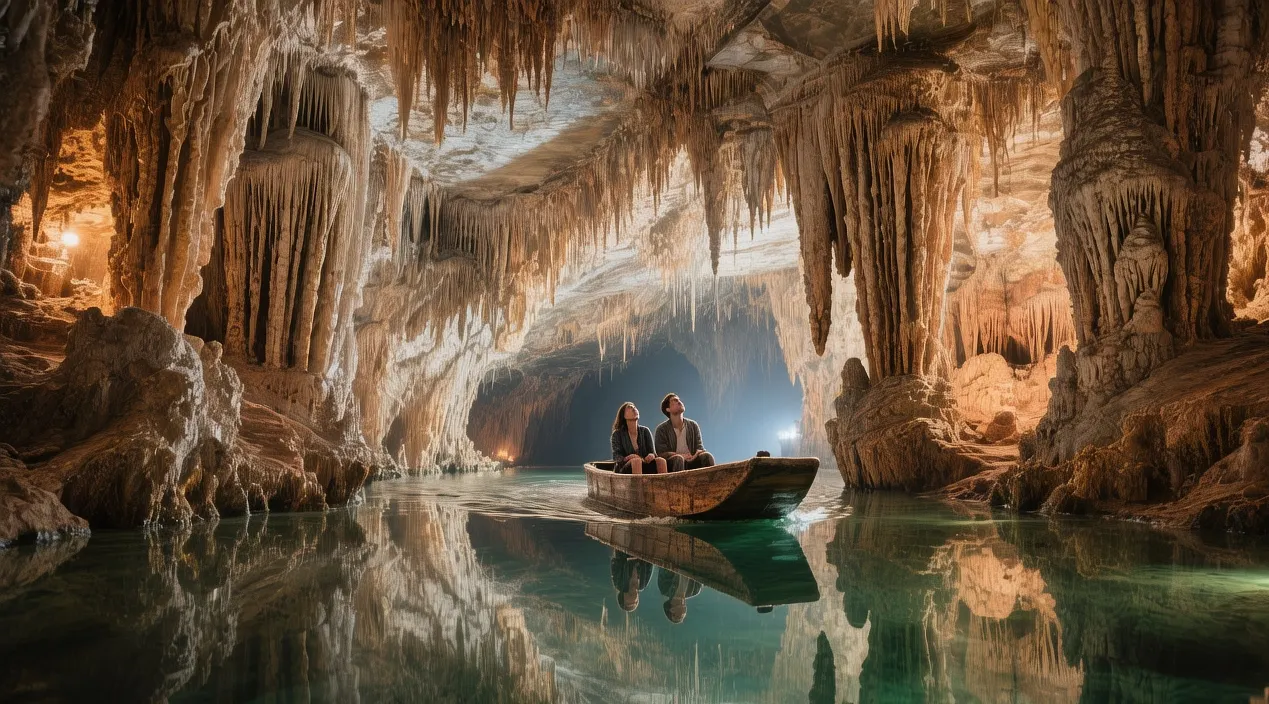
Emerald water laps softly against limestone walls as you glide through a cathedral of stone—stalactites descend like frozen waterfalls from ceilings 25 meters overhead, while stalagmites rise in silent testimony to millennia of mineral deposition. The air carries the cool, mineral scent of underground springs, maintaining a constant 16°C (61°F) regardless of the Mediterranean heat above. You float in a small wooden boat along a subterranean river that has carved its path through rock for over 1.5 million years, your guide's voice echoing gently through chambers where Neolithic humans once sought shelter and ritual space. This is the Diros Caves, a labyrinth of flooded passages and dry galleries extending over 14 kilometers beneath the Mani Peninsula, where only 1.5 kilometers are open to visitors—yet even this fraction reveals a world of breathtaking geological artistry. The Diros Caves matter because they preserve not just natural wonder, but human history: a sanctuary where ancient cultures left pottery and tools, where geological time becomes visible in every dripstone formation, and where the quiet power of water continues to sculpt masterpieces invisible to the surface world.
Why Diros Caves Embodies Geological and Archaeological Wonder
The Diros Caves represent one of Europe's most significant karst cave systems—a subterranean masterpiece where water, time, and geology converge to solve the fundamental question of how landscapes evolve across epochs. Formed during the Pliocene epoch over 1.5 million years ago, the caves were shaped by the slow dissolution of limestone by slightly acidic groundwater, creating chambers, passages, and an underground river system that continues to flow today.
Archaeologically, Diros fulfills a profound historical need: it served as a Neolithic settlement and ritual space between 6000–3000 BCE. Excavations beginning in 1949 by anthropologist Ioannis Petrocheilos revealed pottery shards, bone tools, and human remains indicating continuous habitation. The caves provided shelter from surface conflicts, stable temperatures for food storage, and sacred space for ceremonies—functions that made them invaluable to early communities.
Geologically, the caves showcase extraordinary speleothem diversity. Stalactites form as calcium carbonate-laden water drips from ceilings, depositing minerals at rates of 0.1–0.3 millimeters per year; stalagmites grow upward where drops splash onto floors. The cave's most dramatic formations—helictites that twist in gravity-defying spirals, and flowstones that cascade like frozen waterfalls—demonstrate how subtle variations in water chemistry and airflow create infinite artistic variation. The underground river, maintaining a flow rate of approximately 200 liters per second, carved the main passage now navigated by boat: a 500-meter route through chambers reaching 40 meters in height and 30 meters in width.
Engineering adaptations enable visitor access while preserving the delicate environment: electric lighting uses low-heat LED bulbs to prevent algae growth; walkways are elevated to avoid disturbing sediment; and boat tours limit groups to 20 passengers to minimize acoustic and physical impact. When systematic exploration began in 1900, only the entrance chamber was known; today, sonar mapping reveals over 14 kilometers of passages, though most remain inaccessible to protect fragile formations and archaeological layers. The Diros Caves stand as a testament to patience—both geological and human—where every drip of water writes another line in a story still being composed.
The Best Time to Experience Diros Caves
Timing your visit to the Diros Caves requires balancing crowd dynamics, lighting for photography, and seasonal accessibility. The optimal window runs from April 22 through June 12, when surface temperatures range 18–26°C (64–79°F) and wildflowers bloom across the Mani Peninsula. During this period, morning tours between 9:00–10:30 AM offer the clearest water reflections and minimal wait times, as the cave's constant 16°C (61°F) interior temperature feels refreshingly cool after the mild spring morning.
A second exceptional season spans September 18 through October 25, with surface temperatures of 17–25°C (63–77°F) and clearer atmospheric conditions that enhance the approach drive through olive groves. Afternoon tours between 2:00–3:30 PM provide optimal lighting for exterior photography while avoiding peak cruise-ship crowds.
For the most atmospheric experience, book the first tour of the day at 9:00 AM when opening begins. The cave's acoustics are most pristine before cumulative voices create reverberation, and water surfaces remain undisturbed for mirror-like reflections. Midday visits between 12:00–2:00 PM should be avoided during July and August, when surface temperatures exceed 34°C (93°F) and tour queues can extend to 90 minutes in the sun.
Avoid visiting during peak cruise excursion season (July 15–August 20) when tour groups create significant bottlenecks and advance reservations become essential. Winter months (November–February) bring reduced hours and occasional closures due to weather; while crowds thin dramatically, the approach road from Gytheio may close during heavy rain.
For official information and tour schedules: https://www.diros-caves.gr/
Approximate Budget for a 7-Day Trip
Exploring the Diros Caves as part of a Mani Peninsula itinerary offers exceptional value, combining subterranean wonder with coastal relaxation at prices well below Greek island destinations. The following breakdown assumes a mid-range travel style with comfortable accommodation in nearby Areopoli or Pyrgos Dirou, dining at traditional tavernas, and a mix of independent exploration and guided experiences.
- Accommodation: €45–€80 per night for traditional stone guesthouses or boutique hotels in Areopoli or Pyrgos Dirou. Budget rooms in Gytheio start at €35; luxury sea-view suites reach €120.
- Food: €24–€34 per day. Breakfast €4 (Greek coffee, honey yogurt, fresh bread); lunch €9 (horiatiki salad, grilled sardines, house wine); dinner €14–€18 (slow-cooked goat, fresh octopus, local olive oil).
- Transportation: Bus from Athens to Gytheio €21 (4 hours, KTEL route); Gytheio to Diros Caves taxi €18 round-trip or rental car €30/day (essential for Mani exploration); parking at caves free.
- Attractions: Diros Caves boat tour €12; guided speleology experience €45; Mani tower villages exploration free; Ancient Messene site €8; combined Peloponnese heritage ticket €20.
- Miscellaneous: Handmade olive wood souvenirs €10–€25; local thyme honey 250g €6; traditional woven textiles €18; travel insurance €35/week; water/snacks at site €4.
Total for 7 days: €630–€830 per person (excluding international flights to Athens)
7 Essential Diros Caves Experiences
- Take the underground boat tour at opening time: Board the small wooden vessel at 9:00 AM for the 30-minute journey through the flooded Vlichada chamber. Sit on the starboard side for optimal views of the most dramatic stalactite clusters. The guide's narration (available in English) explains formation processes and archaeological discoveries. Keep voices low to preserve the cave's natural acoustics and enhance the meditative atmosphere.
- Photograph the "Petrified Waterfall" formation: This dramatic flowstone cascade, located midway through the boat route, appears as frozen liquid stone illuminated by carefully positioned LED lights. The best viewing angle occurs when the boat pauses beneath the formation; use a fast shutter speed (1/60s minimum) to capture details without blur. No flash photography permitted to protect delicate mineral deposits.
- Walk the dry gallery pathway: After the boat tour, follow the elevated walkway through the Alepotrypa chamber where Neolithic artifacts were discovered. Interpretive panels in Greek and English explain excavation findings and speleothem science. Allow 15 minutes for this section, pausing to observe helictites—twisting formations that grow sideways due to capillary action rather than gravity.
- Experience the cave's acoustic properties: At a designated quiet point during the tour, your guide will invite silence to demonstrate how sound travels through limestone chambers. Whisper a word and listen as it echoes with crystalline clarity—a reminder that these spaces have amplified human voices for thousands of years. This moment connects visitors to Neolithic rituals that likely utilized the cave's natural acoustics.
- Visit the on-site museum: Before or after your cave tour, explore the small archaeological museum displaying pottery, tools, and bones excavated from Diros. The collection contextualizes human use of the caves across millennia. Visit between 10:30–11:30 AM when natural light from skylights illuminates exhibits without glare. Entry included with cave ticket.
- Photograph the cave entrance at golden hour: Position yourself on the terrace overlooking the bay 30 minutes before sunset. The limestone cliff face glows amber while the turquoise sea creates a striking contrast with the cave's dark mouth. Use a polarizing filter to enhance water color and reduce surface glare. This exterior view frames the subterranean experience within the dramatic Mani landscape.
- Combine with Mani tower village exploration: After your cave visit, drive 10 minutes to the tower village of Pyrgos Dirou or 20 minutes to Areopoli. These stone settlements provide cultural context for the caves' historical significance. Allow 90 minutes for village exploration, stopping at a taverna for lunch with views of the Messenian Gulf.
3 Hidden Gems Most Travelers Miss
- The Neolithic Excavation Viewpoint: Behind the main visitor center, an unmarked pathway leads to a protected viewing area where ongoing archaeological work reveals Neolithic settlement layers. This site, rarely included in standard tours, displays stratified soil sections showing 4,000 years of human occupation. Access requires asking staff for permission; visits permitted Tuesday–Thursday between 11:00 AM–1:00 PM when archaeologists are present to explain findings. Bring a macro lens to photograph pottery fragments in situ.
- The Spring-Fed Pool Outside the Entrance: A small natural pool fed by the cave's underground river lies 50 meters below the visitor entrance. The water maintains a constant 14°C (57°F) year-round and offers a refreshing swim after the cave tour. Most visitors overlook it because signage focuses on the main attraction. Access via the unmarked path to the right of the ticket office; bring water shoes for the rocky entry. Visit early afternoon (2:00–3:30 PM) when sunlight warms the surrounding rocks while water remains refreshingly cool.
- The Speleothem Formation Laboratory: Inside the visitor center's research wing, a small display demonstrates how scientists study cave formations using microscopic analysis and mineral sampling. This educational exhibit reveals the chemistry behind stalactite growth and climate reconstruction from dripstone layers. Most tourists bypass it en route to the boats. Visit between 10:00–11:00 AM when staff scientists occasionally offer impromptu explanations. The lab's magnified images of calcite crystals provide fascinating context for the formations you'll see underground.
Cultural & Practical Tips
- Respect the fragile environment: The Diros Caves' formations grow at millimeter-per-century rates and can be damaged by skin oils, lint, or sudden temperature changes. Do not touch stalactites or stalagmites, stay on marked pathways, and follow all guide instructions. Flash photography is prohibited to prevent algae growth on mineral deposits.
- Carry cash for tickets and souvenirs: The ticket office accepts cash only (no credit cards). Cave tour entrance costs €12 for adults, €6 for students/seniors with ID, free for children under 5. The on-site museum shop sells educational materials and local crafts—proceeds support conservation efforts.
- Learn essential Greek phrases: "Yassou" (YAH-soo) = hello; "Efharisto" (ef-hah-REE-stoh) = thank you; "Poso kani?" (POH-soh KAH-nee) = how much?; "Nero parakalo" (neh-ROH pah-rah-kah-LOH) = water please; "Ine spila?" (EE-neh SPEE-lah) = is it a cave?
- Prepare for temperature contrast: The cave maintains 16°C (61°F) year-round while surface temperatures can exceed 34°C (93°F) in summer. Bring a light sweater or shawl even on hot days. Wear sturdy, non-slip shoes—the boat embarkation area and walkways can be damp. The tour involves minimal walking but requires boarding a small vessel with assistance.
- Photography guidelines: Handheld photography is permitted throughout the cave tour. Flash, tripods, and selfie sticks are prohibited to protect formations and ensure visitor safety. Video recording requires advance permission from site management. Commercial photography requires permits obtained 48 hours in advance from the Hellenic Ministry of Culture (+30 210 8211000).
- Accessibility considerations: The boat tour accommodates visitors with limited mobility, but the embarkation area involves a short set of steps. Wheelchair users can experience the dry gallery via an alternative ramped pathway. Request assistance at the ticket office; staff can arrange priority boarding and provide seating during the boat portion. Service animals are permitted with advance notice.
- Weather considerations: Heavy rain can temporarily raise water levels in the cave, occasionally causing tour modifications. Check the official website or call +30 27330 22265 on the morning of your visit if storms are forecast. The approach road from Gytheio is paved but winding; drive cautiously in wet conditions.
Conclusion: Travel with Reverence, Not Just Sightseeing
The Diros Caves ask for more than a quick photograph and a checklist mark—they invite reverence for the patient artistry of water and time. This isn't merely a tourist attraction; it's a sanctuary where geological epochs become visible, where Neolithic hands once shaped pottery by flickering torchlight, and where every drip of water continues a creative process spanning millennia. When you float through emerald chambers and gaze upward at stone cascades frozen mid-fall, you're not just viewing nature—you're participating in a continuum of wonder that has inspired humans for thousands of years.
Responsible travel here means understanding that you're a guest in a space where fragility and grandeur coexist. It means moving quietly to preserve acoustic purity, following guidelines that protect formations growing at imperceptible rates, and supporting the local communities that steward this heritage. Purchase tickets directly, hire local guides who share both scientific and cultural insights, and dine at family tavernas that source ingredients from Mani's olive groves and gardens.
Slow down. Sit on the terrace after your tour and watch light shift across the Messenian Gulf. Listen to the gentle lap of the spring-fed pool, imagining the underground river that feeds it. Share a moment of silence with fellow travelers, letting the cave's timeless beauty inspire not just admiration, but stewardship. The Diros Caves will endure—if we treat them not as backdrops for selfies, but as teachers of patience, witnesses to Earth's artistry, legacies to protect. Travel here with humility, and the stones will whisper their ancient secrets.