Dubrovnik City Walls: Where Medieval Stone Meets Adriatic Light
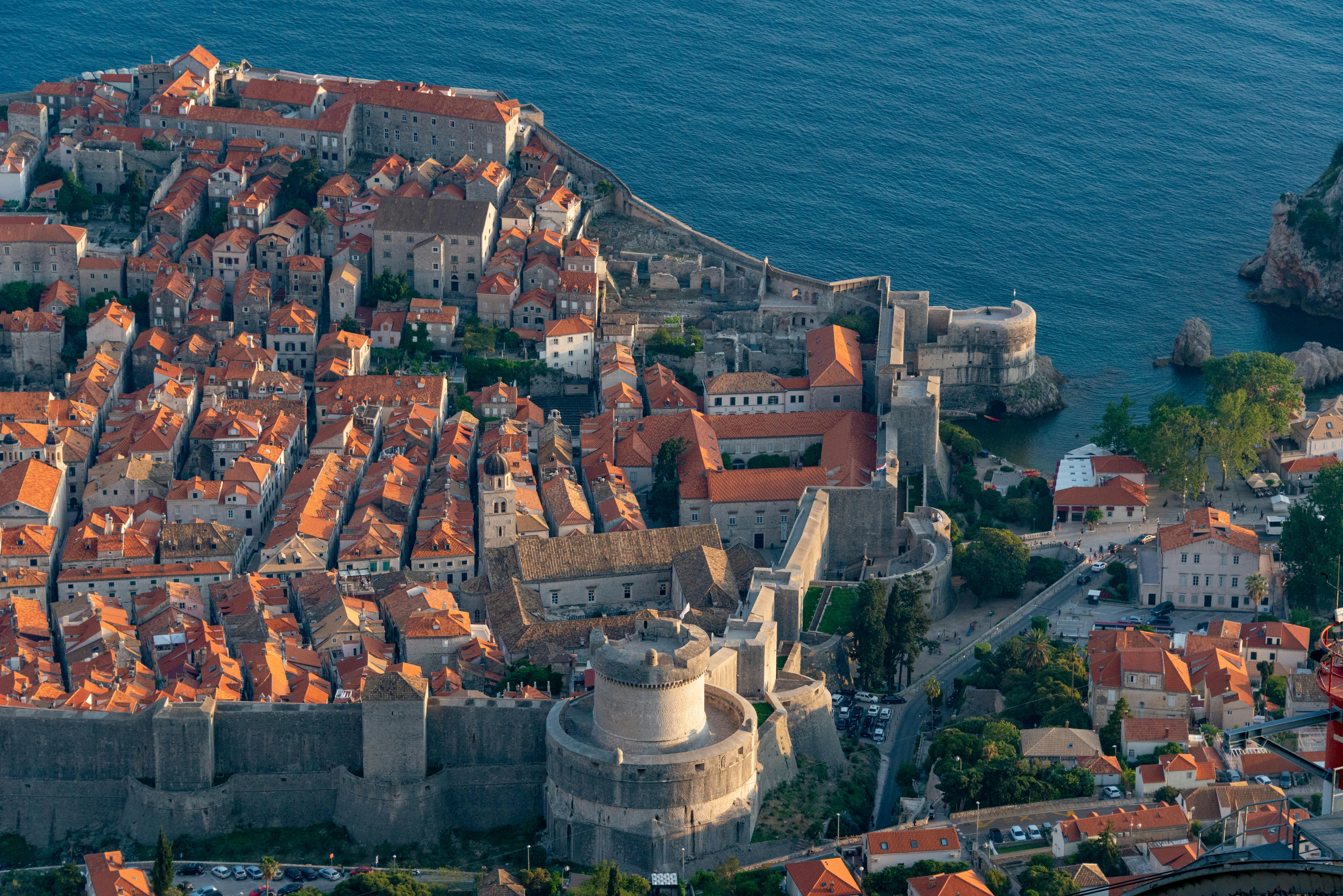
Dubrovnik City Walls: Where Medieval Ramparts Meet Adriatic Sky
At 8:05 AM on a Thursday in early June, I step onto the stone walkway at Pile Gate and the city opens up beneath me. I paid 40 euros for the ticket. The limestone is already warm under my shoes. Below, the Stradun is almost empty. A man is hosing down the pavement outside a bakery. The smell of fresh bread drifts up. I walk west along the wall toward Fort Bokar and stop at a viewpoint that looks straight down at a rooftop courtyard where someone is hanging laundry. By 10:30 AM, the walkway will be a slow-moving queue. By noon, the stone will radiate heat. But right now, at 8:05 AM, the walls belong to the early risers. The Dubrovnik City Walls are 1,940 meters of continuous medieval fortification encircling the Old Town. They are the best-preserved city walls in Europe, and walking the full circuit is the single most important thing you can do in Dubrovnik.
Why the Dubrovnik City Walls Matter
The walls were built between the 13th and 17th centuries, and they defended the Republic of Ragusa for over five hundred years. The system includes 17 towers, 5 bastions, and 2 corner fortresses. The Minčeta Tower, completed in 1464 by architect Juraj Dalmatinac, is the highest point at 37 meters and offers 360-degree views over the city and Lokrum Island. The Bokar Fortress, a round tower on the western side, was designed to protect the approach from the sea. The St. John's Fortress, at the harbour, now houses the Maritime Museum and the Aquarium. The walls were never breached by an enemy army. The Republic maintained its independence through diplomacy and tribute, paying the Ottomans and trading with everyone. The walls were tested in 1991 and 1992, when Yugoslav forces shelled the Old Town during the Croatian War of Independence. UNESCO listed Dubrovnik as a World Heritage Site in 1979, and after the war, restoration work repaired much of the damage. Today the walls are a UNESCO World Heritage Site and the city's most visited attraction. Here is the honest criticism: the walls are expensive. At 40 euros for an adult ticket in high season, it is one of the priciest single attractions in Croatia. The ticket is valid for 72 hours, and it includes one entry to Fort Lovrijenac, which softens the blow. But if you are traveling with a family, the cost adds up quickly. The walk itself is also not suitable for everyone. It involves hundreds of steps, uneven stone surfaces, and almost no shade. People with mobility issues, young children in strollers, and anyone prone to heat exhaustion will struggle.
The Best Time to Experience the Dubrovnik City Walls
May, June, September, and early October are the best months. In May, daytime temperatures range from 20°C to 25°C (68–77°F), and the walls are busy but manageable. June brings warmer days of 25–29°C (77–84°F), with the sea at its most vivid blue. September is arguably the sweet spot. Daytime highs sit at 24–27°C (75–81°F), the summer crowds have thinned, and the late afternoon light turns the stone golden. Early October is mild, with highs of 20–23°C (68–73°F), but rain becomes more frequent. July and August are the hottest and busiest months. Daytime temperatures regularly exceed 30°C (86°F), and the walls are packed from 10:00 AM until late afternoon. The walkway has almost no shade, and the stone radiates heat. If you visit in peak summer, start at 8:00 AM when the walls open, or go after 5:00 PM. The best time of day is right at opening. The light is soft, the walkway is quiet, and you can photograph the rooftops without a dozen people in the frame. Late afternoon, about 90 minutes before closing, is the second-best window. The light is golden, and most of the day-trippers have gone. Winter is quiet and cool, with daytime temperatures around 8–14°C (46–57°F), and the ticket price drops to 20 euros. The walls are open year-round except on Christmas Day, December 25. The last entry is 30 minutes before closing.
Approximate Budget for a 7-Day Trip
Dubrovnik is Croatia's most expensive city, and the walls are a significant part of the cost. Here is a realistic breakdown for one person, based on a 7-day trip using Dubrovnik as a base, with self-catering breakfasts and dinners at konobas away from the Stradun.
Accommodation: Guesthouses and apartments in Dubrovnik run 80–150 euros per night in shoulder season and 150–250 euros in July and August. A 7-night stay lands at roughly 560–1,050 euros. Staying in Lapad or Gruž is cheaper than the Old Town.
Food: Self-catering breakfast and lunch, with dinner at a konoba, costs about 35–50 euros per day. A week of food runs 245–350 euros. Restaurant mains on the Stradun average 20–28 euros, roughly 40 percent more than at konobas two streets inland.
Transport: The Old Town is car-free and walkable. Local buses cost 2 euros per ride. Airport transfers run 8–15 euros by bus or 30–40 euros by taxi. Budget 30–60 euros for local transport.
Attractions: The City Walls ticket costs 40 euros for adults and 15 euros for children aged 7–18 in high season. Children under 7 enter free. The Dubrovnik Pass costs the same 40 euros for one day and includes the walls, Fort Lovrijenac, and entry to 10+ museums plus unlimited city buses. The three-day pass costs 45 euros. Budget 40–45 euros.
Miscellaneous: Coffee, drinks, gelato, and unexpected costs. 80–120 euros.
Total: 955–1,625 euros for a comfortable 7-day trip. One overpriced trap: the café on the walls, near the St. John's Fortress end, charges 5 euros for a coffee and 10 euros for a sandwich. There is only one café on the entire circuit, and it knows it has a captive audience. Bring your own water and snacks. A picnic from the market in the Old Town costs less than one item at the wall café.
Essential Dubrovnik City Walls Experiences
- Start at Pile Gate and walk counter-clockwise. The Pile Gate entrance is the main access point, and going counter-clockwise takes you first along the sea-facing walls, past Fort Bokar, and toward the Ploče Gate. This direction keeps the sun behind you in the morning. Skip if you are visiting in peak season and the Pile Gate queue is long. Walk five minutes to the Ploče Gate entrance instead. It is quieter and the entry is faster.
- Climb the Minčeta Tower. The Minčeta Tower is the highest point on the walls at 37 meters, and it offers 360-degree views over the Old Town, the sea, and Lokrum Island. The spiral staircase inside the tower is narrow, and the climb is steep, but the view from the top is the best on the entire circuit. Skip if you are claustrophobic or have knee problems. The staircase is tight and there is no lift.
- Stand at Fort Bokar and look across at Lovrijenac. Fort Bokar is a round tower on the western side of the walls, and from here you look directly across a narrow channel at the free-standing Lovrijenac Fortress on its 37-meter cliff. This is one of the most photographed viewpoints in Dubrovnik. Your walls ticket includes one free entry to Lovrijenac within 72 hours. Visit the fort the next day to avoid doing both in one go.
- Walk the sea-facing section between Bokar and St. John's Fortress. This is the most dramatic part of the circuit. The wall drops straight into the Adriatic, and on a windy day the waves crash against the stone below. There is a small café near the St. John's end, but it is expensive. Skip if you are afraid of heights. There are low walls in some sections and the drop is significant.
- Use the ticket for Lovrijenac Fortress on a separate day. The ticket is valid for 72 hours and includes one entry to Lovrijenac, the free-standing fort on the cliff outside the walls. Most people do both on the same day and end up exhausted. Split them. Walk the walls one morning, then visit Lovrijenac the next afternoon. Skip if you are short on time. Lovrijenac is worth seeing, but it is a separate climb of 200 steps.
- Buy the Dubrovnik Pass instead of a standalone walls ticket. The one-day Dubrovnik Pass costs the same 40 euros as the standalone walls ticket, but it includes entry to 10+ museums, Fort Lovrijenac, and unlimited city buses for 24 hours. If you plan to visit even one museum, the pass is better value. Skip if you are only in Dubrovnik for the walls and nothing else. The standalone ticket is valid for 72 hours, while the one-day pass is strictly a 24-hour window.
- Skip the walls if you have serious mobility issues or are traveling with a stroller. The walkway is uneven, has hundreds of steps, and there are no ramps. Strollers are not practical. Wheelchairs cannot navigate the circuit. If mobility is a concern, the views from Mount Srđ via the cable car are a better alternative.
Hidden Gems Most Travelers Miss
- The inner walkway between Minčeta and the Pile Gate. Most people rush along the outer walls toward the sea views. The inner walkway, between the Minčeta Tower and the Pile Gate, looks down over the rooftops of the Old Town and is quieter and more shaded in the morning. The overrated "gem" here is the café on the walls. It is the only one, it is expensive, and the view is no better than the free viewpoints a few steps away.
- The Maritime Museum at St. John's Fortress. The museum is included in the Dubrovnik Pass and tells the story of the Republic of Ragusa's maritime trade. It is air-conditioned, which is a relief in summer, and the exhibits are well-curated. Most visitors walk past the entrance on the walls without going in.
- The inner courtyard of the Minčeta Tower. The tower has an inner courtyard with a small garden and a bench. Almost nobody stops here because they are focused on the spiral staircase to the top. It is a quiet corner with good views.
- The western outer wall near Fort Bokar. This section of the walls is often skipped because it is a dead end. It leads to a small terrace with a view of Lovrijenac and the open sea. It takes five extra minutes and is worth the detour.
- The bakery near Pile Gate. Before you enter the walls, stop at the bakery on the side street near Pile Gate. It sells fresh burek, pastries, and sandwiches for 1.50–2 euros. Take it with you and eat it on a bench before you start the walk. It is the best value breakfast in Dubrovnik.
Cultural & Practical Tips
- Warning: Wear shoes with grip. The limestone walkway is polished smooth by centuries of footsteps, and it is slippery when wet. People slip and fall every summer. Flip-flops and smooth-soled shoes are a bad idea.
- Warning: Do not walk the walls between 11:00 AM and 3:00 PM in July or August. There is almost no shade, the stone radiates heat, and the walkway is packed. People get dehydrated and overheated. Start at 8:00 AM or go after 5:00 PM.
- Bring at least one liter of water per person. There is only one café on the entire circuit, and it is expensive. There are no water fountains on the walls.
- Buy your ticket online in advance during peak season. The Pile Gate entrance can have long queues. The Ploče Gate entrance is usually quieter.
- The walls ticket is valid for 72 hours and includes one entry to Fort Lovrijenac. Keep your ticket. Do not throw it away after the first scan.
- Carry cash for small purchases. The ticket offices accept cards, but small bakeries and vendors near the gates may not.
- Learn a few Croatian phrases. "Hvala" (thank you) and "Molim" (please) are appreciated. English is widely spoken in tourist areas, but the effort is noticed.
Essential Visitor Information
Location & Access: The Dubrovnik City Walls encircle the Old Town. The main entrances are at Pile Gate (west) and Ploče Gate (east), with a third entrance near the Maritime Museum at St. John's Fortress (south). GPS coordinates for Pile Gate: 42.6415° N, 18.1067° E. By foot, the Old Town is car-free. By bus, local Libertas lines stop near Pile Gate. By taxi or rideshare from the airport, expect 30–40 euros to Pile Gate. The airport shuttle costs 8–15 euros.
Tickets & Booking: High season (March 1 – November 30): adults 40 euros, children aged 7–18 and students 15 euros. Off-season (December 1 – February 28): adults 20 euros, children 5 euros. Children under 7 enter free. The ticket is valid for 72 hours and includes one entry to Fort Lovrijenac. The Dubrovnik Pass costs 40 euros for one day (24-hour window) and includes the walls, Fort Lovrijenac, 10+ museums, and unlimited city buses. The three-day pass costs 45 euros. Booking online is recommended during peak season. All three entrances accept major credit cards. Cash is not accepted at most entrances.
Operating Hours: June – September: 8:00 AM to 7:30 PM. April, May, October: 8:00 AM to 6:30 PM. November – March: 9:00 AM to 3:00 PM. Last entry is 30 minutes before closing. The walls are open every day of the year except Christmas Day, December 25.
Visit Duration: Minimum: 1.5 hours to walk the full circuit at a steady pace with minimal stops. Recommended: 2–3 hours to include photo stops, the Minčeta Tower climb, and a rest at one of the viewpoints. The walk is 1,940 meters with hundreds of steps.
Family Suitability: The walls are not suitable for strollers or wheelchairs. The walkway is uneven, has steep staircases, and there are drop-offs with low walls in places. Older children who can handle the steps and the heat will enjoy the views. Young children should not attempt the full circuit. A baby carrier is better than a stroller. There are no toilets on the walls. The nearest facilities are at Pile Gate and Ploče Gate.
Timing: Best season: May, June, September, and early October. Best time of day: right at opening, 8:00 AM, or after 5:00 PM. Avoid July and August middays if you dislike heat and crowds.
Highlights: The Minčeta Tower, Fort Bokar, the sea-facing walkway, St. John's Fortress, and the view of Lovrijenac from the western walls.
Nearby & Day Trip: Fort Lovrijenac is included in your walls ticket and is a 5-minute walk from Pile Gate. The Dubrovnik Cable Car lower station is a 5-minute walk from Pile Gate and offers views from Mount Srđ. Lokrum Island is a 15-minute ferry ride from the Old Port. The Stradun and the Old Town's main square are directly inside the walls. Cavtat is a 30-minute bus ride south.
Conclusion: Travel with Timing, Not Just a Ticket
The Dubrovnik City Walls are not a walk you do for the walk itself. It is a walk you do for the perspective it gives you. From the ramparts, the Old Town becomes a single coherent shape. You see the line of the Stradun, the curve of the harbor, the position of the fortresses. You see where the shells fell in 1991 and where the roofs were rebuilt. The ticket is expensive. The walk is hot. The crowds are real. But if you start at 8:00 AM, when the stone is still cool and the walkway is quiet, you will understand why these walls have mattered for seven hundred years. Wear real shoes. Bring water. Use your Dubrovnik Pass. And when you reach the Minčeta Tower, stop and look back at the city below. What is the one historic wall you have walked that changed how you saw a place?
Post a Comment