
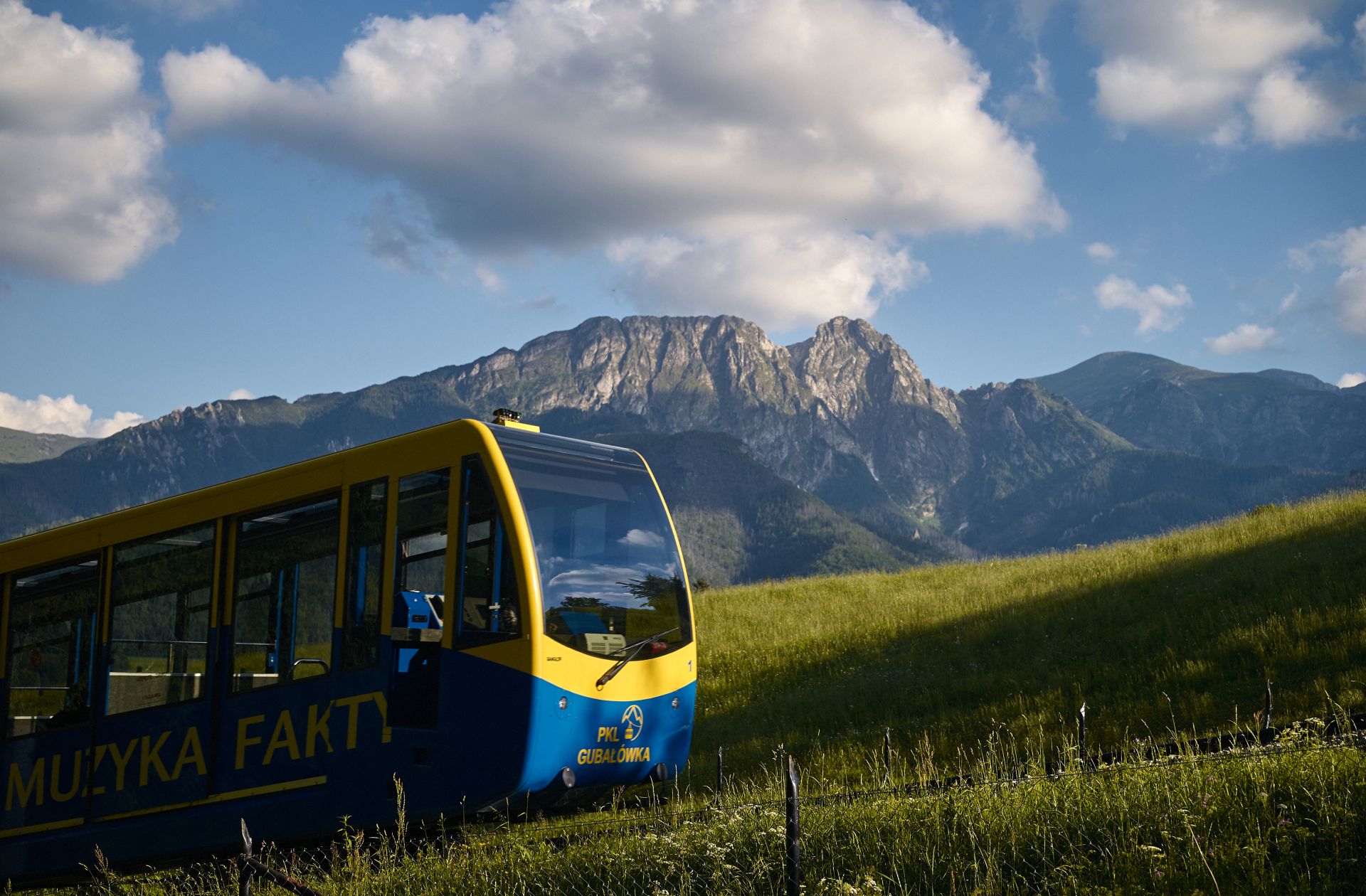
Gubalówka Cable Car: Where Alpine Ascent Meets Panoramic Majesty
As the first rays of dawn illuminate the snow-dusted peaks of the High Tatras, you step into the modern cable car cabin at the base of Gubalówka Hill—a 1,122-meter vantage point that has offered breathtaking panoramic views since 1938. The air carries the crisp scent of mountain pine and the faint hum of machinery as the cabin begins its gentle ascent, gliding silently above ancient spruce forests toward the summit. You feel the subtle shift in air pressure as you rise 475 meters in just six minutes, watching Zakopane's distinctive wooden architecture shrink below while the jagged peaks of the Tatra Mountains draw ever closer. This isn't merely a cable car ride—it's a journey through changing landscapes where the town's red-tiled roofs give way to alpine meadows and finally to snow-capped summits piercing the sky. You hear the soft murmur of fellow travelers in dozens of languages, the gentle creak of the cable, and beneath it all, the profound silence of mountains that have watched over this region for millions of years. Standing in this glass-enclosed cabin, you connect with the same awe that inspired Polish Romantic poets and European aristocrats who traveled here in the 19th century. This place matters because it offers an accessible window into alpine grandeur—a democratized experience of mountain majesty that transforms visitors from passive observers into participants in nature's breathtaking theater.
Why Gubalówka Embodies Alpine Innovation
Gubalówka represents far more than transportation—it embodies the extraordinary evolution of mountain accessibility while maintaining ecological sensitivity in one of Europe's most dramatic alpine regions. Opened in 1938 as Poland's first cable car system, the original wooden cabins transported visitors to the 1,122-meter summit along a 1,292-meter route, revolutionizing access to the Tatra Mountains for ordinary citizens [[15]]. The cable car solved a fundamental challenge of mountain tourism: how to provide breathtaking views while minimizing environmental impact on fragile alpine ecosystems. The modern system, completely rebuilt in 2014 after a fire destroyed the previous station, features state-of-the-art technology with 30 glass-enclosed cabins capable of transporting 1,200 passengers per hour while maintaining a low visual profile against the mountain backdrop. The ascent covers 1,292 meters with an elevation gain of 475 meters, reaching a maximum speed of 6 meters per second while maintaining perfect stability even in high winds—a technical achievement that respects both engineering excellence and environmental stewardship. What makes Gubalówka unique is its dual function as both tourist attraction and ecological observation point: the summit station serves as an educational center for Tatra National Park, where visitors learn about alpine flora, fauna, and conservation efforts. Unlike many mountain cable cars that prioritize speed over experience, Gubalówka's deliberate 6-minute journey allows passengers to witness the dramatic transition from forested slopes to alpine meadows to rocky peaks—a vertical journey through ecosystems that would take hours to traverse on foot [[23]]. The cable car's strategic placement ensures minimal disruption to wildlife corridors while providing unprecedented access to mountain vistas previously reserved for experienced hikers.
The Best Time to Experience Gubalówka Cable Car
To experience Gubalówka at its most atmospheric, plan your visit between May 20–June 15 or September 10–October 15, when daytime temperatures range from 10–20°C (50–68°F) and the mountains bloom with spring wildflowers or glow with autumn colors [[12]]. During these windows, you'll enjoy comfortable conditions for photography, hiking from the summit, and exploring the viewing platforms without summer's crowds or winter's extreme cold. For optimal photography of snow-capped peaks and Zakopane's valley below, arrive at 7:00–8:30 AM when morning light strikes eastern slopes, illuminating mountain details with soft, directional illumination while the air remains clear and crisp. Alternatively, visit at 5:00–6:30 PM during golden hour when warm light transforms limestone into amber tones and creates dramatic shadows across the landscape. You should firmly avoid July 15–August 25 when afternoon thunderstorms become frequent, trail congestion peaks at the summit, and the clarity of mountain views diminishes due to humidity and increased visitor numbers. For real-time weather updates, trail conditions, and special events at the summit, visit zakopane.pl [[9]].
Approximate Budget for Visiting Gubalówka Cable Car
Visiting Gubalówka requires basing yourself in Zakopane with easy access to the cable car station. The following budget assumes moderate travel style—comfortable mountain accommodations, authentic highland cuisine, and appropriate mountain attire. Prices are listed in Polish Złoty (PLN) with euro equivalents for international travelers (1 EUR ≈ 4.3 PLN in 2026) [[19]].
- Accommodation: 150–300 PLN (35–70€) per night in Zakopane center. Budget guesthouses start at 80 PLN; mid-range mountain lodges run 300–600 PLN (70–140€); luxury resorts 600+ PLN (140+€) [[26]].
- Food: 50–75 PLN (12–17€) per day total. Breakfast: 15–25 PLN for traditional highland meal with oscypek cheese, sour cream, and bread. Lunch: 25–40 PLN for zupa grzybowa (mushroom soup) at mountain huts. Dinner: 40–70 PLN for sit-down meals featuring bigos, pierogi, and local beer [[21]].
- Transportation: Kraków-Zakopane train: 35–45 PLN (8–10.50€) one-way; bus: 25–35 PLN (5.80–8.10€); local bus to Gubalówka station: 4 PLN (0.90€); taxi: 15–25 PLN (3.50–5.80€) [[26]].
- Attractions: Gubalówka cable car round-trip: 40 PLN (9.30€); Summit observation deck: included; Guided summit hike: 60 PLN (14€); Audio guide rental: 20 PLN (4.60€) [[13]].
- Miscellaneous: Waterproof mountain jacket: 150–300 PLN (34.90–69.80€); traditional highland hat (kłobuk): 80–120 PLN (18.60–27.90€); smoked oscypek cheese: 20–40 PLN (4.60–9.30€) [[22]].
Total 3-Day Visit Budget: 950–1,700 PLN (220–395€) per person (excluding international flights and main accommodation)
5 Essential Gubalówka Cable Car Experiences
- Ride at Sunrise for Uninterrupted Views: Arrive at opening time to experience the cable car with minimal crowds as morning light transforms the Tatra range. The glass cabins provide unobstructed views during the 6-minute ascent, allowing you to witness the dramatic transition from forested slopes to alpine meadows. Visit mid-week (Tuesday–Thursday) for the quietest experience; round-trip 40 PLN; allow 90 minutes for the full experience.
- Walk the Summit Panoramic Trail: From the upper station, follow the 2.5-kilometer circular trail that offers constantly changing perspectives of the High Tatras. The well-maintained path passes through alpine meadows, rocky outcrops, and designated viewing platforms with interpretive signage about mountain geology. Visit mid-morning (10:00 AM–12:00 PM) when morning mist clears; free; allow 75 minutes; wear sturdy shoes.
- Photograph the Iconic "M" Viewpoint: At the summit's most famous vantage point, capture the distinctive "M" shaped formation of the Tatra peaks against the backdrop of Zakopane valley. The elevated platform provides unobstructed views perfect for both wide-angle landscapes and detailed mountain close-ups. Visit during golden hour (5:00–6:30 PM) for optimal lighting; free; allow 30 minutes; tripod recommended.
- Visit the Tatra Museum Observation Point: Explore the educational exhibits at the summit station that explain the region's geology, ecology, and cultural history. The interactive displays and panoramic windows create a deeper understanding of the landscape before you venture outside. Visit mid-week (Tuesday–Thursday) when guides provide detailed explanations; included with cable car ticket; allow 45 minutes.
- Hike to the Lesser-Known Northern Viewpoint: Continue beyond the main tourist path to a quieter northern vantage point that offers unique perspectives of the High Tatras with fewer crowds. The 20-minute extension rewards you with different angles of the same peaks visible from the main viewpoint. Visit early afternoon (1:00–3:00 PM) for optimal lighting; free; allow 45 minutes total; bring water.
3 Hidden Gems Most Travelers Miss
- The Whispering Rock Formation: Tucked away on the eastern side of the summit, this unusual rock configuration creates natural acoustic phenomena where whispers travel clearly across 20 meters of distance. Most visitors miss it because it requires a 15-minute detour from the main panoramic trail. Access: From the main viewpoint, follow the blue trail marker for 300 meters; best visited mid-morning (10:00 AM–12:00 PM) when fewer crowds allow for acoustic experiments. No additional fee; allow 25 minutes; wear sturdy shoes.
- The Alpine Meadow at Hala Gąsienicowa: Located 45 minutes beyond the main summit on the trail toward Kasprowy Wierch, this high-altitude meadow bursts with wildflowers from June–August and offers uninterrupted views of the entire Tatra range. Most tourists turn back at the summit, missing this serene spot. Access: Continue past the main summit on the red trail; best visited mid-week for solitude. No additional fee; allow 90 minutes; bring water.
- The Historical Cable Car Control Room: During special heritage days, visitors can observe the modern control room where engineers manage the cable system. Most tourists overlook this technical marvel that ensures safe operation in challenging mountain conditions. Access: Check zakopane.pl for "Open Monument Days" (typically September); no advance booking required. Best visited midday; free; allow 15 minutes.
Cultural & Practical Tips
- Respect the Mountain Environment: Stay on marked trails to protect fragile alpine vegetation. The ecosystem takes decades to recover from damage—what might seem like a small shortcut can cause lasting harm.
- Essential Polish & Górale Phrases: "Dzień dobry" (jen doh-brih) = Good day; "Dziękuję" (jen-koo-yeh) = Thank you; "Baba" (bah-bah) = Hello (Górale greeting); "Oscypek" (osh-tsep-ek) = Traditional smoked cheese. Locals appreciate respectful efforts.
- Cable Car Strategy: Purchase tickets online to skip queues, especially during peak season. Morning slots (8:00–10:00 AM) offer the clearest views and fewest crowds. Consider the "express" ticket if available for priority boarding.
- Photography Guidelines: Photography is permitted throughout the summit area. In the national park, flash photography is prohibited near wildlife. Tripods require care on narrow mountain paths; avoid obstructing trails.
- Weather Preparedness: Mountain weather is unpredictable: summer highs reach 20°C (68°F) but can drop to 5°C (41°F) at the summit; winter lows reach -20°C (-4°F). Pack layers, waterproof gear, and sturdy footwear regardless of season.
- Accessibility Notes: The cable car itself is fully accessible with level boarding and space for wheelchairs. The summit area features paved paths suitable for mobility devices, though some viewing platforms have steps. Contact the cable car office in advance for specific accessibility information.
- Combine with Nearby Sites: Enhance your Gubalówka visit with nearby attractions: Morskie Oko lake (45 minutes by bus), Wielka Krokiew ski jump (15 minutes), or the scenic route to Morskie Oko lake. A regional perspective enriches understanding of the Tatra ecosystem.
Conclusion: Travel with Perspective, Not Just Panoramas
Gubalówka invites you to do more than capture postcard-perfect mountain views. This is a place to stand where the vertical dimension of the Earth reveals itself in breathtaking clarity, where the gentle ascent transforms perspective from town dweller to mountain observer, where the quiet persistence of geological time speaks through snow-dusted peaks. When you glide silently above ancient forests, when you witness the dramatic transition from valley to summit in mere minutes, when you feel the mountain air that has shaped ecosystems for millennia, you participate in a legacy of mountain appreciation that transcends tourism. Travel to Gubalówka with reverence for the engineering that created this accessible pathway to alpine majesty, for the conservation efforts that protect the fragile ecosystems you observe below, for the centuries of human connection to these mountains that continue through careful stewardship. Respect the fragility of mountain environments—every footprint off-trail, every piece of litter left behind, disrupts a balance measured in centuries rather than moments. Understand that the pristine beauty you cherish depends on the mindfulness of every visitor who comes after you. Let the panoramic views humble your perspective, let the geological history deepen your understanding, and let the convergence of technology and nature remind you that the most profound journeys are those that expand our vision while grounding us in responsibility.