Hydra: Where Donkey Paths Meet Aegean Harmony
Hydra: Where Stone Harbour Meets Car-Free Island
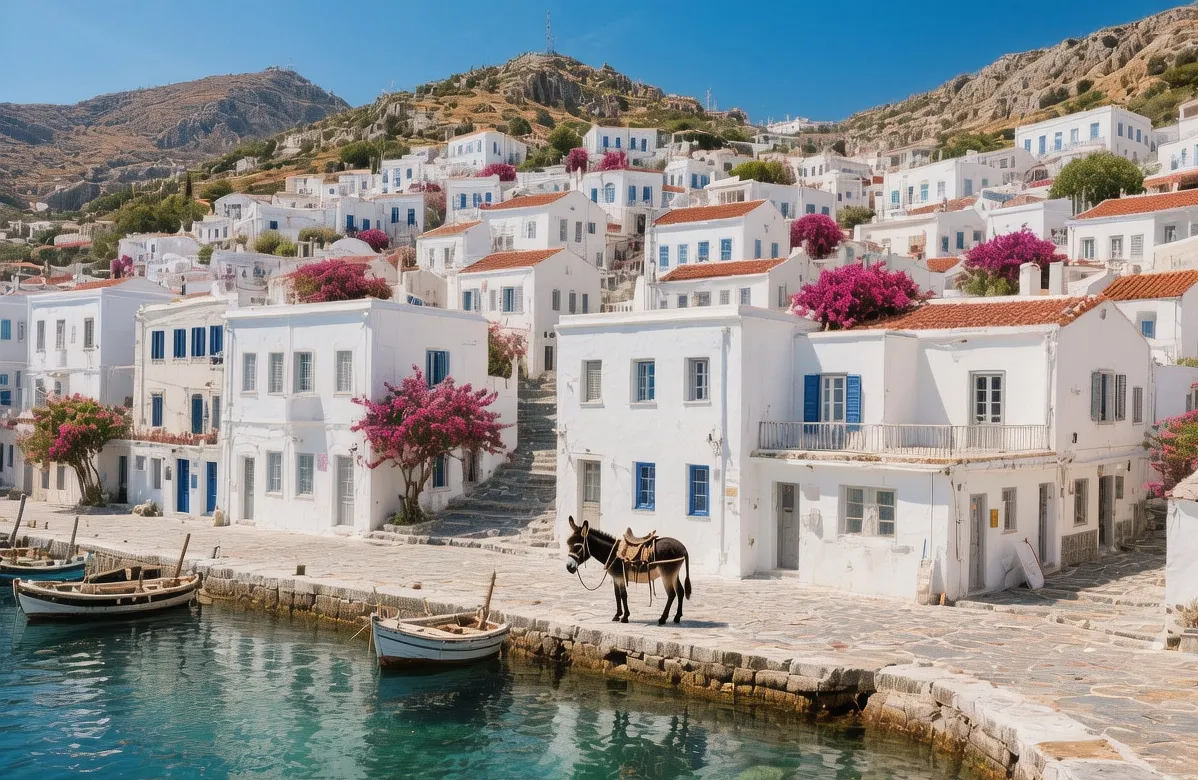
I walk along Hydra harbour at ten past ten on a May morning. Sunlight reflects off calm water and washes across white stone buildings climbing the hillside. No engines hum. No horns blare. The only sounds are water lapping the quayside, voices drifting from waterfront cafes, and the clip-clop of hooves on cobblestones. Mules stand loaded with supplies, ready to climb the stepped lanes. No cars exist here. No scooters, no buses, no traffic lights. That silence feels startling at first. Then it settles around you. You walk slower. You breathe deeper. And you understand immediately why artists, writers, and travellers have come to Hydra for centuries.
Why Hydra Matters
Hydra sits in the Saronic Gulf, separated from the mainland by a narrow channel. Its stone harbour and amphitheatrical town remain unchanged by modern development. No motor vehicles have ever been permitted here. This rule is not a recent tourist attraction — it is how the island has always functioned. Historically a maritime powerhouse, Hydra contributed hundreds of ships and captains to the Greek War of Independence in 1821. Today the island preserves not just stone architecture but a way of life. That preservation comes at a cost. Prices run high. Services stay limited. Everything must be carried in by boat then hauled uphill by mule or hand. Some visitors arrive expecting convenience alongside beauty and leave frustrated by the effort required to get anywhere. That honesty matters. Hydra offers peace, quiet, and timeless stone. It does not offer ease. Come willing to walk and climb, and you will find something increasingly rare: a place that moves at human pace.
The Best Time to Experience Hydra
Late April through June offers ideal conditions. Air temperatures range from 18°C to 26°C (64°F to 79°F). Wildflowers carpet the hills and light feels soft and clear. July and August bring heat from 27°C to 33°C (81°F to 91°F). Stone absorbs warmth and the harbour fills with day-trippers. Arrive before nine in the morning or stay overnight after ferries depart. September through early October brings 22°C to 28°C (72°F to 82°F). Sea stays warm and crowds thin. This may be your best balance overall. Mid-October onward brings rain and cooler days 15°C to 21°C (59°F to 70°F). Some restaurants close and ferry schedules reduce. Winter November–March sees most tourism services suspended. The island remains quiet and beautiful, but you will find few places open and limited transport.
Approximate Budget for a 7-Day Trip
Prices reflect staying on Hydra. Costs peak July and August.
- Accommodation: €70–€160 per night. Harbour-front rooms cost more. Uphill rooms prove quieter and cheaper. Weekly: €490–€1,120
- Food & Drink: €20–€38 daily. Waterfront cafes charge premium prices; walk uphill for better value. Weekly: €140–€266
- Transport: Ferry Piraeus→Hydra: €35–€50 one-way (1.5–3.5 hours). Hydrofoil faster and pricier. On island: walk everywhere; mule rides €10–€25. Weekly: €120–€200
- Sites & Beaches: Historical sites €4–€8 each. Beach water taxis €5–€12 return. Weekly: €30–€60
- Miscellaneous: Water, snacks, tips. Weekly: €30–€55
Total estimated cost: €810–€1,701 per person. Skip the harbour-front restaurants directly facing the water. They charge nearly double what you pay two lanes back. Walk five minutes uphill. Prices drop and the view remains just as beautiful.
Essential Hydra Experiences
- Walk the full harbour circuit at dawn. Light hits the stone buildings and turns them gold. No crowds. No noise. Fishermen unload catches. The island belongs to locals this early. Skip visiting mid-morning in summer; day-trippers arrive by 10:00 AM and transform the atmosphere.
- Climb to the Monastery of the Assumption. Stone steps lead high above the town. White domes and courtyard offer panoramic views across the harbour and sea. The climb takes twenty minutes. Worth every step.
- Take the water taxi to a quiet cove. Beaches lie along the coast — accessible only by boat or long trail. Clear turquoise water and stone shores. Ask the captain which bay stays quietest that day.
- Wander the stepped lanes uphill. Whitewashed houses, blue doors, bougainvillea, and stone walls. Every turn reveals another view. Get pleasantly lost. Carry a map or you may circle the same steps twice.
- Visit the Historical Archive & Museum. Housed in the old orphanage, it displays Hydra’s maritime legacy, independence-era artefacts, and paintings. Understand the island before you explore further.
- Watch sunset from the western headland. Walk past the cannon and up the path. Sun drops behind the mainland and the whole harbour glows. Most day-trippers have left. You share the view with a handful of others.
Hidden Gems Most Travelers Miss
- Agios Ioannis chapel above Kaminia. Small white church perched on a rocky outcrop. Views stretch across open sea. Reachable by footpath in forty minutes. Almost no one walks this far.
- Old stone cisterns and hidden courtyards. Uphill lanes pass shaded stone tanks and quiet walls. Sit quietly and listen. No harbour noise reaches here.
- Trail to the ruins of Agios Nikolaos. Halfway between town and the lighthouse. Stone walls and foundations overlook the straits. Shaded by pines. Perfect place to rest.
- The “famous cannon viewpoint” shown in every guide stays crowded all afternoon. Walk five minutes farther along the path. The view improves, stone benches appear, and no crowds block your sunset.
Cultural & Practical Tips
- Wear sturdy shoes. Cobblestones cover every lane. Steps prove steep, uneven, and slippery when wet. Flip-flops cause slips and sore feet.
- Pack light. No cars mean porters or mules carry your bags. If your hotel sits uphill, you or a mule must haul everything up stone steps. Travel with one manageable bag.
- Carry cash. Many tavernas and small shops do not accept cards. ATMs exist but run out on weekends. Keep small bills handy everywhere.
- Respect the silence. No motor noise means voices carry. Walk quietly through residential lanes. Many locals live here year-round, not just to serve tourists.
- Arrive or depart outside peak hours. Hydrofoils sell out fast at 9:00 AM and 5:00 PM. Book tickets at least one day ahead in summer. Miss the ferry and you wait hours for the next one.
Essential Visitor Information
Location & Access: Saronic Gulf, 65 km southwest of Athens. Reach via Piraeus port: hydrofoil (1.5 hours, €40–€50); ferry (3.5 hours, €35–€40). No airport. No cars or ferries bring vehicles. On island: walk everywhere; mules carry goods and luggage; water taxis reach beaches.
Tickets & Booking: Museum entry €6. Monastery free (donation appreciated). Beach water taxi €5–€12. Ferry tickets bookable online or at port. Reserve accommodation months ahead July–August.
Operating Hours: Island accessible daylight hours year-round. Museum roughly 9:00 AM–4:00 PM, closed Monday. Ferries run frequently May–October; reduced schedule November–April.
Visit Duration: Minimum one full day. Recommended 2–3 days to explore beaches, trails, and lanes without rushing. Overnight stays let you experience Hydra after day-trippers depart.
Family Suitability: Children welcome. Stone steps everywhere mean constant supervision. No stroller access anywhere. Carry everything. Water taxis suit short trips.
Timing: Best season: late April–June, September–early October. Best time of day: before 9:00 AM or after 5:00 PM. Avoid midday July–August.
Highlights: Stone harbour and cannon promenade, monastery views, stepped hilltop lanes, quiet turquoise coves, sunset from western headland.
Nearby & Day Trip: Dokos islet by excursion boat. Poros and Aegina reachable by ferry. Peloponnese mainland across the straits by short boat. Day trip to Hydra from Athens possible, but stay overnight to experience the island truly.
Conclusion: Travel with Feet, Not Engine
Hydra offers something vanishingly rare: a place where silence still matters. No cars. No noise. Just stone, sea, and the sound of wind. That peace comes with trade-offs. You must walk. You must climb. You must carry what you bring. Prices run high. Convenience stays limited. Accept that. Arrive early. Stay late. Walk uphill. And when you sit by the water after ferries depart, listen. The silence wraps around you. That is Hydra’s true gift. Guard it quietly.
Post a Comment