Tilos Eco-Island: Where Sustainable Living Meets Aegean Natural Beauty
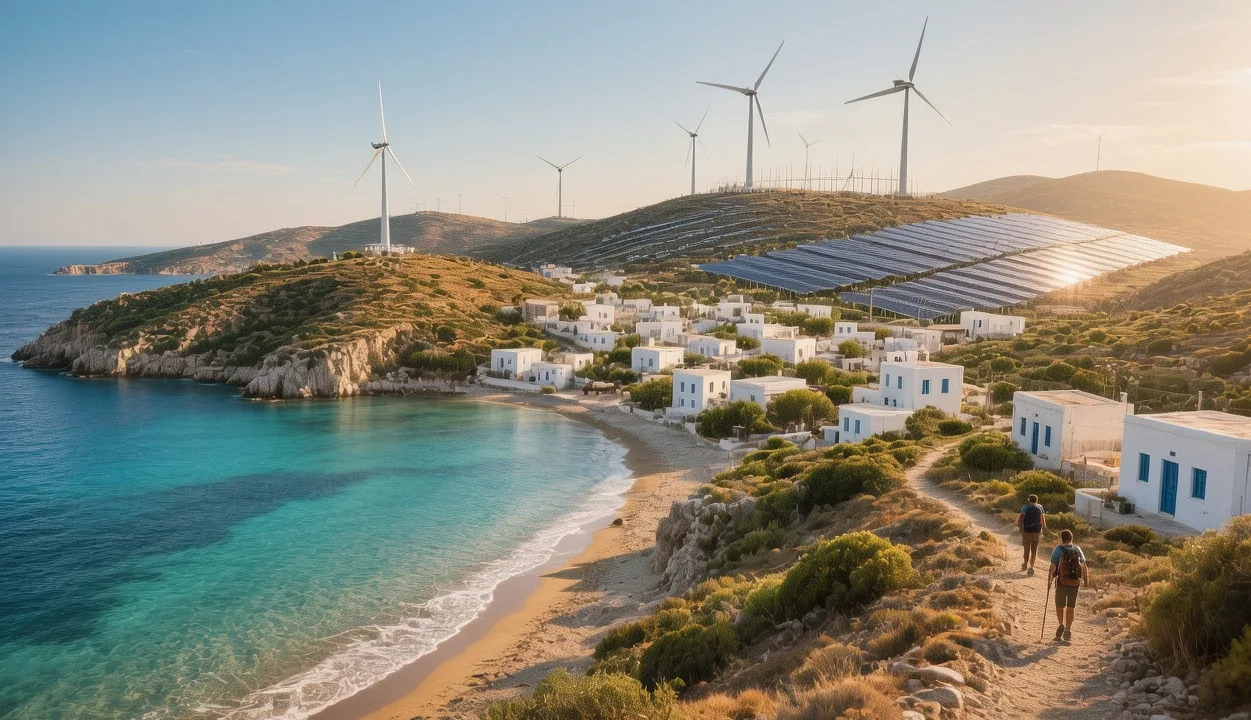
Tilos eco-island pristine beaches and wind turbines overlooking Aegean Sea at golden hour on Greek island

Tilos Eco-Island: Where Sustainable Living Meets Aegean Natural Beauty

Golden afternoon light spills across wind turbines spinning gracefully against azure skies as you wander Tilos's unspoiled coastline—this pioneering eco-island awakens with the gentle rustle of native thyme in the breeze, the distant call of migratory birds wheeling above pristine beaches, and the soft murmur of visitors discovering a sanctuary where sustainability isn't a trend but a way of life. You breathe air scented with wild oregano and salt spray, feel the cool stone beneath your palm as you trace paths walked by ancient settlers, and watch sunlight illuminate solar panels and wind farms that power this tiny Dodecanese gem of just sixty-one square kilometers. This extraordinary island, home to fewer than 800 permanent residents, features over forty kilometers of hiking trails, seven protected beaches, and renewable energy systems that supply 100% of the island's electricity needs through wind and solar power [[15]][[22]]. The landscape's distinctive character—dramatic cliffs, hidden coves, and archaeological sites where dwarf elephant fossils were discovered—creates a living laboratory where conservation, culture, and community converge in perfect harmony. But Tilos matters because it demonstrates not just environmental protection, but an entire philosophy of island living—a testament to how renewable energy, sustainable tourism, and respect for nature can converge to create a model for the future, reminding us of the enduring connection between human ingenuity, ecological balance, and the Aegean's timeless beauty.

Why Tilos Eco-Island Embodies Sustainable Mediterranean Living

Tilos represents the pinnacle of eco-island innovation, solving a fundamental need to protect fragile Mediterranean ecosystems while creating a sustainable tourism model that honors both nature and community. When Tilos declared itself Greece's first eco-island in 2009, local leaders faced a profound challenge: how to develop tourism and improve residents' quality of life without compromising the pristine environment that defines the island's character [[15]][[20]]. The solution was visionary: implement a comprehensive sustainability plan featuring renewable energy infrastructure, waste reduction programs, and eco-tourism initiatives that have made Tilos a model for small islands worldwide.

The island's technical achievements showcase environmental engineering at its finest: wind turbines generating 1.2 megawatts of clean electricity, solar panels covering public buildings and private homes, and an innovative waste management system that recycles over 80% of materials while composting organic waste [[18]][[24]]. The renewable energy grid, completed in 2015, supplies 100% of Tilos's electricity needs through a combination of wind and solar power, making it one of the first islands in the Mediterranean to achieve energy independence. Technical preservation efforts include protected marine areas that safeguard sea grass meadows and nesting sites for loggerhead turtles, sustainable hiking trails that minimize erosion while maximizing access to natural beauty, and community-led initiatives that teach environmental stewardship to younger generations. Tilos fulfilled a dual purpose: environmentally, it became a living laboratory for renewable energy and conservation; culturally, it preserved traditional island life while embracing innovation. Today, managed by the Tilos Municipality alongside the Greek Ministry of Environment, the island stands as a testament to how small communities can lead global change, how sustainability can enhance rather than limit quality of life, and how a single island can anchor hope for a greener future through practical action.

The Best Time to Experience Tilos Eco-Island

Timing your visit to Tilos profoundly influences both atmospheric immersion and access to eco-activities. The optimal window falls between May 18 and June 15, when the Dodecanese enjoys extended daylight—sunset occurs around 8:45 PM—and temperatures range from 20°C to 27°C (68°F to 81°F), creating ideal conditions for hiking, bird watching, and exploring renewable energy sites [[68]][[72]]. During this period, wildflowers bloom across the island's hillsides, migratory birds pause during their northward journey, and summer crowds remain manageable before peak season. For photographers, visit between 6:30–8:30 AM when soft morning light illuminates wind turbines and pristine beaches with minimal crowds, or 7:00–9:00 PM for dramatic golden-hour shots where renewable infrastructure glows against twilight skies.

Tilos operates year-round as a living eco-community, but key experiences follow seasonal patterns: bird watching season peaks April–May and August–September when migratory species pass through; summer season (June–September) extends eco-tour activities and café hours to 9:00 AM–9:00 PM daily; winter hours (November–February) reduce services, though the island remains accessible. For current ferry schedules, eco-tour information, and visitor resources, visit the official Tilos tourism website at www.tilos.gr or the Greek tourism portal at www.visitgreece.gr [[52]][[85]]. Avoid visiting during late November through early March, when temperatures drop to 10°C to 15°C (50°F to 59°F), daylight shrinks to nine hours, and winter winds can make coastal exploration challenging. Also steer clear of mid-July to mid-August when cruise crowds peak and midday heat exceeds 30°C (86°F), making hiking less comfortable. Standard admission to eco-activities ranges €5–€15 for adults, with most natural areas and beaches accessible free of charge [[24]]. The eco-cafés are particularly rewarding between 2:00–4:00 PM when afternoon light enhances the panoramic Aegean views from sustainable terraces.

Approximate Budget for a 7-Day Trip

Exploring Tilos eco-island and the Dodecanese requires moderate budgeting, as Greece offers excellent value compared to many European destinations. Strategic planning—including staying in Livadia or Megalo Chorio and utilizing local transportation—can optimize your experience. The following breakdown reflects mid-range preferences with eco-tourism and nature immersion priorities.

  • Accommodation: €45–€85 per night for a double room in Livadia or Megalo Chorio (walking distance to harbor); eco-lodges €35–€55 per night; boutique sustainable hotels €95+ per night
  • Food: €28–€48 per day total
    • Breakfast: €4–€7 (Greek coffee, local honey, or organic bakery items)
    • Lunch: €8–€14 (Greek salad, grilled octopus, or farm-to-table dishes at taverna)
    • Dinner: €14–€26 (fresh fish, lamb kleftiko, or vegetarian mezze at eco-restaurant)
    • Taverna option: €6–€10 for souvlaki, tzatziki, and Greek coffee
  • Transportation:
    • Ferry from Rhodes to Tilos: €16–€26 one-way (1.5 hours)
    • Local bus on Tilos: €2 per ride
    • Bicycle rental for island exploration: €8 per day (ideal for eco-travel)
    • Electric scooter rental: €12 per day
  • Attractions:
    • Eco-tour guided hike: €15 per person [[24]]
    • Bird watching tour: €18 per person
    • Dwarf elephant fossil site visit: €5 adults
    • Renewable energy center tour: Free
    • Marine conservation boat tour: €22 per person
  • Miscellaneous:
    • Eco-friendly souvenirs and local crafts: €8–€38
    • Audio guide rental: €3
    • Photography permit for professional use: €18

Total estimated budget for 7 days: €610–€940 per person (excluding international flights)

7 Essential Tilos Eco-Island Experiences

  1. Hike the Renewable Energy Trail at Sunrise: Arrive between 6:30–8:30 AM when the island is quiet and soft light reveals wind turbines spinning against azure skies. Follow the marked path connecting solar farms and wind installations, observing how renewable infrastructure integrates with natural landscape. Allow 60 minutes for this educational circuit; the morning atmosphere feels particularly magical before crowds gather. Listen for the gentle hum of clean energy production and imagine the fossil-free future Tilos is helping to create.
  2. Explore the Dwarf Elephant Fossil Site: Visit the archaeological area where remains of prehistoric dwarf elephants were discovered, dating back 40,000 years. Visit between 10:00 AM–12:00 PM when natural light illuminates the excavation site and interpretive displays. Allow 45 minutes for full appreciation; exhibits explain how climate change and human activity shaped Mediterranean ecosystems [[22]].
  3. Bird Watch at Eristos Beach: Join guided bird watching sessions at this protected coastal area where migratory species pause during their journeys. Visit between 2:00–4:00 PM when afternoon light enhances visibility of raptors, warblers, and shorebirds. Allow 90 minutes; binoculars and field guides provided; observe how Tilos's conservation efforts protect critical habitat for over 150 bird species.
  4. Swim at Pristine Eco-Beaches: Discover Tilos's seven protected beaches where swimming, snorkeling, and sunbathing occur within carefully managed environmental zones. Visit between 11:00 AM–1:00 PM when water clarity is optimal. Allow 2–3 hours; follow eco-guidelines including reef-safe sunscreen and zero-waste principles to protect marine ecosystems.
  5. Photograph Sustainability in Action: Position yourself at designated viewpoints between 7:00–9:00 AM when soft light highlights wind turbines, solar panels, and pristine landscapes. Use a polarizing filter to manage reflections; a wide-angle lens captures the scale of renewable infrastructure against Aegean beauty. The iconic view—clean energy technology, blue sea, green hills—defines Tilos's eco-identity.
  6. Taste Farm-to-Table Cuisine: Reserve a table at an eco-restaurant between 1:00–3:00 PM to sample dishes made with organic, locally sourced ingredients. Order Tilos honey with yogurt (€8), grilled vegetables from island farms (€12), or fresh fish caught by sustainable methods (€18). The unique flavors reveal how environmental stewardship shapes culinary heritage.
  7. Attend a Sustainability Workshop: Join hands-on sessions where local experts demonstrate composting, water conservation, and renewable energy basics. Workshops typically occur at 10:00 AM and 4:00 PM daily in summer; book in advance. The experience provides practical knowledge for implementing eco-practices at home, revealing how individual actions contribute to global change.

3 Hidden Gems Most Travelers Miss

  • The Abandoned Village of Episkopi: Tucked in Tilos's interior, this deserted medieval settlement offers atmospheric ruins and panoramic views without crowds. Most visitors focus solely on coastal areas without exploring this historical space. Access: From Megalo Chorio, follow signs toward "Επισκοπή" (Episkopi); accessible via 30-minute hike; open 24/7; free. Best visited between 4:00–6:00 PM for golden-hour photography. The village's stone churches and terraced fields reveal how past communities adapted to island life, creating educational value alongside scenic beauty.
  • The Marine Conservation Zone at Agios Antonios: Beyond the main beaches, a protected underwater area where sea grass meadows and marine life thrive under careful management. Most tourists swim without exploring these conservation success stories. Access: From Livadia harbor, follow coastal path south; accessible via guided snorkel tour; €12 per person. Best visited between 10:00 AM–12:00 PM when water visibility is clearest. Observing protected posidonia meadows and nesting sea turtles reveals how Tilos's conservation efforts protect Mediterranean biodiversity.
  • The Traditional Beekeeping Apiaries: Behind the main villages, small apiaries where local beekeepers maintain hives using sustainable methods that protect native flora and produce award-winning honey. Most visitors don't know these tranquil spaces exist. Access: Inquire at the eco-center for apiary locations; typically open Tuesday–Saturday 9:00 AM–1:00 PM; free. Best visited between 10:00 AM–12:00 PM when beekeepers provide informal explanations. Observing traditional beekeeping techniques reveals how Tilos balances agriculture with conservation, creating a tangible connection to sustainable land management.

Cultural & Practical Tips

  • Photography Guidelines: Photography for personal use is permitted throughout Tilos, but drones require special permission from local authorities—contact +30 22460 44333 in advance. The renewable infrastructure and coastal views are ideal for photography; visit during golden hour for optimal light. Respect wildlife and conservation areas when capturing images.
  • Language: While signage includes English, learning Greek phrases enhances your experience: efharistó (ef-ha-ree-STO = thank you), parakaló (pa-ra-ka-LO = please/you're welcome), yasou (YA-soo = hello). Greek pronunciation emphasizes the second-to-last syllable.
  • Footwear: Sturdy walking shoes with good grip are essential—exploring hiking trails and rocky beaches involves uneven surfaces, loose gravel, and occasional steep sections. The main eco-trail circuit involves moderate climbing; allow 90 minutes for full exploration.
  • Eco-Practices: Tilos is a living eco-community. Follow zero-waste principles: bring reusable water bottles, avoid single-use plastics, and respect designated recycling stations. The community values visitors who honor sustainability practices while embracing cultural exchange.
  • Weather Considerations: Tilos's island location means strong meltemi winds during July and August. Check the forecast before visiting; winds can make coastal exploration challenging. Spring (April–June) and fall (September–October) offer the most reliable conditions with comfortable temperatures.
  • Combining with Rhodes: Tilos is accessible via ferry from Rhodes (1.5 hours) or from Piraeus (10–12 hours). Purchase a Dodecanese ferry pass for flexible travel. Consider spending 3–4 nights on Tilos to fully explore eco-activities alongside the island's beaches, hiking trails, and archaeological sites.
  • Respectful Engagement: Tilos is a small community where sustainability is a way of life. Support local businesses by purchasing eco-friendly products directly from artisans, dine at farm-to-table restaurants, and engage with residents through respectful conversation about environmental practices. The community values visitors who contribute to rather than consume the island's resources.

Conclusion: Travel with Purpose, Not Just Pleasure

Tilos invites more than passive relaxation—it demands engagement with the layered narratives embedded in wind turbines, hiking trails, and Aegean waters: the courage of a small community that chose sustainability over convenience, the ingenuity of engineers who powered an island with renewable energy, and the ongoing stewardship that keeps this eco-paradise alive for future generations. When you stand on that pristine beach watching wind turbines spin against blue skies, you're not merely enjoying a vacation; you're connecting with a model for sustainable living, a testament to how small actions can create global change, and a reminder that the most meaningful journeys honor both pleasure and purpose. This isn't a place to rush through, checklist in hand, snapping photos before racing to the next attraction. Slow down. Feel the cool breeze from renewable energy; listen to the gentle hum of sustainability in action; contemplate how a single island could inspire a greener future for the Mediterranean. Travel here with curiosity about how places shape values and how values give meaning to places. Support preservation by respecting eco-guidelines, choosing experiences that employ local guides, and sharing not just images but understanding. The most transformative journeys leave you not just with memories of what you saw, but with deeper appreciation for responsibility—and Tilos eco-island, with its seamless fusion of natural beauty and sustainable innovation, offers precisely that invitation to those willing to wander, to wonder, and to simply connect with purpose.

```
Post a Comment (0)
Previous Post Next Post