
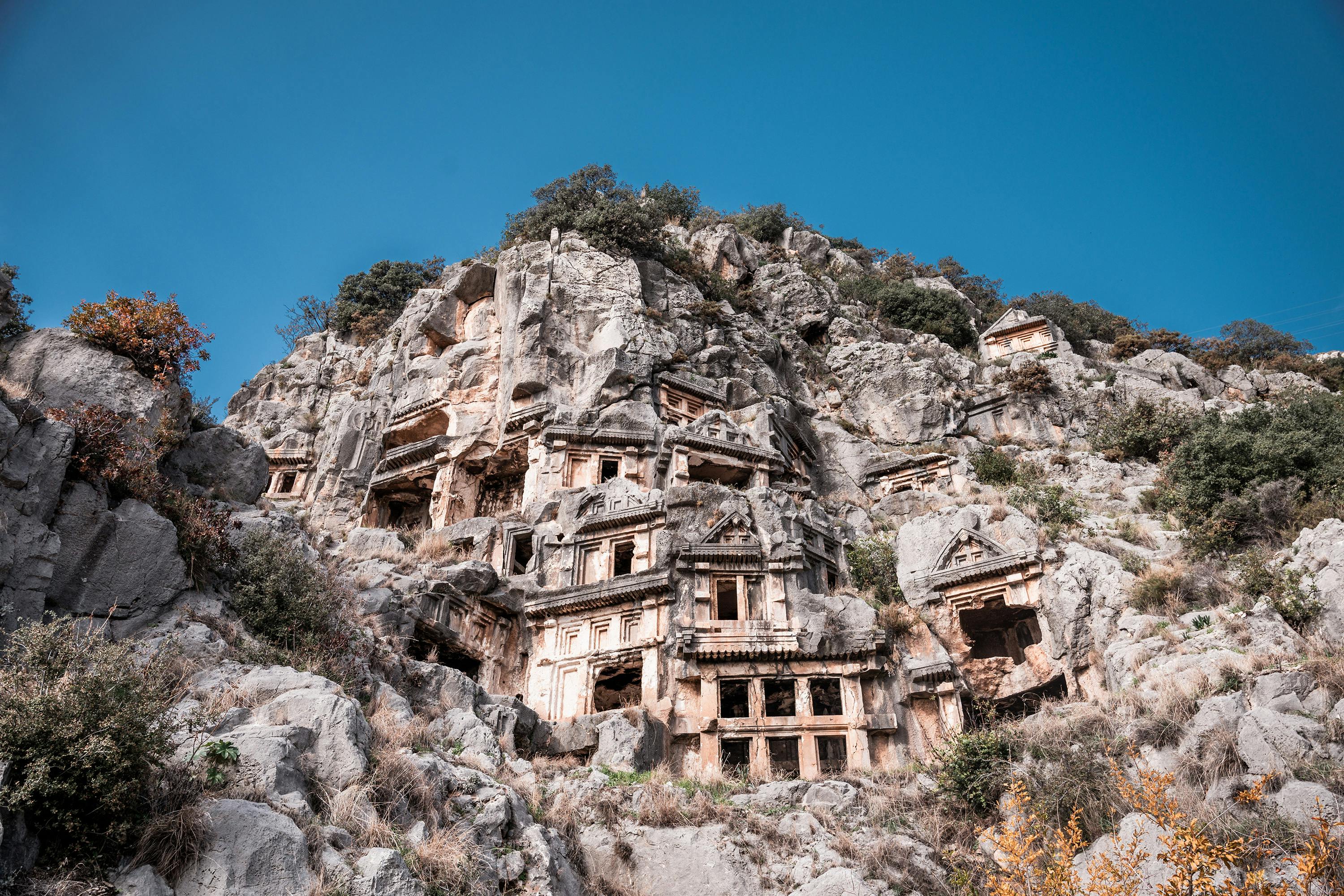
Lycian Rock Tombs: Where Ancient Stone Meets Eternal Sky
Golden light spills across weathered limestone as you stand before monumental facades carved directly into sheer cliffs—Lycian rock tombs that have watched over the Mediterranean for over two millennia. The air carries the scent of wild thyme and sun-baked stone, while cicadas sing their ancient song in olive trees rooted in crevices between carved pillars. You trace your fingers over intricate reliefs depicting banquets and processions, feeling the chisel marks of artisans who transformed living rock into eternal dwellings for the departed. These tombs—some rising fifteen meters above valley floors, others perched precariously on coastal headlands—represent one of antiquity's most distinctive funerary traditions: homes for the dead that mirror the wooden architecture of the living, frozen forever in stone. This place matters because it preserves the soul of Lycian culture—a unique civilization that blended Anatolian tradition with Hellenistic sophistication—offering visitors a profound encounter with human creativity, spiritual belief, and the timeless desire to build beauty that outlasts mortality itself.
Why Lycian Rock Tombs Embody Timeless Craftsmanship
Lycian rock tombs represent one of Anatolia's most distinctive archaeological achievements, solving the ancient need to honor the departed with monuments that reflected both social status and spiritual beliefs. Dating primarily to the fourth and fifth centuries BCE, these tombs were carved by skilled Lycian stonemasons who transformed sheer limestone cliffs into elaborate facades mimicking wooden house architecture—complete with beam-and-peg details, gabled roofs, and Ionic columns frozen in stone. Over two hundred significant tomb sites remain visible along Turkey's Turquoise Coast, from the dramatic cliffside necropolis of Dalyan to the hillside monuments of Myra and the coastal tombs of Kaş.
The engineering behind these monuments reveals sophisticated understanding of geology and structural integrity: masons selected limestone formations with natural vertical faces, then carved inward using iron chisels and bronze tools, creating chambers that have withstood earthquakes for over two thousand years. Tomb interiors typically measure three to five meters square, with stone benches for sarcophagi and niches for grave goods. The famous Lion Tomb at Xanthos—now represented by a replica after the original was removed to the British Museum—demonstrates the artistic pinnacle: relief sculptures blending Persian, Greek, and indigenous Lycian motifs that tell stories of rulers, banquets, and mythological scenes.
Beyond their aesthetic grandeur, these tombs fulfilled critical cultural functions: they marked territorial boundaries, demonstrated family lineage, and provided sacred spaces for ongoing ancestor veneration. The Turkish Ministry of Culture designated key tomb clusters as protected archaeological zones in 1973, implementing conservation measures that prevent weathering damage and unauthorized access. Scientific documentation by the German Archaeological Institute since 1990 has cataloged over fifteen hundred individual tombs, revealing regional variations in style that help scholars trace Lycian cultural evolution. Today, Lycian rock tombs serve as both open-air museums and spiritual landmarks, where visitors can connect with a civilization that understood stone as a medium for eternity.
The Best Time to Experience Lycian Rock Tombs
Timing your visit to Lycian rock tombs dramatically affects lighting, comfort, and photographic opportunities. The optimal window stretches from April 20–May 28 and September 12–October 20, when air temperatures range between 19–27°C (66–81°F) and the Mediterranean breeze keeps humidity comfortable. During these shoulder seasons, wildflowers bloom among the ruins, golden-hour lighting enhances carved details, and visitor numbers stay manageable at approximately two hundred to four hundred daily rather than the eight hundred to twelve hundred seen in peak summer. Arrive at tomb sites between 8:30–10:00 AM when morning light illuminates eastern-facing facades beautifully and before tour groups arrive from coastal resorts.
Avoid July 15 through August 25 absolutely: temperatures soar to 34–41°C (93–106°F), exposed limestone reflects heat intensely, and minimal shade exists at most tomb locations, making extended exploration uncomfortable and potentially hazardous. Midday visits between 11:00 AM and 3:00 PM during peak season prove particularly punishing—the white stone creates blinding glare, and finding respite from the sun becomes difficult. Winter months (November through March) bring cooler air temperatures of 9–15°C (48–59°F) and occasional rain that makes ancient stone pathways treacherously slippery, though the site remains stunningly beautiful for photography with dramatic cloud formations.
Most tomb sites operate daily with seasonal hour adjustments. For current accessibility information, conservation updates, and regional archaeological news, Note that many tomb clusters are freely accessible outdoors, though some require entrance fees (€4–€8) when part of larger archaeological parks like Myra or Xanthos.
Approximate Budget for a 7-Day Trip
Exploring Lycian rock tombs and the surrounding Turquoise Coast offers exceptional value for history enthusiasts and cultural travelers. This budget assumes moderate comfort—mid-range accommodation with sea or mountain views, fresh Turkish and Mediterranean cuisine, local transportation, site entrance fees, and selective guided experiences. Prices reflect 2026 rates for travelers seeking authentic archaeological experiences without luxury resort pricing.
- Accommodation: €40–€76 per night in Dalyan, Kaş, or Demre (boutique pensions with garden courtyards and traditional breakfast; budget hostels from €22, upscale boutique hotels from €118)
- Food: €24–€36 per day (breakfast €4—Turkish kahvaltı spread with cheeses, olives, tomatoes, honey, börek; lunch €7–€10—gözleme, grilled chicken dürüm, or meze platter at village cafes; dinner €13–€22—fresh sea bass, lamb tandır, or vegetarian options with local wine)
- Transportation: €58 total (Dalaman Airport to Kaş via shuttle: €10 each way; local dolmuş between tomb sites: €2.50 per ride; taxi from Kaş to Myra: €16; bicycle rental: €7/day; optional car rental for exploring: €30/day)
- Attractions: €74 total (Myra rock tombs entrance: €6; Xanthos-Letoon UNESCO site: €8; Dalyan river boat tour: €18; Lycian Way hiking guide: €15; guided archaeological tour: €20; Kaş ancient theatre: €4)
- Miscellaneous: €42 (guidebook €9, Turkish evil eye charm €6, local olive oil products €12, reef-safe sunscreen €7, travel insurance prorated €8)
Total: €430–€600 for 7 days (excluding international flights to Dalaman)
7 Essential Lycian Rock Tombs Experiences
- View the Dalyan cliffside necropolis by boat: Depart from Dalyan's riverside dock at 9:00 AM for a scenic journey past the iconic rock-cut tombs carved into cliffs overlooking the delta. The forty-minute boat ride reveals monumental facades with Ionic columns and gabled roofs, some rising twenty meters above the water. Your guide will explain Lycian funerary traditions while kingfishers dart overhead. This perspective—viewing tombs from below as ancient travelers would have—creates a profound sense of scale and reverence.
- Explore Myra's hillside tombs at golden hour: Arrive at the ancient city of Myra approximately one hour before sunset to experience the rock-cut tombs bathed in warm light. Climb the stone path to the upper necropolis where facades feature intricate reliefs depicting banquets and mythological scenes. The acoustics among the tombs remain remarkable—speak softly and hear echoes carry through carved chambers. Allow forty-five minutes to appreciate the architectural details and panoramic views of the Mediterranean.
- Examine the Lion Tomb replica at Xanthos: Near the entrance to Xanthos archaeological park, a faithful replica of the famous Lion Tomb stands where the original once rested before its removal to the British Museum. The four-sided monument features relief sculptures depicting Lycian rulers receiving offerings—a masterpiece blending Persian, Greek, and indigenous artistic traditions. Visit at midday when overhead light minimizes shadows on the carved reliefs, revealing intricate details of drapery and facial expressions.
- Hike the Lycian Way between tomb clusters: Follow red-and-white blazes along the legendary Lycian Way, a 540-kilometer hiking route that passes numerous rock-cut tombs. The section between Kaş and Myra (approximately 12 kilometers) offers dramatic coastal views and access to lesser-known tombs rarely visited by tour groups. Allow four hours for this moderate hike, carrying water and wearing sturdy shoes. This experience combines archaeological exploration with active adventure and connects you to the landscape that inspired ancient Lycian civilization.
- Photograph the Kaş harbor tombs: In the town of Kaş, several rock-cut tombs overlook the harbor from a hillside park. Visit between 5:00–7:00 PM when golden light bathes the limestone facades and the harbor below fills with fishing boats. These accessible tombs offer excellent photographic opportunities without entrance fees. Bring a polarizing filter to enhance the contrast between golden stone and turquoise water. The setting sun creates dramatic shadows that highlight carved details.
- Read Lycian inscriptions with a guide: Many tombs feature inscriptions in the ancient Lycian language—a script deciphered only in the twentieth century. Hire a local archaeological guide (€20 for two hours) to explain the meaning of these texts, which often record the names of the deceased, their achievements, and curses against tomb robbers. This experience transforms stone carvings into personal stories, connecting you directly to the individuals who commissioned these monuments over two millennia ago.
- Attend a sunset reflection at a tomb viewpoint: Choose a tomb site with western exposure—such as the upper necropolis at Myra—and arrive thirty minutes before sunset. As the sun descends behind the Mediterranean, watch how changing light transforms the stone: warm gold gives way to soft rose, then deep amber, before twilight shadows reclaim the cliffs. This meditative experience invites contemplation of mortality, legacy, and the enduring human impulse to create beauty that outlasts life itself.
3 Hidden Gems Most Travelers Miss
- The Pinara acropolis tombs: While most visitors focus on Dalyan or Myra, the ancient city of Pinara—located forty kilometers inland from Fethiye—features one of the Mediterranean's most dramatic necropolises carved into a sheer rock face. Access requires asking locals for "Pinara kaya mezarları" directions; the path climbs steeply for fifteen minutes but rewards with panoramic views and over one hundred well-preserved tombs. Visit between 3:00–5:00 PM when afternoon light illuminates carved details and fewer visitors are present. Bring water and wear sturdy shoes; the site includes uneven stone steps and loose gravel sections.
- The underground tomb chambers of Tlos: Near the ancient city of Tlos, approximately thirty kilometers from Fethiye, several rock-cut tombs feature hidden interior chambers accessible through narrow passages. Most tourists overlook these because signage is minimal and entry requires crouching. Ask site staff for "gizli odalar" (hidden rooms) directions. Inside, you'll find stone benches, carved niches, and occasionally faint frescoes depicting funerary scenes. Visit during morning hours when natural light penetrates the entrance, revealing interior details. Bring a small flashlight for darker chambers.
- The coastal tombs of Üçağız: Along the shoreline near the village of Üçağız, several rock-cut tombs overlook the Mediterranean from sea-level cliffs, accessible only by boat or coastal hike. This location remains overlooked because standard tours don't include it. Arrange a water taxi from Kaş harbor (€25 round-trip) or hike the Lycian Way coastal trail. The tombs offer unique photographic opportunities with turquoise water as backdrop and occasional sightings of loggerhead sea turtles swimming below. Visit between 10:00 AM–12:00 PM when sunlight penetrates the narrow cove, illuminating carved facades.
Cultural & Practical Tips
- Respect archaeological preservation: Lycian rock tombs are protected under Turkish cultural heritage law. Never climb on facades, touch relief sculptures, or remove stones—oils from skin accelerate deterioration and violations carry fines up to ₺2,000 (approximately €60). Stay behind barriers and respect roped-off conservation areas.
- Wear appropriate footwear: Tomb sites feature uneven limestone surfaces, ancient stone steps worn smooth over millennia, and loose gravel paths. Sturdy walking shoes or hiking sandals with grip are essential; avoid flip-flops or smooth-soled shoes. Many sites include elevation changes as you navigate between cliff levels.
- Carry sun protection: Minimal shade exists at most tomb locations, and white limestone reflects UV rays intensely. Bring a wide-brimmed hat, sunscreen (SPF 30+), and at least one liter of water per person. A small kiosk may sell beverages near major sites, but prices are inflated (€3 for water).
- Learn essential Turkish phrases: "Merhaba" (mehr-hah-bah—hello), "Teşekkür ederim" (teh-shek-kür eh-deh-rim—thank you), "Likya mezarları nerede?" (lik-ya meh-zar-lah-ruh neh-reh-deh—where are the Lycian tombs?), "Su nerede?" (soo neh-reh-deh—where is the water?), and "İyi günler" (iy-ee gün-ler—good day). Even basic efforts earn warm responses from site staff and local vendors.
- Photography guidelines: General photography is permitted throughout tomb sites. Tripods require permission from site staff—usually granted for non-commercial use. When photographing other visitors, especially Turkish families, always ask "Fotoğraf çekebilir miyim?" (foh-toh-raf cheh-keh-bee-leer mee-yim—may I take a photo?). Avoid using flash inside tomb chambers where it can disturb other visitors.
- Combine with nearby attractions: Many tomb clusters sit within easy reach of beaches, ancient cities, and natural wonders. Purchase combined tickets where available (e.g., Xanthos-Letoon for €12) to maximize value. This allows you to visit each location during optimal lighting conditions rather than rushing through in one session.
- Plan for seasonal considerations: Spring (April–May) offers wildflower blooms, comfortable temperatures, and excellent photographic light but occasional rain showers. Autumn (September–October) provides stable weather, fewer crowds, and golden-hour lighting ideal for photography. Summer visits require early morning arrival (before 9:00 AM) to avoid heat exhaustion. Winter months see reduced hours but offer solitary exploration opportunities with dramatic skies.
Conclusion: Travel with Reverence, Not Just Checklists
Lycian rock tombs don't surrender their deepest secrets to hurried visitors ticking boxes on an itinerary. They reward those who pause to examine how ancient masons carved wooden architectural details into eternal stone, who linger in the shadow of a cliffside necropolis to imagine the ceremonies that once honored the departed, who understand that every inscription tells a story of a culture that balanced mortality with memory. When you stand before a facade that has watched over the Mediterranean for twenty-five centuries, you're participating in a dialogue across time—a reminder that human creativity and spiritual longing transcend eras.
Responsible travel here means honoring these monuments' fragility—these stones have survived earthquakes, conquests, and centuries of neglect only to face modern threats from weathering and human impact. Support preservation by hiring local guides certified through Turkey's Ministry of Culture, purchasing crafts from Lycian region artisans rather than mass-produced imports, and respecting every barrier erected to protect archaeological deposits still waiting beneath the soil. Leave only footprints on paths worn smooth by millennia of travelers. Take only photographs and the profound understanding that history isn't confined to textbooks—it lives in weathered reliefs, in stone that still echoes with ancient voices, in the patient work of conservators preserving tomorrow's heritage today.