
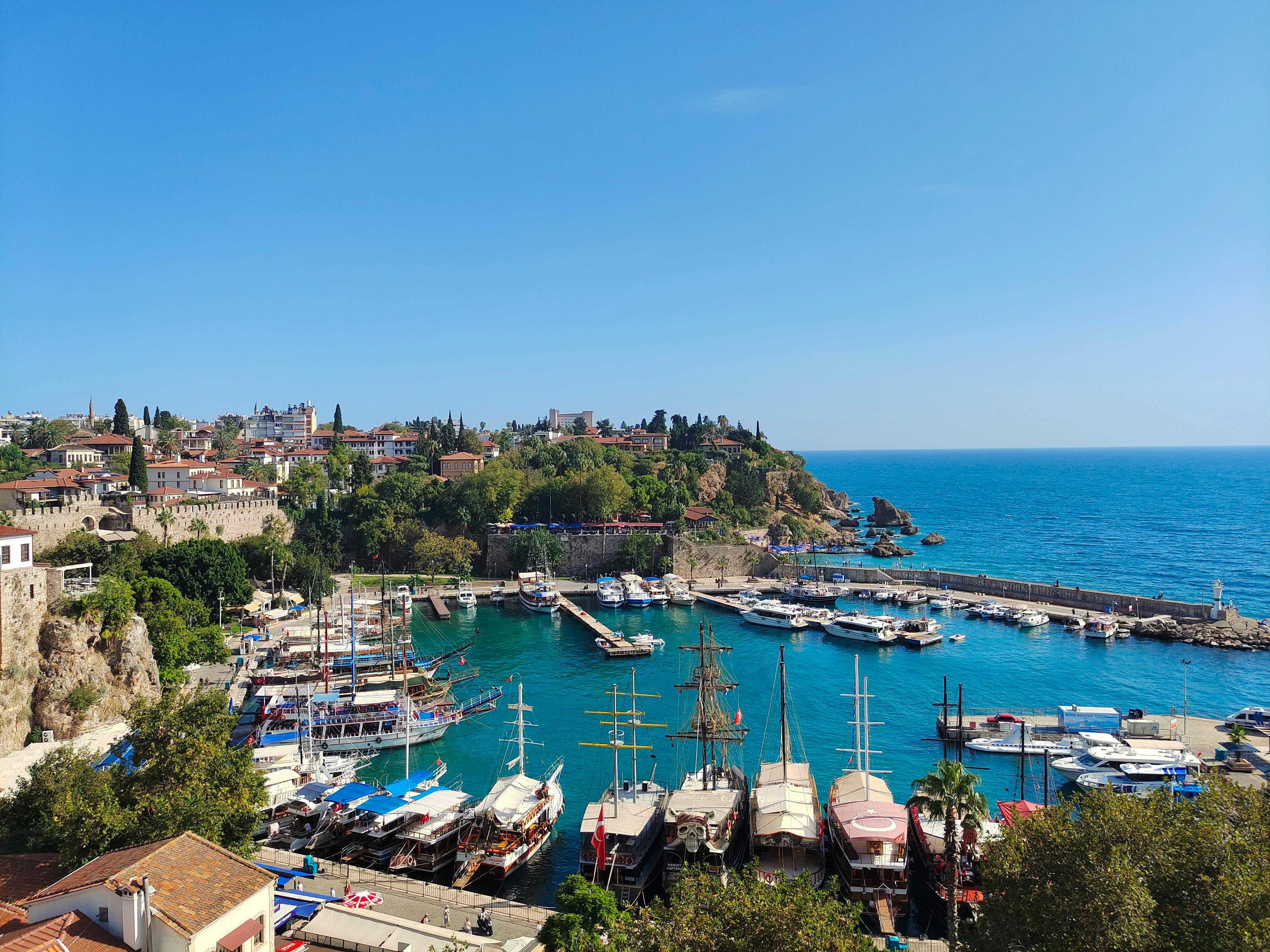
Antalya Old Harbor: Where Ancient Stone Meets Turquoise Dreams
Golden light spills across weathered stone quays as you step into Antalya old harbor—Kaleiçi Marina in Turkish—a timeless crescent where Roman walls embrace Ottoman-era houses and traditional wooden gulets bob against a backdrop of terracotta rooftops cascading down to the sea. The air carries the scent of salt, orange blossoms, and freshly grilled fish, while the gentle lap of Mediterranean waters against ancient breakwaters creates a rhythm unchanged since Attalos II founded this port over two millennia ago. You walk along a harbor measuring approximately three hundred meters across, where Hadrian's Gate stands sentinel at the entrance and historic minarets pierce the sky above whitewashed walls. This place matters because it preserves the living soul of Antalya—a harbor where history isn't confined to museums but breathes through every cobblestone, where you can sip Turkish tea beside ruins that witnessed empires rise and fall, and where the Mediterranean's eternal blue invites you to slow down and truly experience a coastline that has welcomed travelers since antiquity.
Why Antalya Old Harbor Embodies Timeless Mediterranean Charm
Antalya old harbor represents one of Turkey's most evocative maritime landscapes, solving the modern traveler's quest for authentic encounters with layered history within a compact, walkable setting. Founded as Attaleia around 159 BCE by Pergamene King Attalos II, the harbor served as a crucial port for Roman, Byzantine, Seljuk, and Ottoman traders navigating the eastern Mediterranean. The harbor's semicircular design—approximately three hundred meters in diameter with depths of three to five meters—was engineered to shelter vessels from prevailing northwesterly winds while allowing easy access to the city's fortified walls.
The harbor's architectural ensemble reflects centuries of cultural convergence: the iconic Yivli Minare (Fluted Minaret), built in 1226 under Seljuk Sultan Alaeddin Keykubad I, rises thirty-eight meters above the waterfront; Hadrian's Gate, erected in 130 CE to honor the Roman emperor's visit, features triple marble arches adorned with intricate floral reliefs; and Ottoman-era wooden mansions with projecting upper floors (cumba) line the harbor's edge, their latticed windows overlooking the water. Engineers constructed the ancient breakwaters using local limestone blocks fitted without mortar—a technique that has allowed these structures to withstand Mediterranean storms for over two thousand years.
Beyond its aesthetic grandeur, the harbor fulfilled critical historical functions: it facilitated trade in olive oil, wine, and textiles between Anatolia and the Levant; served as a departure point for pilgrims traveling to Jerusalem; and provided naval defense for successive empires controlling this strategic coastline. The Turkish Ministry of Culture designated Kaleiçi (the old town surrounding the harbor) as a protected urban conservation area in 1972, implementing restoration guidelines that preserve historic facades while allowing adaptive reuse as boutique hotels, cafes, and artisan workshops. Today, Antalya old harbor serves as both a working marina for traditional gulets and a living museum where visitors can trace the footsteps of merchants, sailors, and conquerors who shaped the Mediterranean world.
The Best Time to Experience Antalya Old Harbor
Timing your visit to Antalya old harbor dramatically affects atmosphere, lighting, and comfort levels. The optimal window stretches from April 18–May 30 and September 10–October 22, when air temperatures range between 20–28°C (68–82°F) and the Mediterranean breeze keeps humidity comfortable. During these shoulder seasons, orange blossoms perfume the air, golden-hour photography conditions are spectacular, and visitor numbers stay manageable at approximately one thousand to fifteen hundred daily rather than the three thousand to five thousand seen in peak summer. Arrive at the harbor between 8:30–10:00 AM when morning light illuminates Hadrian's Gate beautifully and before cruise ship excursions arrive in force.
Avoid July 15 through August 25 absolutely: temperatures soar to 34–41°C (93–106°F), the harbor's stone surfaces reflect heat intensely, and narrow Kaleiçi streets become crowded with tour groups, diminishing the intimate atmosphere. Midday visits between 12:00–4:00 PM during peak season prove particularly punishing—the white limestone creates blinding glare, and finding quiet corners for contemplation becomes difficult. Winter months (November through March) bring cooler air temperatures of 10–16°C (50–61°F) and occasional rain that makes ancient cobblestones treacherously slippery, though the harbor remains stunningly beautiful for photography with dramatic cloud formations and fewer crowds.
The harbor operates as a public space with no entrance fees, though boat tours and attractions have seasonal schedules. cultural festivals, and sustainable tourism initiatives. Note that many harbor-side cafes and boat operators adjust hours seasonally, with peak services running from May through October.
Approximate Budget for a 7-Day Trip
Exploring Antalya old harbor and the surrounding Turquoise Coast offers exceptional value for history enthusiasts and cultural travelers. This budget assumes moderate comfort—mid-range accommodation in Kaleiçi with harbor or mountain views, fresh Turkish and Mediterranean cuisine, local transportation, harbor activities, and selective guided experiences. Prices reflect 2026 rates for travelers seeking authentic encounters without luxury resort pricing.
- Accommodation: €44–€82 per night in Kaleiçi (Antalya old town) (boutique Ottoman-style hotels with courtyard gardens and traditional breakfast; budget pensions from €26, upscale heritage hotels from €130)
- Food: €26–€40 per day (breakfast €5—Turkish kahvaltı spread with cheeses, olives, tomatoes, honey, börek; lunch €8–€12—grilled fish sandwich, pide, or meze platter at harbor cafes; dinner €13–€23—fresh sea bass, lamb şiş kebab, or vegetarian options with local wine)
- Transportation: €62 total (Antalya Airport to Kaleiçi via Havataş bus: €4 each way; local tram to nearby attractions: €1.50 per ride; taxi to Düden Waterfalls: €12; bicycle rental: €8/day; optional car rental for exploring: €34/day)
- Attractions: €84 total (Antalya old harbor boat tour: €18; Hadrian's Gate: free; Yivli Minare: free; Antalya Museum: €6; Düden Waterfalls tour: €15; guided Kaleiçi walking tour: €20; traditional Turkish bath experience: €25)
- Miscellaneous: €48 (Turkish coffee set €12, evil eye charm €7, local olive oil products €14, reef-safe sunscreen €8, travel insurance prorated €9)
Total: €460–€640 for 7 days (excluding international flights to Antalya)
7 Essential Antalya Old Harbor Experiences
- Walk the harbor at sunrise: Arrive by 7:00 AM to experience Antalya old harbor in its most tranquil state—before crowds arrive and fishing boats return with their dawn catch. The morning light transforms the stone quays into warm gold, and the harbor's reflections create mirror-like conditions perfect for photography. Walk the full three-hundred-meter perimeter, noting how Roman breakwaters, Seljuk minarets, and Ottoman houses create a layered architectural timeline. This experience lasts as long as you desire; many visitors spend an hour simply absorbing the harbor's peaceful atmosphere.
- Pass through Hadrian's Gate: Enter Kaleiçi through the iconic triple-arched gateway erected in 130 CE. Pause to examine the Corinthian columns and floral reliefs that have welcomed visitors for nearly two millennia. The gate's central arch measures four meters wide and five meters high—large enough for Roman chariots, now traversed by pedestrians. Visit between 9:00–11:00 AM when morning light illuminates carved details without harsh shadows. Allow fifteen minutes to appreciate this monument to imperial diplomacy.
- Climb the Yivli Minare viewpoint: The Fluted Minaret, Antalya's most recognizable landmark, offers panoramic views of the harbor and Mediterranean coastline. While the minaret itself isn't open for climbing, the adjacent courtyard provides an elevated vantage point. Visit at sunset when warm light bathes the terracotta rooftops and the harbor fills with golden reflections. This free viewpoint rewards with photographs encompassing ancient walls, modern marina, and distant Taurus Mountains.
- Take a traditional gulet cruise: Book a two-hour harbor tour (€18) departing from the central dock at 10:00 AM or 3:00 PM. These wooden sailing vessels glide past Roman ruins, coastal caves, and the dramatic Düden Waterfalls where the river plunges directly into the sea. The captain provides historical commentary while you relax on deck with Turkish tea. This perspective reveals the harbor's strategic beauty from the water—just as ancient sailors would have experienced it.
- Explore Kaleiçi's winding streets: Beyond the harbor, Antalya's old town unfolds in a labyrinth of cobblestone lanes lined with restored Ottoman houses, artisan workshops, and boutique cafes. Follow the path uphill from the harbor, noting wooden latticework (kafes) on upper floors designed for privacy. Visit between 4:00–6:00 PM when shopkeepers display handwoven textiles, copperware, and ceramics. Allow two hours to wander without a map—getting lost is part of the charm.
- Sip Turkish tea at a harbor café: Choose a terrace table overlooking the water and order çay (pronounced "chai") served in traditional tulip-shaped glasses. Watch fishing boats unload their catch, yachts depart for afternoon cruises, and seagulls wheel overhead. This simple ritual—costing approximately €2 per glass—connects you to the harbor's daily rhythm and provides a perfect pause for people-watching and reflection.
- Photograph the harbor at blue hour: Return to the waterfront thirty minutes after sunset when the sky turns indigo and harbor lights begin to glow. The contrast between illuminated stone facades, boat lanterns, and twilight sky creates magical conditions for long-exposure photography. Position yourself near the breakwater for compositions that capture the harbor's semicircular shape with the city rising behind. Bring a tripod for stability in low light.
3 Hidden Gems Most Travelers Miss
- The Kesik Minare (Broken Minaret): Tucked behind a quiet square five minutes uphill from the harbor, this unusual monument combines Roman, Byzantine, and Ottoman architectural layers in a single structure. The base dates to the second century CE as a Roman temple, later converted to a Byzantine church, then a mosque—its minaret was damaged in a fire and never fully restored. Most tourists overlook this site because signage is minimal. Access requires asking locals for "Kesik Minare" directions. Visit at midday when sunlight illuminates the contrasting stone layers. This palimpsest of faiths offers profound insight into Antalya's layered history.
- The hidden Ottoman hammam: Behind the harbor's eastern edge, the İbrahim Bey Hamamı—a sixteenth-century Turkish bath—remains operational yet rarely visited by international travelers. Most tourists don't realize this historic hamam offers authentic experiences at local prices. Access requires walking past the fish market and asking for "tarihi hamam" (historic bath). Traditional sessions (€20–€30) include scrubbing, foam massage, and relaxation in the marble-walled warmth. Visit on weekday mornings when the experience is most serene. Bring a towel or rent one onsite.
- The Roman harbor wall viewpoint: At the harbor's western end, a lesser-known path climbs along the ancient breakwater to a rocky outcrop offering unobstructed Mediterranean views. This spot remains overlooked because it lacks signage and requires a five-minute scramble over limestone. Ask harbor staff for "Roma duvarı manzara" (Roman wall viewpoint) directions. Visit at sunset when the setting sun paints the water in shades of amber and rose. This secluded perch rewards with photography opportunities free of crowds and a tangible connection to the engineers who built this harbor two millennia ago.
Cultural & Practical Tips
- Respect historic preservation: Antalya old harbor and Kaleiçi are protected conservation areas. Never climb on ancient walls, touch carved reliefs, or remove stones—oils from skin accelerate deterioration and violations carry fines up to ₺2,000 (approximately €60). Stay behind barriers and respect roped-off restoration zones.
- Wear appropriate footwear: Kaleiçi's cobblestone streets and harbor quays feature uneven surfaces worn smooth over centuries. Sturdy walking shoes or sandals with grip are essential; avoid flip-flops or smooth-soled shoes. Many paths include elevation changes as you navigate between harbor level and hillside neighborhoods.
- Carry sun protection: Minimal shade exists along the harbor's stone quays, and white limestone reflects UV rays intensely. Bring a wide-brimmed hat, sunscreen (SPF 30+), and at least one liter of water per person. Harbor-side cafes sell beverages, but prices are inflated (€3 for water).
- Learn essential Turkish phrases: "Merhaba" (mehr-hah-bah—hello), "Teşekkür ederim" (teh-shek-kür eh-deh-rim—thank you), "Lütfen" (lü-tfen—please), "Ne kadar?" (neh kah-dar—how much?), and "İyi günler" (iy-ee gün-ler—good day). Even basic efforts earn warm responses from local vendors and boat captains.
- Photography guidelines: General photography is permitted throughout the harbor and Kaleiçi. Tripods require permission from site staff for commercial use. When photographing people—especially vendors or families—always ask "Fotoğraf çekebilir miyim?" (foh-toh-raf cheh-keh-bee-leer mee-yim—may I take a photo?). Avoid using flash inside historic buildings where it can disturb other visitors.
- Understand bargaining etiquette: In Kaleiçi's artisan shops, polite negotiation is expected. Start by offering 15–20% below the asking price, then meet halfway. Maintain a friendly demeanor—"Pahalı" (pah-hah-luh—expensive) said with a smile often yields better prices. Never bargain aggressively; Turkish culture values respectful interaction.
- Plan for seasonal considerations: Spring (April–May) offers orange blossom fragrance, comfortable temperatures, and excellent photographic light but occasional rain showers. Autumn (September–October) provides stable weather, fewer crowds, and golden-hour lighting ideal for photography. Summer visits require early morning or late afternoon timing to avoid heat. Winter months see reduced boat services but offer solitary exploration opportunities with dramatic skies.
Conclusion: Travel with Presence, Not Just Checklists
Antalya old harbor doesn't yield its deepest magic to hurried visitors ticking boxes on an itinerary. It rewards those who pause to trace the chisel marks on Hadrian's Gate, who linger over tea watching fishing boats return at dusk, who understand that this harbor represents a living dialogue between ancient craftsmanship and modern life. When you stand where Roman merchants once unloaded amphorae and Ottoman sailors prepared for voyages to Alexandria, you're participating in a continuum of human connection to this timeless coastline.
Responsible travel here means honoring the harbor's fragile heritage—supporting local artisans who preserve traditional crafts, choosing boat operators committed to marine conservation, leaving no trace beyond footprints on ancient stone, and recognizing that your presence contributes to sustaining this authentic experience for future generations. This harbor has welcomed travelers for over two millennia while maintaining its character—a balance worth protecting through mindful choices. Come not just to capture the perfect photograph, but to understand that wonder isn't consumed—it's cultivated, one respectful step, one shared smile, one moment of pure presence at a time.