
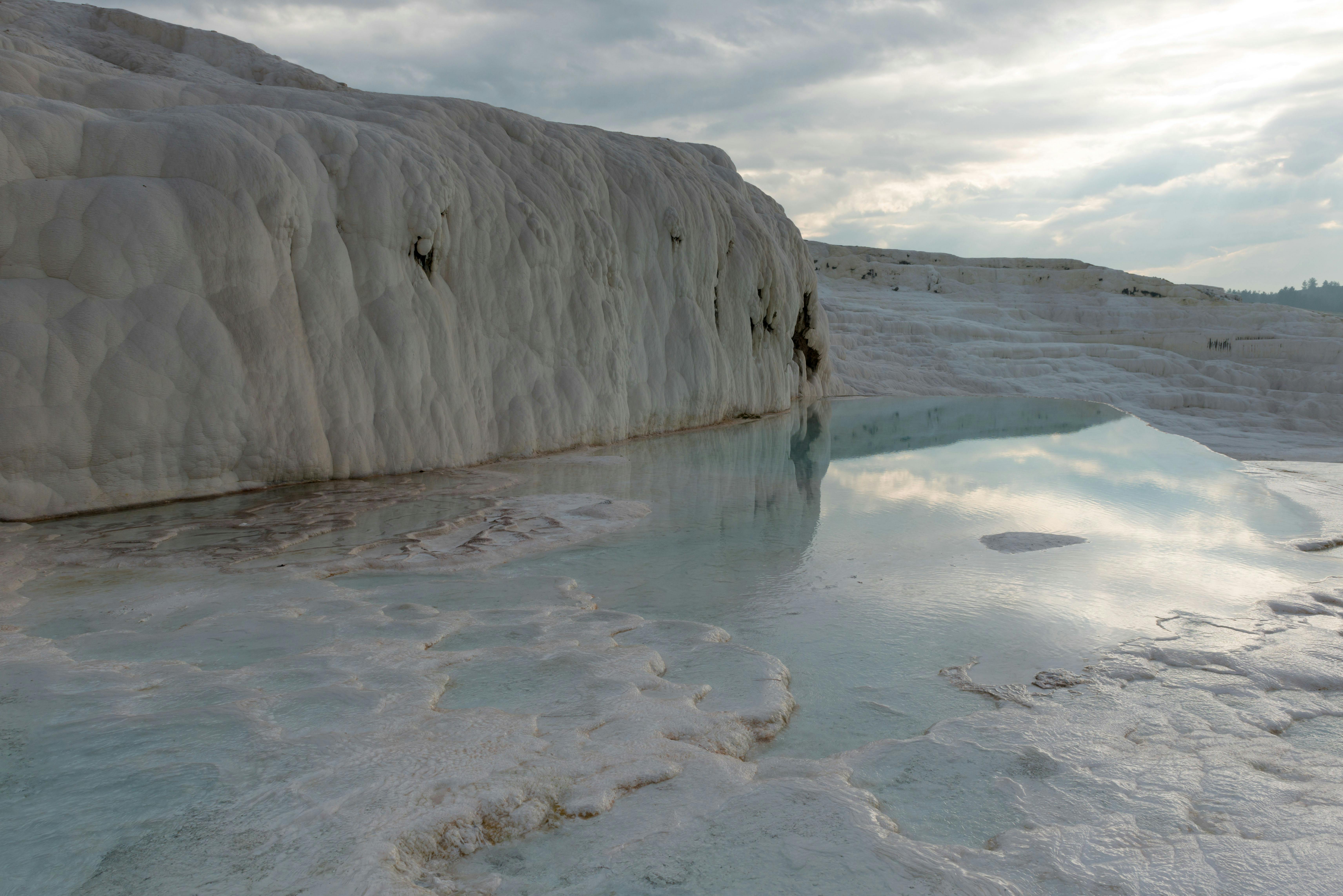
Pamukkale Travertine Terraces: Where Thermal Waters Meet Ancient Stone
The first light of dawn spills over western Anatolia, casting rose-gold hues across Pamukkale travertine terraces—a cascading wonder of white calcite formations that tumble 160 meters (525 feet) down a mountainside, fed by seventeen thermal springs rich in calcium carbonate. You step barefoot onto the warm, smooth stone, the mineral-scented air carrying whispers of antiquity as turquoise pools ripple gently at your feet. Above, the ruins of Hierapolis—founded in 190 BCE—crown the plateau, their marble columns silhouetted against the waking sky. This is not merely a geological marvel; it is a living sanctuary where nature's alchemy transforms mineral-rich waters into petrified waterfalls, and where Roman bathers once sought healing in the same thermal pools you now explore. Standing here, surrounded by formations that have grown layer by layer over 200,000 years, you understand why this place matters: it reminds us that beauty emerges not from haste, but from the patient, persistent work of water and time—a lesson as relevant today as it was when ancient pilgrims first descended these luminous slopes.
Why Pamukkale Travertine Terraces Embody Natural Alchemy
The Pamukkale travertine terraces represent one of Earth's most elegant solutions to a fundamental geological process: how mineral-rich thermal waters can sculpt enduring landscapes through the patient work of precipitation and evaporation. Formed over approximately 200,000 years, these terraces emerged as calcium carbonate-laden waters from seventeen hot springs—flowing at 35°C (95°F)—cooled upon reaching the surface, depositing layers of calcite that hardened into the iconic white formations visible today.
Technically, the terraces showcase remarkable natural engineering. Each terrace functions as a shallow basin, typically 1–2 meters (3–7 feet) deep, with rims built up by calcite deposits that grow approximately 1–2 millimeters annually. The water's journey—from underground aquifers through volcanic rock, absorbing minerals, then emerging at the surface—creates a self-renewing system where flow rates of 50 liters per second continuously reshape the landscape. The ancient city of Hierapolis, built directly atop the terraces in 190 BCE, leveraged these thermal waters for its renowned spa culture, constructing bath complexes, nymphaea, and healing sanctuaries that integrated human architecture with natural wonder. Materials were synergistic: local marble for Roman structures, calcite for terrace formation, and mineral-rich waters for therapeutic use.
Beyond their geological significance, the travertine terraces fulfilled a profound human need: creating a sanctuary where physical healing and spiritual renewal converged. For millennia, visitors have sought Pamukkale's waters for relief from ailments ranging from arthritis to skin conditions, while the panoramic views from Hierapolis offered contemplative perspective. Today, as travelers walk these luminous slopes beneath the watchful gaze of ancient columns, the terraces continue their original purpose: inviting the human spirit to encounter wonder through the enduring dialogue between water, stone, and time.
The Best Time to Experience Pamukkale Travertine Terraces
Timing your visit to the Pamukkale travertine terraces requires balancing light conditions, water levels, and seasonal crowds for the optimal experience. The ideal window runs from April 15–June 12 and September 15–October 31, when Denizli's temperatures hover between 15–26°C (59–79°F), thermal pool levels remain stable, and the angle of sunlight creates ideal conditions for photographing the terraces' luminous white calcite against turquoise waters without harsh glare.
For the most magical experience, arrive at 6:30–8:00 AM when the site opens. This is when the terraces are least crowded, allowing you to walk the upper pathways in peaceful solitude while morning light enhances the calcite's pearlescent glow. Alternatively, visit between 4:30–6:30 PM for sunset photography, when golden light casts long shadows that accentuate the terraces' textures while the thermal pools reflect amber skies. The site operates daily from 6:30 AM to 9:00 PM (April–October) or 5:00 PM (November–March); allow 2–3 hours for full exploration.
Avoid July 15–August 31 if possible: temperatures climb to 30–38°C (86–100°F), and midday sun can make the white calcite uncomfortably bright and hot underfoot. Also skip Turkish national holidays (April 23, August 30, October 29) when domestic tourism surges, creating queues that diminish the contemplative atmosphere. Winter months (December–February) offer atmospheric mist and fewer visitors, with temperatures of 4–12°C (39–54°F), but some terraces may have reduced water flow.
Approximate Budget for a 7-Day Trip
Southwestern Turkey offers exceptional value for cultural and nature travelers, with costs remaining moderate despite recent inflation. The following budget assumes mid-range travel with comfortable accommodations in Pamukkale village or nearby Denizli, quality Turkish cuisine, and comprehensive sightseeing including the travertine terraces and Hierapolis. All prices reflect current rates in euros (€1 ≈ 35 Turkish Lira).
Accommodation: €50–€110 per night
• Budget pension in Pamukkale: €30–€50/night
• Mid-range thermal hotel (3-star): €50–€85/night
• Upscale resort with spa access: €110–€180/night
7 nights total: €350–€770
Food: €20–€40 per day
• Breakfast: €4–€7 (Turkish tea, simit, menemen, olives, feta)
• Lunch: €6–€12 (kebap, lentil soup, pide, fresh salads)
• Dinner: €10–€21 (mezze platter, grilled sea bass, lamb şiş)
• Street food/snacks: €2–€4 (simit, baklava, Turkish coffee)
7 days total: €140–€280
Transportation:
• Airport transfer (Denizli Çardak): €12 each way
• Local dolmuş/shuttle rides: €2–€5 per trip
• Car rental (optional): €30/day
• Intercity bus to Pamukkale: €15
7 days total: €75–€130
Attractions:
• Pamukkale travertine terraces: €13
• Hierapolis archaeological site: Included with terrace entry
• Antique Pool (Cleopatra's Pool): €8 extra
• Laodicea ancient city: €5
• Aphrodisias day trip: €25
• Thermal spa experience: €20–€40
Total: €71–€91
Miscellaneous:
• Travel insurance (cultural coverage): €35
• Souvenirs (textiles, ceramics, evil eye): €25–€75
• SIM card (10GB data): €12
• Tips for guides: €15–€30
Total: €87–€152
TOTAL 7-DAY BUDGET: €723–€1,423
7 Essential Pamukkale Travertine Terrace Experiences
1. Walk the Upper Terraces at Sunrise: Enter the site at opening time (6:30 AM) and ascend to the highest accessible terraces. The early morning light casts a soft glow on the white calcite, while the thermal pools reflect pastel skies. Walk barefoot on designated paths—the smooth, warm stone feels luxurious underfoot. Pause to photograph the contrast between the luminous terraces and the dark green cypress trees framing the valley. Allow 45 minutes for this serene introduction.
2. Soak in the Antique Pool: Descend to Cleopatra's Pool, where ancient marble columns lie submerged in 36°C (97°F) mineral-rich waters. Swim among fallen pillars that once supported Roman porticos, feeling the gentle buoyancy of calcium-laden water on your skin. The pool's therapeutic properties have drawn visitors for two millennia; spend 30 minutes floating in this unique fusion of history and hydrotherapy. Entry requires an additional €8 fee.
3. Explore Hierapolis' Necropolis: After visiting the terraces, walk the ancient road leading to Hierapolis' extensive necropolis—one of Turkey's best-preserved burial grounds. Over 1,200 tombs line the route, featuring sarcophagi with intricate reliefs depicting mythological scenes. Visit mid-morning (9:00–10:00 AM) when light enhances the stone carvings. This solemn space offers profound context for the spa city that thrived above the terraces.
4. Photograph the Cascade Pools: Locate the iconic tiered pools where thermal waters flow over calcite rims in gentle cascades. Position yourself to capture the interplay of turquoise water, white stone, and blue sky. Use a polarizing filter to reduce glare on the water's surface; a slow shutter speed (1/15 second) creates silky water effects. Visit during golden hour for the most dramatic lighting.
5. Hike to the North Terrace Viewpoint: Follow the marked trail along the northern edge of the plateau for panoramic views of the entire terrace complex. From this vantage point, appreciate the scale: 2,700 meters (8,858 feet) long and 600 meters (1,969 feet) wide of cascading calcite formations. The viewpoint also frames Hierapolis' theater and colonnaded streets against the Menderes Valley. Allow 20 minutes for this rewarding detour.
6. Study the Roman Theater: Perched on the hillside overlooking the terraces, Hierapolis' 2nd-century CE theater seats 15,000 spectators and remains one of Anatolia's best-preserved performance spaces. Climb to the upper tiers for sweeping views of the travertines below. Notice how the theater's orientation maximizes acoustics while framing the thermal landscape as a natural backdrop—a brilliant integration of architecture and environment.
7. Reflect at Sunset on the Lower Terraces: Conclude your visit on the lower terraces as the sun dips toward the Menderes Valley. The setting light transforms the calcite into shades of rose and amber, while thermal mists rise gently from the pools. Find a quiet spot to sit and contemplate the day's journey—from ancient ruins to natural wonder. This moment of stillness encapsulates Pamukkale's enduring magic.
3 Hidden Gems Most Travelers Miss
• The Plutonium Gate: Tucked near Hierapolis' Apollo Temple, this ancient shrine to Pluto (god of the underworld) features a cave emitting carbon dioxide—a natural phenomenon that once fueled oracular rituals. Most visitors overlook this archaeological curiosity, but it offers fascinating insight into ancient spiritual practices. Access: Follow signs from the theater; allow 15 minutes. Visit mid-morning when guides explain the site's historical significance. A quiet moment here connects you to the mystical dimensions of Hierapolis.
• The Frontinus Aqueduct: Beyond the main archaeological zone, a well-preserved section of the Roman aqueduct that once supplied water to Hierapolis winds through olive groves. This engineering marvel, built in the 1st century CE, demonstrates sophisticated hydraulic knowledge. Access: Follow the marked trail east of the necropolis; allow 30 minutes round-trip. Visit late afternoon when golden light enhances the stone arches. This overlooked structure reveals the infrastructure that sustained ancient spa culture.
• Karahayıt's Red Springs: Just 5 kilometers from Pamukkale, the small village of Karahayıt features terraces tinted rust-red by iron oxide deposits—a striking contrast to Pamukkale's white calcite. Family-run pensions offer thermal pool access with fewer crowds. Access: Take a local dolmuş from Pamukkale (€2, 10 minutes); terraces open 8:00 AM–6:00 PM. Visit mid-week to experience this colorful alternative in peaceful solitude. The red waters are believed to benefit circulatory conditions—a local secret worth exploring.
Cultural & Practical Tips
• Wear appropriate footwear: The travertine terraces are smooth but can be slippery when wet. Walk barefoot on designated paths as required; bring water shoes for the Antique Pool. Avoid flip-flops that may slip on calcite surfaces. The stone retains heat—test temperature before stepping onto sun-exposed areas.
• Photography etiquette: Photography is permitted throughout public areas, but drones require special permits from Turkish authorities. Tripods are allowed but must not obstruct pathways. The phrase "Fotoğraf çekebilir miyim?" (foh-toh-raf cheh-keh-bee-leer mee-yim) means "May I take a photo?" Always respect other visitors when composing shots.
• Protect the fragile ecosystem: The travertine formations are living geological features; walking off designated paths damages calcite deposits that take centuries to regenerate. Stay on marked trails, avoid touching delicate rimstone formations, and follow all posted guidelines. Your mindfulness helps preserve this UNESCO World Heritage Site for future generations.
• Hydrate and protect from sun: Western Anatolia's climate means intense sun exposure, especially on the reflective white calcite. Carry at least 1.5 liters of water, use broad-spectrum sunscreen (SPF 30+), and wear a hat and sunglasses. Reapply sunscreen every two hours; the thermal environment can accelerate dehydration.
• Learn essential Turkish phrases: "Teşekkür ederim" (teh-shek-kur eh-deh-rim) = Thank you; "Pamukkale çok güzel" (pah-muk-kah-leh chok gew-zel) = Pamukkale is very beautiful; "Su nerede?" (soo neh-reh-deh) = Where is water? Attempting Turkish shows respect and often sparks warm interactions with local staff and vendors.
• Combine with nearby attractions: Pamukkale is 20 minutes from Laodicea ancient city and 90 minutes from Aphrodisias. Plan a full-day itinerary: terraces at sunrise, Hierapolis exploration mid-morning, lunch in Pamukkale village, afternoon visit to Laodicea. This balance of natural and cultural experiences maximizes your southwestern Turkey adventure.
• Respect thermal pool protocols: Swimwear is required in the Antique Pool; shower facilities are available at the entrance. Avoid using lotions or oils before entering thermal waters, as they can affect water quality. Follow staff instructions regarding pool capacity and safety guidelines.
Conclusion: Travel with Reverence, Not Just Curiosity
The Pamukkale travertine terraces demand more than casual observation—they ask for reverence. As you walk these luminous slopes where water and stone have collaborated for millennia, watching thermal pools reflect the sky while ancient columns stand sentinel above, remember that you are not merely a visitor but a witness to nature's patient artistry. This landscape offers a narrative of transformation: geological forces shaping stone, human hands carving sanctuaries, and light painting beauty across centuries.
Travel here with intention. Between photographs, pause to feel the warm calcite beneath your feet, to listen to the gentle ripple of thermal waters, to simply stand in silence among formations that have witnessed empires rise and fall. Support conservation by staying on marked trails, respecting fragile ecosystems, and choosing local guides who share both knowledge and stewardship. These small acts of mindfulness accumulate into something larger than tourism—they become participation in preserving a fragile magic for generations to come.
Pamukkale's terraces will continue to grow long after we're gone, their calcite layers accumulating millimeter by millimeter as thermal waters flow. Your visit should honor that continuity, supporting the delicate balance between access and preservation that allows this wonder to endure. Slow down. Breathe the mineral-scented air. Let the luminous white stone remind you that the most profound beauty often emerges not from haste, but from patience—from the quiet, persistent work of time itself. That is how you truly experience the Pamukkale travertine terraces.