
Samothrace Sanctuary: Where Ancient Mysteries Meet Aegean Wilderness
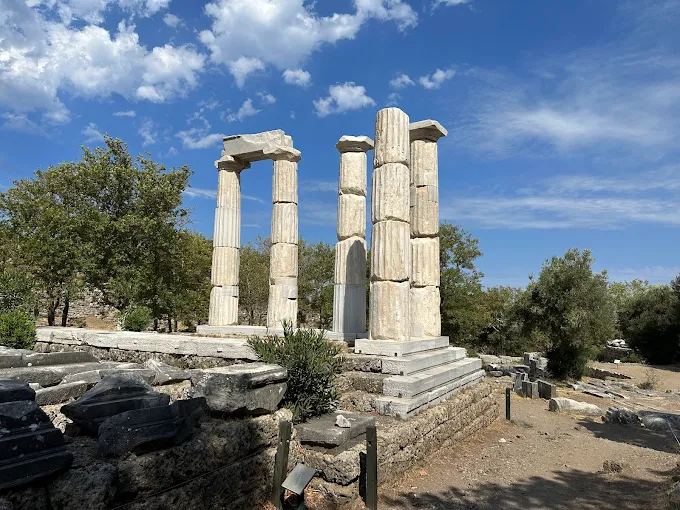
Dawn breaks over the forested slopes of Mount Saos on Samothrace, where mist clings to marble columns that have stood sentinel for over two millennia. You walk the Sacred Way—a paved path worn smooth by countless pilgrims—toward the Sanctuary of the Great Gods, an archaeological complex spanning 50,000 square meters nestled between two river valleys. The air carries the scent of wild thyme and damp stone; somewhere nearby, water trickles through ancient drainage channels carved by Hellenistic engineers. Before you rise the ruins of the Hieron, its partially restored Doric columns reaching toward a sky that once witnessed torchlit initiation rites, while the Rotunda of Arsinoe—once the largest covered circular structure in ancient Greece with its 20-meter diameter—stands as a silent testament to royal devotion. This isn't merely an archaeological site—it's a portal to one of antiquity's most secretive spiritual traditions, where Odysseus, Alexander the Great, and countless ordinary seekers came to be initiated into mysteries that promised protection at sea and purification of the soul. To stand here is to touch the edge of the unknowable, where history, mythology, and human longing converge in the whispering pines of Greece's sacred island.
Why Samothrace Sanctuary Embodies Mystical Heritage
The Sanctuary of the Great Gods represents far more than ancient ruins—it embodies a 1,100-year continuum of spiritual practice that rivaled even the famed Eleusinian Mysteries in importance. Archaeological evidence confirms religious activity at this site from the 7th century BC through the 4th century AD, spanning Homeric, Archaic, Classical, Hellenistic, and Roman eras. What makes the Samothrace Sanctuary uniquely significant is its universal accessibility: unlike many ancient cults restricted by gender, class, or citizenship, the Kavirian Mysteries welcomed all—men and women, slaves and free, Greeks and foreigners—seeking initiation into rites that promised divine protection during perilous sea voyages. The sanctuary solved a profound human need: providing spiritual reassurance in an age when maritime travel meant confronting the unpredictable wrath of the Aegean.
Engineering excellence defines the sanctuary's architecture. The Propylaeum of Ptolemy II, constructed between 285–281 BC, featured dual porticoes of white Thassos marble with six Ionic columns facing the ancient city and six Corinthian columns oriented toward the sacred precinct—a sophisticated design demonstrating advanced understanding of load distribution and aesthetic harmony. The Rotunda of Arsinoe II, erected 288–270 BC, achieved a remarkable 12.65-meter height with walls 2.5 meters thick at the foundation, employing a conical-to-octagonal roof transition that distributed weight efficiently while creating dramatic interior acoustics for ritual chanting. The Hieron, completed around 150 BC, incorporated an intricate drainage system with clay pipes that channeled sacrificial blood and ritual libations away from the sacred space—a practical solution reflecting both religious purity concerns and hydraulic engineering expertise.
Today, the sanctuary stands as one of the best-preserved Pan-Hellenic religious complexes in the northern Aegean. Excavations by American archaeologists beginning in 1938 under Karl Lehmann, and continuing through Emory University's ongoing summer campaigns, have revealed new insights into initiation practices while maintaining the site's atmospheric integrity. The Archaeological Museum of Samothrace, located adjacent to the sanctuary entrance, houses the original statue base of the Nike of Samothrace—discovered in 1863 and now displayed at the Louvre—alongside hundreds of votive offerings: bronze fishhooks, ceramic vessels inscribed with Θ (for Theos, "god"), and magnetite rings worn by initiates to symbolize connection with the goddess Axieros. Preservation efforts focus on stabilizing marble structures against seismic activity while protecting the surrounding forest ecosystem that has sheltered these ruins since antiquity.
The Best Time to Experience Samothrace Sanctuary
To experience the Samothrace Sanctuary under optimal conditions, plan your visit between May 22 and June 18 or September 10 through September 28. During these windows, air temperatures range from 21–26°C (70–79°F), while the forested sanctuary microclimate remains 3–5°C cooler than coastal areas—ideal for exploring ruins without heat fatigue. The ideal visiting hours are 8:30–10:30 AM, when morning light filters through pine branches to illuminate marble surfaces, and crowds remain minimal before tour groups arrive from Kamariotissa port. Late afternoon visits (4:00–6:00 PM, when Saturday hours extend to 8:00 PM during peak season) offer dramatic golden-hour photography opportunities as shadows lengthen across the Sacred Way.
Avoid visiting during July 25 through August 20, when temperatures soar to 30–35°C (86–95°F) and humidity rises, making the uphill walk from parking to sanctuary entrance (approximately 400 meters with moderate elevation gain) physically demanding. Additionally, cruise ship day-trippers often arrive mid-morning during peak season, creating congestion at the museum and key monuments. Winter months (November 1 through March 31) present reduced hours (Wednesday–Sunday only, 8:30 AM–3:30 PM) and occasional closures due to heavy rainfall that makes marble pathways slippery; however, the sanctuary's atmospheric mist and solitude during this period offer a uniquely contemplative experience for prepared travelers.
For current opening hours, ferry schedules from Alexandroupolis or Kavala, and local event calendars, consult the official Greek tourism portal: https://www.visitthraki.gr provides comprehensive, updated information specific to Samothrace island travel planning.
Approximate Budget for a 7-Day Trip
Samothrace remains one of Greece's most affordable island destinations, largely because it hasn't succumbed to mass tourism development. Prices reflect authentic Greek island living rather than inflated tourist premiums. The following budget assumes moderate comfort—clean, family-run accommodations and taverna dining with occasional splurges on guided experiences.
- Accommodation: €45–€85 per night in Kamariotissa (port village) or Chora (mountain capital). Traditional studios with kitchenette: €45–€60; seaside apartments with balcony: €65–€85; boutique guesthouses in restored stone houses: €90–€120.
- Food: €26–€36 per day
- Breakfast: €4–€6 (Greek coffee €2, tiropita €2.50, fresh figs €1.50)
- Lunch: €8–€12 (horiatiki salad €6, grilled octopus €9, spanakopita €4.50)
- Dinner: €14–€18 (fresh fish by weight €15–€22, lamb kleftiko €13, moussaka €9, house wine €4)
- Transportation:
- Ferry from Alexandroupolis to Kamariotissa: €16 per person, €45 per car (one-way, 2-hour crossing)
- Ferry from Kavala to Kamariotissa: €14 per person, €40 per car (one-way, 2.5-hour crossing)
- Car rental: €32–€48 per day (essential for reaching sanctuary, waterfalls, and remote beaches)
- Fuel: €40–€55 for week of island exploration (approximately 150 km total)
- Local taxi (Kamariotissa to Sanctuary): €12 one-way
- Attractions:
- Sanctuary of the Great Gods + Archaeological Museum combo ticket: €10 adult, €5 reduced
- Guided sanctuary tour with local archaeologist: €35 per person (2 hours)
- Fonias Gorge hiking guide: €25 per person (half-day)
- Boat tour to inaccessible northern coves: €30–€45 per person
- Miscellaneous:
- Thassian honey from Samothrace producers (500g): €9–€13
- Handwoven wool blanket from Chora artisans: €45–€85
- Olive oil from mountain groves (750ml): €10–€15
- Travel insurance: €35–€50 for week
Total estimated cost for 7 days: €760–€1,090 per person (excluding international flights to Alexandroupolis or Kavala)
6 Essential Samothrace Sanctuary Experiences
- Dawn Meditation at the Hieron: Arrive at the sanctuary entrance by 8:00 AM when gates open. Walk directly to the Hieron—the partially restored temple where the second initiation stage (epopteia) occurred—and sit quietly on the marble benches that line its interior walls. As morning light penetrates the colonnade, observe how the restored columns cast geometric shadows across the sacred floor. Bring a small notebook to journal reflections; the acoustics amplify whispered thoughts, creating an intimate dialogue with antiquity. Spend 30–45 minutes here before other visitors arrive. The experience costs nothing beyond your entrance ticket and offers profound perspective on why seekers traveled across the ancient world to stand in this space.
- Photography Walk Along the Sacred Way: Begin at the Propylaeum of Ptolemy II at 4:30 PM during May–June or September. The late-afternoon sun strikes the white Thassos marble at an angle that reveals carved details invisible at midday. Use a polarizing filter to reduce glare on stone surfaces and capture the contrast between warm marble and cool forest shadows. Focus on architectural details: the bull-head frieze fragments, the drainage channel beneath the propylaeum, and the votive inscription bearing Ptolemy II's dedication. The path descends gently toward the Sanctuary Circle—pause at the circular paved area (9-meter diameter) where preliminary rituals occurred. Professional photography workshops cost €40 and include post-processing instruction specific to archaeological subjects.
- Museum-to-Sanctuary Context Tour: Start your visit at the Archaeological Museum (included in your €10 ticket) to examine the original statue base of the Nike of Samothrace, magnetite initiation rings, and ceramic vessels inscribed with Theos. Then walk the 200-meter paved path to the sanctuary entrance, using museum knowledge to identify structures: the Rotunda of Arsinoe's massive foundation, the Hall of Dancers where ritual performances occurred, and the Monument of Philip III where royal offerings were displayed. This self-guided contextual approach transforms ruins from abstract stones into narrative spaces. Allow 2 hours total: 45 minutes in the museum, 75 minutes exploring the sanctuary. Audio guides aren't available, so download the free Emory University sanctuary reconstruction app beforehand for 3D visualizations.
- Sunset Reflection at the Nike Monument: Hike to the southernmost point of the sanctuary where the Monument of Nike once displayed the famous winged statue overlooking the Aegean. Arrive at 6:30 PM during shoulder season to witness the setting sun illuminate the rectangular foundation (10×13 meters) and the ship's prow base where the goddess stood. The view stretches across Paleopoli bay toward the open sea—the very vista that initiated sailors would have seen after completing their rites. Bring a light jacket; temperatures drop 4–6°C after sunset even in summer. This spot offers the sanctuary's most dramatic photographic opportunity and a powerful moment to contemplate why this location was chosen for commemorating naval victory.
- River Valley Contemplation Walk: After exploring the main sanctuary plateau, follow the secondary path eastward along the ancient drainage channel that once carried ritual water toward the sea. The trail descends through pine forest alongside a seasonal stream, passing the ruins of dining halls where initiates shared ceremonial meals. Continue 400 meters to a natural rock pool formed by the river—a spot locals believe was used for ritual purification baths. The walk takes 25 minutes round-trip and requires sturdy shoes for uneven terrain. Visit between 10:00 AM–12:00 PM when sunlight penetrates the canopy to illuminate moss-covered stones. This experience connects the sanctuary's built environment to the natural landscape that shaped its spiritual significance.
- Full Moon Sanctuary Experience: During summer months when the moon reaches full phase, the sanctuary transforms under silver light. While official evening hours are limited, some local guides offer small-group moonlight tours (by special arrangement through Great Gods Travel Agency, +30 25510 41474) that explore the Sacred Way and Sanctuary Circle after sunset. Cost: €45 per person including flashlight rental and safety briefing. The experience feels primal and transcendent—marble surfaces glow softly, forest sounds amplify, and the absence of modern lighting recreates the atmospheric conditions ancient initiates would have known. Bring warm layers and non-slip footwear; moonlight reveals beauty but not tripping hazards.
3 Hidden Gems Most Travelers Miss
- The "Stone Map" Boulder: Embedded in the wall of an unidentified Hellenistic-era ruin approximately 150 meters southeast of the Milesian Offering lies a 1.2×0.8-meter boulder with an irregular surface that strikingly resembles Samothrace's distinctive coastline. While not scientifically verified as an ancient map, local guides and some archaeologists speculate it may represent the island's earliest cartographic attempt. Access requires asking sanctuary staff to point out the specific ruin—it's unmarked on visitor maps. Visit between 11:00 AM–1:00 PM when sunlight strikes the stone at an angle that highlights its topographical features. Bring a camera with macro capability to capture surface details. This overlooked artifact invites contemplation of how ancient peoples understood and represented their sacred landscape.
- South Necropolis Sunrise Path: Most visitors turn back after exploring the central sanctuary plateau, missing the secondary path that leads to the South Necropolis—a burial ground with approximately 400 graves spanning Archaic to Roman periods. Begin at the Nike Monument and follow the unmarked trail southeast for 300 meters through pine forest. Arrive at sunrise (check local times; approximately 6:15 AM in June) when mist often settles among the grave markers, creating an ethereal atmosphere. The necropolis offers quiet solitude and insight into how the sanctuary community honored their dead. No facilities exist here—bring water and wear insect repellent. This experience requires moderate fitness but rewards with profound perspective on the human stories behind the monumental architecture.
- Arsinoe Rotunda Interior Acoustics: While most visitors photograph the Rotunda of Arsinoe's impressive foundation from outside, few step inside the circular structure to experience its acoustic properties. Enter through the southern entrance and stand at the center point where initiates once gathered. Speak softly or hum a single note—the 20-meter diameter and thick stone walls create subtle reverberations that amplify sound in unexpected ways. Visit between 2:00–4:00 PM when ambient noise is minimal and sunlight illuminates the interior through the ruined roof opening. This sensory experience connects you to the ritual chanting that would have filled this space during ceremonies. Bring a small percussion instrument (like a hand drum) to experiment with sound—many visitors report feeling the space "respond" to vibration, a phenomenon ancient builders may have intentionally engineered.
Cultural & Practical Tips
- Respect sacred silence: While the sanctuary isn't an active religious site, many visitors come seeking contemplative experience. Keep voices low, avoid loud music or phone conversations near the Hieron and Rotunda, and refrain from touching marble surfaces—oils from skin accelerate stone deterioration. The Archaeological Service of Greece monitors preservation; disrespectful behavior may result in removal from the site.
- Essential Greek phrases: Pronunciation guide: "Kalimera" (kah-lee-MEH-rah) = Good morning; "Efharisto" (ef-hah-REE-stoh) = Thank you; "Pu ine to arheologiko mouseio?" (poo EE-neh toh ar-hee-oh-loh-YEE-koh moo-SEE-oh) = Where is the archaeological museum? Locals appreciate effort and often share insights about lesser-known paths or local festivals when approached respectfully.
- Footwear matters: The sanctuary's marble pathways become extremely slippery when wet—always wear closed-toe shoes with grip soles. The walk from parking to entrance involves uneven stone steps and moderate elevation gain; hiking sandals or trail runners are ideal. Avoid flip-flops or smooth-soled shoes, especially after rainfall.
- Photography guidelines: Tripods require prior permission from sanctuary staff (contact +30 25510 41474). Drone photography is prohibited within the archaeological zone without special authorization from the Hellenic Ministry of Culture. For best results, use a polarizing filter to reduce marble glare and a wide-angle lens (24mm or wider) to capture architectural scale. Golden hour (first and last hour of daylight) provides optimal lighting.
- Weather preparedness: Samothrace's mountainous terrain creates microclimates—the sanctuary can be 5°C cooler and significantly windier than coastal Kamariotissa. Always carry a light windbreaker even in summer. Check the Hellenic National Meteorological Service (www.emy.gr) before visiting; sudden squalls can make marble surfaces hazardous. After heavy rain, wait at least 2 hours before exploring to allow pathways to dry.
- Leave no trace: The sanctuary has no trash collection within the archaeological zone—pack out everything you bring in, including biodegradable items like fruit peels. Never remove stones, pottery fragments, or plant material as souvenirs; Samothrace's cultural heritage belongs to future generations. Apply sunscreen at least 30 minutes before entering to minimize chemical runoff on ancient surfaces.
- Accessibility considerations: The main sanctuary path is partially accessible for visitors with limited mobility, but many key structures (Nike Monument, South Necropolis) require navigating uneven terrain. Wheelchair users should contact the Archaeological Museum in advance (+30 25510 41474) to arrange assisted access to the most significant monuments. The museum itself has ramp access and accessible restrooms.
Conclusion: Travel with Reverence, Not Just Recreation
The Samothrace Sanctuary asks nothing dramatic of you—only that you approach its marble ruins with awareness, recognizing that these stones have witnessed two millennia of human longing, hope, and spiritual seeking. In an age where travel often becomes a race to collect landmarks, the sanctuary demands something different: presence. It invites you to stand where initiates once stood, to feel the weight of mystery that drew seekers from across the ancient world, and to understand that some places transcend their physical form to become vessels for human connection across time.
When you leave Samothrace—whether your ferry departs at dawn carrying you back to the mainland or you drive toward Chora with forest air still clinging to your clothes—carry more than photographs of Doric columns. Carry the understanding that places like this survive only when visitors become stewards, when we measure success not by how many ruins we checked off a list but by whether the next traveler finds the sanctuary as atmospheric and intact as we did. Slow down. Sit on that sun-warmed marble. Listen to wind moving through pine branches that have sheltered these stones since before written history. This is travel transformed from consumption into communion—a sacred exchange between visitor and place, between present curiosity and ancient wisdom, between human wonder and nature's enduring grace.
/p>