Santana Traditional Houses: Where Thatched Heritage Meets Madeiran Mountain Culture
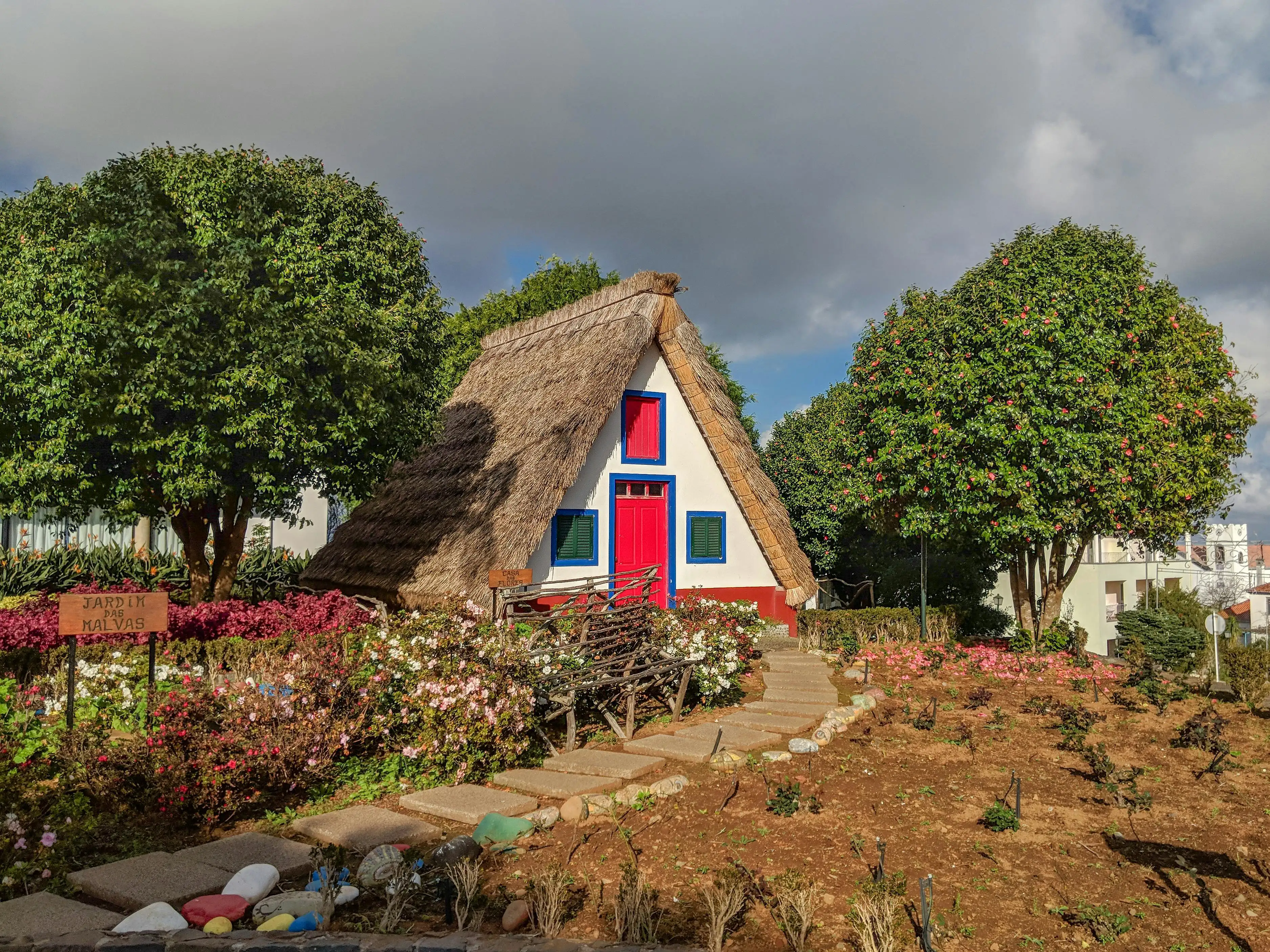
Santana Traditional Houses: Where Thatched A-Frames Meet Madeiran Rain
At 8:40 AM on a Monday in late September, I stand in front of a row of triangular houses beside the Santana town hall and count the colours. White walls. Blue window frames. Scarlet doors. The thatched roof of the nearest house slopes almost to the ground on both sides, creating a shape that looks like a child's drawing of a house. A woman is opening the door of the souvenir shop inside one of them. The air smells of damp straw and wood smoke from a chimney further up the street. I paid nothing to walk through. The Núcleo de Casas Típicas de Santana is a free public space, open 24 hours, with no gate, no ticket booth, and no queue. I spent forty minutes there. I could have spent four. These houses are the single most photographed symbol of Madeira, and they exist because farmers on the island's wet northern coast needed buildings that would shed rain, not absorb it.
Why Santana Traditional Houses Matter
The origins of the Santana house go back to the 16th century, when settlers from the Minho region of mainland Portugal began farming Madeira's north coast. They built with what they had. Timber from local forests formed the structure and the façades. The roof was made from wheat and rye straw, dried, bundled, and laid in overlapping layers from the bottom upward, then trimmed to create the neat triangular silhouette. The steep pitch, around 60 degrees, was not a decorative choice. It shed the heavy north-coast rainfall quickly and prevented moisture from penetrating the thatch. The interior was simple and functional. The ground floor, known locally as the loja, held a small living area and storage. A loft-style space under the roof served as the family bedroom, warm in winter and cool in summer because warm air rises. The kitchen was often in a separate outbuilding to reduce the risk of sparks igniting the straw roof. The houses were modest family homes, designed for basic comfort in a harsh, humid climate. They were not ornamental cottages. They were working farmhouses. Here is the honest criticism: the houses you see today in the centre of Santana are not lived-in homes. They are preserved examples, adapted into souvenir shops and small exhibitions. The row beside the town hall looks tidy and photogenic, but it has been polished for visitors. Some travellers find the shopfront houses a little too perfect. For a rawer feel, walk a few streets further from the centre, where you can still find unrenovated traditional houses, often without the bright colours, that are worth seeing for their more authentic character.
The Best Time to Experience Santana Traditional Houses
May, June, September, and early October are the best months. In May, daytime temperatures range from 18°C to 22°C (64–72°F), and the north coast is green and relatively dry. June brings warmer days of 20–24°C (68–75°F), with longer daylight hours. September is arguably the sweet spot. Daytime highs sit at 21–23°C (70–73°F), the summer crowds have thinned, and the light on the thatched roofs is soft and golden. Early October is mild, with highs of 19–22°C (66–72°F), but rain becomes more frequent. July and August are the warmest and busiest months. Daytime temperatures reach 23–25°C (73–77°F), and the town receives its highest visitor numbers. The houses themselves are free and open 24 hours, so there is no timed entry. The best time of day is early morning, between 8:00 AM and 10:00 AM. The light is soft, the streets are quiet, and you can photograph the houses without a dozen people in the frame. Late afternoon, after 4:00 PM, is the second-best window. The day-trippers have gone, and the thatch turns amber in the low sun. One thing to understand about Santana is the weather. The town sits on the north coast and at an altitude, which means it catches more moisture from the Atlantic trade winds than the south of the island. It is cooler, greener, and cloudier than Funchal. Rain is common year-round. If you are visiting between November and March, expect wetter, cooler conditions, with daytime temperatures around 15–18°C (59–64°F). The houses look their best in the rain, but you will need a jacket.
Approximate Budget for a 7-Day Trip
Santana is a small town on Madeira's northeast coast, and most visitors stay in Funchal and visit as a day trip. Here is a realistic breakdown for one person, based on a 7-day trip using Santana as a two-night base, with the rest of the week split between Funchal and the north coast.
Accommodation: Guesthouses and small hotels in Santana run 55–110 euros per night most of the year. A 2-night stay lands at roughly 110–220 euros. For the full 7 nights, budget 385–770 euros depending on your mix of locations. Inventory in Santana is limited, so book early.
Food: Self-catering breakfast and lunch, with dinner at a local restaurant, costs about 25–35 euros per day. A week of food runs 175–245 euros. Restaurant mains in Santana average 10–15 euros.
Transport: The SIGA express bus from Funchal to Santana costs 2.00 euros with a GIRO card or 2.65 euros on board. The journey takes about 50 minutes. A rental car for a week costs 150–250 euros plus fuel. Budget 50–250 euros depending on your transport choices.
Attractions: The traditional houses are free to visit. The Madeira Theme Park costs around 12 euros for adults. The Rocha do Navio cable car costs a few euros. Levada do Caldeirão Verde is free to hike. Budget 5–20 euros.
Miscellaneous: Coffee, drinks, snacks, and unexpected costs. 70–100 euros.
Total: 795–1,405 euros for a comfortable 7-day trip. One overpriced trap: guided day tours from Funchal that include Santana charge 40–80 euros per person, and many of them spend only about an hour and a half in the town. The public bus costs 2.00 euros and takes 50 minutes. The guided tour adds transport and context, but you are paying a premium for someone else's schedule. A rental car costs 150–250 euros for the week and gives you the freedom to explore the north coast at your own pace.
Essential Santana Traditional Houses Experiences
- Walk the Núcleo de Casas Típicas beside the town hall. This is the postcard row. Three or four brightly painted A-frame cottages with tidy gardens, preserved and adapted into small shops. Entry to the area is free, and you can walk through the grounds and photograph the exteriors. Some of the houses are open to visitors and house small exhibitions about rural Madeiran life. Skip if you are expecting a museum. The houses are small, and the interiors are simple.
- Find the unrenovated traditional houses in the side streets. Walk a few streets away from the main row and you will find other typical houses in Santana, less polished and often without the bright colours. These are worth seeing for their more authentic character. They show what the houses looked like before they became a tourist attraction. Skip if you are short on time. The main row is the highlight.
- Visit the Madeira Theme Park. The Parque Temático da Madeira sits a short drive from the centre, in the Fonte da Pedra area. It is a 7-hectare recreational space with interactive exhibits, traditional craft demonstrations, botanical gardens, and replicas of historic buildings, including a village of traditional houses. It is especially appealing to families with children. The park generally runs every day from 10:00 AM to 7:00 PM (April–September) or 10:00 AM to 6:00 PM (October–March). Skip if you are not interested in family-oriented attractions. The traditional houses in town are free, and the theme park adds context but costs money.
- Hike the Levada do Caldeirão Verde. Starting from Queimadas Forest Park, just above Santana, this 13-kilometre round trip follows a centuries-old irrigation channel through dense laurel forest, past vertical cliffs, and through four short tunnels before arriving at a hidden valley where a waterfall plunges into an emerald pool. It is one of the most celebrated walks in Madeira. The trail is moderate in difficulty and takes around four to five hours. Bring a torch for the tunnels. Skip if you are not comfortable with heights or uneven terrain. The path is narrow in places and has drop-offs.
- Ride the Rocha do Navio cable car. On the coast below Santana, the Rocha do Navio Nature Reserve is accessible by a short cable car ride that drops you from the clifftop to a rocky shoreline and a small agricultural area. The descent offers dramatic views of the vertical sea cliffs and the islets offshore. The cable car costs just a few euros. Skip if you are afraid of heights or if the weather is windy. The cable car may close in high winds.
- Photograph the houses in the rain. Santana is one of the wettest parts of Madeira, and the thatched roofs look their best when wet. The straw darkens and the colours of the doors and window frames become more saturated. If you visit in the rain, embrace it. Bring an umbrella and photograph the houses from under the shelter of a café awning. Skip if you are only interested in sunny-day photos. The rain is part of the experience.
- Eat a traditional lunch in the village. Several small restaurants and cafés in Santana serve traditional Madeiran dishes. Try the espetada (beef skewers on a laurel stick) or the bolo do caco (flatbread with garlic butter). A lunch for one costs 10–15 euros. Skip if you are on a tight budget. The food is good but not cheap.
Hidden Gems Most Travelers Miss
- The Igreja Matriz de Santana. The village church was built between 1698 and 1745 and still stands in the town centre. It is a quiet, historic building that most visitors walk past on their way to the houses. Step inside if it is open. The overrated "gem" here is the shopfront row itself. It is the most famous image of Santana, but it is also the most polished and the most crowded. The side streets are quieter and more interesting.
- Queimadas Forest Park. A beautifully maintained picnic area surrounded by ancient laurel trees, Japanese cedars, and hydrangeas. The air is noticeably cooler and fresher than on the coast. It is the starting point for the Caldeirão Verde hike and a good spot for a quiet lunch. Most visitors drive past it without stopping.
- São Jorge. A village 5 kilometres up the coast from Santana, notable for its richly ornamented 17th-century church and its quiet waterfront. It sees a fraction of the visitors that Santana does. It is a good addition to a north-coast drive.
- Faial. A neighbouring parish with a pebble beach and a dramatic cliff viewpoint. The beach is the closest swimming option to Santana. It is not sandy, but the water is clear and the setting is dramatic.
- The bakery in Santana village. A small bakery near the church sells fresh bread and pastries for 1–2 euros. It is where locals buy their breakfast. Take it to a bench near the houses and eat it while the village wakes up.
Cultural & Practical Tips
- Warning: Do not expect the houses to be lived-in homes. The preserved row beside the town hall has been adapted into souvenir shops and small exhibitions. If you want to see how people actually live in traditional houses, look for the unrenovated examples in the side streets. They are less photogenic but more authentic.
- Warning: Bring a rain jacket, even in summer. Santana is on the north coast and catches more moisture than the south of the island. Rain is common year-round. The thatched roofs look beautiful in the rain, but you will be miserable without proper clothing.
- Wear shoes with grip. The streets around the houses are cobblestone, and the trails at Queimadas and Caldeirão Verde are uneven and can be muddy.
- Carry cash for small bakeries and village shops. Most accept cards, but small vendors may not. There are ATMs in Santana.
- Learn a few Portuguese phrases. "Obrigado" (thank you) and "Por favor" (please) are appreciated. English is widely spoken in tourist areas, but the effort is noticed.
- Do not touch the thatched roofs. The straw is fragile, and the thatch needs to be replaced every four to five years. Touching it accelerates wear and damage.
- Combine your visit with the north coast. São Jorge, Faial, and the Rocha do Navio cable car are all within a short drive. A full day allows you to see the houses, hike a levada, and explore the coast.
Essential Visitor Information
Location & Access: Santana is on the north coast of Madeira, Portugal, about 50 kilometres northeast of Funchal. GPS coordinates for the Núcleo de Casas Típicas: 32.8003° N, 16.8813° W. By bus, the SIGA express route 801 runs from Funchal to Santana in about 50 minutes and costs 2.00 euros with a GIRO card or 2.65 euros on board. By car, take the VR1 or the coastal roads north from Funchal; the drive takes about 50 minutes. By tour, most excursions from Funchal include Santana as a stop. By taxi from Funchal, expect 40–60 euros each way.
Tickets & Booking: The traditional houses at the Núcleo de Casas Típicas are free to visit. There is no entrance fee and no booking required. The area is open 24 hours a day, year-round. The Madeira Theme Park costs around 12 euros for adults, with reduced rates for children and seniors. The Rocha do Navio cable car costs a few euros. Booking is not required for any of these attractions, but guided tours should be booked in advance during peak season.
Operating Hours: The traditional houses are accessible 24 hours. The small shops inside the houses are generally open from 9:00 AM to 7:00 PM. The Madeira Theme Park runs every day from 10:00 AM to 7:00 PM (April–September) and 10:00 AM to 6:00 PM (October–March). The Rocha do Navio cable car operates daily, weather permitting.
Visit Duration: Minimum: 1–1.5 hours to walk the row of houses, take photos, and browse the shops. Recommended: 2–3 hours to include the side streets, the church, and a coffee or lunch in the village. A full day allows for the houses, the Madeira Theme Park, and the Rocha do Navio cable car.
Family Suitability: Santana is suitable for families. The traditional houses are wheelchair accessible, and the area around the town hall is flat and easy for strollers. The Madeira Theme Park is especially family-friendly, with interactive exhibits and a small farm where children can interact with animals. The levada hikes are not suitable for young children or strollers. There are toilets at the Madeira Theme Park and in cafes around the village.
Timing: Best season: May, June, September, and early October. Best time of day: before 10:00 AM or after 4:00 PM. Avoid July and August middays if you dislike crowds. The north coast is wetter and cloudier than the south, so bring a jacket year-round.
Highlights: The Núcleo de Casas Típicas, the unrenovated houses in the side streets, the Madeira Theme Park, the Levada do Caldeirão Verde, and the Rocha do Navio cable car.
Nearby & Day Trip: São Jorge is 5 kilometres east and has a 17th-century church and a quiet waterfront. Faial is a neighbouring parish with a pebble beach and a cliff viewpoint. Queimadas Forest Park is a short drive uphill and is the start of the Caldeirão Verde hike. The Madeira Theme Park is on the outskirts of Santana. Funchal is 50 minutes south and has the Old Town, the cable car, and the botanical gardens.
Conclusion: Travel with Rain Gear, Not Just a Camera
Santana Traditional Houses are not a museum. They are a village on Madeira's wet northern coast, and the thatched A-frames that made the town famous are the reason most people stop here. The row beside the town hall is free, open 24 hours, and genuinely beautiful. But the polished shopfront houses are only half the story. Walk a few streets further and you will find unrenovated cottages that show what these houses were before they became an icon. Bring a rain jacket. Wear real shoes. Skip the midday crowds and come early. And if it rains, do not turn back. The thatch looks best when it is wet. What is the one traditional building you have visited that was worth seeing in bad weather?
Post a Comment