Skyros Wild Horses: Where Ancient Freedom Meets Aegean Winds
Skyros Wild Horses: Where Ancient Breed Meets Island Wilderness
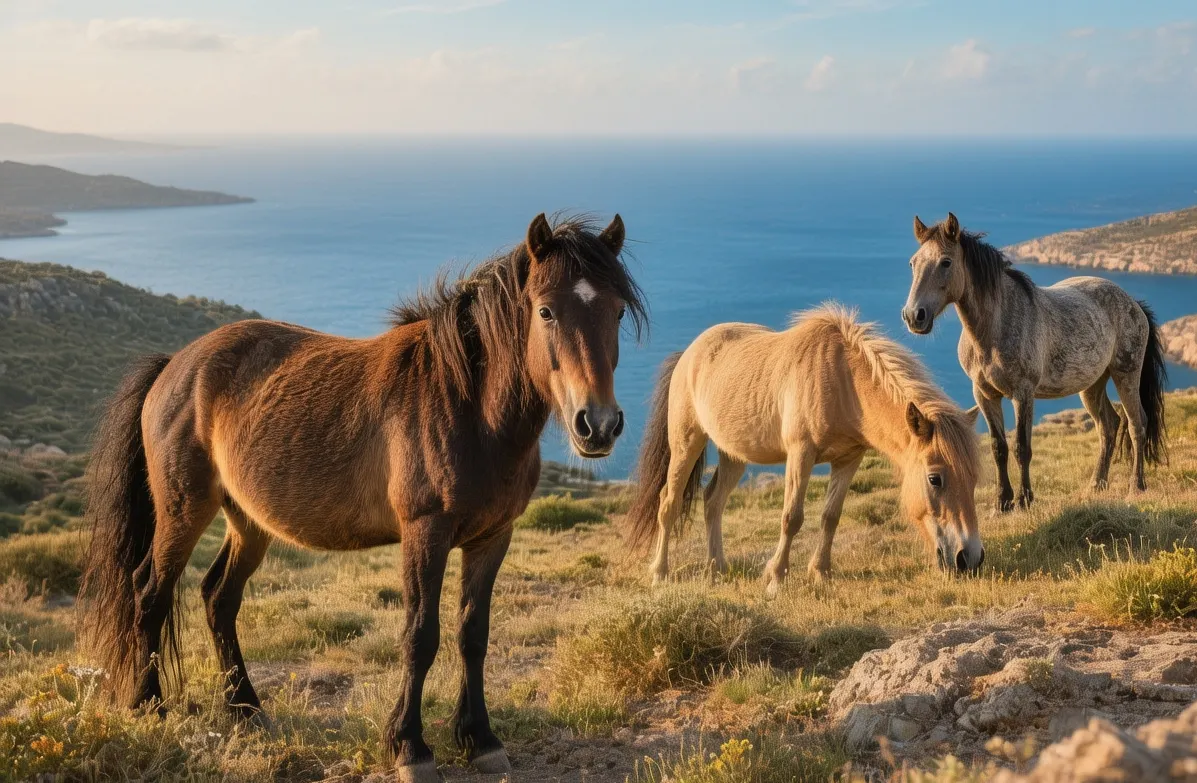
I stand on the Gerania plateau at ten past seven on a late May morning. Sunlight spills low across limestone and scrub. Three small horses stand fifty paces away, heads down, grazing on thin grass. They stand barely taller than my waist, compact and sturdy, with thick manes and coats the color of dried earth. One lifts its head and looks directly at me. It does not run. It stands still, ears forward, calm and watchful. The wind carries thyme scent and the faint, distant sound of waves. No fences line this land. No signs mark a sanctuary. These horses belong here, roaming free across ground their ancestors walked for thousands of years. Seeing them feels like stepping into an older story, one still unfolding.
Why Skyros Wild Horses Matter
The Skyrian horse ranks among the rarest breeds alive today. Ancient in form, they stand roughly 110 centimeters tall, with proportions closer to full-sized horses despite their small stature. Some believe they descend from the animals pulling chariots in classical Greece. Fewer than three hundred exist worldwide, and most live here on Skyros, roaming the southern plateau semi-wild. Their survival hangs fragile. Overgrazing, changing farming, and cross-breeding with donkeys once pushed them toward disappearance. Numbers have stabilized through effort, but threats remain. You will find no grand visitor center here. No organized viewing platform. The terrain stays rough. Horses wander where they choose, and you may walk all day without seeing one. That uncertainty frustrates visitors expecting guaranteed sightings. It also means the horses remain undisturbed. They stay wild. And that matters more than convenience.
The Best Time to Experience Skyros Wild Horses
Late May through June offers ideal conditions. Daytime temperatures range from 20°C to 26°C (68°F to 79°F). Vegetation stays green and horses move more freely across the plateau. July and August bring heat from 27°C to 33°C (81°F to 91°F). Horses retreat to higher, shadier ground during midday. Visit before nine or after five. They move to water sources at those times. September through early October brings 21°C to 27°C (70°F to 81°F). Heat softens, and fewer visitors travel the island. This may be your best balance of weather and quiet. Mid-October cools further to 16°C to 22°C (61°F to 72°F) with more rain. Winter sees fewer daylight hours and occasional road closures. The horses remain, but conditions grow difficult for walking. Ferry schedules also shrink from October onward, limiting how easily you can reach the island.
Approximate Budget for a 7-Day Trip
Prices reflect summer season on Skyros. Costs fall in spring and autumn.
- Accommodation: €40–€70 per night in Chora or near port. Weekly: €280–€490
- Food & Drink: €14–€24 daily at local tavernas. Weekly: €98–€168
- Transport: Ferry from Athens: €45–€60 per person each way. Rental car: €30–€50 daily. Weekly: €255–€410
- Horse Farms & Sites: Visiting conservation farms: €5–€10 donation per person. Wild viewing: free. Other entry fees: €10–€15 total. Weekly: €25–€35
- Miscellaneous: Water, snacks, fuel. Weekly: €30–€55
Total estimated cost: €688–€1,158 per person. Skip the paid guide services advertised near port. They charge €40–€50 to drive you to spots you can find yourself by asking locals or driving the southern road at dawn. Save that money and spend it supporting the conservation farms directly.
Essential Skyros Wild Horses Experiences
- Drive or walk the southern plateau at dawn. Horses move to water and grazing as light breaks. Visibility stays clear and shadows help them stand out against stone. Go slowly and stop often.
- Visit Mouries Farm conservation centre. Meet Skyrian horses up close, learn their history, and see breeding efforts. Your visit directly supports their care. Skip if you arrive after 4:00 PM; they close and staff head home.
- Walk toward Mount Kochylas lower slopes. Horses frequent these areas especially in warmer months. Stay quiet, keep distance, and watch from shade. Bring binoculars if you have them.
- Speak with farmers and shepherds. Locals know exactly where herds graze each day. A polite question often yields precise directions. Respect their advice about where to walk and where not to trespass.
- Watch sunset from the southern road. Horses often return across open ground as day ends. The light turns soft and they appear as dark shapes moving against gold and orange.
- Visit the Skyros Island Horse Trust in Trachi. See their breeding and welfare work. Meet horses in residence and understand what keeps the breed alive.
Hidden Gems Most Travelers Miss
- Water trough near Olympos village. Horses come here to drink in early morning and late afternoon. Park respectfully and wait quietly from a distance.
- Old stone threshing floors along the southern route. These flat circular platforms once held grain, and horses trod the crops here for centuries. They still gather near the walls for shade.
- Valley between Gerania ridge and Kochylas. A small stream runs through and vegetation stays lusher. Horses graze here often, yet few visitors walk the path.
- The “famous viewpoint” marked on many maps sits beside a busy stretch of road with noise and dust. Horses avoid it. Walk ten minutes farther uphill for quiet ground where viewing actually works.
Cultural & Practical Tips
- Keep your distance. These are semi-wild animals. Approach slowly or not at all. Never chase, call loudly, or try to touch or feed them.
- Bring sturdy shoes and ample water. The plateau offers no shops or fountains. Terrain stays rocky and sun hits unshaded ground hard.
- Do not enter gated or fenced fields. Some land remains private. Horses move freely across open ground; stay on roads or paths unless invited otherwise.
- August brings heavy traffic and limited accommodation. Book early or travel shoulder season. Many services reduce hours in winter.
- Do not assume you will see horses. They wander across hundreds of hectares. Even locals sometimes go days without spotting certain herds. Treat any sighting as a gift, not a right.
Essential Visitor Information
Location & Access: Southern plateau (Gerania and Mount Kochylas area), Skyros Island, Sporades, Greece. From Skyros port, drive south then east toward Olympos village. Continue to plateau roads. Options: rental car or ATV; taxi from port (€25–€35 one way); limited local bus to Olympos then walk 6+ km.
Tickets & Booking: Wild viewing: free. Conservation farms: €5–€10 donation suggested. No booking needed for wild areas; farms welcome drop-ins.
Operating Hours: Wild plateau: accessible daylight hours year-round. Conservation farms: typically 9:00 AM–4:00 PM, closed Sundays or reduced off-season.
Visit Duration: Minimum 2–3 hours for driving and roadside stops. Recommended 4–6 hours to walk, wait, and explore thoughtfully.
Family Suitability: Children welcome but terrain is uneven, rocky, and unshaded. No stroller access. No restrooms or facilities on plateau.
Timing: Best season: late May, June, September. Best time of day: 6:30 AM–9:00 AM and 5:00 PM–sunset.
Highlights: Gerania plateau wild viewing, Mouries Farm, Trachi conservation centre, Olympos village water trough, Mount Kochylas lower slopes.
Nearby & Day Trip: Skyros Town (Chora) with castle and views 25 km north. Molos and Magazia beaches 28 km north. Atsitsa Bay west coast 30 km. Rupert Brooke’s grave 22 km. Day loop around island comfortably possible in one day.
Conclusion: Travel with Respect, Not Just Sight
Skyros wild horses do not exist for viewing. They roam this plateau because their ancestors roamed it, because people fought to keep them here. You may travel far and see nothing but stone and thyme. Or you may round a bend and find a herd watching you, calm and sure. When that happens, stand still. Keep quiet. Let them choose to stay. That is how you honor them. You come to see a rare breed. You leave understanding what it means to share land with creatures older than the paths themselves.
Post a Comment