Thassos Giola Natural Pool: Where Aegean Waves Meet Ancient Stone
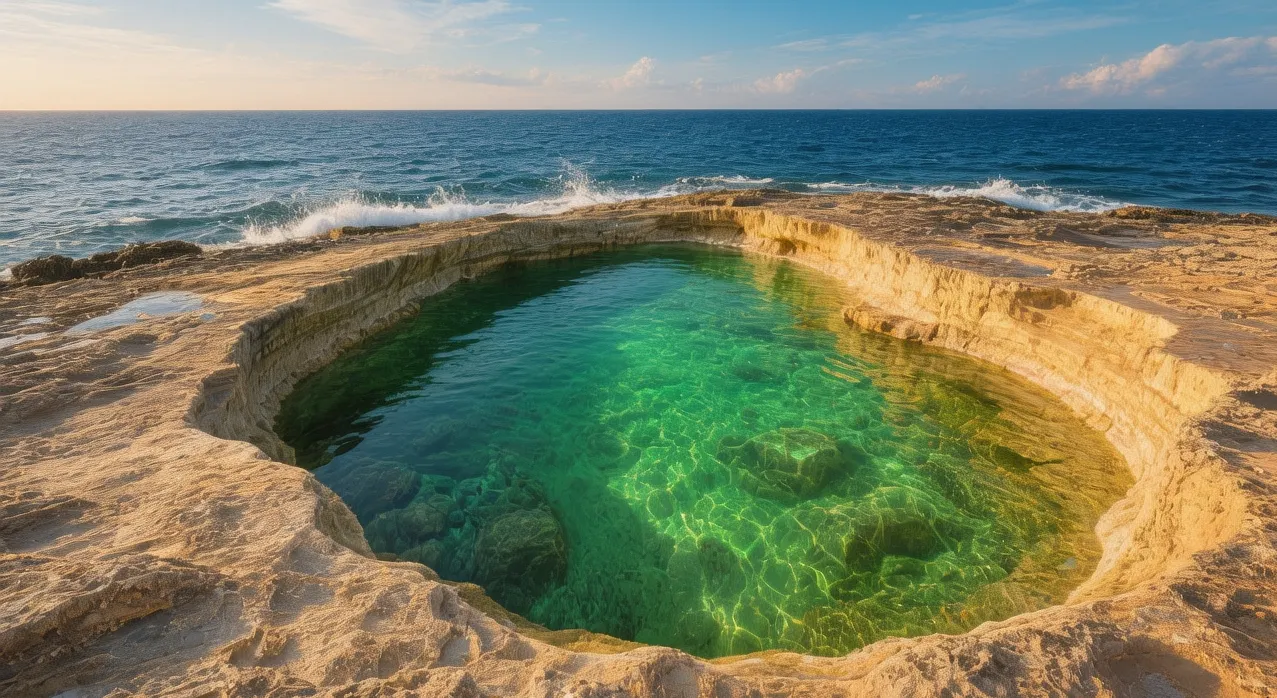
Giola natural pool Thassos at sunset with turquoise waters carved in limestone rocks overlooking Aegean Sea

Thassos Giola Natural Pool: Where Aegean Waves Meet Ancient Stone

The late afternoon sun casts golden light across the rugged coastline of Thassos, where the Aegean Sea has spent millennia sculpting marble and limestone into something extraordinary. You stand at the edge of a natural wonder—Giola, a rectangular pool carved by ancient hands into the living rock, its dimensions roughly 10 meters long and 5 meters wide, filled with crystalline seawater that shifts from emerald to sapphire as clouds drift overhead. The air carries the sharp scent of salt and wild oregano growing in crevices between weathered stones; below, the water laps gently against smooth marble walls, creating a rhythmic percussion that echoes the heartbeat of this island. Fish dart through the transparent depths while swallows circle overhead, their calls mingling with the distant crash of waves against the outer rocks. This isn't merely a swimming hole—it's a testament to human ingenuity working in harmony with nature's raw power, a place where Bronze Age settlers created a protected sanctuary from the tempestuous sea, and where modern travelers discover what it means to swim in a pool built by gods and mortals together. To experience Giola is to touch the soul of Thassos itself.

Why Thassos Giola Embodies Timeless Harmony

The Giola natural pool represents far more than a picturesque swimming spot—it embodies a 3,000-year dialogue between human civilization and the formidable forces of the Aegean. Archaeological evidence suggests this remarkable structure dates to the Classical or Hellenistic period, approximately 500–300 BC, when Thassos flourished as a center of marble quarrying and maritime trade. The island's white marble, prized by ancient Greeks for its translucency and workability, provided the perfect medium for creating this marine sanctuary. What makes Giola particularly significant is its engineering: ancient builders carved a rectangular basin directly into the coastal rock formation, then constructed a low wall approximately 1.5 meters high on the seaward side, creating a natural filtration system where ocean waves wash over the barrier, refreshing the pool's water while protecting swimmers from dangerous currents and large predators.

The pool solves a fundamental problem that plagued ancient coastal communities: how to enjoy the sea's benefits while mitigating its dangers. The Aegean, though beautiful, presents real hazards—sudden squalls, powerful undertows, and rocky shores that punish the unwary. Giola provided a controlled environment where women could bathe safely, children could learn to swim, and fishermen could clean their catch without risking life and limb. The structure's dimensions—approximately 10 meters in length, 5 meters wide, and reaching depths of 2 to 3 meters—accommodate multiple swimmers while maintaining intimate scale. The marble composition offers practical advantages beyond aesthetics: the stone's natural smoothness prevents injuries, its thermal mass keeps water refreshingly cool even in peak summer heat, and its slight porosity creates optimal conditions for beneficial microorganisms that maintain water clarity.

Today, Giola stands as one of the best-preserved examples of ancient Greek coastal engineering in the northern Aegean. Unlike man-made pools that require constant maintenance, this structure has endured through minimal intervention—the sea itself performs daily cleaning cycles, while the marble's durability resists erosion. The Thassos Archaeological Service monitors the site, ensuring that modern visitation doesn't compromise its structural integrity. Local conservation efforts focus on preventing pollution and maintaining the delicate ecosystem within the pool, where small fish, sea urchins, and marine algae create a self-sustaining microcosm. This ancient pool reminds us that the Greeks weren't merely conquerors and philosophers—they were practical engineers who understood that true mastery meant working with nature, not against it.

The Best Time to Experience Thassos Giola Natural Pool

To experience the Giola natural pool under optimal conditions, plan your visit between May 20 and June 15 or September 8 through September 25. During these windows, air temperatures range from 24–28°C (75–82°F), while water temperatures hover between 20–23°C (68–73°F)—warm enough for comfortable swimming without the oppressive heat that characterizes peak summer. The ideal times to visit are 8:00–10:00 AM, when the morning light creates spectacular reflections on the marble surfaces and crowds remain minimal, or 6:30–8:00 PM, when the setting sun bathes the pool in amber and rose hues. Mid-morning visits (10:00 AM–12:00 PM) offer the clearest water visibility for observing the small fish that inhabit the pool.

Avoid visiting during July 20 through August 25, when temperatures soar to 32–38°C (90–100°F) and the site becomes overwhelmingly crowded—sometimes 50–100 visitors compete for space around the pool's limited perimeter. During this period, parking becomes nearly impossible within 500 meters of the site, and the experience transforms from meditative to chaotic. Winter months (November through March) present their own challenges: water temperatures drop to 13–15°C (55–59°F), rough seas make the outer rocks treacherous, and frequent rains create slippery conditions on the marble surfaces. Additionally, many tavernas and facilities in nearby Limenaria reduce hours or close entirely from October through April.

Approximate Budget for a 7-Day Trip

Thassos remains one of Greece's most accessible island destinations, offering exceptional value compared to more famous Cycladic islands. The following budget assumes moderate comfort—clean, family-run accommodations and authentic taverna dining with occasional splurges. Prices reflect the 2024–2026 season and assume travel during shoulder season (May–June or September) rather than peak summer.

  • Accommodation: €50–€90 per night in Limenaria or Limenas (Thassos Town). Traditional studios with kitchenette: €50–€65; seaside apartments with balcony: €70–€90; boutique hotels in restored buildings: €95–€130.
  • Food: €28–€38 per day
    • Breakfast: €5–€7 (Greek coffee €2.50, bougatsa pastry €2.50, fresh fruit €2)
    • Lunch: €9–€13 (Greek salad €6.50, grilled sardines €8, spanakopita €4.50)
    • Dinner: €14–€18 (fresh grilled fish €16–€22, moussaka €9.50, lamb souvlaki €11, house wine €4)
  • Transportation:
    • Ferry from Kavala to Thassos (Limenas): €7.50 per person, €22 per car (one-way, 35-minute crossing)
    • Ferry from Keramoti to Thassos (Limenas): €6 per person, €18 per car (one-way, 30-minute crossing)
    • Car rental: €30–€45 per day (essential for reaching Giola and remote beaches)
    • Fuel: €50–€65 for week of island exploration (approximately 200 km total)
    • Local bus (Limenas to Limenaria): €3.50 per ride
  • Attractions:
    • Giola natural pool: Free (no entrance fee)
    • Archaeological Museum of Thassos: €4 (combined ticket valid 3 days)
    • Ancient Theatre of Thassos: Included in museum ticket
    • Monastery of Archangel Michael: €3 donation suggested
    • Boat tour around Thassos: €25–€35 per person (half-day)
  • Miscellaneous:
    • Thassos honey (500g jar): €8–€12
    • Olive oil from local producer (750ml): €9–€14
    • Handmade soap with thyme honey: €6–€10
    • Beach equipment rental (umbrella + 2 chairs): €12 per day
    • Travel insurance: €35–€50 for week

Total estimated cost for 7 days: €820–€1,180 per person (excluding international flights to Kavala or Thessaloniki)

6 Essential Thassos Giola Natural Pool Experiences

  1. Sunrise Swimming at Giola: Arrive at the pool by 7:30 AM during May through June or September. Park at the small lot 200 meters from the site (arrive early—only 15–20 spaces available) and walk down the stone path. The morning light transforms the marble to honey-gold, and you'll likely have the pool nearly to yourself. Enter the water carefully—the bottom slopes gradually from 0.5 meters to 2.5 meters depth. Bring water shoes to protect feet from sea urchins near the outer wall. Spend 30–45 minutes swimming, then climb to the rocks above for photographs before crowds arrive. The temperature difference between air and water creates mystical morning mist rising from the surface.
  2. Cliff Jumping Adventure: For experienced swimmers only, the rocks above Giola's eastern side offer jumping platforms at heights of 3, 5, and 8 meters. Before attempting any jump, verify water depth (minimum 3 meters required for 5-meter jump, 4 meters for 8-meter jump) and check for other swimmers below. The best jumping conditions occur between 10:00 AM–12:00 PM when the sun illuminates the water, making depth assessment easier. Never jump after rainfall—the marble becomes dangerously slippery. Local youths demonstrate proper technique: arms extended overhead, body straight, entering feet-first or in clean dive position. The adrenaline rush of leaping into crystalline water surrounded by ancient stone creates an unforgettable sensory experience.
  3. Underwater Photography Session: Giola's exceptional water clarity—often exceeding 15 meters visibility—makes it ideal for underwater photography. Rent or bring a waterproof camera or GoPro. The best subjects include: the marble pool walls covered in golden algae, schools of small silver fish (typically salema and bogue), sea urchins clustered in shaded crevices, and light patterns dancing across the pool floor. Optimal lighting occurs between 11:00 AM–2:00 PM when the sun reaches its zenith, penetrating deepest into the water. Use slow-motion video to capture the ethereal quality of light filtering through the surface. Professional underwater photography workshops cost €45 and include equipment rental and post-processing instruction.
  4. Coastal Hiking from Limenaria: Begin at Limenaria's port at 8:00 AM and follow the coastal path south toward Giola—a scenic 4-kilometer hike taking approximately 90 minutes. The trail winds through pine forest, passes several small coves with private swimming spots, and offers panoramic views of the Aegean. Bring 2 liters of water per person, sun protection, and snacks. Upon reaching Giola, reward yourself with a refreshing swim before returning via the same route or arranging pickup by taxi (€12–€15). This hike combines physical activity, natural beauty, and cultural exploration, passing ruins of ancient marble quarries that supplied stone for the pool's construction.
  5. Sunset Picnic Experience: Purchase supplies from Limenaria's market: local cheese (try the distinctive Thassian feta), olives, fresh bread, tomatoes, and a bottle of Assyrtiko white wine. Arrive at Giola at 6:00 PM and claim a spot on the flat rocks above the pool. As the sun descends, the marble changes color from cream to amber to rose, while the water shifts from turquoise to deep indigo. Watch fishing boats return to port in the distance while swallows perform aerial acrobatics overhead. This experience costs €15–€20 per person for provisions and creates memories far more valuable than any organized tour. Remember to pack out all trash—preserve this pristine environment for future visitors.
  6. Full Moon Swimming: During summer months when the moon reaches full phase, Giola transforms into something magical. The marble glows silver-white under moonlight, and the water becomes a mirror reflecting the star-filled sky. Organize this experience through your accommodation—many hotels offer midnight transportation to Giola for groups of 4+ people (€25 per person including guide and safety equipment). Swim in the bioluminescent-tinged water while listening to waves crash against the outer rocks. The experience feels primal and transcendent, connecting you to countless generations who've gathered at this spot to witness nature's spectacle. Bring a waterproof flashlight for the walk back and warm clothing—the temperature drops 5–7°C after sunset even in summer.

3 Hidden Gems Most Travelers Miss

  • Aliki Ancient Quarry Pools: Located 12 kilometers southeast of Giola near the village of Aliki, these twin natural pools formed in ancient marble quarries remain virtually unknown to mass tourism. Unlike Giola's single pool, Aliki features two connected basins carved by Byzantine quarry workers between the 4th and 7th centuries AD. The larger pool measures approximately 15 meters long and reaches depths of 4 meters, while the smaller pool offers shallower wading areas ideal for children. Access requires asking locals for directions—the site isn't marked on tourist maps. Enter through the olive grove behind Aliki's double temple ruins (look for the unmarked dirt path). Visit between 9:00–11:00 AM when light penetrates the quarry walls, creating spectacular color contrasts. The pools maintain cooler temperatures than Giola (typically 2–3°C lower) due to their depth and shaded location. Bring your own refreshments—no facilities exist on-site.
  • Paradise Beach Secret Cave: While thousands flock to Paradise Beach's organized facilities, few discover the sea cave located 400 meters east of the main beach, accessible only by swimming or kayak. Paddle from Paradise Beach's eastern end (kayak rental: €12 per hour) and follow the coastline past the rocky headland. The cave entrance measures 3 meters wide and becomes visible when waves recede. Inside, a small chamber approximately 8 meters deep contains a freshwater spring that mixes with seawater, creating unusual temperature layers and supporting unique microorganisms. The cave's ceiling features stalactite formations created by mineral deposits over thousands of years. Visit during low tide (check tide tables at Limenas port office) and calm sea conditions only—waves exceeding 0.5 meters make entry dangerous. Bring a waterproof flashlight to illuminate the interior. This geological wonder reminds visitors that Thassos's marble composition creates landscapes far beyond the island's famous beaches.
  • Maries Village Traditional Oil Press: Nestled in Thassos's mountainous interior at 450 meters elevation, the village of Maries preserves a functioning 19th-century olive oil press that operates using traditional stone mill technology. While most tourists race between beaches, this working museum offers insight into the agricultural practices that sustained Thassos communities for centuries. The press operates seasonally (October–December) during harvest, but owner Dimitrios Papadopoulos (+30 25930 51234) welcomes visitors year-round by appointment. Watch as granite wheels crush olives into paste, then observe the traditional pressing method that extracts oil without modern machinery. Taste unfiltered extra virgin olive oil that tastes nothing like supermarket varieties—peppery, grassy, and intensely flavorful. Purchase directly from the producer (€8–€12 per liter) and receive detailed instructions on identifying quality olive oil. The visit includes a tour of the family's 200-year-old olive grove and traditional meze tasting. This experience connects you to Thassos's agricultural heritage and supports preservation of vanishing craftsmanship.

Cultural & Practical Tips

  • Respect sacred space: While Giola isn't a religious site, locals view it as part of their cultural heritage. Avoid loud music, excessive noise, or behavior that disrupts the peaceful atmosphere. Many elderly residents remember when Giola served as the village's primary bathing spot—treat it with the reverence due a community landmark rather than a tourist attraction.
  • Essential Greek phrases: Pronunciation guide: "Kalimera" (kah-lee-MEH-rah) = Good morning; "Efharisto" (ef-hah-REE-stoh) = Thank you; "Poso kostizi?" (POH-soh koh-STEE-zee) = How much does it cost?; "Pu ine Giola?" (poo EE-neh YOH-lah) = Where is Giola? Thassos residents appreciate visitors who attempt Greek, even imperfectly, and often share insider knowledge about hidden beaches or local festivals when approached respectfully.
  • Parking strategy: The official parking area near Giola accommodates only 15–20 vehicles. Arrive before 9:00 AM or after 5:00 PM to secure a spot. Alternative parking exists 400 meters uphill along the Limenaria-Giola road, but the walk involves steep descent on uneven terrain—wear sturdy shoes. Never park on private property or block narrow village roads—local authorities tow violators without warning (€120 fine plus towing fees).
  • Safety considerations: The marble surfaces become extremely slippery when wet—always wear water shoes or sandals with grip when entering or exiting the pool. Sea urchins inhabit the outer rocks and pool edges; stepping on one causes intense pain requiring immediate removal of spines (visit Limenaria health center for proper treatment). Never swim alone, and avoid diving headfirst—the pool's depth varies and submerged rocks pose serious injury risks. Strong winds can create dangerous wave conditions over the outer wall—exit immediately if waves exceed 1 meter height.
  • Photography etiquette: Golden hour (first and last hour of daylight) provides optimal lighting for photographing Giola's marble and water. Use polarizing filters to reduce surface glare and capture underwater details. Respect other visitors' privacy—ask permission before photographing strangers, especially families with children. Drone photography requires permission from the Hellenic Civil Aviation Authority and local municipality—unauthorized drone use incurs fines up to €1,000.
  • Weather awareness: Thassos experiences the meltemi—northern Aegean winds that intensify between July and September. When meltemi exceeds force 5 (30+ km/h), waves crash violently over Giola's outer wall, creating dangerous currents within the pool. Check weather forecasts daily at www.emy.gr (Hellenic National Meteorological Service). If red flags fly at nearby beaches, avoid Giola entirely. After rainfall, wait at least 24 hours before visiting—the marble becomes treacherously slippery, and runoff temporarily reduces water clarity.
  • Leave no trace: Giola has no trash collection services—pack out everything you bring in, including food wrappers, cigarette butts, and biodegradable items like fruit peels. The pool's ecosystem is delicate; sunscreen chemicals harm marine life, so apply reef-safe sunscreen at least 30 minutes before entering the water. Never remove stones, shells, or marine life as souvenirs—Thassos's natural beauty belongs to future generations.

Conclusion: Travel with Reverence, Not Just Recreation

The Giola natural pool asks nothing dramatic of you—only that you approach it with awareness, recognizing that this marble basin has witnessed three millennia of human joy, fear, wonder, and contemplation. In an age where travel often devolves into checklist tourism—snap the photo, post the story, move to the next attraction—Giola demands something different: presence. It asks you to sit on sun-warmed marble and watch light dance across water, to feel the shock of cold marble against bare feet, to understand that some places transcend their physical form and become vessels for human connection across time.

When you leave Thassos—whether your ferry departs at dawn carrying you back to Kavala or you drive toward the airport with salt still crystallizing on your skin—carry more than memories of turquoise water and golden sunsets. Carry the understanding that places like Giola survive only when visitors become stewards, when we measure success not by how many photos we captured but by whether the next visitor finds the pool as pristine as we did. Slow down. Sit on those ancient stones. Watch a child's laughter echo off marble walls worn smooth by countless generations. Listen to waves crash against rocks that have stood sentinel since before written history. This is travel transformed from consumption into communion—a sacred exchange between visitor and place, between present and past, between human curiosity and nature's enduring grace.

Post a Comment (0)
Previous Post Next Post