
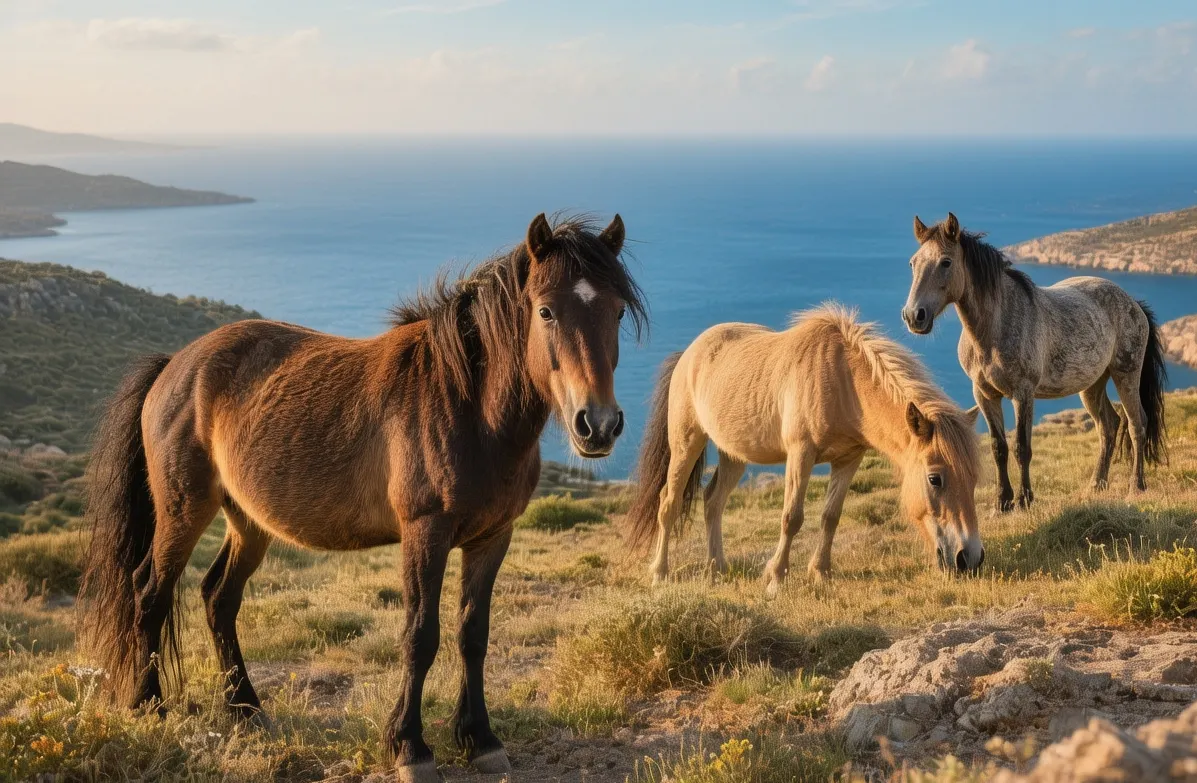
Skyros Wild Horses: Where Ancient Freedom Meets Aegean Winds
Dawn breaks over the rugged hills of Skyros—a small, windswept island in the Aegean Sea—where the air carries the scent of wild thyme and salt spray. In the soft morning light, small silhouettes emerge from the mist: the legendary Skyros wild horses, their hooves barely disturbing the rocky terrain as they move with the grace of creatures unchanged for millennia. These ancient ponies, standing just 90 to 110 centimeters at the withers, represent one of Europe's oldest surviving horse breeds—a living link to classical Greece that has roamed this 209-square-kilometer island since the 5th century BC. As the sun climbs higher, painting the white-washed Chora in brilliant gold, you witness something extraordinary: a breed so rare that only 190 individuals remain on their ancestral homeland, with fewer than 300 existing worldwide. This isn't merely a wildlife encounter—it's a privileged glimpse into an unbroken thread connecting the present to antiquity, where every galloping hoofbeat echoes the footsteps of horses depicted in ancient Greek pottery and mentioned in classical texts. To stand in their presence is to understand why preservation matters.
Why Skyros Embodies Ancient Equine Heritage
The Skyrian horse—known in Greek as το αλογάκι της Σκύρου—represents far more than an endangered breed; it embodies a 2,500-year continuum of Greek cultural and agricultural history. Archaeological evidence and ancient texts suggest these remarkable ponies descended from horses brought to Skyros by Athenian settlers around 475 BC, though some researchers argue their lineage extends even further back to prehistoric equines that inhabited the Aegean region. What makes the Skyros wild horses particularly significant is their isolation: confined to this single island for over two millennia, they evolved without crossbreeding, preserving genetic characteristics that vanished from other European horse populations centuries ago. Their compact size—averaging 1 meter (39 inches) at the withers—wasn't a limitation but an adaptation to Skyros's rugged, mountainous terrain and sparse vegetation. These horses possess extraordinary hardiness: they thrive on minimal forage, navigate steep limestone slopes with sure-footed precision, and withstand the island's fierce meltemi winds that howl through summer months at speeds exceeding 70 kilometers per hour.
Historically, the Skyros wild horses solved critical needs for island inhabitants. Their small stature made them ideal for the narrow terraced paths carved into Skyros's hillsides, where larger horses would struggle. They served as pack animals, carried water from distant springs, worked small agricultural plots, and provided transportation across terrain impassable to wheeled vehicles. During the Byzantine era and through Ottoman occupation, these ponies remained essential to daily survival. The breed faced near-extinction twice in modern history: first during World War II when occupying forces requisitioned livestock, and again in the 1980s when mechanization reduced their practical necessity. Today, organizations like the Skyros Island Horse Trust work tirelessly to protect the remaining population through controlled breeding programs and habitat preservation. The horses now live semi-ferally in designated mountain areas, particularly around the central plateau and northern hills, where they maintain natural herd structures while receiving supplemental feeding during harsh winter months when vegetation becomes scarce.
The Best Time to Experience Skyros Wild Horses
To witness the Skyros wild horses in their most active, natural state, plan your visit between May 18 and June 12 or September 5 through September 28. During these windows, temperatures hover between 22–26°C (72–79°F)—warm enough for the horses to graze comfortably in open areas, yet cool enough that they remain active throughout the day rather than seeking shade during peak heat. The optimal viewing hours are 7:00–9:30 AM and 6:00–8:00 PM, when the horses descend from higher elevations to drink from natural springs and graze in coastal meadows. Spring offers the added spectacle of newborn foals, typically born between April and June, their legs still wobbly as they learn to navigate the rocky terrain beside their mothers.
Avoid visiting during July 15 through August 20, when temperatures soar to 32–38°C (90–100°F) and the horses retreat to shaded ravines, becoming nearly impossible to spot. Winter months (November through March) bring heavy rains, temperatures dropping to 6–12°C (43–54°F), and rough seas that make ferry access unreliable. The meltemi winds reach their peak intensity in late July and August, creating dusty conditions that obscure visibility and drive the horses into sheltered valleys. For the most reliable experience, contact the Skyros Island Horse Trust (+30 22220 91456) to arrange guided tours with local experts who know the horses' seasonal migration patterns and current locations.
Approximate Budget for a 7-Day Trip
Skyros remains one of Greece's most affordable island destinations, largely because it hasn't succumbed to mass tourism. Prices reflect authentic Greek island living rather than inflated tourist premiums. The following budget assumes moderate comfort—clean, locally-owned accommodations and taverna dining with occasional upscale meals.
- Accommodation: €45–€85 per night in Chora (main town) or Linaria (port village). Traditional studios with kitchenette: €45–€60; boutique rooms with sea view: €70–€85.
- Food: €25–€35 per day
- Breakfast: €4–€6 (Greek coffee €2, tiropita cheese pie €2.50, fresh orange juice €2)
- Lunch: €8–€12 (horiatiki salad €7, grilled octopus €10, spanakopita €5)
- Dinner: €13–€17 (fresh fish by weight €18–€25, lamb chops €14, moussaka €9, house wine €4)
- Transportation:
- Ferry from Kymi (Evia): €18–€25 one-way per person (2-hour crossing)
- Ferry from Skyros to Alonissos/Skiathos: €22–€30 (seasonal route)
- Car rental: €35–€45 per day (essential for reaching remote horse habitats)
- Fuel: €45–€55 for week of island exploration
- Local bus (Chora to beaches): €2.50 per ride
- Attractions:
- Skyros Island Horse Trust guided tour: €35 per person (half-day)
- Archaeological Museum: €4 (combined ticket with Folk Art Museum)
- Rupert Brooke Museum: €3
- Boat trip to nearby islets: €25–€40
- Miscellaneous:
- Handwoven Skyrian carpet (small): €80–€150
- Ceramic pottery from local artisans: €25–€60
- Thyme honey (500g jar): €8–€12
- Travel insurance: €35–€50 for week
Total estimated cost for 7 days: €780–€1,150 per person (excluding international flights to Athens)
5 Essential Skyros Wild Horse Experiences
- Dawn Horse Tracking Expedition: Begin your day at 6:30 AM from Chora's central square, driving north toward the Achilli plateau. Park at the designated observation area (coordinates 38°58'N, 24°32'E) and hike 20 minutes along the marked trail. Bring binoculars with at least 8x magnification—the horses often graze 300–500 meters from the trail. Listen for the distinctive snort that signals their presence before you see them. Local guides from the Skyros Island Horse Trust can identify individual horses by their unique markings and explain herd dynamics. Expect to observe 8–15 horses in typical family groups consisting of one stallion, 3–5 mares, and their offspring.
- Photography Workshop at Golden Hour: Position yourself at the hillside above Molos Beach between 7:00–8:30 PM in late May or early September. The western-facing slope catches the setting sun, creating dramatic backlighting as horses descend to drink from seasonal streams. Use a telephoto lens (minimum 200mm) to capture intimate portraits without disturbing the animals. The contrast between their dark coats and the brilliant white limestone creates stunning compositions. Professional photographer-led workshops cost €65 and include post-processing instruction.
- Visit the Skyrian Horse Conservation Center: Located 4 kilometers southeast of Chora, this facility houses rescued horses and serves as an educational hub. Open Tuesday–Sunday, 10:00 AM–2:00 PM, the center offers close-up encounters with gentle, socialized horses accustomed to human contact—ideal for families with children. Learn about veterinary care, breeding programs, and the genetic diversity challenges facing the breed. The €8 admission includes a 45-minute guided presentation and the opportunity to feed carrots to resident horses under supervision.
- Traditional Pack Horse Demonstration: Every Saturday at 11:00 AM (June through September) at the Skyros Folk Museum courtyard, elderly islanders demonstrate how Skyros wild horses were traditionally saddled and used for transport. Watch as handlers place the distinctive wooden packsaddle (called a "samar") and load it with amphora-style water jars. This living history experience connects you to the practical role these horses played in island life for centuries. The demonstration lasts 30 minutes and is included with museum admission (€6).
- Full-Day Equestrian Trek: For experienced riders, the Skyros Riding Club offers 6-hour treks through horse habitat zones (minimum age 16, weight limit 75 kg). Cost: €95 including lunch. You'll ride gentle Skyrian-cross horses while searching for wild herds, learning to read terrain signs—fresh hoofprints in soft earth, grazed vegetation patterns, and manure piles that indicate recent horse activity. The trek covers 12–15 kilometers through pine forests, coastal scrub, and mountain trails, ending at a secluded beach accessible only on horseback or by boat.
3 Hidden Gems Most Travelers Miss
- Tristomo Spring Horse Gathering Point: This natural spring, located 8 kilometers northwest of Chora near the abandoned village of Tristomo, serves as a critical water source for wild horse herds during dry summer months. Access requires a 4WD vehicle for the final 2 kilometers of unpaved road, followed by a 15-minute walk. Visit between 7:00–9:00 AM for the best chance of seeing multiple herds converging. The site features ancient stone watering troughs carved by Byzantine monks in the 11th century. Bring a thermos of coffee and sit quietly on the weathered stone walls—you'll often have this magical place entirely to yourself. The spring's coordinates are not marked on standard tourist maps; ask at the Skyros Island Horse Trust office for precise directions.
- Pefkos Monastery Horse Corridor: The hiking trail connecting the 16th-century Pefkos Monastery to the coastal village of Kalamitsa passes through a narrow valley that wild horse herds use as a migration corridor. Most tourists visit the monastery but never continue the 3-kilometer trail beyond it. Hike this route on weekday mornings (avoid weekends when local shepherds bring their livestock through) between late April and early June. The valley's limestone cliffs create natural acoustics that amplify the sound of approaching horses—you'll hear them before you see them. Bring a sketchbook; the combination of Byzantine frescoes inside the monastery and wild horses in the valley makes this a unique artistic pilgrimage.
- Magazia Beach Northern Headland: While most visitors flock to Magazia's main beach, the northern headland—accessible via an unmarked footpath behind the last taverna—offers elevated views of a coastal meadow where horses occasionally graze at low tide. This spot is particularly rewarding during the October–November period when autumn rains revive vegetation in this salt-tolerant grassland. The path requires moderate fitness (20-minute climb with 120-meter elevation gain) but rewards with panoramic views stretching to neighboring Skyropoula islet. Local fishermen use this headland as a landmark; ask taverna owner Dimitris (at Magazia Beach Taverna) to point out the trailhead—he's been guiding visitors there discreetly for 15 years and knows current horse activity patterns.
Cultural & Practical Tips
- Respect the horses' space: Maintain a minimum distance of 50 meters from wild horses. Never attempt to feed, touch, or photograph them using drone cameras—the noise causes panic and can trigger dangerous stampedes across rocky terrain. The Skyros Island Horse Trust can issue fines up to €500 for harassment of protected animals.
- Learn essential Greek phrases: Pronunciation guide: "Kalimera" (kah-lee-MEH-rah) = Good morning; "Efharisto" (ef-hah-REE-stoh) = Thank you; "Pou ine ta alogakia?" (poo EE-neh tah ah-loh-GAH-kee-ah) = Where are the little horses? Locals appreciate effort and often share insider information about recent horse sightings when approached respectfully.
- Ferry logistics matter: Skyros has no airport with regular commercial service. You must reach Kymi port on Evia island (3-hour drive from Athens), then take the ferry. Book vehicle transport in advance during July–August; foot passenger tickets rarely sell out. Ferry schedule varies seasonally—check www.visitgreece.gr for current timetables.
- Photography etiquette: Golden hour (first and last hour of daylight) provides the best light for horse photography. Use silent shutter mode on your camera to avoid startling animals. Never position yourself between a mare and her foal. If a horse ears flatten backward and swishes its tail aggressively, you're too close—back away slowly.
- Water and sun protection essential: Skyros has limited freshwater sources and intense sun exposure. Carry at least 2 liters of water per person when hiking to horse habitats. Temperatures can feel 5–7°C hotter than forecast due to reflective limestone terrain. Wear UV-protective clothing and reapply sunscreen every 2 hours.
- Support conservation responsibly: Purchase the "Adopt a Skyrian Horse" certificate (€50) from the Skyros Island Horse Trust. Funds support veterinary care, fencing maintenance, and winter feed supplements. You'll receive a photo and updates about "your" horse via email—a meaningful souvenir that directly contributes to breed preservation.
- Weather contingency planning: The meltemi winds can make outdoor activities unpleasant or dangerous. Always have indoor alternatives: the Archaeological Museum (open 8:30 AM–3:00 PM, closed Mondays), traditional craft workshops in Chora's old quarter, or cooking classes featuring Skyrian specialties like "xinochondros" (fermented wheat and yogurt).
Conclusion: Travel with Reverence, Not Just Sightseeing
The Skyros wild horses ask nothing of you except space to exist as they have for twenty-five centuries—free, unbroken, and gloriously themselves. Yet in witnessing them, you receive something profound: a reminder that some threads of history remain unsevered, that ancient beauty persists in a world obsessed with the new. These small horses, barely reaching your shoulder, carry the genetic memory of battlefields and harvests, of Athenian settlers and Byzantine monks, of an island community that chose preservation over profit. To encounter them is to participate in an act of collective memory, to acknowledge that our responsibility as travelers extends beyond consumption to stewardship.
When you leave Skyros—whether your ferry departs at dawn or dusk—carry more than photographs. Carry the understanding that places like this survive only when visitors approach them with humility, when we measure the value of an experience not by how close we got or how many photos we took, but by whether our presence left the horses undisturbed and the habitat intact. Slow down. Sit quietly on that windswept hillside. Watch a mare teach her foal to navigate the limestone scree. Listen to the sound of hooves on ancient rock. This is travel transformed from tourism into pilgrimage—a sacred exchange between past and present, between human curiosity and wild freedom.