
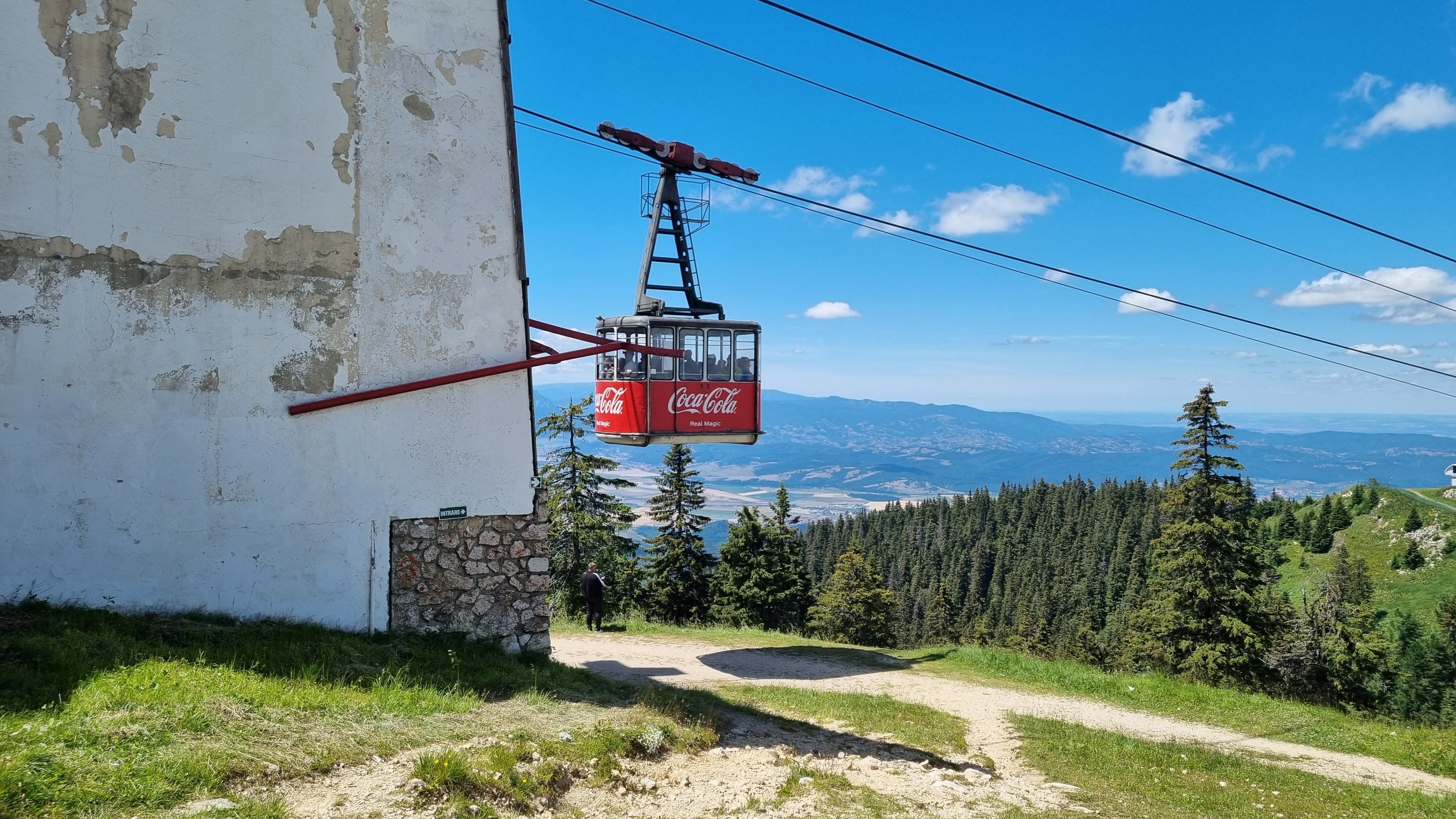
Tâmpa Mountain Cable Car: Where Alpine Ascent Meets Transylvanian Panorama
Golden light spills across the forested slopes of Tâmpa Mountain as the cable car glides silently upward, its cabin suspended 400 meters above Brașov's red-tiled roofs, where the Gothic spire of the Black Church and the ochre façade of Council Square shrink into a living postcard of Transylvanian heritage. You stand inside the modern gondola, feeling the gentle hum of the cable mechanism and watching through panoramic windows as pine forests give way to rocky outcrops, as the scent of mountain wildflowers drifts through ventilation slats, and as the Carpathian peaks—Piatra Mare, Postăvarul, and the distant Bucegi range—emerge like ancient guardians on the horizon. This is the Tâmpa Mountain Cable Car, a 10-minute aerial journey that connects Brașov's medieval heart to an observation platform at 960 meters elevation, where 360-degree vistas reward visitors with one of Romania's most breathtaking panoramas. The air grows crisper with each meter of ascent, carrying the resinous perfume of spruce and the distant call of hawks circling above limestone cliffs. Standing here, suspended between earth and sky, you understand why this cable car has become more than transportation: it reminds us that some of humanity's most profound perspectives emerge not from reaching summits alone, but from the transformative journey that lifts us above the familiar, inviting us to see our world—and ourselves—from a new and humbling height.
Why Tâmpa Mountain Cable Car Embodies Elevated Perspective
The Tâmpa Mountain Cable Car represents one of Transylvania's most elegant solutions to a fundamental human desire: how to offer accessible mountain vistas without requiring technical climbing skills or hours of strenuous hiking. Originally conceived in the 1970s and modernized with a state-of-the-art system in 2004, the cable car was engineered to transport up to 40 passengers per cabin across a 420-meter vertical rise in approximately 10 minutes—a feat of mechanical precision that balances efficiency with environmental sensitivity. The system employs a reversible aerial tramway design: two counterbalanced cabins travel along a single steel cable suspended from reinforced concrete towers, minimizing visual impact on the forested slopes while maximizing passenger capacity during peak seasons.
The technical mastery behind this installation lies in its adaptation to challenging mountain terrain. Engineers anchored support towers directly onto limestone outcrops to avoid extensive excavation, selected corrosion-resistant materials to withstand Carpathian weather extremes, and integrated automatic braking systems that respond to wind speeds exceeding 70 km/h—a critical safety feature given Tâmpa's exposure to sudden mountain gusts. The upper station, perched at 960 meters elevation, features an observation platform with protective railings designed to frame panoramic views without obstructing photography, while the lower terminal in Brașov's Șchei district connects seamlessly to historic walking routes.
Today, the cable car fulfills multiple needs: providing accessible mountain access for visitors of all ages and abilities, reducing foot traffic on fragile forest trails that could suffer erosion from overuse, and offering a unique vantage point for understanding Brașov's geographic context within the Carpathian arc. The system welcomes approximately 200,000 passengers annually, serving as both a practical transportation link and a symbolic threshold between the medieval city below and the wild mountain above—a reminder that perspective, like elevation, can transform how we see the world.
The Best Time to Experience Tâmpa Mountain Cable Car
The optimal window for riding the Tâmpa Mountain Cable Car stretches from May 20 through September 25, when temperatures at the summit range from 14–22°C (57–72°F) during daytime hours, creating ideal conditions for outdoor observation and photography. For the clearest mountain views and most comfortable walking conditions, plan your visit between June 15 and September 10, when humidity levels drop and afternoon thunderstorms become less frequent. Early morning rides between 9:00–10:30 AM offer the dual advantage of softer light for photography and significantly fewer crowds, as most tour groups from Bucharest arrive after 11:00 AM.
Late spring (May through June) brings blooming rhododendrons on upper slopes and lush green forests, though temperatures can dip to 8–14°C (46–57°F) at the summit in early mornings. Autumn (mid-September through October) offers spectacular foliage as beech and fir forests surrounding Tâmpa turn brilliant shades of gold and crimson, with comfortable temperatures of 10–18°C (50–64°F) and dramatically fewer visitors after the summer peak.
Avoid visiting during Romanian national holidays—particularly June 1 (Great Union Day) and August 15 (Assumption Day)—when domestic tourism peaks and waiting times can exceed 60 minutes. Also skip weekends in late July if you prefer tranquility, as the cable car operates at maximum capacity during peak season. The cable car suspends operations during high winds (sustained speeds above 70 km/h), heavy fog (visibility under 50 meters), or thunderstorms; check the official website for real-time status updates before ascending.
Approximate Budget for a 7-Day Trip
Exploring the Tâmpa Mountain Cable Car and the broader Brașov region requires modest financial planning, as Romania remains significantly more affordable than Western European destinations while offering exceptional natural and cultural value. The following budget assumes a comfortable mid-range travel style with quality accommodations, regional Romanian cuisine, and comprehensive exploration of the cable car, nearby attractions, and surrounding Carpathian experiences over seven days.
- Accommodation: €40–€75 per night for a double room in Brașov historic center (boutique guesthouses and three-star hotels); mountain-view pensions €48–€82 per night; budget hostels from €23–€36 per person
- Food: €21–€33 per day (breakfast €5–€8 at accommodation with coffee, pastries, and eggs; lunch €7–€11 for traditional Romanian dishes like sarmale or mămăligă with brânză at local restaurants; dinner €9–€14 for grilled meats, ciorbă soup, or trout at regional restaurants)
- Transportation: Train from Bucharest to Brașov €15 round-trip (2.5 hours scenic mountain route); local bus within Brașov €2 per day; taxi from station to cable car base €5 one-way; parking at cable car €2 per day if driving
- Attractions: Tâmpa Cable Car round-trip €8 (40 RON); Black Church entry €4 (18 RON); Council Square access free; Brașov Council Tower entry €3; nearby Bran Castle day trip €18 transport + €12 entry; Peleș Castle excursion €22 transport + €13 entry
- Miscellaneous: Authentic Transylvanian crafts and souvenirs €10–€27; local wine and țuică €6–€10 per evening; travel insurance €22 for the week; guidebook €9; bottled water and mountain snacks €11
Total estimated cost for 7 days: €455–€680 per person (depending on accommodation choices and dining preferences)
5 Essential Tâmpa Mountain Cable Car Experiences
- Ride at Sunrise for Unparalleled Photography: Reserve the first cabin departure at 9:00 AM, when morning light casts long shadows across Brașov's historic center and the Carpathian peaks glow amber on the horizon. The 10-minute ascent offers uninterrupted panoramic views through floor-to-ceiling windows; position yourself on the right side of the cabin (facing uphill) for optimal views of the Black Church and Council Square. Bring a polarizing filter to reduce atmospheric haze and enhance sky contrast; a telephoto lens (70–200mm) compresses the distance between foreground city and distant mountains. The cabin accommodates 40 passengers; arrive 15 minutes early to secure window positions.
- Explore the Summit Observation Platform: Upon arrival at 960 meters elevation, dedicate 45 minutes to walking the 360-degree observation platform, where protective railings frame views in every direction. Start at the eastern viewpoint to photograph Brașov's medieval core nestled in the valley, then circle clockwise to capture the forested slopes of Postăvarul Mountain and the dramatic limestone cliffs of Piatra Mare. Informational panels identify peaks and landmarks in Romanian, English, and German. Visit between 10:00 AM–12:00 PM when atmospheric clarity is typically highest; bring binoculars to spot wildlife in distant forests.
- Hike the Summit Trail to the Cross: Extend your visit by following the marked 15-minute trail from the upper station to the summit cross, a metal monument erected in 1928 that offers the highest viewpoint on Tâmpa (995 meters). The path gains 35 meters in elevation over well-maintained stone steps; wear sturdy footwear as the trail can be slippery after rain. The cross provides an unobstructed 360-degree panorama and a quiet spot for reflection away from the main platform crowds. Allow 30 minutes round-trip; bring water as there are no facilities at the summit.
- Descend at Sunset for Golden Hour Magic: Time your return ride for 6:30–7:30 PM in summer, when the setting sun bathes Brașov's red-tiled roofs in amber light and the valley fills with soft evening mist. The descending cabin offers a different perspective: watching shadows lengthen across the historic center, seeing church spires silhouette against the glowing sky, and witnessing the first lights flicker on in Council Square. Position yourself on the left side of the cabin (facing downhill) for optimal city views. The experience transforms a simple transportation ride into a contemplative journey between day and night.
- Combine with a Forest Walk: Instead of taking the cable car down, descend on foot via the marked hiking trail (approximately 45 minutes) that winds through pine and beech forest back to Brașov's Șchei district. The trail gains no elevation on the descent, features wooden steps and handrails on steeper sections, and offers opportunities to spot birds, squirrels, and wildflowers. Start the hike by 4:00 PM to ensure daylight; bring a headlamp as backup. The experience provides a different connection to Tâmpa—feeling the mountain underfoot rather than viewing it from above—and ends near traditional restaurants serving hearty Transylvanian cuisine.
3 Hidden Gems Most Travelers Miss
- Hidden Rock Formation Viewpoint: This unmarked rocky outcrop, located 200 meters northeast of the main observation platform along a faint footpath, offers a secluded vantage point where you can photograph the cable car ascending against the forested slope—a perspective rarely captured by visitors focused solely on city views. Access via the informal trail behind the eastern railing (5-minute walk); the site is overlooked because it lacks signage and requires leaving the main platform. Best visited between 3:00–5:00 PM when side-lighting accentuates the cable car's silhouette. No facilities; bring water and wear sturdy shoes for uneven terrain. The viewpoint rewards patience with unique photographic opportunities and peaceful solitude.
- Alpine Wildflower Meadow: This small, sun-dappled clearing on Tâmpa's southern slope, accessible via a 10-minute walk from the upper station along the blue-marked trail, blooms with Carpathian endemic species—including rare mountain avens and Gentiana clusii—between June and August. The meadow is overlooked because most visitors remain on the main observation platform, but the reward is intimate connection with Tâmpa's botanical heritage and opportunities for macro photography of alpine flora. Visit between 11:00 AM–2:00 PM when flowers are fully open and light is optimal. Stay on established paths to protect fragile vegetation; no picking allowed. The meadow offers a quiet spot to rest and appreciate the mountain's ecological diversity.
- Historic Cable Car Control Room: By special arrangement, visitors can observe the cable car's operational control room, where technicians monitor wind speeds, cabin positions, and safety systems in real time. This experience, limited to four guests per session and requiring advance booking (info@brasovtourism.eu), reveals the engineering sophistication behind the seemingly simple ride. Sessions run Wednesday mornings at 10:00 AM (May–September); cost €5 per person includes a 20-minute demonstration and small commemorative booklet. The control room is overlooked because it serves operational rather than tourist functions, but the experience offers tangible insight into the technical expertise that ensures passenger safety on a mountain exposed to rapidly changing weather.
Cultural & Practical Tips
- Respect Mountain Safety Protocols: The cable car operates under strict weather guidelines. If staff announce a suspension due to wind or fog, accept the decision gracefully—these measures prioritize passenger safety over convenience. Follow all posted instructions about boarding procedures and remain seated during the ascent and descent.
- Learn Basic Romanian Phrases: While cable car staff speak English and German, knowing a few Romanian phrases enhances your experience: "Bună ziua" (BOO-nah ZEE-wah) means "Good day"; "Mulțumesc" (mool-tsoo-MESK) means "Thank you"; "Vă rog" (vah ROHG) means "Please"; "Cât costă?" (kuht KOH-stah) means "How much does it cost?"
- Prepare for Temperature Changes: Summit temperatures average 6–8°C (11–14°F) cooler than Brașov's valley floor. Pack layers even in summer, including a windproof jacket. The observation platform is exposed with minimal shelter; bring gloves and a hat if visiting in May, September, or October.
- Carry Cash (Romanian Lei): While the cable car ticket office accepts cards, smaller vendors, rural facilities, and parking attendants often operate on cash only. The currency is Romanian leu (RON), with an approximate exchange rate of 4.9 RON to €1. ATMs are available in Brașov historic center but not at the cable car base.
- Photography Guidelines: Tripods are permitted on the observation platform but not inside cable car cabins where they obstruct other passengers. Flash photography is discouraged inside cabins to avoid distracting the operator. Drone use requires written permission from Brașov municipal administration—contact info@brasovtourism.eu at least two weeks in advance.
- Weather Preparedness: Mountain weather changes rapidly—check the forecast at the Brașov tourist information center before ascending. Afternoon thunderstorms are common from June through August; if you hear thunder while on the summit, descend immediately via cable car or hiking trail. The cable car may close with less than one hour's notice if conditions deteriorate.
- Accessibility Considerations: The cable car cabins accommodate wheelchairs with advance notice; contact the operator (+40 268 411 470) at least 24 hours in advance to arrange assistance. The observation platform is mostly level with protective railings, but the summit cross trail involves uneven stone steps not suitable for mobility devices.
Conclusion: Travel with Perspective, Not Just Ascent
The Tâmpa Mountain Cable Car endures not because it lifts us higher, but because it invites us to see differently—because the journey between valley and summit teaches that perspective, like elevation, transforms how we understand our place in the world. When you stand on that observation platform, watching Brașov's medieval heart nestled in the Carpathian embrace, you participate in a continuum of wonder that stretches from mountain pilgrims to your own moment of awe. But with that privilege comes responsibility: to respect the fragile mountain ecosystem that makes these views possible, to value the engineering that balances access with preservation, to let the panoramic vista remind you that true travel is not about reaching destinations but about expanding vision. The cable car will continue its silent ascent long after we've departed—let our presence here be measured not in photographs taken, but in the perspective we carry forward, the respect we show to living landscapes, and the willingness to slow down long enough to see what height has to teach.