
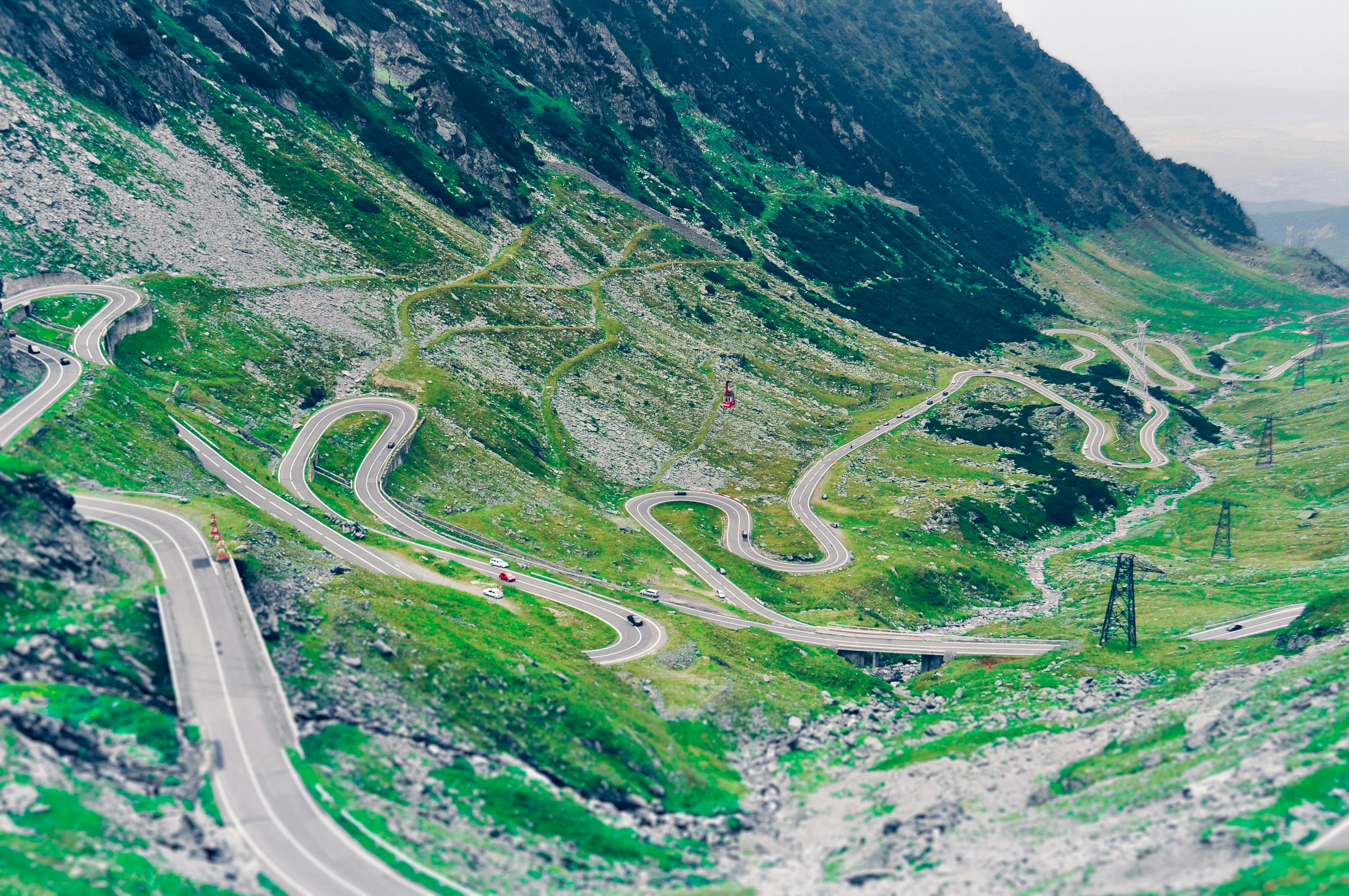
Transfăgărășan Highway: Where Mountain Majesty Meets Engineering Marvel
Golden hour light spills across the serpentine curves of Transfăgărășan Highway—Romania's legendary mountain road where the scent of pine resin mingles with the mineral freshness of ancient rock. The air carries the soft hum of engines navigating the hairpin turns, the distant strains of Romanian folk music drifting from mountain lodges, and the gentle murmur of conversations in dozens of languages that have echoed through these valleys since the 1970s. You hear the rhythmic crunch of gravel beneath your tires on the historic roadway, the soft laughter of fellow travelers marveling at the panoramic views, and beneath it all, the profound silence that honors the memory of what transpired here. This isn't merely a road—it's a living chronicle of Romanian engineering, where 90 kilometers of meticulously constructed asphalt create one of the world's most distinctive driving experiences, and where every curve tells a story of deliberate design that survived political change and weather extremes. Standing at the summit with panoramic views of the Southern Carpathians, you connect with the same landscape that has drawn visitors since the highway's completion in 1974, where history breathes through the daily rhythm of exploration, photography, and quiet contemplation along ancient pathways. This place matters because it represents humanity's capacity to transform geographical barriers into enduring connections—a testament to the enduring power of engineering vision that continues to inspire awe decades after its creation.
Why Transfăgărășan Highway Embodies Engineering Mastery
Transfăgărășan Highway represents far more than scenic beauty—it embodies one of Europe's most extraordinary examples of mountain road engineering, where geographical necessity merged with political ambition. Constructed between 1970–1974 under the directive of Nicolae Ceaușescu, this roadway spans 90 kilometers with 90 hairpin turns, making it one of the most challenging and distinctive mountain roads in the world. The highway solved a fundamental strategic challenge: how to create a reliable connection between Transylvania and Wallachia that could withstand the extreme mountain weather conditions of the Southern Carpathians while also serving as a potential military route. Built following the damming of Bâlea Lake to create a reservoir, the highway features distinctive engineering elements including the 830-meter-long Bâlea Tunnel, the dramatic 2,042-meter (6,700-foot) summit at Capul Mortului Pass, and the 15-kilometer section with gradients reaching 6% that required moving over 2 million cubic meters of earth. What makes Transfăgărășan unique is its completeness: unlike many mountain roads that have been widened or straightened, this route maintains much of its original design while gaining protected status as a National Road of Interest. The highway's strategic location through the Făgăraș Mountains created a visual language that speaks of its historical importance, where each curve follows deliberate engineering principles while maintaining functional integrity. Today, Transfăgărășan Highway stands as one of Europe's most significant engineering treasures, where the constant interplay between historical preservation and modern tourism creates a dynamic route that continues to shape our understanding of 20th-century infrastructure—a testament to the enduring power of engineering vision when nurtured with passion and precision.
The Best Time to Experience Transfăgărășan Highway
To experience Transfăgărășan Highway at its most atmospheric, plan your visit between June 25–July 25 or September 1–October 15, when daytime temperatures range from 15–22°C (59–72°F) and the surrounding landscape blooms with summer greenery or glows with autumn colors. During these windows, you'll enjoy comfortable conditions for driving, photography, and exploring the mountain pathways without summer's humidity or winter's biting cold. For optimal photography of the serpentine curves and mountain vistas, arrive at 7:00–8:30 AM when morning light illuminates the eastern sections, creating soft reflections with directional illumination while the road remains relatively quiet. Alternatively, visit at 5:00–6:30 PM during golden hour when warm light transforms the asphalt into amber tones and creates dramatic effects against the mountain backdrop. You should firmly avoid July 26–August 31 when temperatures can exceed 25°C (77°F), the highway becomes congested with tour groups, and the intense midday sun diminishes the visual impact of the delicate mountain textures. For visitor information, road conditions, and special events, visit www.romaniatourism.com.
Approximate Budget for a 7-Day Trip
Visiting Transfăgărășan Highway requires basing yourself in Sibiu, Brașov, or nearby mountain towns with easy access to the highway, accommodations, and cultural venues. The following budget assumes moderate travel style—comfortable boutique hotels, authentic Romanian cuisine, and a mix of car rental and occasional taxi rides. Prices are listed in Romanian Lei (RON) with euro equivalents for international travelers (1 EUR ≈ 4.9 RON in 2026).
- Accommodation: 300–700 RON (61–143€) per night in Sibiu Historic Center or mountain lodges near Bâlea Lake. Budget pensions start at 150 RON; mid-range boutique hotels run 700–1,300 RON (143–265€).
- Food: 80–130 RON (16–27€) per day total. Breakfast: 25–40 RON for traditional mic dejun with ouă, local cheese, and fresh bread. Lunch: 35–60 RON for regional specialties at a restaurant like Crama Sibiu. Dinner: 70–120 RON for sit-down meals featuring mici, sarmale, and Romanian wine.
- Transportation: Car rental: 250 RON (51€) per day; fuel: 5 RON/km (1€/km); local bus: 5 RON (1€) for 90 minutes; taxi from Sibiu: ~150 RON (31€); Uber/Bolt: ~30 RON (6€) for short trips within city center.
- Attractions: Transfăgărășan Highway driving: free; Bâlea Lake cable car: 25 RON (5.10€); Poenari Fortress entry: 15 RON (3.10€); Vidraru Dam viewing platform: 10 RON (2.00€); Guided highway tour: 300 RON (61.20€).
- Miscellaneous: Traditional Romanian ceramics: 150–350 RON (31–71€); hiking gear: 100–250 RON (20–51€); traditional music concert ticket: 100–250 RON (20–51€).
Total 7-Day Budget: 3,000–5,200 RON (610–1,060€) per person (excluding international flights)
7 Essential Transfăgărășan Highway Experiences
- Drive the Full Route: Navigate the 90-kilometer span of the historic mountain road, experiencing the 90 hairpin turns that have earned it the title of "best road in the world." The elevated pathway creates a visceral connection to Romania's engineering history. Best experienced mid-morning (9:00 AM–12:00 PM) when lighting enhances the mountain details; free; allow 180 minutes; drive slowly to experience each curve.
- Marvel at Bâlea Lake: Stand before the glacial lake at 2,034 meters above sea level, featuring the distinctive mountain lodge and surrounding peaks. The high-altitude setting creates a powerful connection to the Carpathian ecosystem. Best experienced mid-day (12:00–2:00 PM) when lighting illuminates the lake details; free; allow 90 minutes.
- Visit Poenari Fortress: Follow the 1,480-step pathway to Vlad the Impaler's ruined fortress perched on a dramatic cliff. The elevated path offers panoramic views that reveal the strategic importance of this medieval stronghold. Best experienced mid-day (12:00–2:00 PM) when lighting illuminates fortress details; entry 15 RON; allow 120 minutes; wear comfortable shoes.
- Photograph the Highway at Golden Hour: Position yourself from the summit viewpoint to capture the iconic view of the serpentine road against the Carpathian Mountains backdrop. The elevated vantage points offer perfect perspectives for both wide-angle landscapes and detailed road close-ups. Visit during golden hour (5:00–6:30 PM) for optimal lighting; free; allow 30 minutes; wide-angle lens recommended.
- Explore Vidraru Dam: Visit the impressive 166-meter-high concrete arch dam that created the reservoir essential for the highway's construction. The engineering marvel creates a powerful connection to Romania's industrial history. Visit mid-week (Tuesday–Thursday) when guides provide detailed historical context; viewing platform 10 RON; allow 60 minutes.
- Taste Traditional Romanian Mountain Cuisine: Sample authentic dishes at mountain lodges like Bâlea Lake Chalet: try ciorbă de burtă, mici, and regional specialties that connect you to centuries of culinary tradition. Best experienced during lunch (12:00–2:00 PM); budget 70–120 RON per meal.
- Join an Engineering Interpretation Tour: Experience the specialized tour focusing on the highway's construction history, featuring explanations of the engineering principles behind the mountain road design. Knowledgeable guides reveal details often overlooked by casual visitors. Tours typically begin at 9:00 AM; tickets 300 RON; allow 180 minutes; book online to secure spots.
3 Hidden Gems Most Travelers Miss
- The Secret Viewpoint at Capra Waterfall: Tucked away behind the main highway route, this elevated platform offers panoramic views of the highway that reveal the precise alignment with the surrounding peaks often missed by visitors focused on the main pathways. Most visitors miss it because it requires a short detour from the main road. Access: Located 5 kilometers south of Bâlea Lake; visit early morning (7:00–9:00 AM) when lighting enhances the mountain details. No additional fee; allow 30 minutes; bring binoculars.
- The Hidden Shepherd's Hut: Hidden along the northern section of the highway, this traditional wooden structure features authentic pastoral equipment often overlooked by visitors focused on the main attractions. Often overlooked because it's not prominently marked on standard tourist maps. Access: Located near km marker 58; visit mid-morning (10:00 AM–12:00 PM) when shepherds are often present; best visited May–September. No additional fee; allow 20 minutes.
- The Moonlight Drive: This lesser-known evening driving route follows the western section of the highway where strategically placed mountains create dramatic moonlight effects on the road surface. Most visitors leave before dusk, missing this serene experience. Access: Available during evening hours; best visited on clear nights with full moon. No additional fee; allow 120 minutes; bring a flashlight and drive with extreme caution.
Cultural & Practical Tips
- Respect Engineering Significance: Transfăgărășan Highway represents decades of Romanian cultural heritage—speak thoughtfully about its historical context. Avoid making casual comparisons to other mountain roads without acknowledging its unique role as one of the world's finest examples of challenging mountain engineering.
- Essential Romanian Phrases: "Bună ziua" (boo-nah zee-wah) = Good day; "Mulțumesc" (mool-tsoo-mesk) = Thank you; "Vă rog" (vuh rog) = Please/You're welcome; "Drum" (droom) = Road. Locals appreciate respectful efforts.
- Highway Strategy: Drive early morning for photography, late afternoon for atmosphere. Avoid midday when the highway is most congested with tour buses. Consider returning at different times to experience its changing character throughout the day.
- Photography Guidelines: Photography is permitted throughout the highway. When photographing the road, avoid stopping in dangerous locations. Early morning offers the best lighting for capturing the mountain details and road curves.
- Weather Preparedness: Southern Carpathians experience temperate continental climate: summer highs reach 22°C (72°F); winter lows drop to -15°C (5°F). The mountain pass can be windy year-round; carry a light waterproof layer even in summer.
- Accessibility Notes: Transfăgărășan Highway has limited accessibility for pedestrians in many sections due to narrow shoulders and high traffic. Some viewpoints are accessible, but many require navigating steep slopes; request assistance at visitor centers for alternative viewing options.
- Combine with Nearby Sites: Enhance your Transfăgărășan Highway visit with nearby attractions: Bran Castle (45 minutes from northern access), Sibiu Old Town (60 minutes), and the Transalpina Road (90 minutes). A regional perspective enriches understanding of Romania's historical layers.
Conclusion: Travel with Respect, Not Just Speed
Transfăgărășan Highway invites you to do more than drive its legendary curves—it calls you to understand with profound responsibility. This is a place to stand where engineering vision transformed geographical barriers into human connections, where the rhythmic pulse of mountain life has continued uninterrupted for decades, where respect must triumph over reckless driving. When you navigate the same curves trodden by generations of Romanian drivers through political transformations, when you gaze upon the Carpathian peaks that have stood for millions of years, when you experience the engineering harmony that has survived storms, political change, and technological evolution, you participate in an act of historical understanding that transcends tourism. Travel to Transfăgărășan Highway with reverence for the engineers who created this road masterpiece, for the preservationists who maintained it through turbulent times, for the community that cherishes this space as their living heritage. Respect the fragility of engineering continuity—every careless maneuver, every unauthorized modification, disrupts a balance measured in decades rather than moments. Understand that the vibrant atmosphere you experience depends on the mindfulness of every driver who comes after you. Let the highway's serpentine curves humble your understanding, let its stories deepen your compassion, and let the convergence of engineering, nature, and mountain majesty remind you that the most profound journeys are those that transform observation into meaningful connection with the enduring power of human creativity that nurtures our shared experience across generations.