
Dotonbori: Where Neon Dreams Meet Four Centuries of Culinary Rebellion
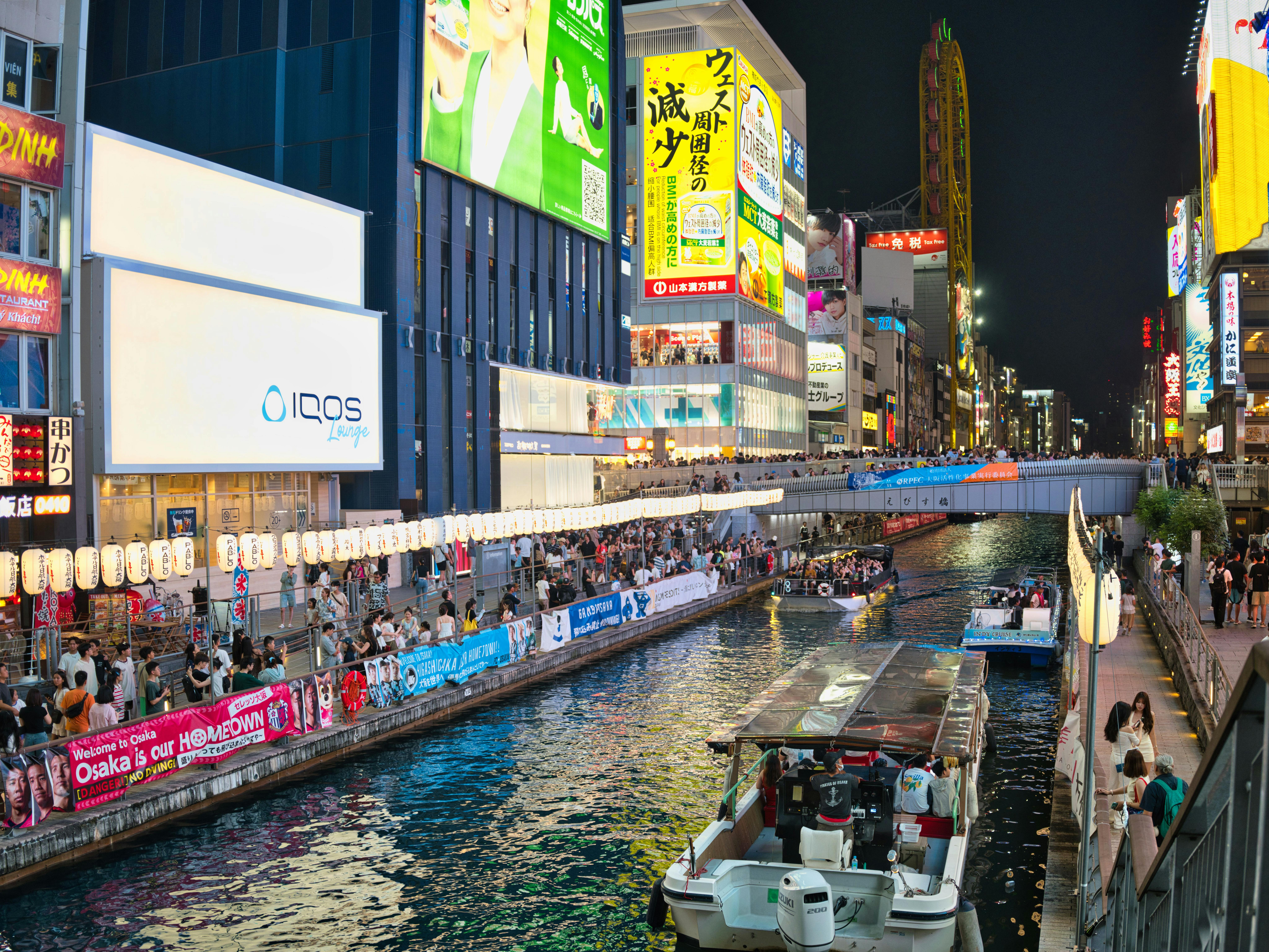
The first thing that hits you isn't a sound—it's a color. Vermillion crab claws, electric blue rivers of light, and the ghostly green glow of a running man frozen mid-stride. You're standing at the edge of the Dotonbori Canal, and the reflections below are so saturated they feel like a second city inverted. The air smells of takoyaki sauce, sizzling okonomiyaki, and something sweeter—perhaps caramelizing from a kushikatsu stand. This is Dotonbori, the entertainment heart of Osaka, a district that traces its theatrical origins to 1612 when a local entrepreneur named Doton Yasui began digging the canal . Though Yasui died before its completion, the waterway—and the vibrant town that grew around it—bears his name. Today, over 80,000 daily visitors flood its 1.2-kilometer (0.75-mile) canal-side promenade, drawn not to ancient temples but to something far more Japanese: the philosophy of kuidaore (くいだおれ)—to eat until you drop.
Why Dotonbori Embodies Neon Gluttony Against a Canal's Reflection
Dotonbori solves an enduring paradox: how to turn commerce into theater. The district began as a licensed theater quarter (kabuki) during the Edo period (1603–1868), home to the Shochikuza Theatre, which celebrated its 100th anniversary in 2023 . That theatrical DNA never faded—it just found new stages. Today, the entire canal becomes a proscenium arch, and the signs are the actors. The Glico running man, originally installed in 1935, has become Osaka's unofficial mascot—a 21st-century neon embodiment of vitality . The Kani Doraku crab, with its mechanical legs twitching skyward, dates to the 1960s but feels timelessly absurd. Even the Kuidaore Taro mechanical clown, preserved after the restaurant that commissioned it closed in 2008, still drums and bows to passing crowds . These aren't advertisements; they're urban landmarks built from argon gas and ambition. The district's solution to modern entertainment was simple: remove the kabuki stage and make the entire street the performance. You aren't watching a show here—you're in one.
The Best Time to Experience Dotonbori
Dotonbori never truly sleeps, but certain times unlock its full magic. For maximum neon impact, visit 6:00 PM–10:00 PM when the sky darkens fully and all signs illuminate. Crowds peak during 7:00–9:00 PM; arrive at 5:30 PM to watch the district transition from daylight to its electric alter ego. For comfortable temperatures, target October 15–November 15 (17–23°C / 63–73°F) or March 20–April 10 (13–20°C / 55–68°F) . Summer (June–August: 25–33°C / 77–91°F) brings intense humidity; visit after 7:00 PM . Winter (December–February: 3–12°C / 37–54°F) offers crisp air and fewer tourists—ideal for lingering over hot oden at Takoume, Japan's oldest oden restaurant, founded 1844 . Avoid: August 11–16 (Obon holiday) when domestic crowds surge, and rainy days when neon reflections blur but so does foot traffic.
Approximate Budget for a 7-Day Trip
This budget assumes mid-range travel with a focus on Osaka's food and entertainment. Prices are current for 2025–2026 using ¥1 ≈ $0.0067 USD (¥150 ≈ $1).
- Accommodation: ¥9,000–¥22,000 per night ($60–$147) — Stay near Namba Station for canal access. Dotonbori Hotel (3-min walk) offers doubles from ¥13,300–¥15,600 ($88–$104) . Budget: Dotonbori Hotel at ¥9,000 . Mid-range near Shinsaibashi: ¥18,000–¥25,000.
- Food: ¥4,000–¥7,500 per day ($27–$50) — Breakfast: ¥600–¥1,000 (konbini). Lunch: ¥1,200–¥2,500 (okonomiyaki or soba). Dinner: ¥2,000–¥4,000 (kushikatu or multiple street food stops). Takoyaki: ¥600–¥800 for 8 pieces . Kushikatu set: ¥2,000–¥3,000 .
- Transportation: ¥500–¥1,200 per day ($3–$8) — Subway Midosuji Line from Shin-Osaka to Namba Station: ¥280 (15 minutes) . Nankai Line from Kansai Airport to Namba: ¥930 (45 minutes). Osaka Amazing Pass (1-day): ¥2,800 (includes river cruise).
- Attractions: ¥1,000–¥2,500 total ($7–$17) — Dotonbori River Cruise: ¥1,000–¥1,500 (20 minutes) . Hozenji Temple: Free. Kamigata Ukiyoe Museum: ¥500 (woodblock printing experience additional ¥1,500) .
- Miscellaneous: ¥2,000–¥5,000 ($13–$33) — Kuidaore Taro pudding at Nakaza building: ¥500. Glico sign keychains: ¥300–¥800. Purikura (photo sticker) at Don Quijote: ¥400.
Total (7 days, excluding international flights): ¥80,000–¥180,000 ($533–$1,200)
7 Essential Dotonbori Experiences
- Mimic the Glico Running Man at Canal's Edge: The Glico sign at 1 Chome-10-3 Dotonbori is open 24 hours —but the best light is 7:30–8:30 PM when the canal reflects the full spectrum of neon . Strike the iconic pose: arms raised, chest forward, running in place. Local tip: walk west along the promenade for a less-crowded shooting angle with both the sign and the Don Quijote ferris wheel.
- Eat Takoyaki from a 3D Octopus Stall: Look for the giant 3D takoyaki ball protruding above Takoyaki Wanaka's storefront . Their secret: batter blended with dashi stock and milk for creamy interior, tempura bits for crunch . Eight pieces cost ¥600–¥800; watch the chefs flip the balls with metal picks—a performance in itself. Open 11:00 AM–9:00 PM .
- Find the Moss-Covered Buddha at Hozenji Temple: Tucked on a cobblestone alley away from the neon chaos, Hozenji Temple was founded in 1637 . The statue of Fudo Myo-o is covered in green moss—the result of a ritual where visitors splash water over it to make dreams come true . The alley (Hozenji Yokocho), approximately 80 meters (260 feet) long, retains its Edo-period charm with stone paving and traditional lanterns . Best visited 10:00–11:00 AM before lunch crowds arrive .
- Ride the Dotonbori River Cruise at Twilight: The Tonbori River Walk cruise departs from multiple piers between 10:00 AM–9:00 PM . For ¥1,000–¥1,500, you'll get a 20-minute guided commentary (Japanese with English handouts) passing beneath all major landmarks—the Glico sign, Kani Doraku crab, and the Don Quijote ferris wheel. The 5:30 PM departure offers the transition from daylight to neon—both reflections visible in the water.
- Try Kushikatsu at a 100-Year-Old Chain: Kushikatsu Daruma, founded in 1929, is the most iconic tempura-skewer restaurant in Osaka . Follow the "no double-dipping" rule (sauce communal). A set of 10 skewers costs around ¥2,000–¥3,000 . Their flagship location at 1-6-8 Dotonbori (11:00 AM–10:30 PM) has a massive red daruma facade that's a photo op itself. Insider tip: The "secret sauce" recipe hasn't changed since 1929 .
- Pose with Kuidaore Taro the Mechanical Clown: At the entrance of the Nakaza Kuidaore Building, the cheerful mechanical clown in red-and-white stripes has been preserved since his restaurant closed in 2008 . He plays drums and bows every few minutes. Inside, a souvenir shop sells official Kuidaore Taro pudding (¥500) and plush toys . No entry fee; open whenever the building is (10:00 AM–9:00 PM). Most tourists snap a photo and leave—watch for a full cycle of his movements (about 90 seconds) to appreciate the engineering.
- Eat Ramen at 2:00 AM Under a Dragon: Kinryu Ramen operates 24 hours at its bright red location beneath a massive dragon sculpture . Two options: regular ramen (¥800) and charsiu ramen (¥1,100) with extra roast pork . The tonkotsu-style broth mixes pork and chicken for a lighter finish. After midnight, the crowd transforms—karaoke refugees, late-night workers, and other ramen pilgrims. The free kimchi and spicy Chinese chives on every table let you customize the heat. Address: 1-7-25 Dotonbori .
3 Hidden Gems Most Travelers Miss
- Japan's Oldest Oden Restaurant (1844) at Takoume: Hidden in plain sight along the canal, Takoume occupies a traditional two-storey house that's served Kanto-ni (Osaka-style oden) for over 180 years . Around 20 ingredients—octopus (the origin of the restaurant's name), daikon radish, surimi fish cakes—simmer in pots visible behind the counter . Open evenings only (5:00 PM–10:00 PM); closed Sundays. The interior is cramped and sparsely lit—exactly as it's always been. Warm sake recommended (¥500–¥800). No English sign; look for the wooden facade with noren curtains near the Shochikuza Theatre.
- Junkissa American's 1940s Retro Interior: Just a short walk from the main drag, Junkissa American (established 1946, moved to current location 1950) preserves the grandeur of a bygone era . Red marble imported from Italy (no longer in production), dripping chandeliers, patterned carpets, and a spiral staircase at the entrance . The menu is equally nostalgic: Napolitan spaghetti (ketchup-based), omurice, and fluffy pancakes (¥800–¥1,500). Open 9:00 AM–8:00 PM; a perfect mid-afternoon escape from Dotonbori's sensory overload. Address: 1-7-5 Dotonbori .
- Teuchi Soba Akari's Rear Canal Window: This hidden soba joint looks unremarkable from the front—a simple facade, a charming elderly couple running the counter. But the back window faces the Dotonbori Canal directly, offering a view of the neon-lit water that no expensive restaurant can match . Cold zaru soba with tempura (¥1,800–¥2,500) is the move here; the owner provides an illustrated guide on proper soba-eating technique . Located on the main stretch but easy to miss—look for the small wooden sign and the quiet interior insulated from the outside frenzy. Open 11:30 AM–3:00 PM, 5:30 PM–9:00 PM; closed Wednesdays .
Cultural & Practical Tips
- Photography Rules: Tripods are discouraged on the main bridge—too crowded and you'll obstruct foot traffic. Handheld or monopod only. The best spot for the Glico reflection is the west side of Ebisu Bridge, shooting east toward the sign. For the Kani Doraku crab, stand directly across the canal at 8:00 PM when the restaurant's exterior lights dim slightly, making the crab's red neon pop against dark water. No flash needed—the signs provide all the light.
- Essential Japanese Phrases: "Kuidaore" (koo-ee-dah-oh-reh) — Eat until you drop (the district's motto). "Hitotsu kudasai" (hee-toh-tsoo koo-dah-sai) — One, please (for street food). "Mou hitotsu" (moh hee-toh-tsoo) — One more. "Dōmo" (doh-moh) — Thanks (casual, perfect for food stalls).
- Dipping Sauce Rules: At kushikatsu restaurants, the communal sauce is for one dip only before your first bite. Double-dipping is a serious faux pas. Your skewer has already been in your mouth—don't return it to the shared pot. If you need more sauce, use the raw cabbage piece provided to scoop sauce onto your plate.
- Access & Timing: From Kansai International Airport (KIX), take the Nankai Line to Namba Station (¥930, 45 minutes) . From Shin-Osaka Station (shinkansen), take the Midosuji Subway Line to Namba (¥280, 15 minutes) . Dotonbori Hotel (3-min walk from Namba Station Exit 25) offers free beer and highballs from their lobby—an unusual perk for budget lodgings .
- Crowd Strategy: The main bridge (in front of the Glico sign) is gridlocked between 7:30–9:30 PM. If you want the classic photo with fewer heads, arrive at 11:00 PM on a weekday—the signs stay lit until midnight or later, but the crowds thin by 70%. The canal-side promenade on the south side (opposite the main shops) offers a less-pressed walking experience.
- Dietary Considerations: Many Dotonbori street foods contain dashi (fish stock)—not suitable for strict vegetarians/vegans. However, Hozenji Yokocho has several restaurants that offer shojin ryori (Buddhist vegetarian cuisine) by advance request. For gluten-free travelers, sashimi and yakitori (without sauce) are safer bets than takoyaki or ramen. The Dotonbori Tourist Information Center (near Ebisu Bridge, 9:00 AM–9:00 PM) has allergen cards in multiple languages.
Conclusion: Travel with Appetite, Not Just Ambition
Dotonbori doesn't ask you to contemplate eternity—it asks you to eat. To stand under a mechanical crab and feel hungry. To catch a reflection of neon in dark water and call it beautiful not because a guidebook told you so, but because your eyes have never seen anything so aggressively joyful. This is Osaka's great gift: it has no interest in being subtle. The Glico running man has been sprinting toward an invisible finish line for 90 years; Kuidaore Taro drums on long after his restaurant closed; the takoyaki stalls sizzle through typhoons and holidays. You came here to see the lights, but you'll leave remembering the sounds: the hiss of batter on hot plates, the murmur of a dozen languages at once, your own laughter when you finally master the Glico pose. That's the real souvenir. Not a photograph, but the memory of a night when you ate one more skewer than you should have, and the city celebrated you for it.