
Heian Shrine: Where Imperial Grandeur Meets Kyoto's Spiritual Heartbeat
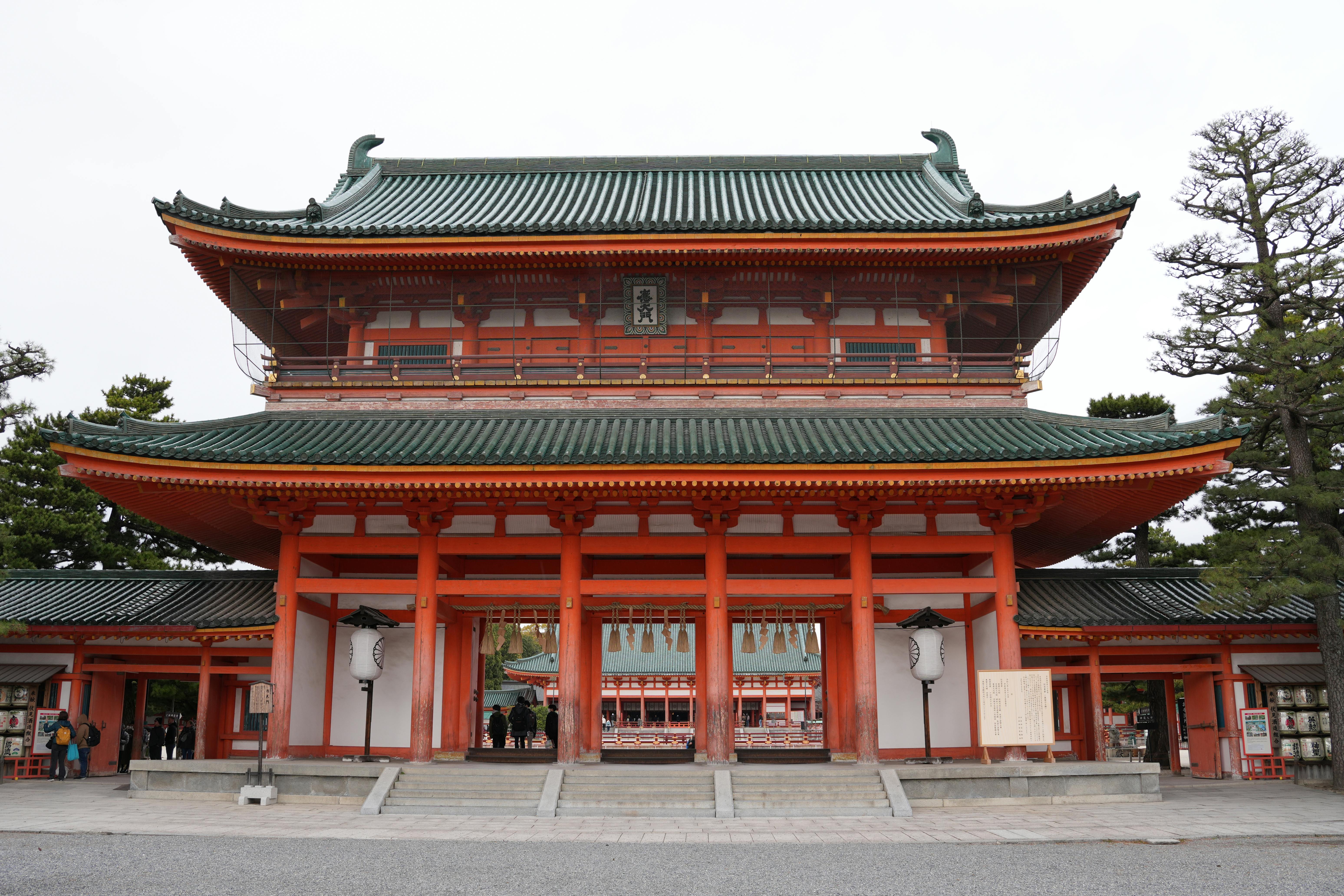
The low-angle morning light—slanting gold through the colossal vermillion torii gate—paints a pathway of shadows across the white gravel courtyard. You hear the soft scrape of your own footsteps, then nothing but breeze rustling through ancient pines. This is Heian Shrine (平安神宮), a place that doesn't whisper of age so much as it reverberates with deliberate memory. Built in 1895 to commemorate the 1,100th anniversary of Kyoto's founding as Japan's capital, this Shinto sanctuary replicates the original Imperial Palace at five-eighths scale—a conscious act of architectural time travel. The 24-meter (79-foot) torii gate marks the approach, while the Ōtenmon Gate opens onto a courtyard so vast it feels like a theater stage for the gods. Unlike Kyoto's cramped medieval alleyways, Heian Shrine breathes. Its recreated Heian Period (794-1185) architecture—green tiles, red pillars, and symmetrical harmony—solves the cultural problem of lost heritage, resurrecting an era when Japan first centralized its imperial power. Here, you don't just see history; you step inside its measured, elegant proportions.
Why Heian Shrine Embodies Deliberate Resurrection
Most of Kyoto's treasures survived centuries by accident, fire, or faith. Heian Shrine is different: it was built with intention. The Meiji Restoration had shifted imperial power to Tokyo, and Kyoto needed a symbolic anchor. The shrine honors Emperor Kanmu (737-806), who moved the capital to Heian-kyō (Kyoto) in 794, and Emperor Kōmei (1831-1867), the last emperor to reign from the city. Their spirits are enshrined here as guardian deities. The architecture follows the Daigokuden (Hall of State Ceremonies) of the original Heian Palace, resurrecting a layout that had vanished for a millennium. The Shin'en Garden—a "pond and stream stroll" garden designed by landscape artist Shigemori Mirei's predecessors—wraps around the main hall with four distinct sections: East, South, West, and Middle . Seiryū Pond reflects the sky like polished obsidian, while the Taikobashi ("drum bridge") arches dramatically over the water. Koi fish and turtles glide beneath. The garden's weeping cherry trees (shidare-zakura) bloom later than Kyoto's standard varieties, extending cherry blossom season by up to two weeks. This isn't accidental—the designers understood layering time. The shrine solved a cultural crisis: how to honor a lost capital without cheap imitation. The answer was reverence, scale, and botanical poetry.
The Best Time to Experience Heian Shrine
The shrine's open courtyard and seasonal garden reward precise timing. For cherry blossoms, target late March 25–April 12, when the weeping cherries reach full peak—about five to seven days after most of Kyoto's sakura have fallen. Morning 7:00–9:00 AM offers soft light on the vermillion pillars and significantly fewer tour groups. For irises, visit June 5–June 25, when the garden's ponds are ringed in purple and blue. Autumn colors transform the maples from November 15–November 30, with peak reds typically around November 22. The shrine grounds open at 6:00 AM year-round, though closing times shift: 6:00 PM (March 15–September), 5:30 PM (October and February 15–March 14), and 5:00 PM (November–February 14) . The Shin'en Garden operates 8:30 AM–5:30 PM with last entry 30 minutes prior . Avoid Golden Week (April 29–May 5) when domestic tourism peaks, and August 11–16 (Obon holiday) for oppressive heat and crowds. For official updates, always consult: www.heianjingu.or.jp/english/
Approximate Budget for a 7-Day Trip
This budget assumes mid-range comfort, mixing traditional experiences with modern convenience. Prices are current as of 2025, using a ¥1 = $0.0067 USD exchange rate (approx. ¥150 = $1).
- Accommodation: ¥12,000–¥25,000 per night ($80–$167) — A renovated machiya townhouse near Heian Shrine (like Yuzunoe) runs ¥46,550–¥58,500 for single occupancy . Mid-range hotels near Higashiyama Station cost ¥12,000–¥18,000.
- Food: ¥3,500–¥6,000 per day ($23–$40) — Breakfast: ¥600–¥1,000 (konbini onigiri and coffee). Lunch: ¥1,200–¥2,000 (set meals or ramen). Dinner: ¥2,000–¥3,500 (local izakaya or Blue Bottle Coffee + light meal near Nanzen-ji) .
- Transportation: ¥500–¥1,500 per day ($3–$10) — Bus #5 from Kyoto Station: ¥230 one-way . Subway to Higashiyama Station: ¥260 from Kyoto Station. 1-day bus pass: ¥700.
- Attractions: ¥600–¥2,000 total ($4–$13) — Heian Shrine grounds: Free. Shin'en Garden: ¥600 adults, ¥300 children . KYOCERA Museum of Art (nearby): ¥1,600–¥2,000 for special exhibitions.
- Miscellaneous: ¥2,000–¥5,000 ($13–$33) — Omamori (protective amulets): ¥500–¥1,000. Ema (votive plaque): ¥500–¥800. Matcha and sweet at garden tea house: ¥800–¥1,200.
Total (7 days, excluding international flights): ¥85,000–¥155,000 ($567–$1,033)
6 Essential Heian Shrine Experiences
- Walk the Jingū-michi Avenue at Dawn: Approach from the south, where the massive 24-meter torii frames the rising sun. Arrive by 6:30 AM—the courtyard gravel reflects first light onto the Ōtenmon Gate's green roof tiles, and you'll share the space only with crows and the occasional jogger.
- Circle the Shin'en Garden's Four Ponds: This strolling garden requires 60–90 minutes to properly absorb . Start at the East Pond's Seiryū-ike, cross the stepping stones to the arched Taikobashi, then follow the path past the irises (June) or maples (November). The South Garden's borrowed views of Higashiyama mountains demonstrate classic shakkei (borrowed scenery) technique.
- Photograph the Ōtenmon Gate's Symmetry: Stand centered in the courtyard at 8:00 AM. The gate's vermillion pillars, green brackets, and sweeping karahafu (cusped gable) create perfect bilateral symmetry—a hallmark of Heian Palace architecture. Use a telephoto lens to compress the foreground gravel with the gate's depth.
- Attend the Jidai Matsuri (Festival of Ages) on October 22: This parade features over 2,000 participants in costumes spanning eight historical eras, from the Meiji Restoration back to the Enryaku period . The procession ends at Heian Shrine around 1:00 PM. Book accommodations months in advance—this is Kyoto's third-largest festival.
- Find the Wisteria in Late May: While tourists swarm cherry and maple seasons, May offers water lilies in the Shin'en Garden and the start of wisteria blooms near the Tea House . Temperatures average 20–25°C (68–77°F)—ideal for garden lingering before June's rainy season.
- Write a Wish on an Ema Plaque: Purchase a wooden plaque (¥500) from the shrine office, write your prayer or goal in Japanese or your native language, and hang it among hundreds of others near the main hall. The shrine's dedication to emperors makes it a powerful place for wishes involving new beginnings or academic success.
3 Hidden Gems Most Travelers Miss
- The Okazaki Canal Boats: Just east of the shrine's torii, seasonal jikkokubune (ten-koku boats) operate during cherry blossom week (late March–early April). These flat-bottomed vessels offer 25-minute rides through the canal lined with weeping cherries—visible from the road but rarely accessed by shrine-only visitors . Tickets: ¥1,500 (cash only).
- Hyōtei's Morning Breakfast: Located 12 minutes south near Nanzen-ji, this 400-year-old kaiseki restaurant serves a tea-ceremony breakfast (asa-cha) from 8:00–9:30 AM by reservation only . Cost: ¥6,000–¥10,000. Most tourists walk past its bamboo-hidden entrance, assuming it's private housing.
- The Suirokaku Aqueduct at Nanzen-ji: A 15-minute walk from Heian Shrine, this Meiji-era red brick aqueduct (built 1888–1890) carries water from Lake Biwa. Climb the stone steps behind Nanzen-ji's main hall for a view down the arched bridge—it feels like Roman engineering transplanted into Japanese forest. Free access, best at 4:00–5:00 PM when light filters through surrounding maples.
Cultural & Practical Tips
- Purify at the Temizuya: Before entering the main hall, use the ladle at the water pavilion: wash left hand, right hand, then mouth (never drink directly from the ladle). Skip this if no water is present—the ritual space remains sacred.
- Photography Rules: Tripods are banned in the Shin'en Garden due to narrow bridges—bring a monopod or use high ISO. The main courtyard allows tripods before 8:00 AM. Never photograph the inner sanctum's mirrors; they're considered shintai (divine body vessels).
- Local Phrase: Say "Otera dewa naku, jingū desu" (oh-teh-rah deh-wah nah-koo, jeen-goo dess) meaning "it's not a temple, it's a shrine"—locals appreciate the distinction. For thanks: "Arigatou gozaimasu" (ah-ree-gah-toh go-zai-mahs).
- Footwear Strategy: The Shin'en Garden mixes gravel, wooden bridges, and moss-covered stepping stones. Closed-toe shoes with grip—trail runners or lightweight hiking shoes—are superior to sneakers or leather soles.
- Rainy Season (June–mid-July): Bring a compact umbrella; the garden's irises are stunning in light rain, and crowds drop by 70%. The Tsuyu (plum rain) also makes the Taikobashi bridge slippery—grip the handrail.
- Gift Shops: The shrine's omamori (amulets) are among Kyoto's most beautiful—the red-and-gold kotsu anzen (traffic safety) charm is a local favorite. Purchase from the booth near the main hall, not the souvenir kiosk outside the torii (which sells mass-produced goods).
Conclusion: Travel with Presence, Not Just Proof
Heian Shrine rewards the traveler who resists the urge to rush. Its courtyard doesn't change dramatically with seasons; it endures, offering space to breathe in a city famous for narrow corridors and crowded temples. The garden, yes, dazzles with cherries and irises and maples—but its deeper gift is the invitation to sit on a wooden bench at Seiryū Pond, watch a turtle surface, and feel the weight of 1,200 years distilled into five-eighths scale. This shrine was built from loss and love: a Meiji-era decision to remember what could have remained forgotten. When you walk its gravel paths, you participate in that act of cultural gratitude. So put away your phone for ten minutes. Listen to the wind through the pines above the torii. Know that some places don't demand you document them—they ask you to witness them. And that is the truest form of travel.