
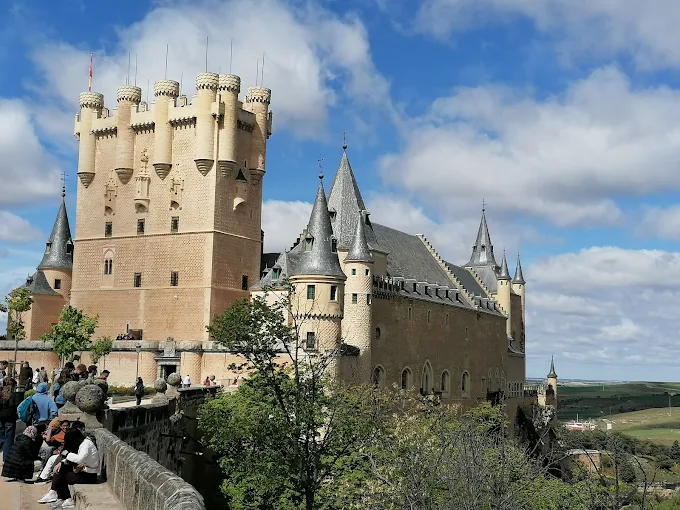
Alcázar of Segovia Fairytale Towers Meet Castilian Cliffs
The wind whistles through the crenellations—a sharp, clear sound that has echoed over the Alcázar of Segovia since the 12th century. You stand on the rocky crag 80 meters above the confluence of the Eresma and Clamores rivers, watching the sun dip behind the Sierra de Guadarrama. The air smells of dry pine and heated granite; the light turns the slate spires into silhouettes against a violet sky. This is not merely a castle but a stone ship sailing over the Castilian plains, rebuilt after the devastating fire of 1862 to resemble its original medieval glory. You hear the click of cameras capturing the turrets; the murmur of guides explaining the throne room; the silence of the artillery museum within. In 2026, as historic sites face the pressure of mass tourism, the Alcázar of Segovia remains a sentinel of memory—a place where royal power is frozen in stone, demanding you look up at the towers that inspired Disney's Cinderella Castle.
Why Alcázar of Segovia Embodies Royal Defense
The Alcázar of Segovia represents one of the most distinctive examples of medieval military architecture in Europe, solving the critical need for a defensible royal residence on a strategic granite promontory. Originally documented in 1120 during the reign of Alfonso VII, the structure evolved from a Moorish fort into a palatial fortress under Henry II and John II. The architecture addresses a fundamental engineering challenge: how to maximize defense while maintaining residential comfort on a narrow rock spur. The solution is the ship-like shape, with the bow pointing toward the plains and the stern anchored to the city.
Following the fire of 1862, the reconstruction led by architect José María de Avrial utilized original plans to restore the conical towers and slate roofs characteristic of the 15th century. The keep, known as the Tower of John II, rises 80 meters above the river gorge, offering visibility for 30 kilometers in every direction. The walls, measuring up to 2.5 meters thick in sections, are constructed from local granite and brick, designed to withstand siege weaponry of the medieval era. This integration of military function and royal aesthetics makes the Alcázar of Segovia not merely a monument but a physical document of Spanish monarchy, where every turret and curtain wall tells a story of survival, power, and architectural resilience.
The Best Time to Experience Alcázar of Segovia
For the optimal Alcázar of Segovia visit, target April 15–June 10 or September 15–October 25, when temperatures range between 12–24°C (54–75°F) and the light is soft enough for photography. The castle opens at 10:00 AM daily; arrive 15 minutes before opening to enter with the first group, as tour buses converge by 11:30 AM. Sunset views from the Tower of John II—specifically 7:00–8:30 PM in summer—offer dramatic lighting over the plains, though last entry is typically one hour before closing. Spring coincides with local festivals, causing accommodation prices to increase 30–50%; book lodging three months in advance if visiting during this period.
Avoid July 15–August 25 unless you tolerate extreme heat; temperatures regularly exceed 32°C (90°F), making the stone surfaces radiate intense thermal energy. The lack of shade on the ramparts exacerbates the heat. Winter months (December–February) bring cold weather (2–10°C / 36–50°F) but fewer crowds, allowing for contemplative exploration. The castle closes early on state function days; verify current schedules at www.alcazardesegovia.com or contact the ticket office at informacion@alcazardesegovia.com (+34 921 460 759). Weekday mornings typically see the lowest visitor density, allowing for clearer photography of the towers without obstruction from crowds.
Approximate Budget for a 7-Day Trip (2026)
Segovia offers excellent value for cultural travelers, with costs generally 20–30% lower than Madrid. The following budget assumes mid-range comfort with a focus on local experiences, based on 2026 pricing with approximately 3.5% inflation from 2025 figures. Estimates include stays in the historic center for easy access to the Alcázar of Segovia and day trips to explore Castilla y León.
- Accommodation: €65–€120 per night for a double room in a boutique hotel or casas rurales in the historic center; luxury paradores with castle views command €150–€280 per night
- Food: €40–€60 per day—breakfast €5–€8 (café con leche and hornazo), lunch €15–€25 (menú del día including cochinillo asado, salad, and wine), dinner €20–€30 (tapas selection including judiones and local cheeses)
- Transportation: Train from Madrid Chamartín to Segovia-Guiomar: €13 high-speed AVANT (30 minutes); local bus to city center: €2.50; taxi from station: €12 fixed rate; regional bus to nearby towns: €8–€15 per trip
- Attractions: Alcázar of Segovia entry: €8.50; Aqueduct viewing: free; Cathedral: €6; Roman ruins tour: €12; guided castle tour: €15
- Miscellaneous: Ceramic souvenirs from €10; local Ribera del Duero wine €8–€20 per bottle; ponche segoviano liqueur €12; artisan leather goods €25–€60; marzipan from €8
Total estimated cost for 7 days: €850–€1,250 per person (based on double occupancy; solo travelers should add 35–45% for single supplements)
7 Essential Alcázar of Segovia Experiences
- Climb the Tower of John II: Ascend the 152 steps to the top of the keep for panoramic views. The staircase is narrow and spiral, typical of medieval defense design. Visit at 10:00 AM opening time to experience the climb before crowds obscure the view. The view extends 30 kilometers across the plains. Allow 30 minutes to reach the top and descend. This is the anchor of the Alcázar of Segovia; do not rush the climb.
- Explore the Throne Room: Enter the hall where Isabella I was proclaimed Queen of Castile in 1474. The coffered ceiling features gold leaf and Mudéjar designs. Visit between 2:00–4:00 PM when lighting accentuates the wood details. The room measures 15 meters by 10 meters, designed for royal audiences. Audio guides explain the historical significance. This collection defines the political history of Spain.
- Visit the Royal Armory: Locate the collection of weapons and armor from the 15th to 19th centuries. The displays include swords, crossbows, and firearms used by the royal guard. Visit at 11:30 AM when the guide explains the weaponry. The space is small but rich in history. Audio guides available in six languages for €3. Allow 20 minutes to appreciate the details. This is a rare survivor of the castle's military function.
- Walk the Ramparts: Stroll along the outer walls where sentries once patrolled. The stone is cool to the touch even in summer. Visit in late afternoon when the sun softens the granite colors. The walls offer views over the river gorge. Entry is included with the ticket. This provides a physical sense of the castle's defense. The wind is stronger here; secure loose items.
- View the Hall of Kings: Examine the frieze depicting 34 kings of Spain from Athanaric to Philip II. The paintings date to the 15th century and were restored in the 19th. Visit when sunlight streams through the windows to illuminate the colors. The gallery measures 20 meters in length. It demonstrates the lineage of the Spanish monarchy. Do not touch the protective glass; oils damage the surface.
- Attend Evening Illumination: Return after dark to see the castle lit with golden lights. The slate towers glow against the night sky. Visit at 9:00 PM in summer or 7:00 PM in winter. The lighting changes seasonally; verify times at the tourist office. It creates a magical atmosphere distinct from daytime. This reveals the structure's fairytale beauty.
- Explore the Queen's Bedroom: Step into the private quarters featuring 19th-century furnishings and tapestries. The bed canopy is original to the reconstruction period. Visit at 1:00 PM when the light wells illuminate the textiles. The room offers a glimpse into royal domestic life. The architecture itself is worth studying. It reveals the castle's evolution beyond the military core.
3 Hidden Gems Most Travelers Miss
- Church of San Martín: Located 400 meters northwest at Plaza de San Martín, this 12th-century Romanesque church features a stunning portico. Entry: €3; open 10:00 AM–6:00 PM. It is often overlooked as visitors focus on the castle. The bell tower rises 33 meters with Mudéjar influences. Contact: +34 921 460 327. Visit early morning for photography without crowds. The interior frescoes date to the 13th century.
- Casa de la Moneda (Royal Mint): A 10-minute walk down the river at Calle de la Moneda, this 16th-century building housed the royal mint. Entry: €4; open Tuesday–Sunday 10:00 AM–6:00 PM. It is often overlooked by tourists rushing to the Alcázar. The hydraulic machinery used to mint coins is preserved. Contact: +34 921 466 720. Visit mid-morning when light illuminates the wheels. The engineering is unique in Spain.
- Alcázar Gardens: Located behind the castle at Plaza de la Reina Victoria Eugenia, these terraced gardens offer views over the Clamores River valley. Entry included with castle ticket; open 10:00 AM–6:00 PM. It is often overlooked as visitors focus on the castle interior. The gardens feature native plants and medieval irrigation systems. Contact: +34 921 460 759. Visit late afternoon when the light is soft. The perspective allows you to see the aqueduct in the distance.
Cultural & Practical Tips
- Respect the monument: The Alcázar of Segovia is a protected historic site. Do not climb on the walls or touch the tapestries. Oils from skin damage the ancient fabrics. Fines for vandalism can reach €300. Security monitors the area. Keep the site clean; use provided bins.
- Master these phrases: "Buenos días" (BWEH-nos DEE-as) for good morning; "Por favor" (por fah-BOR) for please; "¿Cuánto cuesta?" (KWAN-toh KWES-tah) to ask price; "La cuenta, por favor" (lah KWEN-tah) to request the bill.
- Photography guidelines: Tripods are allowed in the gardens but not inside rooms without permission. Drone usage is strictly prohibited over the monument. Flash photography is discouraged inside to protect artifacts. Respect other visitors when composing shots. Early morning and sunset offer the best light without crowds.
- Hydration strategy: Segovia's high altitude (1,000 meters) means dry air; carry a refillable bottle. Public fountains (fuentes) are available in the plazas. The water is potable and sourced from mountain springs. You'll save €2–€3 daily and reduce plastic waste. Purchase water from kiosks if fountains are unavailable.
- Footwear selection: The ground consists of cobblestones and granite steps. Wear sturdy walking shoes with good grip. The ramparts can be slippery when wet. Avoid high heels. Comfortable walking shoes essential for exploring the historic center. The cobblestones can be uneven.
- Weather considerations: The castle provides little shade on the walls; wear a hat and sunscreen during summer months. Winter evenings can be chilly due to altitude; bring a light jacket even if the day is warm. Rain is rare but possible in November; the stone surfaces become slick when wet.
- Security awareness: While the area is safe, pickpockets operate near crowded viewpoints. Keep bags zipped and valuables secure. Do not leave phones on café tables. Allow an extra 15 minutes for security processing during peak festival seasons. Report suspicious activity to local police.
Conclusion: Travel with Reverence, Not Just Reverie
The Alcázar of Segovia demands more than casual observation—it asks for contemplation of the layers of history embedded in every granite block, every tapestry, every turret carved by hands long turned to dust. When you walk these halls in 2026, you're not merely touring a monument; you're walking through a fragile ecosystem of memory where royal power, military strategy, and modern tourism intersect in delicate balance.
Choose to engage deeply: hire a local guide from the historic center rather than a large tour company; purchase tickets directly to support preservation efforts; respect the silence of the halls that housed kings. The Alcázar of Segovia survives not as a museum exhibit but as a living bridge between eras—and its preservation depends on visitors who recognize the difference between appreciation and consumption.
Slow down. Sit on the ramparts after the tour buses depart. Listen to the wind moving through the crenellations. Watch the sunset paint the slate in shades of gold and amber. The castle rewards those who approach it not as a checklist item but as a conversation across time—a dialogue between ancient defense and modern wonder that continues, like the rivers below, in perpetual motion.