Asturias Green Coast Emerald Cliffs Meet Atlantic Wildness
Costa Verde: Where Green Hills Meet Wild Coast
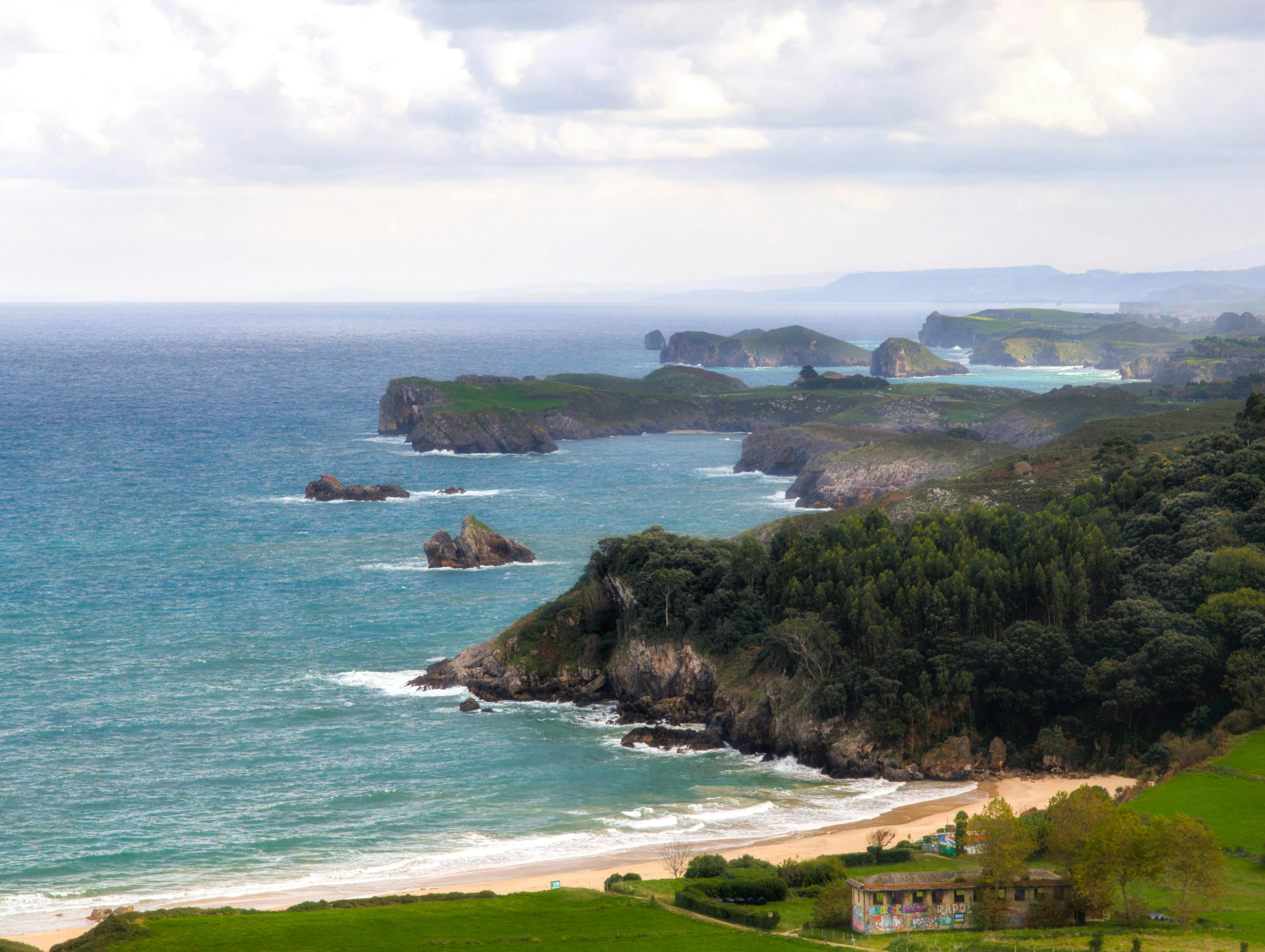
I stand on a cliff path at eleven in the morning. Wind carries salt and pine scent. The coastal trail is free. I look down at deep blue waves crashing against dark rock. Forest runs straight to the shore — oak, chestnut, eucalyptus — thick and vivid green. Small coves hide between headlands, sand glowing pale gold. Not everything stays easy. Roads curve steep and narrow. Weather shifts fast. Some stretches lack parking. Yet this is Spain’s Green Coast — where mountains fall into the ocean and the land stays wild, generous, and deeply alive.
Why Costa Verde Matters
Costa Verde stretches along Asturias’ northern shore, between the borders of Cantabria and Galicia. The name means Green Coast — and it fits perfectly. Rain falls often here, feeding dense forest that covers hills right to the water’s edge. Unlike the south, where dry land meets blue sea, here green and blue interweave constantly. This rugged shore kept outsiders at bay for centuries — preserving ancient villages, traditional fishing ways, and quiet coves. That seclusion is fading. More visitors discover the coast each year. New roads bring easier access but also busier lanes. Some developments sit too close to the shoreline. Still the forest stands thick. The waves roll in wild. And the coast remains one of Europe’s most unspoiled stretches.
The Best Time to Experience Costa Verde
May through June brings fresh growth and blooming hedgerows — 12°C to 20°C (54°F–68°F). Days lengthen late. September and early October offer warm sea and golden light — 13°C to 21°C (55°F–70°F). Summer from July to August feels warmest — 15°C to 24°C (59°F–75°F) — but popular beaches fill fast. Winter from November to March stays quiet and blustery — 8°C to 14°C (46°F–57°F). Storms make the ocean magnificent. Weekdays beat weekends. Arrive before 10:00 to walk cliff paths with almost no one else.
Approximate Budget for a 7-Day Trip
- Accommodation: Village guesthouse — 45–75 euros per night. Rural stone cottage — 55–95 euros per night. Coastal hotel — 70–130 euros per night. Campsite — 14–20 euros per person.
- Food: Grilled seafood lunch — 14–24 euros. Fabada dinner — 12–20 euros. Cider and tapas — 10–16 euros. Bakery or market — 5–9 euros.
- Transport: Car rental — 35–55 euros per day (essential). Local bus — 2–5 euros one way. Parking — 3–6 euros daily. Train between Gijón and Ribadesella — 6 euros.
- Attractions: All paths and beaches — free. Museum — 3–5 euros. Guided kayak — 25–40 euros.
- Miscellaneous: Waterproof layer, snacks — 8–14 euros daily.
Total estimated for one person, 7 days: 330–620 euros
Beachside kiosks charge double for drinks and snacks. Carry water and lunch from the nearest village. It saves money and you can pause wherever feels best.
Essential Costa Verde Experiences
- Walk the cliff path at dawn. Mist clings to forested slopes. The ocean glows silver. No one else walks here. The world feels quiet and entirely yours. Skip this if heavy rain falls — stone paths turn slippery and dangerous.
- Swim a hidden cove at low tide. Sand appears wide and pale. Water stays calm and clear. Trees frame the shore. It feels like a secret world. Check tide times — some coves vanish completely when water rises.
- Drive the coastal road at golden hour. The sea turns deep gold then amber. Green hills glow warm. Every bend reveals a new view. Go slow — the road is narrow and stopping spots scarce.
- Eat grilled sardines at a fishing port. Fresh from the boat, cooked over wood fire, served simple with bread and cider. They taste of salt and summer. Nothing else is needed.
- Explore a fishing village at sunset. White houses, slate roofs, boats pulled up on the shore. The day winds down slow. Locals gather at the waterfront. It feels peaceful and timeless.
- Walk the forest trail to a headland. Tall trees block the view until you emerge at the edge — open ocean, endless blue, wind in your face. The surprise stays perfect every time.
Hidden Gems Most Travelers Miss
- The cove west of Ribadesella. Most people stay near the main beach. Drive ten minutes further. Sand sits sheltered between wooded cliffs. Almost no one visits here.
- The old coast path between villages. Newer roads bypass it. Walk the original route. It winds through woods and past farmland. You see the shore as locals have for centuries.
- The so-called "best viewpoint" marked on every map. It fills instantly. Walk five minutes further along the ridge. The same view opens wide — empty and just as beautiful.
Cultural & Practical Tips
- Rent a car. Public transport serves main towns but misses the quietest stretches. You need wheels to truly know this coast.
- Carry waterproof everything. Showers come and go fast. They do not ruin the day — they make the green glow brighter.
- Stay on marked paths. Cliffs are steep and unstable. Shortcuts damage fragile soil and put you at risk. Respect the edge.
- Do not block farm gates or narrow lanes. Pull over where safe. Local traffic moves fast. Be patient and let others pass.
- Pack out everything. Bins are scarce along remote stretches. Carry your waste back. Keep the coast clean for everyone.
- Book accommodation months ahead in August. Rooms vanish fast. May or September offer better value and thinner crowds.
Essential Visitor Information
Location & Access: Northern Spain, Asturias coast. Runs east from Ribadesella to the Galician border. Main hubs: Gijón, Oviedo, Ribadesella, Luarca. Asturias airport connects to major cities; car or bus onward recommended.
Tickets & Booking: All paths, beaches, viewpoints — free. Reserve accommodation June–September well ahead.
Operating Hours: Always open. Best explored in daylight. Villages and shops generally 10:00 to 20:00.
Visit Duration: Minimum 3–4 days. 7 days lets you drive the full length, explore different coves, and walk trails without rushing.
Family Suitability: Good for all ages. Sheltered coves suit children. Main paths are accessible; longer cliff walks are steep and exposed. Restrooms in villages and larger beaches.
Timing: Best season — May–June and September. Best time — before 10:00 or 1 hour before sunset.
Highlights: Dawn cliff walk, hidden cove swim, golden hour drive, port sardines, village sunset, forest headland trail.
Nearby & Day Trip: Oviedo — 45 mins. Gijón — 30–45 mins. Santillana del Mar & Altamira — 1 hour. Covadonga Lakes — 1 hour 15 mins.
Conclusion: Travel with Green, Not Just Gold
Costa Verde does not need to be polished. It is already whole — forest, cliff, ocean living together. Before you leave, take one last breath of pine and salt air. What will you keep wild, wherever you go?
Post a Comment