Covadonga Lakes Glacial Waters Meet Asturian Legend
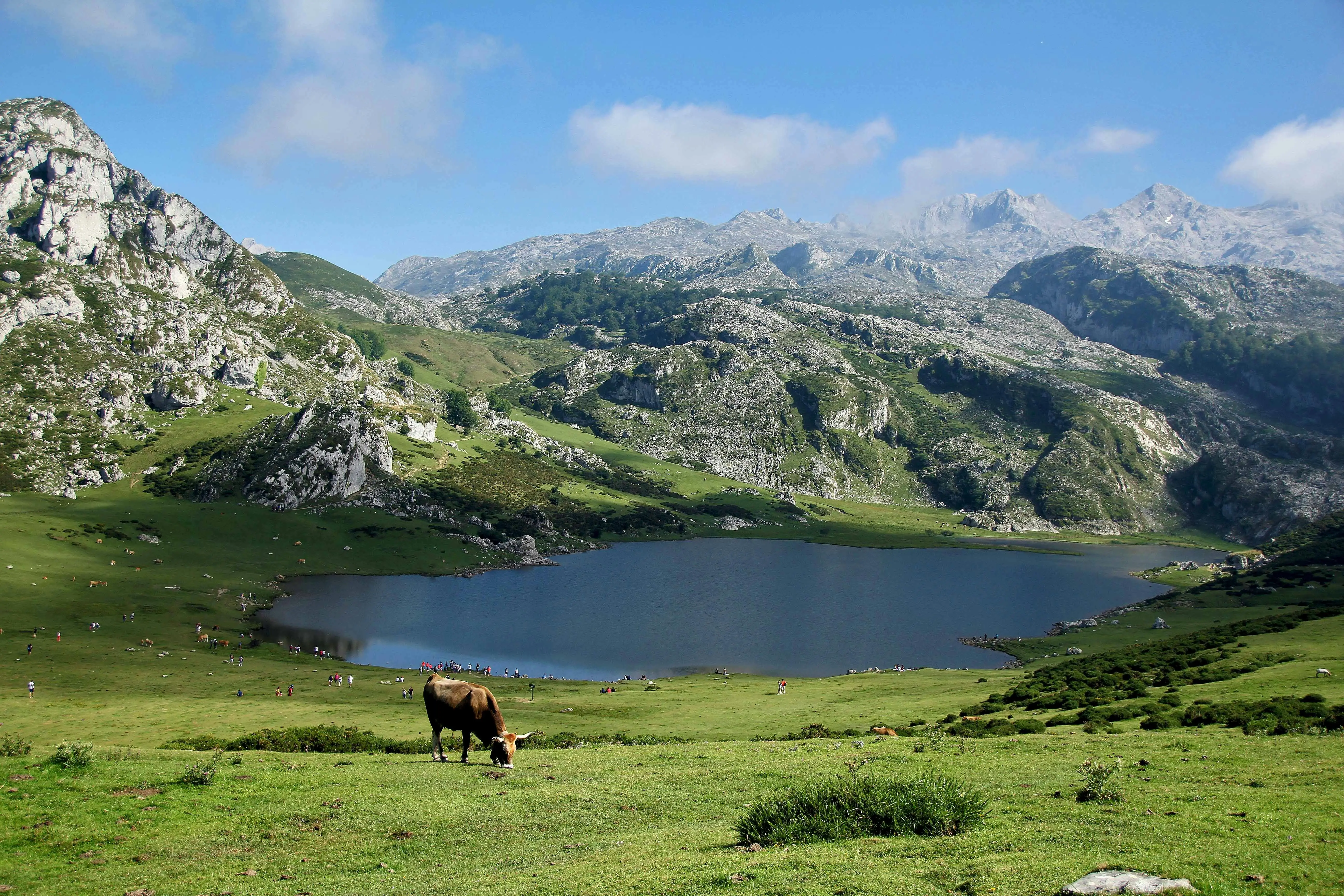
Lakes of Covadonga: Where High Peak Meets Glacial Water
I stand beside the larger lake at ten in the morning. Water lies still and deep, reflecting rock and sky. Entry to the landscape is free. I walk the shore path — stones smooth underfoot, grass soft and bright. Limestone peaks rise steep all around, streaked with grey and gold. Cattle graze quiet on the high pastures. Not everything stays peaceful. The access road fills fast by mid-morning. Parking vanishes. Some sections feel crowded. Yet these lakes sit where the Asturian mountains hold their purest water — still, ancient, and unforgettable.
Why Covadonga Matters
The lakes — Enol and Ercina — lie high in the Picos de Europa, formed by slow-moving ice thousands of years ago. They stand beside the shrine where Asturias’ first king rallied his people in the 8th century. This is where the region’s story began — a place of battle, faith, and wild nature. Over time the lakes became a shared treasure. UNESCO recognised the surrounding peaks as a Biosphere Reserve. That fame brings pressure. Summer traffic strains the narrow mountain road. Footfall erodes fragile grassy banks. Balancing protection with access grows harder every year. Still the water stays clear. The peaks stand watch. And people come here to find something deeper than a view.
The Best Time to Experience Covadonga
Late May through June brings fresh green and blooming wildflowers — 10°C to 18°C (50°F–64°F). Snow melts slowly from highest peaks. September and early October offer golden light and crisp air — 9°C to 17°C (48°F–63°F). Summer from July to August feels warmest — 12°C to 22°C (54°F–72°F) — but crowds arrive before dawn. Winter from November to April stays quiet and often closed — 2°C to 8°C (36°F–46°F). Ice covers the lakes on coldest mornings. Weekdays beat weekends. Arrive before 08:30 to walk the shore alone.
Approximate Budget for a 7-Day Trip
- Accommodation: Mountain guesthouse in nearby village — 50–85 euros per night. Rural stone cottage — 60–100 euros per night. Cangas de Onís base — 45–80 euros per night. Campsite in valley — 14–20 euros per person.
- Food: Mountain stew lunch — 12–18 euros. Asturian cheese and cider — 10–16 euros. Market meal — 6–10 euros. Bakery — 5–9 euros.
- Transport: Car rental — 35–55 euros per day (highly recommended). Shuttle bus from valley — 4 euros one way. Parking at lakes — 3 euros. Bus from Oviedo/Gijón — 8–12 euros one way.
- Attractions: Lakes and trails — free. Sanctuary grounds — free. Museum — 3 euros. Guided high route — 12 euros.
- Miscellaneous: Warm layer, water, snacks — 8–15 euros daily.
Total estimated for one person, 7 days: 340–630 euros
Food and drinks right at the main car park cost noticeably more than in Cangas de Onís, twenty minutes downhill. Pack a picnic from the village. It saves money and you can eat beside the water whenever you choose.
Essential Covadonga Experiences
- Walk Lake Enol at sunrise. Water acts like a mirror — peaks, sky, clouds all reflected perfect. No one else walks here. The world feels still and silent. Skip this if mist hangs thick — the view stays hidden until it lifts.
- Climb to the overlook above Lake Ercina. A steady twenty-minute climb opens wide across both lakes and the valley far below. Green, blue, gold — all laid out beneath you. It feels like standing at the top of the world.
- Follow the shore path to the hermitage. A quiet stone chapel sits beside the water. Simple, ancient, deeply peaceful. It connects you to centuries of travellers who stopped here the same way.
- Walk the high pasture loop. Beyond the lakes, grassy uplands stretch open. Cattle graze slow. The air feels thin and clear. You see the peaks from every angle.
- Eat Cabrales cheese beside the water. Sharp, creamy, bold — made in these mountains. Served with crusty bread and tart cider. It tastes exactly like the land around you.
- Watch sunset paint the peaks. Rock turns deep amber then rose. Water glows warm. Most visitors have left. The lakes belong to silence again.
Hidden Gems Most Travelers Miss
- The small cove on Lake Enol’s far shore. Most people stay near the car park. Walk ten minutes further round. A sheltered grassy spot sits right at the edge. Almost no one stops here.
- The old trail connecting both lakes. Quieter, greener, softer underfoot. It winds through pasture and small trees. You see the landscape as shepherds have for centuries.
- The so-called "perfect photo spot" right at the main railing. It fills instantly. Walk fifty metres along the shore. The same lake and peak appear empty and just as beautiful.
Cultural & Practical Tips
- Arrive very early or take the shuttle. Private vehicles are restricted on busiest days. The road closes when full — do not risk driving up late.
- Wear sturdy shoes. Paths are uneven, stony, and muddy after rain. Flip-flops are impractical and unsafe. Ankle support matters on higher ground.
- Do not feed the cattle. They look calm but grow pushy around food. Keep your distance. They belong here — you are the visitor.
- Stay on marked paths. The turf is thin and slow to regrow. Shortcuts destroy fragile plant life. Help the lakes heal.
- Carry extra warm layers. Temperatures drop fast at this altitude. Even sunny mornings turn cold when cloud covers the peaks.
- Book accommodation months ahead in August. Rooms vanish fast. May or September offer better value, thinner crowds, and richer colour.
Essential Visitor Information
Location & Access: Picos de Europa National Park, Asturias, Spain. 20 km north of Cangas de Onís — 20 minutes by car or shuttle. 70 km east of Oviedo — 1 hour 15 minutes. 110 km west of Santander — 1 hour 45 minutes. Access road is narrow and steep.
Tickets & Booking: Lakes, trails, sanctuary — free. No ticket needed. Reserve accommodation June–September well ahead.
Operating Hours: Always open. Access road subject to closure when full or in bad winter weather. Sanctuary — generally 09:00 to 19:00.
Visit Duration: Minimum half a day. 1–2 full days lets you explore both lakes, high pastures, sanctuary, and nearby valleys without rushing.
Family Suitability: Good for all ages. Main shore paths are wide and accessible. Higher climbs are steep. Strollers work on lower paths but not on upper trails. Restrooms at main car park.
Timing: Best season — late May–June and September. Best time — 30 mins before sunrise; 1 hour before sunset.
Highlights: Lake Enol sunrise, Ercina overlook, shore hermitage, high pasture loop, cheese and cider, sunset peaks.
Nearby & Day Trip: Cangas de Onís — 20 mins. Covadonga Sanctuary — 10 mins. Ribadesella coast — 45 mins. Gijón — 1 hour 15 mins.
Conclusion: Travel with Care, Not Just Camera
These lakes do not exist only to be photographed. They are water, life, home — to fish, birds, cattle, and people who have tended these mountains for generations. Before you leave, look at the water one last time. What will you keep as clear and pure?
Post a Comment