
Ávila Medieval Walls Romanesque Stone Meets Castilian Sky
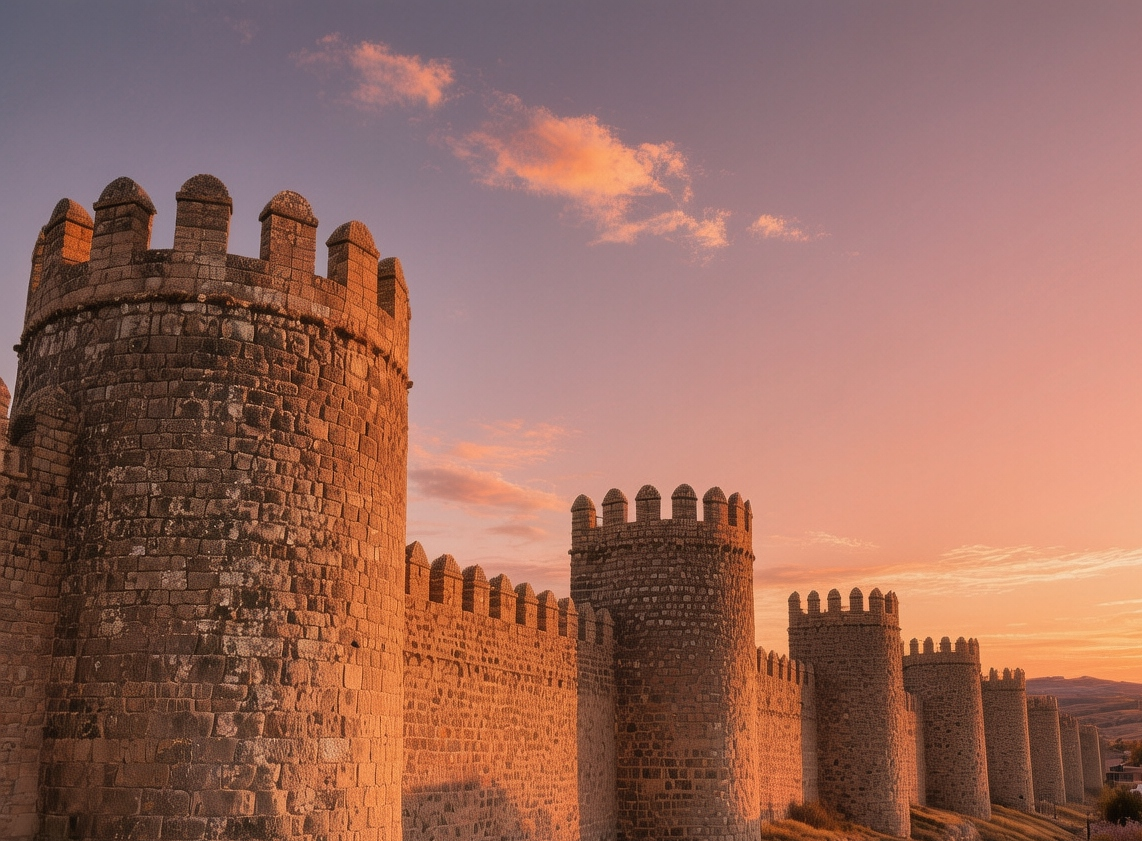
The wind howls across the paramo—a sharp, biting gust that has swept over the Ávila medieval walls since the 11th century. You stand at the Cuatro Postes viewpoint, 1,131 meters above sea level, watching the sun dip behind the Sierra de Gredos. The air smells of dry thyme and heated granite; the light turns the honey-colored stone into a burning ember against the deepening blue. This is the most complete defensive enclosure in Spain, stretching 2,516 meters around the old city, punctuated by 88 semi-circular towers and 9 fortified gates. You hear the distant toll of the Cathedral bell; the crunch of gravel underfoot; the silence of a city that has stood sentinel for nearly 1,000 years. In 2026, as modern borders shift and fade, the Ávila medieval walls remain a testament to permanence—a place where history is not displayed behind glass but lived in every block of stone, demanding you touch the cold granite to feel the weight of the past.
Why Ávila Medieval Walls Embodies Defensive Mastery
The Ávila medieval walls represent the pinnacle of Romanesque military architecture in Europe, solving the critical need for a fortified stronghold on the frontier of the Christian Reconquista. Construction began around 1090 under the command of Raymond of Burgundy and his wife Urraca, daughter of Alfonso VI, to protect the city from Moorish incursions. The engineering is a marvel of medieval logistics: 2,516 meters of perimeter wall, rising to an average height of 12 meters, with a thickness of 3 meters at the base. The structure utilizes local granite and limestone, bound with lime mortar, designed to withstand siege weaponry and the harsh Castilian climate.
The defensive system is comprehensive: 88 towers project from the curtain wall, providing flanking fire for archers, while the 9 gates control access to the city. The Puerta del Alcázar and Puerta de San Vicente remain the most imposing, featuring double arches and machicolations for dropping projectiles on attackers. This integration of topography and masonry makes the Ávila medieval walls not merely a barrier but a statement of power. Recognized as a UNESCO World Heritage Site in 1985, the walls enclose the entire old town, preserving the medieval street plan within. This concentration of military architecture makes it a pilgrimage site for historians, where the evolution of fortress design is traced through the very stones that defined the frontier.
The Best Time to Experience Ávila Medieval Walls
For the optimal Ávila medieval walls visit, target May 18–June 12 or September 10–October 25, when temperatures range between 10–22°C (50–72°F) and the light is clear for photography. The wall walk opens at 10:00 AM daily; arrive 15 minutes before opening to enter with the first group, as tour buses converge by 11:30 AM. Sunset views from the Cuatro Postes—specifically 7:00–8:30 PM in summer—offer dramatic lighting over the granite, though the temperature drops rapidly after dusk. Spring coincides with the Mercado Medieval, causing accommodation prices to increase 40–60%; book lodging three months in advance if visiting during this period.
Avoid December 15–February 15 unless you tolerate extreme cold; temperatures regularly drop below 0°C (32°F), making the stone ramparts icy and dangerous. The high altitude (1,131 meters) exacerbates the chill, with wind chill factors often reaching -10°C (14°F). Summer months (July–August) bring warm days (25–30°C / 77–86°F) but intense sun on the exposed walkway. The wall walk closes during heavy rain or snow; verify current status at www.turismoavila.com or contact the ticket office at info@turismoavila.com (+34 920 211 387). Weekday mornings typically see the lowest visitor density, allowing for clearer photography of the towers without obstruction from crowds.
Approximate Budget for a 7-Day Trip (2026)
Ávila offers excellent value for cultural travelers, with costs generally 20–30% lower than Madrid. The following budget assumes mid-range comfort with a focus on local experiences, based on 2026 pricing with approximately 3.5% inflation from 2025 figures. Estimates include stays in the historic center for easy access to the Ávila medieval walls and day trips to explore Castile and León.
- Accommodation: €60–€110 per night for a double room in a parador or boutique hotel inside the walls; luxury options with rampart views command €140–€250 per night
- Food: €40–€60 per day—breakfast €5–€8 (café con leche and yemas de Santa Teresa), lunch €15–€25 (menú del día including chuletón de Ávila, beans, and wine), dinner €20–€30 (tapas selection including morcilla and local cheeses)
- Transportation: Train from Madrid Chamartín to Ávila: €12 high-speed AVANT (1 hour 15 minutes); local bus within Ávila: €1.20 per ride or €3.50 daily pass; taxi from station: €8 fixed rate; regional car rental: €35 per day
- Attractions: Ávila medieval walls walk: €7; Cathedral: €6; Basilica of San Vicente: €3; Convent of Santa Teresa: €5; guided wall tour: €15
- Miscellaneous: Religious souvenirs from €8; local Ribera del Duero wine €7–€18 per bottle; hornazo pastry €10; artisan ironwork €20–€50; marzipan from €6
Total estimated cost for 7 days: €800–€1,200 per person (based on double occupancy; solo travelers should add 35–45% for single supplements)
7 Essential Ávila Medieval Walls Experiences
- Walk the Ramparts: Ascend to the top of the walls via the Puerta de San Vicente. The walk covers 1,700 meters of the perimeter. Visit at 10:00 AM opening time to experience the path before crowds obscure the view. The stone is cool to the touch even in summer. Allow 45 minutes to complete the full circuit. This is the anchor of the Ávila medieval walls; do not rush the walk.
- View from Cuatro Postes: Drive or walk 1 kilometer outside the city to this iconic viewpoint. The four stone pillars frame the entire walled city. Visit at 7:00 PM when the sun sets behind the walls, casting long shadows. The light reflects off the granite. It is the most photographed spot of the Ávila medieval walls; arrive early to secure a spot without people in your shot.
- Enter Through Puerta del Alcázar: Pass through the main gate near the Cathedral. The double archway features defensive machicolations above. Visit between 2:00–4:00 PM when lighting accentuates the stone details. The gate dates to the 12th century. It demonstrates the military architecture of the Reconquista.
- Visit the Cathedral Fortress: Explore the apse which forms part of the city wall. The structure measures 70 meters in length and integrates defensive towers. Visit at 11:30 AM when the guide explains the dual function. Audio guides available in six languages for €3. Allow 30 minutes to appreciate the details. This is a rare example of ecclesiastical defense.
- Taste Yemas de Santa Teresa: Eat the traditional egg yolk sweets at a convent shop. Order the box wrapped in brown paper. Visit at 4:00 PM for afternoon tea. The recipe dates to the 16th century. Expect to pay cash; cards are not always accepted. The atmosphere is quiet and reverent. This is a living culinary tradition.
- Attend Night Illumination: Return after dark to see the walls lit with golden lights. The granite glows amber against the night sky. Visit at 9:00 PM in summer or 7:00 PM in winter. The lighting changes seasonally; verify times at the tourist office. It creates a magical atmosphere distinct from daytime. This reveals the structure's timeless beauty.
- Explore the Jewish Quarter: Walk the streets inside the walls near the Puerta de la Malaventura. The alleys are narrow and winding, typical of medieval planning. Visit at 10:00 AM when the sun illuminates the stone facades. The streets are only 2 meters wide; step aside to let locals pass. It is the most atmospheric spot in the Ávila medieval walls; arrive early to avoid crowds in your shot.
3 Hidden Gems Most Travelers Miss
- Church of San Pedro: Located inside the walls at Plaza de San Pedro, this Romanesque church features a stunning portico. Entry: €3; open 10:00 AM–6:00 PM. It is often overlooked as visitors focus on the Cathedral. The bell tower rises 30 meters with intricate carvings. Contact: +34 920 211 387. Visit early morning for photography without crowds. The interior frescoes date to the 13th century.
- Palace of the Superunda: A 5-minute walk from the walls at Calle de los Superunda, this 16th-century mansion features a plateresque facade. Entry: €4; open Tuesday–Sunday 10:00 AM–6:00 PM. It is often overlooked by tourists rushing to the ramparts. The Museum of Ávila is housed inside. Contact: +34 920 211 387. Visit mid-morning when light illuminates the courtyard. The architecture is unique in Castile.
- Monastery of Santo Tomás: Located 1 kilometer outside the walls at Avenida de Madrid, this 15th-century monastery houses the Royal Tombs. Entry: €5; open 10:00 AM–6:00 PM. It is often overlooked as visitors focus on the city center. The cloister features Mudéjar arches. Contact: +34 920 250 213. Visit late afternoon when the light is soft. The perspective allows you to see the walls in the distance.
Cultural & Practical Tips
- Respect the monument: The Ávila medieval walls are a UNESCO World Heritage Site and protected monument. Do not climb on the battlements or touch the frescoes. Oils from skin damage the ancient stone. Fines for vandalism can reach €300. Security monitors the area. Keep the site clean; use provided bins.
- Master these phrases: "Buenos días" (BWEH-nos DEE-as) for good morning; "Por favor" (por fah-BOR) for please; "¿Cuánto cuesta?" (KWAN-toh KWES-tah) to ask price; "La cuenta, por favor" (lah KWEN-tah) to request the bill.
- Photography guidelines: Tripods are allowed on the viewpoint but not inside churches without permission. Drone usage is strictly prohibited over the monument. Flash photography is discouraged inside religious sites. Respect other visitors when composing shots. Early morning and sunset offer the best light without crowds.
- Hydration strategy: Ávila's high altitude (1,131 meters) means dry air; carry a refillable bottle. Public fountains (fuentes) are available in the plazas. The water is potable and sourced from mountain springs. You'll save €2–€3 daily and reduce plastic waste. Purchase water from kiosks if fountains are unavailable.
- Footwear selection: The ground consists of cobblestones and granite steps. Wear sturdy walking shoes with good grip. The ramparts can be slippery when wet. Avoid high heels. Comfortable walking shoes essential for exploring the historic center. The cobblestones can be uneven.
- Weather considerations: The walls provide little shade; wear a hat and sunscreen during summer months. Winter evenings can be chilly due to altitude; bring a heavy jacket even if the day is warm. Rain is rare but possible in November; the stone surfaces become slick when wet.
- Security awareness: While the area is safe, pickpockets operate near crowded viewpoints. Keep bags zipped and valuables secure. Do not leave phones on café tables. Allow an extra 15 minutes for security processing during peak festival seasons. Report suspicious activity to local police.
Conclusion: Travel with Reverence, Not Just Reverie
The Ávila medieval walls demand more than casual observation—they ask for contemplation of the layers of history embedded in every granite block, every tower, every battlement carved by hands long turned to dust. When you walk these ramparts in 2026, you're not merely touring a monument; you're walking through a fragile ecosystem of memory where military strategy, religious devotion, and modern tourism intersect in delicate balance.
Choose to engage deeply: hire a local guide from the historic center rather than a large tour company; purchase tickets directly to support preservation efforts; respect the silence of the stones that guarded a kingdom. The Ávila medieval walls survive not as a museum exhibit but as a living bridge between eras—and its preservation depends on visitors who recognize the difference between appreciation and consumption.
Slow down. Sit on the viewpoint after the tour buses depart. Listen to the wind moving through the towers. Watch the sunset paint the granite in shades of gold and amber. The walls reward those who approach them not as a checklist item but as a conversation across time—a dialogue between ancient defense and modern wonder that continues, like the Castilian sky, in perpetual motion.